Part Thirteen
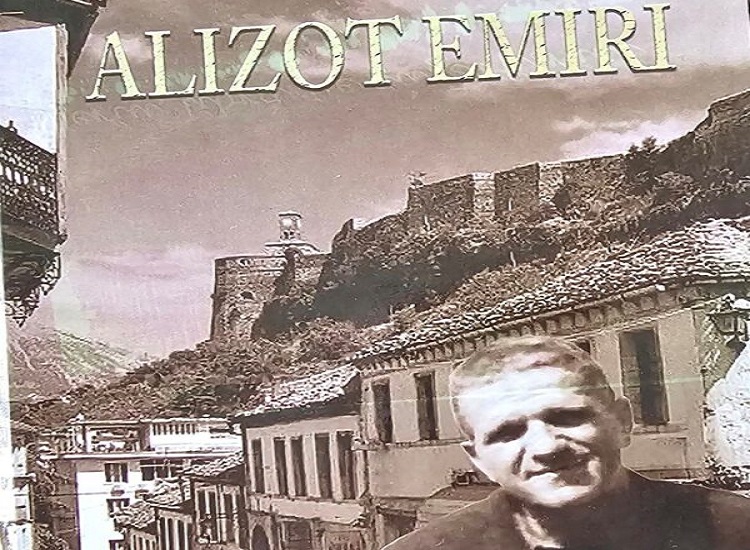
Excerpts from the book: ‘ALIZOT EMIRI – The Man, the Bookstore, and the Noble Spark’
A FEW WORDS AS AN INTRODUCTION
Memorie.al / Whenever we, Alizot’s children, would recount “Zotia’s” (Alizot’s) stories in joyful social gatherings, we were often asked: “Have you written them down? No? What a shame, they will be lost…! Who should do it?” And we felt increasingly guilty. If it had to be done, we were the ones who had to do it. But could we write them? “Not everyone who knows how to read and write can write books,” Zotia used to say whenever he held a poorly written book in his hands. As we discussed this “obligation” – this Book – among ourselves, we naturally felt a sense of inadequacy. It wasn’t a task for us! By Zotia’s “yardstick,” we were incapable of writing this book.
Continued from the previous issue…
“IT’S NOT FOR YOU!”
He was very observant whenever a stranger lingered in the bookstore, showing an interest in literature.
“To a person who loves books, you must give what they deserve. You must choose a book for them so that they don’t get bored, but rather enjoy it, assimilate it, and digest it completely,” Alizot often repeated.
Zotia would tell stories of how he sometimes “clashed” with readers during their first meeting – even going as far as refusing to give them the book they asked for! I recall an instance when I was a young boy in the shop.
“Master, do you have ‘such-and-such’ a book?” asked a stranger whose dialect made it clear he was from the countryside.
“At your service, I have it!” Zotia replied, taking a copy from the shelf and placing it before the customer. Meanwhile, he began a casual conversation: “Where are you from? What is your level of education? Where do you work? What did you read before this? What did you like most…?”
In this way, Zotia would build a “portrait” of the stranger who had entered his shop for the first time, ensuring they would return. It wasn’t the first time he acted this way. I used to sit there on pins and needles. It felt like Zotia was bothering people for no reason.
“Leave them be,” I thought to myself. “Why are you talking their ear off as if they’re family? He asked for the book – give it to him! It’s his business! For goodness’ sake!”
As the reader prepared to pay, Zotia continued to probe: “Who recommended this book to you? Because there’s this other book here. Readers have enjoyed it very much. These are the last copies. Almost gone!” Zotia tried to convince him to give up on the recommended book, but the young reader was determined. Either the recommended book or nothing!
“No,” Alizot said in a soft voice, leaning in as if to share a secret. “I won’t give you that book; it’s not for you! Don’t even take out your money. You will take the book I’m recommending instead – free of charge! Take it and read it. If you like it, bring me the money; if you don’t, bring it back – just don’t fold the pages.”
The stranger stood there, bewildered and almost hypnotized by the bookseller after the initial revolt caused by the firm yet kind refusal. The stranger had misunderstood his intentions; Alizot wasn’t trying to offload an old copy.
“Alright then, uncle, I’ll take the book you’re giving me. But tell me, why did you deny me the other one?”
“You told me you finished primary school,” Alizot explained calmly, “while the village teacher who recommended it to you has finished the Higher Pedagogical Institute. You aren’t the same! You’d have to swap your head for the teacher’s to enjoy that book as much as he did. Can you swap heads?” Zotia asked, speaking in the reader’s own dialect. “If I made the mistake of giving you that book, you’d never set foot in a bookstore again!”
“Keep my money for your book then,” the new friend said firmly. “Don’t embarrass me now—we’ve become friends after all!”
EXTRA-CURRICULAR BOOKS
This happened mostly with primary school students. They would come to the shop looking for age-appropriate books assigned by their reading teachers.
“Uncle Alizot, I want such-and-such a book, do you have it?”
“What grade are you in, my boy?” Alizot would begin, immediately linking the student’s age to the book’s content. If he felt they weren’t a good match – though this was rare – he would intervene.
“What school do you go to? Who is your teacher? How many students are in your class…?” Finally, he would explain to the student: “We had that book, but it’s sold out. Tell your teacher to come and see me; a new shipment of even more beautiful books arrived yesterday. Don’t forget, they’ll go fast!”
“Oh no, Uncle Alizot! I’ll tell the teacher first thing tomorrow morning.”
And the teachers would gladly come to see Alizot, for whom they held a special respect. They would discuss the delicate matter of matching a book to a student’s age. The teachers understood that the book they had recommended wasn’t actually missing from the shop. They weren’t offended at all. They thanked him for his tactful intervention. Zotia would update them on the latest literature for that age group, which he had already read, and he would share insights from other schools where more experienced teachers had made different, more suitable choices.
He never forgot to give the teacher a book for themselves: “What did I give you last time?” After finding out, he would say: “Now you will take this one!” He didn’t impose; he knew the financial situation of his fellow citizens well. “Take the book; bring the money when you have it, don’t worry about it.”
“Alizot, thank you. You’ve helped me choose the extra-curricular reading; I’m in your debt!”
“Don’t even mention it!” Zotia would reply, deeply satisfied to feel useful to society. His modest contribution went toward knowledge – ensuring people gained as much as possible, as correctly and qualitatively as possible. He was part of that generation that inherited the tradition of a thousand efforts for knowledge, carved into every stone of Gjirokastra.
Alizot claimed no credit for himself, often repeating:
“I am only selling the world’s wisdom!”
THE HIGH-HEELED SHOES
Zotia didn’t remember this story clearly until Dervish Lela’s daughter in Fier reminded him of it. He had been invited to visit Dervish’s family, who had lived in Gjirokastra for a long time. Dervish had been an army officer and a friend of Zotia.
They welcomed Zotia and his wife, Fete, with great respect. Dervish’s daughter, who was married and lived in another neighborhood, had come just to see him. She had a vivid memory of an incident in the bookstore and wanted to share it.
“I came to the bookstore and asked for a book,” she said, mentioning the title. “I had the money in my hand. The book was right there in the window and on the shelf, but you wouldn’t give it to me. I insisted – I was young and didn’t understand. Why? It felt like an injustice. The book was there, and I had the money. You still refused, but finally calmed me down by saying: ‘I will give you the book, but on one condition. Go home, put on your mother’s high-heeled shoes, and then come back for it. I’ll save a copy for you, so don’t worry about it running out.’”
“Though I didn’t understand why I needed high heels to buy a book, I didn’t argue. I ran home, kicked off my shoes, and asked my mom for her heels. Surprised, she asked why. ‘I’m just wearing them to the bookstore because Uncle Alizot made it a condition,’ I explained. Expecting her to let me go – since Alizot was my father’s friend – the opposite happened. I was so angry at my mother for stopping me. On one hand, they told us to read as much as possible, and on the other… they should have been thrilled their daughter wanted a book! How strange!”
“Only years later did I understand why Uncle Alizot didn’t give me the book I wanted. That’s when I realized you weren’t just a book salesman. I constantly recalled your words: ‘It’s not for your age, my girl!’ As soon as I heard Alizot Emiri was visiting my father’s house, I rushed over to tell you this story that remained etched in my memory.”
Zotia was delighted. He hadn’t expected such a surprise. He didn’t remember the incident at all, but he felt even more appreciated. He was respected not merely as a bookseller, but as a parent to that little reader./Memorie.al