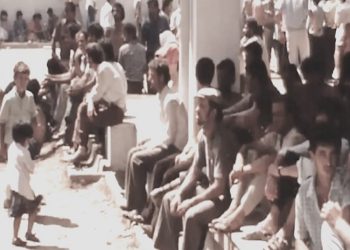

Memorie.al / They could have been intellectuals, translators, artists, writers, physicists, engineers, doctors, lawyers, professors, etc., but after the loss of their freedom and their imprisonment, the communist regime transformed almost all of them into manual laborers.
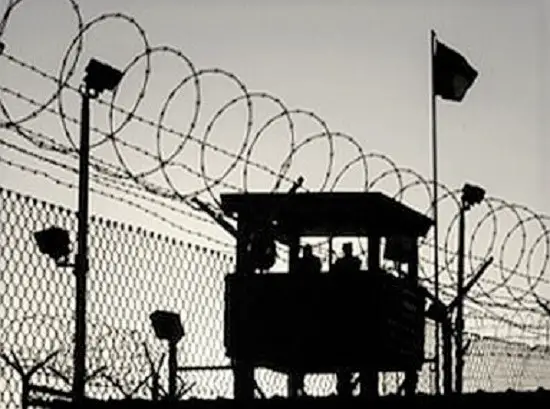
They drained swamps and dug canals, submerged in mud up to their waists; they lifted thousands of cubic meters of earth by hand, and built roads, apartment buildings, bridges, plants, and factories. Political prisoners in Albania, during the years of the communist regime, were treated like slaves. They were exploited as a labor force to the extreme, even in conditions where they were sick and unable to work. This is now a fact proven from all angles, not only through the testimonies of survivors but also through a series of official documents. These records explain in detail how forced labor camps were established and operated, and how prisoners were exploited for work on the most difficult fronts – tasks impossible to cover with free workers.
Following the publication of documents regarding the opening of a new labor camp for prisoners in Zadrima at the end of 1955, we present today another document from this period. Born of the same theme, it reveals in detail how forced labor camps were established, at what cost, and how plans were made to forcibly exploit prisoners as a labor force.
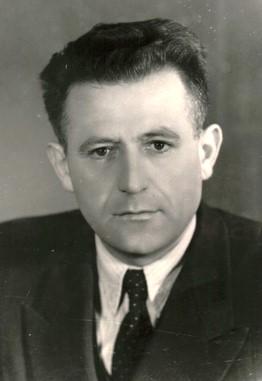
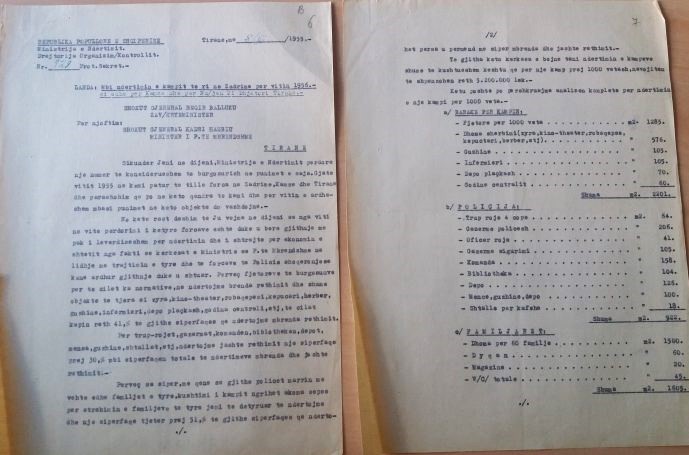
The document is dated December 8, 1955, and was sent to the Prime Minister’s Office by the Minister of Construction, Josif Pashko. Also notifying the Minister of Internal Affairs, Kadri Hazbiu, Josif Pashko lays out a detailed plan on how the prisoner forces could be better exploited, noting that from year to year, the costs of moving prisoners from one camp to another had significantly increased.
After listing all the costs for setting up a camp like that in Zadrima, as well as those in Kamza and Tirana – which were to be exploited for labor during 1956 – Josif Pashko writes:
“Regarding the nature of our works and for a more rational exploitation of forces, the possibility should be explored to create more camps with fewer people, since in this way they could be better exploited and workers would not sit idle, as they do today at the Kamza site, where out of 1,000 people, we currently use about 500 due to a lack of workfronts caused by the bad season, etc.; such is the nature of our works that in the 1st and 4th quarters we can use fewer workers, and in the 2nd and 3rd quarters, more.”
Throughout the entire document, the striking fact is the maximum exploitation of the prisoners’ strength and the reduction of construction costs so as not to burden the regime’s budget. Below, we present the full document signed by Josif Pashko on December 8, 1955:
PEOPLE’S REPUBLIC OF ALBANIA Secret
MINISTRY OF CONSTRUCTION Tirana, 8/XII/1955
Directorate of Organization – Control
Prot. No. 929
SUBJECT: Regarding the construction of the new camp in Zadrima for the year 1956, as well as for Kamza and for the “21 Dhjetori” Enterprise in Tirana.
TO COMRADE GENERAL BEQIR BALLUKU
DEPUTY PRIME MINISTER
For Information:
TO COMRADE GENERAL KADRI HAZBIU
MINISTER OF INTERNAL AFFAIRS
TIRANA
As you are aware, the Ministry of Construction utilizes a considerable number of prisoners in its works. During 1955, we had such forces in Zadrima, Kamza, and Tirana, and we foresee having them in these same centers for the coming year, as the works at these sites will continue.
In this regard, we wish to inform you that from year to year, the use of these forces is becoming increasingly less profitable for construction and expensive for the state economy, due to the fact that the requirements of the Ministry of Internal Affairs regarding their treatment and that of the accompanying Police forces have steadily increased.
Besides the dormitories for the prisoners, for which there are regulations, we also build many other facilities within the perimeter, such as offices, a cinema-theater, a tailor shop, a shoemaker, a barber, a kitchen, an infirmary, a storage for belongings, a power plant building, etc., which account for about 41% of the total area we build inside the enclosure.
For the guards, barracks, command, library, depots, canteen, kitchen, stables, etc., we build outside the enclosure an area equal to 30% of the total construction surface inside and outside the perimeter.
Furthermore, since all policemen bring their families with them, the cost of the camp rises even further because, for the housing of their families, we are forced to build an additional area equal to 51% of the total area mentioned above. All these requirements now make the construction of camps very expensive, so that for a camp of 1,000 people, approximately 5,200,000 lek must be spent.
Below we describe the complete analysis for the construction of a camp for 1,000 people:
- a) BARRACKS FOR THE CAMP:
- Dormitories for 1,000 people: 1,285 m2
- Service rooms (offices, cinema-theater, tailor, shoemaker, barber, etc.): 576 m2
- Kitchen: 105 m2
- Infirmary: 105 m2
- Storage for belongings: 70 m2
- Power plant building: 60 m2
- Subtotal: 2,201 m2
- b) POLICE:
- Guard posts (4 units): 64 m2
- Police barracks: 206 m2
- Guard officers: 41 m2
- Security barracks: 105 m2
- Command: 158 m2
- Library: 104 m2
- Depot: 126 m2
- Canteen, kitchen, depot: 100 m2
- Stables for animals: 18 m2
- Subtotal: 922 m2
- c) FAMILIES:
- Rooms for 60 families: 1,500 m2
- Shop: 60 m2
- Warehouse: 20 m2
- WC (total): 45 m2
- Subtotal: 1,605 m2
Grand Total: 4,728 m2 x 1,100 lek/m2 = 5,200,000 lek.
We believe that the Ministry of Internal Affairs should re-examine its requirements, as well as the force structures, in the spirit of reducing general and administrative expenses, certainly without compromising necessary security.
Specifically, we are referring to the numerous non-productive forces that gather in our camps, which often exceed 20% of the total force. We believe our and their administrative costs increase even more by keeping these sick and unfit workers in the camps, such as in Tirana and Zadrima; it would be more profitable for these to remain in prisons rather than being transported back and forth, they and their belongings, and ensuring for them wood, food, and the forces for their guarding.
The Ministry of Internal Affairs must take the necessary measures to replace them so that the percentage of the unfit does not exceed 5%.
Taking the above into account, we also believe that regarding the nature of our works and for a more rational exploitation of forces, the possibility should be explored to create more camps with fewer people… [as per the quote mentioned in the introduction].
Ultimately, we request that the allocation of prisoner forces for construction in 1956 be decided so that we can immediately begin the construction of the camps. Our specific needs for 1956 regarding prisoner forces are:
- For the Zadrima land reclamation: a constant annual working force of 700 people. Today, there are over 1,000 people in the Zadrima camp. For this, we propose setting up a camp for 700 working people… if built according to current requirements… it will cost about 3,350,000 lek. Repairing 3km of village road will cost another 1,100,000 lek, bringing the total cost of the new camp to about 4,450,000 lek – a fairly high figure. Since family housing for police exists at the current camp 13km away, we propose that families stay there… thus reducing the cost to 3,600,000 lek.
- For the Kamza site: an average working force of 800 people…
- For the residential buildings in Tirana (21 Dhjetori Site): an average force of 300 working people… at present, many there are non-productive. Measures must be taken to replace them.
Considering that we are near the end of the year, it is necessary for this matter to be reviewed and decided by you, so that we can take the necessary measures, especially regarding the new camp in Zadrima… Otherwise, the forces risk remaining without work.
These are the most essential workfronts for these types of forces for the year 1956, and this Ministry has no other suitable workfronts for such forces. We remain awaiting a swift conclusion to this matter./Memorie.al
MINISTER
JOSIF PASHKO