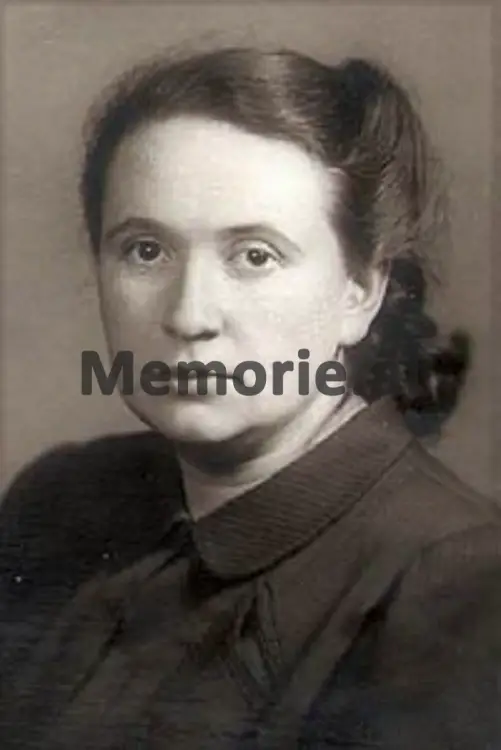
Taisa Batkina Pisha
Part Twenty
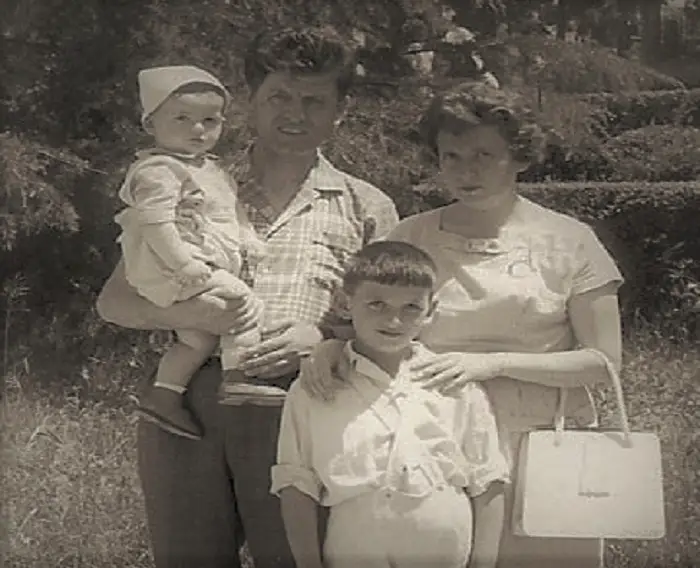
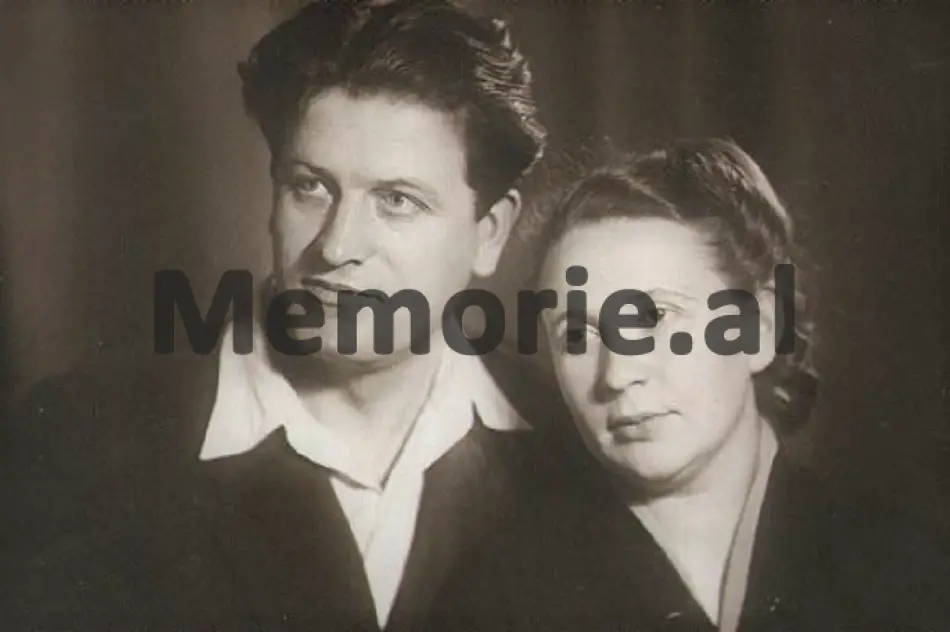
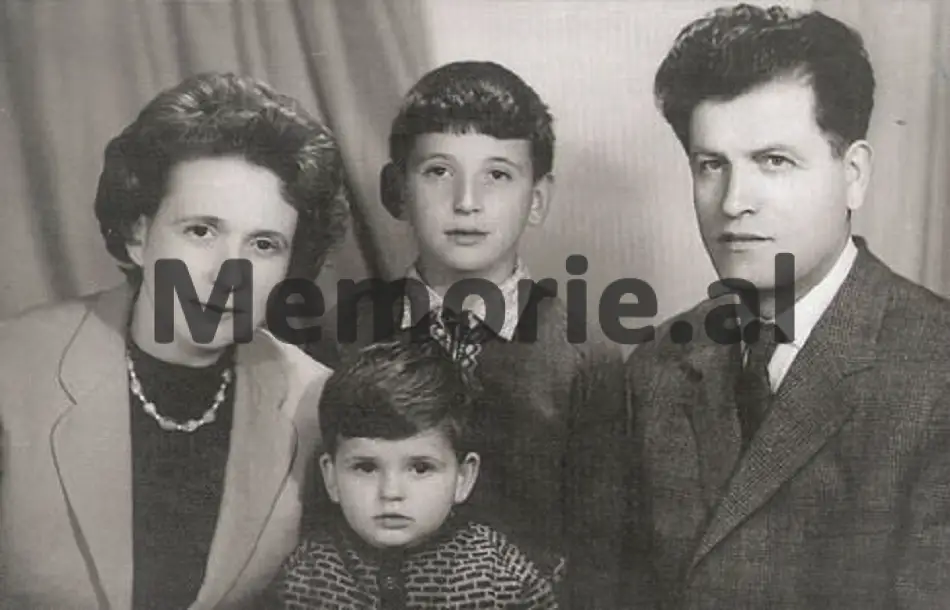
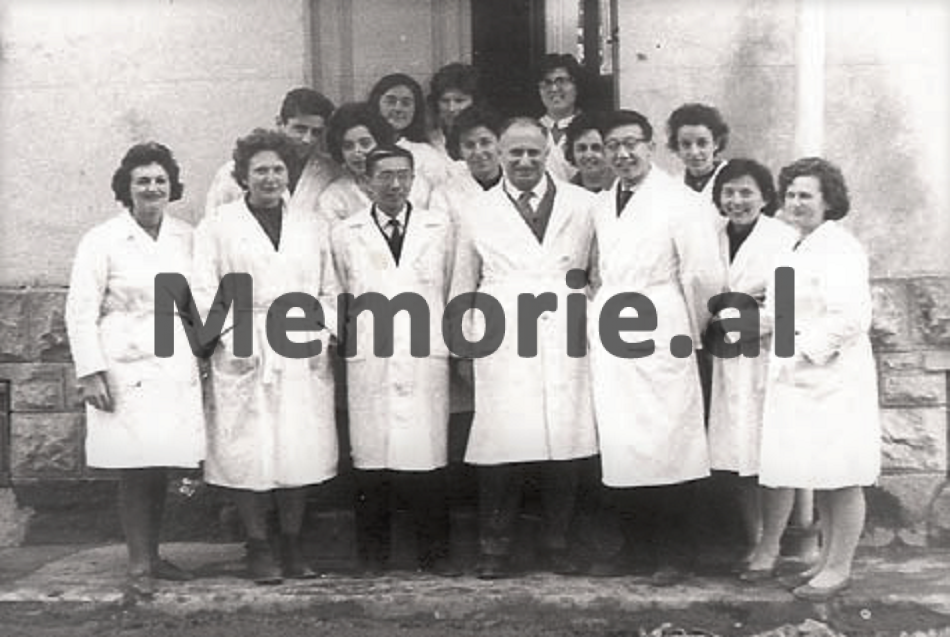
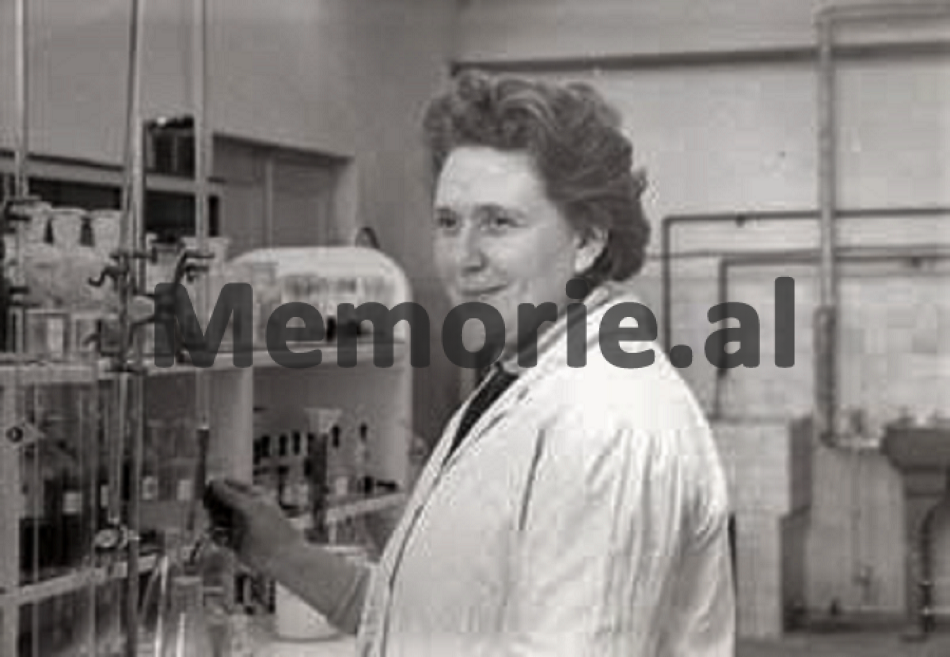
Memorie.al /publishes the unknown story of the Russian national Taisa Batkina (Pisha), originally from Tula, Russia, the third child of a poor peasant family, who was orphaned at a young age after her father lost his life while working in one of the coal mines located on the outskirts of Tula, where he worked as a miner. Taisa’s graduation from the Faculty of Chemistry at the “Lomonosov” University of Moscow, where she met and married the Albanian student, Gaqo Pisha, originally from the city of Korça, who at that time was studying at the Faculty of Philosophy in Moscow, and both of them together in 1957, returned to Albania, along with their newborn son, Sasha, where they began their life in Tirana. Taisa was appointed as a lecturer of Chemistry at the State University of Tirana, while Gaqo was appointed to the chair of Marxism-Leninism, where they worked until 1976, when the State Security (Sigurimi), with fabricated charges, arrested Taisa Batkina, accusing her of being a “Soviet KGB agent” and sentenced her to ten years of political prison, which she served in the “Women’s Prison” in the “Stalin” City, from where she was released in 1986, while her husband, Gaqo Pisha, had passed away in 1983 from a serious illness. The tragic story of Taisa Batkina (Pisha), through the inhumane camps and prisons of Enver Hoxha’s communist regime, where she spent a decade of her life, along with many compatriots from the former Soviet Union or other Eastern European countries, comes through her memoirs, published in a book titled “We Hoped and We Survived.”
We Hoped and We Survived
I dedicate this to the bright memory of my husband, GAQO PISHA
Continued from the previous issue
The Two Elderly Serbian Women
The Yugoslav “Spies” These two women were brought to the camp in the years ’78-’79, I don’t remember exactly. I remember the tormented look on the faces of the two elderly Serbian women, indicted for espionage in the service of Yugoslavia. Before they arrived, there were no Yugoslavs in the camp, so the “void” had to be filled. The younger one, Nada, was 60 years old, while Mica was somewhat older. The unfortunate women still did not understand why they were put inside and how the accusation had been orchestrated. Nada was arrested along with her husband. Only their daughter, an artist, remained at home. Along with the arrest of her parents, her career also ended; now she could only be taken for menial jobs with a low salary. The “espionage group” – Nada’s husband, Nada, and Mica – were “spying” for Yugoslavia. Once, about 15 years before the arrest, a distant cousin who at that time worked at the Yugoslav embassy used to visit Nada. Before inviting her cousin to the house, Nada had requested permission from the Department of Internal Affairs. They had given her permission, but even this did not help her. When it was needed, these visits were interpreted as meetings of spies. Mica, who was very little acquainted with Nada, was included in this group because her brother, an employee of the Yugoslav Ministry of Foreign Trade, often came to Albania for work and sometimes met with his sister. Very little “activity,” but enough to be sentenced to 14 and 15 years of deprivation of liberty, with which the court “rewarded” them.
Nada found her stay in prison very difficult; she was not used to enduring hardships, so she fell ill often and fell into depression. Her daughter would come to meet her, helping both her mother and father. Her relatives from abroad also helped her. In prison, Nada received the news of her husband’s death… from cancer. This news simply killed her. Mica was morally stronger. Throughout the day she worked, she found the work herself, helping the elderly and the sick. We had many such women in our corps. As I calculated one day: the average age of the prisoners in our corps was 51-52 years old. Mica’s first husband, the one who had brought her to Albania, had died. She married a widower who had 4 children. She raised them, worked as a seamstress all her life, and before her arrest, she was raising her grandchildren. Her husband immediately sought a divorce, while the children, who were not her biological children, did not abandon her; they came to the meetings and helped her. Her brother also helped her; every six months he wrote to the Albanian leadership, even to Enver himself, with the plea to release his sister. But he received only refusals. The slogan of the Albanian communist regime: “No mercy for the enemies!” found application in life! Nada and Mica were released along with the others, after the amnesty of 1986.
Vala
Our “diplomatic corps” was regularly replenished. Almost every six months they brought new convicts to the camp, and on the eve of 1978, the “corps” numbered 19 people. Vala was arrested later than us. She lived in Vlora. I met her in the camp. Vala’s husband was a pilot. Like almost all military personnel who had studied in the Soviet Union, especially those who had Soviet wives, he had been discharged from the army and worked as a mechanic. Vala, a beautiful, blonde woman with a graceful body, cheerful, sociable, a wonderful embroiderer, worked as a teacher in a school. She had two good sons. One of them, the younger one, I saw when he came to a meeting with his mother. We were returning to the camp from the fields, while he was sitting on the grass near the hut where those who came for meetings with the prisoners usually stayed. Handsome, blonde, tall, he looked older than he was. He looked very much like his mother, so we immediately understood whom he had come to see. Those who had known Vala before said that her eldest son was even better, a tall handsome athlete. One day, quite suddenly, they arrested Vala’s husband. A few days later, the eldest son disappeared. Vala waited for him at home, and then started looking for her, ran through the streets, asked acquaintances, her son’s friends. No one knew anything. This horror lasted for several days. Vala waited for him, searched for him, cried. Suddenly she was called to the offices of the State Security. “We have data,” they told her there, “that your son has died…! He wanted to swim to a foreign ship anchored in the roads and… He drowned. You understand for yourself… his action is the action of an enemy of the people.”
Yes, Vala understood… and very well! She did not remember how she reached home. But in the depths of her soul, she kept the hope that her son, an excellent swimmer, would have reached the ship that he had not died. After the father’s arrest, from a wonderful boy, he was transformed, he changed for the worse. Everyone moved away from him… and he could not tolerate such a thing. After a few days, a truck stopped in front of Vala’s house, where they quickly loaded the belongings and, together with the young son, they sent them into internment, to a distant village, and sheltered them in a shack almost ready to collapse. Vala was sent to work on the farm. But very soon the authorities changed their minds and… They arrested Vala. (Apparently, the Vlora district had not realized the plan of arrests, and Vala was a very suitable object). The boy, who was now 12 years old, was left on the streets. At first, the husband’s relatives took him, but then they were forced to take him to the children’s home and from there to various dormitories and schools. Everywhere around him, they created an atmosphere of hostility, of hatred. The poor boy could not endure these and would run away, but they would find him, catch him, and threaten him with trial. Vala wrote several letters to the camp command, to the prosecutor’s office, to the ministry, begging them to take care of her son. But the situation did not change. Even her husband, who was serving his sentence in a men’s prison, tried to help his son. He finished his sentence and came out before Vala. One day he came and met her. After that, Vala seemed somewhat calmed; she knew that the boy was at home with his father. After staying 6 years in prison, Vala came out with the amnesty of 1982. I did not meet her again, but I heard that her eldest son had not died; he had reached a Bulgarian ship by swimming, where they gave him shelter… in short, they hid him and took him with them. He was able to reach America, where later, after this became possible, the whole family moved.
Gala
Before prison, I did not know Gala. When they brought her to the camp, I immediately liked her for her simplicity, special diligence in work, and sincerity. In the camp, she did not socialize with anyone in a special way and never argued. She worked in the field, minded her own business, and… Sang very beautifully. Even when she washed clothes, she sang. We would take a place where she could not see us and listen to her. Before they arrested her, Gala lived in a small town near Elbasan. Her husband, a former officer, had been discharged from the army long ago; now he worked as a simple worker. Gala she worked in a nursery school. They had three children. When they arrested Gala, the youngest was four years old. Gala spoke Albanian very well, communicated easily with people, but did not seek to stand out too much among her companions. Out of fear that they might harm her family, she did not write at all to her people in the Soviet Union. But nothing saved her; if they put a tiny cross next to your name, you were finished…! I have often wondered why they had imprisoned her, who needed her arrest?! But, knowing a bit of the working method of the Albanian Security organs, the answer came naturally and alone: the arrest and imprisonment of foreign women was decided from above. In the Elbasan district, two foreign women had to be arrested, but they had only managed to arrest Lena and to realize the plan, they put the irons on Gala as well. They indicted her for “agitation and propaganda” against the People’s Republic of Albania.
Gala’s agitation was this: “In the Soviet Union, they make blackberry jam tastier!” Also another expression of Gala: when a neighbor complained to her that she could not see her people, she replied: “Mountains do not meet, but people do.” This “terrible” proverb figured in the final conclusion of Gala’s indictment, as evidence of the hope she nourished that the communist regime in Albania would fall one day. Gala’s children came to see her sometimes, most often the 16-year-old son, thin, poorly dressed. They had a hard time without their mother. Praise God, she was sentenced to only 5 years, and then she was released and returned home.
Lusja
Lusja is no longer alive. She died in Leningrad after a serious illness. She was the thirteenth and last of the Soviet part of the “diplomatic corps.” It seems to me that even the organs themselves had understood that they had overdone it with the arrests. All Soviet women could not be spies! Then where were these glorious organs for a full 15 years after the breaking of diplomatic relations with the Soviet Union? How did they not notice and discover this “espionage network” during these years?! In the period from the mid-70s, so many spies were “caught” in the country that even the most loyal party members were losing faith, although they continued to remain silent out of fear. Lusja’s life was not easy at all. She separated from her officer husband and was immediately sent to another city, where she found herself without close people, without acquaintances, without a trade, and with two children in her hands. But her hands were gold! She started working in tailoring and very soon became among the best masters of the city. She had to endure much. Her ex-husband, who lived better materially, drew her son to himself, turned him against his mother, and he went to his father. Lusja remained alone with her daughter. She met a man with whom she wanted to link her fate, but she did not succeed because… they arrested both of them…! They took Lusja while she was at work, with noise, cynicism, and humiliations. In front of everyone, they put the irons on her; she became ill, but in that state, they put her in prison. She had an extraordinarily difficult investigation, but since the quota of spies, apparently, had been realized, Lusja was sentenced to only 8 years for agitation and propaganda. Her friend was given… 25 years, after being indicted for “attempted escape.” This type of indictment was very convenient and was kept as a reserve, for any case; to attach to someone they wanted to put in prison for a long time.
Lusja took her friend’s sentence very hard. We, who knew her from before, noticed that she became a different person, strange and very nervous. Lusja’s daughter, Xhulia, remained alone. She was now a grown girl, but she had it very hard. They did not give her permission to study. Her personal life went poorly. Everyone avoided her, they were afraid to approach her because she had a foreign, Soviet mother and, moreover… in prison! Xhulia was put into a menial job. She tried to help her mother as much as she could; she came often to meet her, after walking almost 20 km on foot through fields and hills, even heavily loaded. Once they wanted to rob her; she barely managed to run away, and a villager passing by stood by her. Lusja suffered a lot, she begged her daughter not to come. Lusja really had golden hands; she learned to cut clothes with a half razor blade that she hid in a crack in the wall, then she sewed quickly by hand. Very soon she started taking orders, which came mainly from the corps of ordinary convicts. There, “clothing for the day of release” was often needed. The young girls convicted of theft and immorality had short sentences, they got out of prison quickly, but they also returned again after a short time, now without beautiful clothes, therefore they ordered others. Lusja earned not badly and forbade her daughter to come to see her, even helping her from time to time. Lusja was released with the amnesty of 1982. Then, in the early 90s, along with her daughter, she returned to Leningrad. /Memorie.al