
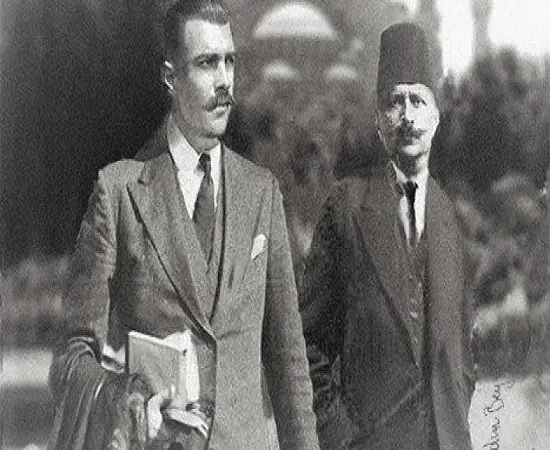
Memorie.al / We believe and say that the Homeland is like a big family, but likewise, there are also great families that are like a homeland. Families that carry its fate, from the drama of its eternity, that takes and gives from the shared identity through the ages, from the hymn and that ideal, irreplaceable charm. Family and Homeland become one with their lives and work, with their efforts and peace, and more so with war and deaths, with difficult victories and those losses that forged, together with resilience and collective consciousness, the entire anthropology, the events, the characters, the very glory of the nation, anticipating the future, which becomes the present, adding to experience, and after the many have passed, like any past, it leaves behind history and remains as a land. But also as a spirit. As a legend. Ancient and modern.
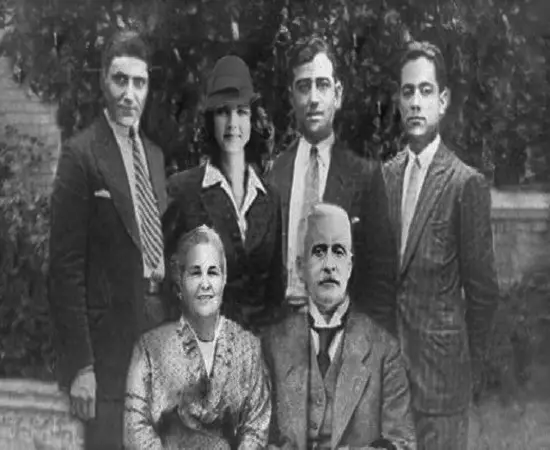
The great Cakrani family is a living history of independent Albania, now also wonderfully written, encompassing the last two centuries, the crossing of the 19th century together with the long and harsh Ottoman bondage, and it spans the entire 20th century, with independence and the armed Balkan conflicts, World War I, the Congress of Lushnja, as Albania’s second independence, the fascist occupation and World War II, the victors and the establishment of their dictatorship, the most savage in the smallest country within the entire communist empire, and the escapes from it.
The Cakrani family is thus also a deeply embedded root, traversing through the Ottoman Empire and disappearing into the Byzantine one. As such, this well-known feudal family also had the fate of the root, remaining underground, providing nourishment, but also with trunks cut above, in the murderous new oblivion. But just as one of the many characters of this memoir book, the exiled politician and writer Ernest Koliqi, managed to foresee in his drama “The Roots Move,” the time would also come for another memory, for a spiritual revival, where along with values and virtues, the names of those who worked “for Albania” would be unearthed, melting away not only their wealth but also their lives, placing their honor and fate in its service.
THE BOOK OF MEMORY
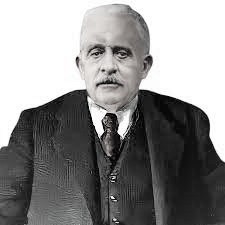
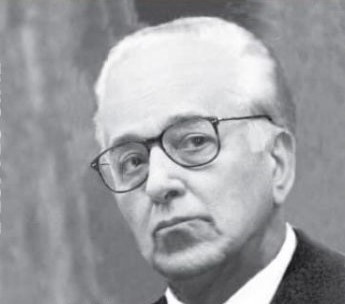
After the surprising and multi-important book, “Memories of a Signatory,” by the way, also a historical document that was missing from the time of the declaration of Albania’s Independence, even of linguistic value in the Albanian narrative in the Tosk dialect, and without finishing, the astonishment at this discovery, lo, now comes the book by his son, Kadri Cakrani, “The Truths of My War,” which includes the continuation, his life and that of his family and the Homeland, intertwined together as a whole.
Just as he took on the duties and responsibilities where his father left them, with the feelings of a high mission, with the devotion of a son, after having been a warrior for the homeland, with the character and typical Balkan mentalities, but especially those Albanian ones, where virtue and vices mix, after he left into forced exile, in the cultured West, in the end he performed an act, one of a European, a Westerner; he left behind his memories, which he calls his truths, but which equally are the truths of Albanians and of Albania itself.
“Albanians do a lot, but they write little,” said Dora d’Istria, the writer of Albanian origin, among the most cultured women in Europe in her time. But behold, after her, the Cakranis seem to have broken this atavistic carelessness, this useless conservatism, not once, but twice, by father and son.
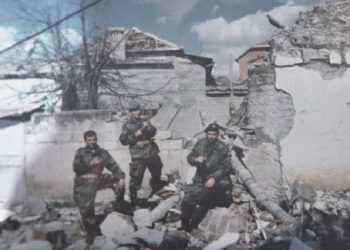
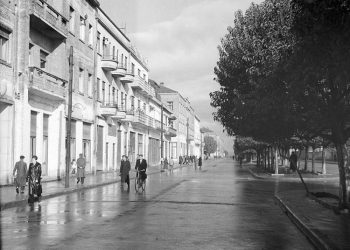
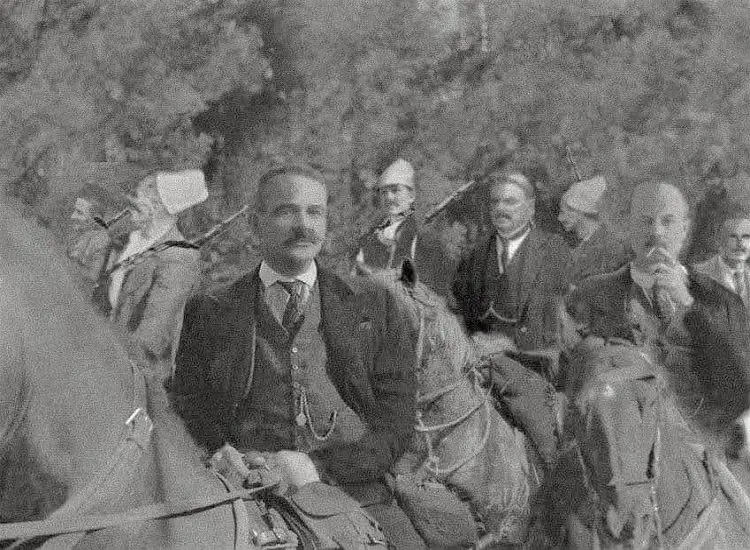
The emergence of Kadri Cakrani’s memories also resembles an archaeology, which does not discover, so to speak, only places – the events begin in the author’s birthplace, in Mallakastër, where they had their domain, the “Cakrani Republic,” continue in Berat, where they also had a big house there and the author served as the Supreme Commander of the “Balli Kombëtar,” but also in Austria earlier, where he was educated at the Theresian Military Academy, the continuations, the war and finally the forced exile, in Italy, even further away, in Syria, and across the ocean in the USA, as if fleeing an evil, but not the confrontation with it.
But in these memories, the most important thing is revealed: time is revealed, as much personal as it is shared, family and royal time, time to make time, and then comes the time of the Nazi-fascist occupation, of the civil war, as the author calls that between the partisans under the leadership of the Communist Party and the “Balli Kombëtar” under the leadership of the scions of the great families, to which he belongs as a founder and leader, the defeat of those who should have won and the victory of those who should have lost, etc., but different time was needed for the overthrow to be overthrown, even as another reality, and the author of this book unfolds it as a moral reality.
The book is of Kadri Cakrani’s truths, narration and reproaches, for others and for what belonged to him, but also towards himself, that they should have done more, and differently, convinced of his path and its righteousness, with a harsh, military sincerity as he was, that while he implemented the principles of his Organization for a war against the occupier with as little bloodshed as possible, he himself exploded as a hero, with the motto and passion that killers must be killed and he never let the gun out of his hand, which he naturally used with passion. What is important is that Kadri Cakrani’s truths, the most fundamental ones, challenge some other truths, which had taken hold by force and had been formalized, according to that law that history is written by the victors.
The dictatorship with its historians remade a past as it would have liked it to have been, superimposed another reality, but the crime remained in essence nonetheless…! From Kadri Cakrani, now comes another reality of that same time, believable amidst betrayals, but also natural, in its nature, at a time when time and Albanians were being denatured.
“The Truths of My Life” turns into the truths of the life of the homeland. The book also draws you in as a “novel,” where any resemblance to real events and people is not coincidental, but intentional. It begins with childhood in that great family, the mansions, the games, football, then the great games of humanity, war, the Balkans, Europe, the world, returns again to the homeland, the divisions, the conflicts, political meetings in men’s rooms and squares full of people, aristocratic life, the hippodrome, the tennis courts they had and where, in the Mallakastra of that time, horse rides, with boys and girls, also coming from abroad, their comrades and friends.
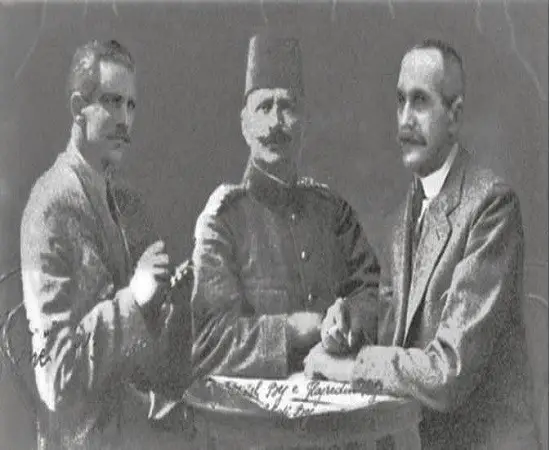
Hajredin Bej Cakrani with his brother, Bekash Bej Cakrani, were collaborators of Ismail Qemali, the declarer of Independence, had hosted him in their mansions in those days and had left together with carts through the mud of the time, to found the new Albanian state in Vlora, when one brother would be a signatory and the other a minister, who not only did not receive a salary for his work, but paid the administration from his own household treasury.
In the years of the historic Congress of Lushnja, where they were participants, amidst the troubles, the so-called “Spanish Flu” fell across Europe and the “Cakrani Brothers” created the first Albanian foundation, aiding and supporting the people with clothing and medicine, turning their residence into a hospital. The sons of the Cakrani family were also dedicated to knowledge, they had to become for the homeland as it expected: its defenders, economists, agronomists, doctors, jurists, diplomats, politicians, etc., and they were spread across famous universities, in Vienna and Paris, Rome, and Berlin, but also in Romania and Poland and Hungary, etc., and, if necessary, to take up arms again, they were also warriors.
The sister of the author of this book, Suhade Cakrani, the only daughter of Hajredin Beu, who appears to us a bit like a flash of lightning, studied in the marvelous Florence of Dante, Michelangelo, and Machiavelli, etc., of those who led the European Renaissance. But what did she study for? Medicine, Finance, Science? No, Fine Arts, just as she herself were. Because the homeland would also need art, culture, to become as beautiful as possible. But also rebellion. Kadri would be imprisoned as an opponent of King Zog, but even in prison, he would be so elegant, with his friends, with his Borsalino hats, ties, and shoes that shone.
Following the flow of the memories of the “Prince,” as they liked to call Kadri Cakrani, we discover more of the Balkans, absurd, where victory is also loss and the defeated can be the victor, and, “when Monarchies turned into Republics, the Republic of Albania becomes a Monarchy,” says the author with a bitter smile, and describes a chaotic Albania, “where, assassinations became like fashion today.” Amidst it all is him. A protagonist. Life merges with history. World conflicts arrive even in Mallakastër.
The partisan units, the author recounts, often did the work of gangs and received similar responses. With weapons. The son of the Shehu – a partisan, the son of Hajredin Beu – a Ballist. A division that deepened more and more in the village, in the province, in the cities, in Albania. And in the world. Berlin was divided in two, with a wall in the middle. The agreement of Albanians in Mukja was betrayed by the communists.
The nationalists did not want fratricide, as the author openly calls it. But it came and was desired by the leadership of the communists, specifically Enver, who was under the tutelage of the Yugoslavs, two missionaries of which were in the high command as supporters or advisors, but in fact they directed, and the goal was the seizure of power by them, in an Albania without Kosovo, which the occupier had united.
After the war, the plan was for all of Albania to become one of the Republics of the Yugoslav Federation, while the nationalists, the “Balli Kombëtar,” in their pluralistic organization whose leaders were the sons of the Frashëri family and other great families, including the Cakranis, and proven patriot professors, had as their goal Albania, its lost sovereignty, democratic prosperity as in the Western world, thus adding the other issue, so very critical and concerning, not a communist Albania. The war between two truths, just as between two rights, becomes increasingly harsh, as civil wars are.
IRREPLACEABLE AND LITERATURE…!
“The Truths of My War,” in its best achievements, is also written as literature, and certainly throughout its pages we would also find engaging conversations about literature and the arts. Being a time of war, they are felt and are part of resistance and defense. In the beginning, we encounter what the Cakrani fathers say among themselves, when one brother supported Sami’s philosophy and the other Naim’s poetry, but you don’t build a state with poetry, one would retort, but you build consciousness, the other would insist. So it seems as if a strategy of action is being sought, like strategies in war.
While the sons, Kadri Cakrani, a professional military man, would debate European literature with Professor Abaz Ermenji, the first speaking of the superiority of German literature and the second of French literature, not without tension, etc., etc. Even in their conversation, it seems as if they are seeking the strongest ally, and this begins with culture. But what war could not destroy, the dictatorship of the victors would shatter after the war.
And in the author’s exile in the USA, there is again reflection on literature, there towards the final pages of the book, he recalls Borchert, Hemingway, Remarque, and Böll, whom he likes, but Albanian literature today cannot be read, he says, referring to Socialist Realism, but surprisingly he has spotted a different book, one that gives hope, “The General of the Dead Army.” As a military man, he is drawn to both the theme and the ending, similar to their work. As an ideologue, in literature he sees the spiritual state of a people and the hope for the future, if there will be one…?!
CONTINUATIONS WITH DEEDS
But let us return to the issues of war, which dominate the book. With Kadri Cakrani, we are increasingly convinced that the communists sought to achieve their goal at any price, their ideal, even with terror, with killings, betrayals even of their own, even collaboration with the occupier, something that was little or no known at all and was hidden by official historiography, while the opposite was trumpeted. Whereas the “Balli Kombëtar,” Kadri Cakrani tells us, seemed to be interested in man, the life and fate of every person, even if a foreigner, who together constitute the Homeland.
The acts of humanism and great courage that Kadri Cakrani tells us about are excellent. The Jews of Berat, about 450 families, old and new, recently arrived from persecution in neighboring states, would be saved under his care, all being given Albanian passports, throughout Mallakastër, on their lands, now under the care of his uncle, Bektash. The correspondence between them is now in the Holocaust museums in Israel. The greatest humanitarian act in the Balkans.
The fear was that the partisans might expose this action to the Germans, to create terror and panic and exploit it for their victory. With the government of Mustafa Kruja, what could not be done in larger, more powerful, and more cultured countries was achieved: the protection of Jews, not surrendering a single one to the Nazi-fascists, and by the end of the War in Albania, “in the second homeland of the Jews,” their number had doubled.
Kadri Cakrani, but especially the son of Bektash Beu, Kujtim Cakrani, like all the people, faced another difficult task: the rescue of thousands of Italian soldiers after the capitulation of Fascist Italy, as they were threatened by the German occupier as deserters and by the partisans as occupiers, despite the fact that a part of them later, by order of the allies, were sent to fight alongside the partisans. Albania did what no one else in the world had done: to the army that had come as an occupier, after it was defeated, to its abandoned soldiers, it gave bread and shelter, over 25 thousand sons, and saw them off as brothers. It is biblical to turn enemies into brothers.
Again, Kadri Cakrani, as Supreme Commander of the “Balli Kombëtar,” will be found in humanitarian actions, in the rescue of American nurses; the plane they were flying in mistakenly crashed in Albania in war zones, where the partisans, disregarding their lives, wanted to use them as propaganda, as a landing of the allies, Kadri Cakrani tells us. Another instance: the liberation of several German soldiers captured by the partisans in Berat, when those German soldiers did not know that the partisans would break the agreement they had made with them. The German command immediately took 140 hostages, innocent Albanians, whom they would execute if the two German prisoners did not return to their unit.
The partisans wanted the massacre, because it would increase hatred against the Germans, but Kadri Cakrani went into their zones and freed the German prisoners to save the lives of 140 people, his fellow citizens. Along with the tension, the wonder of the book grows. The hiding of the Berat Codices, millennia-old, Byzantine, especially the Purple Codex, which the Germans were seeking, and if they were not handed over, our Orthodox priests, as many as were there, would be executed.
Again, Kadri Cakrani is in the whirlwind, trying to find a solution, as he translates for the Germans who came from Tirana for this matter. The priests had to be saved from execution, but the codices absolutely too, and whoever informed, “I will execute him myself” – threatened Kadri Cakrani, as always. And he proposed a false oath to the Germans, since the priests had prayed to the icon of Saint Mary to forgive them for what they were about to do.
The book is full of events and counter-events, discoveries and counter-discoveries, secret and critical alliances, dangers and abysses, night and war, killings and national feuds that would be resolved as the world might be resolved, deciding for Albania, etc., etc., while issues would suddenly open others, larger ones, like ripples in water when a stone is thrown into a pond.
Those ripples went beyond the country, to Belgrade and Athens, London and Moscow, and Washington, and they were not of water, but often ripple of blood. Accusations and counter-accusations now had no end; the partisans’ side had masters of propaganda, ever-growing; the “Balli Kombëtar” was accused of collaborating with the occupier, as an organization of traitors, while the Germans were arresting and interning from the ranks of the “Balli,” according to Kadri Cakrani, e.g., the poet Kudret Kokoshi was interned, later imprisoned by the communists, etc.
Nevertheless, the “Balli Kombëtar,” when it seemed absurd in that mad reality, was achieving humane and moral victories, accepting to bear the accusations on their backs. Meanwhile, terror was bringing success to the partisans. That they were using it best is not only stated by Kadri Cakrani with his testimonies, but also by others, even from the ranks of the partisans, e.g., their defector, Xhelal Staravecka, a high-ranking military man, but also their theoretician, who had studied in Moscow, the poet Sejfulla Malëshova, told them in one of the conferences that the Communist Party was turning into a gang of terrorists. Kadri Cakrani insists that the murderers of Albania must be killed, even if they are Albanians. War has its laws; it is not won by forgiving those who do not forgive you.
The Germans were being defeated as opponents, and the other opponents, the communists, were winning, according to Kadri Cakrani, and what was truly losing was Albania. Kadri Cakrani, along with all the leaders of the “Balli Kombëtar,” Legalists, collaborators, etc., flees. They lost the battle, but not the war, according to Mit’hat Frashëri. And they would continue it from abroad “For Albania.”
The terror of the victors would be worse and greater than that of the occupiers. Kadri Cakrani’s uncle, Bektash Bej Cakrani, who had raised him, the first Minister of Finance in the new Albanian state, would be executed by firing squad. The scene is heroic on the part of those being executed, whereas on the part of those executing, there was grotesquery. They were rehearsing the execution because a great man was expected to attend, he would come, now high in position, the one Kadri Cakrani wanted to kill, but his uncle, who was now being executed by him, had not allowed it.
In Albania, in the middle of the city of Fier, they hang one of Kadri Cakrani’s brothers; imprison two others, while their sister, she of the Fine Arts, the beautiful Suhadja, dies at a young age, terrorized, in an asylum. Like a metaphor for the youth of that time. Another heavy metaphor in the book is that of the skull of Gjergj Kastrioti-Skënderbeu, which was thought to be in a secret grave in a small church in Lezhë, but by not showing due care, the new state doing the opposite, it seemed that this ancient tradition, customs, the historical glory of Albanians, etc., etc., would also be lost.
Even in the USA, at a UN meeting where the one from Tirana was coming to participate, and he, their enemy, Kadri Cakrani was waiting for him on a New York street, opposite the hotel, to assassinate him with a sniper. Therefore, in the book, at the end, we also find scenes like Hollywood movies, when Kadri Cakrani, with a hunting rifle, follows the car of those who had lingered suspiciously in front of his restaurant, who must have been placed by the Albanian State Security. The book closes as it begins, as if with irony, with a football match. As if to say, are the efforts of this entire life just a game?
What is important in Kadri Cakrani’s Memoirs are not the events, but the substance, the time that brings his truths face to face with the truths of others, of official history itself. This new confrontation, once with weapons and now with books, helps the national memory, the creation of a shared truth, because neither alone can be absolute, but from the perspectives, we reach the conclusion that everyone tried for Albania, according to what they believed and their personal interests, with the strategies and tactics they knew, or that were imposed on them.
Who were on the right side of history? Well, we still do not have a shared history, with events and heroes accepted by all. The victors seemed to be, but when they took power, they became terribly anti-historical. The defeated? Time seems to have vindicated them now that they are gone. That we would not know how they would have been, had they taken power. But ideas, vision, even loss, suffice. Better to lose at the right time, than to win when you should not. Harmful victories are heavier for a people.
And who were the more dangerous collaborators for the country, those of the time of War under Western occupation or those of the time of peace with the “Eastern Bloc”? Cakrani, it goes without saying, is against the latter and fought them. But not only him. Meanwhile, those who think so are increasing. If it has not been possible to determine what was best for that time, let us be able to find what was worst, what should not have been? At least let this unite us.
The contribution of Kadri Cakrani’s book to this issue is extraordinary. And of unconditional love for the homeland.
A SMALL EPILOGUE (outside this book)
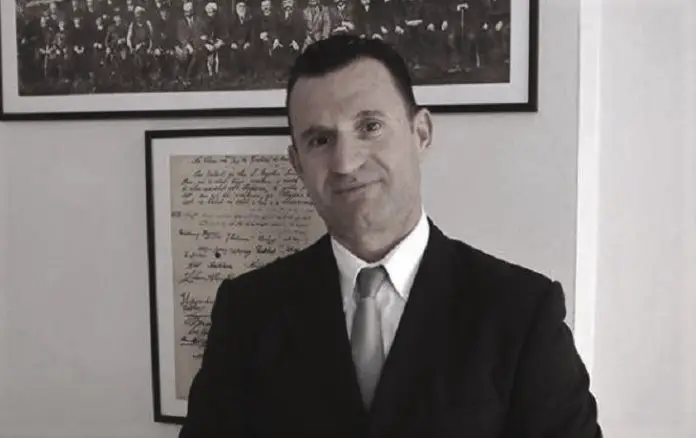
…Now, since the year 2000, the “Cakrani Brothers” Foundation has been re-established, and the two memoir books, “Memories of a Signatory” and “The Truths of My War,” written by the father, Hajredin Cakrani, and the son, Kadri Cakrani, of special importance, a treasure among the works of National Memory, come to us for the first time, as discoveries thanks to their descendant, lawyer Kujtim Cakrani. His work, passion, persistence, inherited courage, is like a revival, not only of his Great Family.
He is also engaged professionally in uncovering and condemning the crimes of communism, even morally, although an Albanian Nuremberg Trial has been lacking. Recently, he has taken a special initiative, I would say wonderful; he has sued state institutions, i.e., the state, asking why the authentic Document of the Declaration of Independence of Albania in 1912 is not present and cannot be found, where one of the signatories is: his great-grandfather. His concern surpasses the familial one; it is a concern for the entire Family of the Homeland.
According to lawyer Kujtim Cakrani, that document is like the property deed of a house; we have the common house, Albania, but we do not have the document. Where is it? Why is it hidden? Why can it not be found? He has discovered that until 1944, that foundational document was kept in the Safe of the National Bank of Albania, and when the victors took the keys, that document disappeared and a forged one was used, where many signatures had been erased, those who had placed them having been killed or imprisoned by the regime, and signatures were added of those who were not at the Declaration of Independence, e.g., the uncle of the dictator Enver Hoxha.
Lawyer Kujtim Cakrani, in the name of all Albanians, for Albania, even if not declared so, seeks the Document of our Independence. A high, magnificent act, a continuation of the path of his ancestors. Although that document is in the blood of Albanians, in the air of the homeland, it is even a bronze monument in the capital, with signatures like interrupted paths, but united by the great, historical deed. We and the state are free and independent, as much as this document is truly within us. Memorie.al