Part Eleven
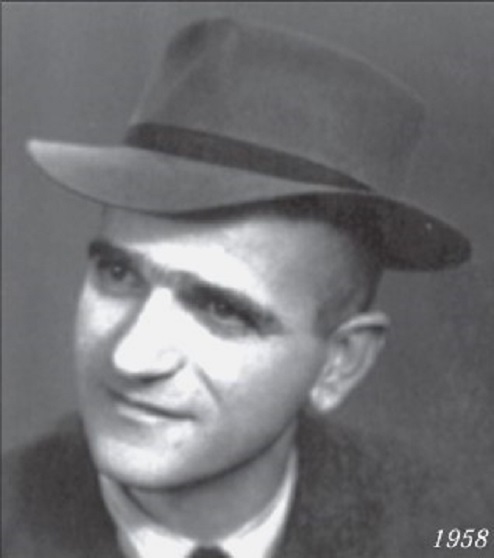
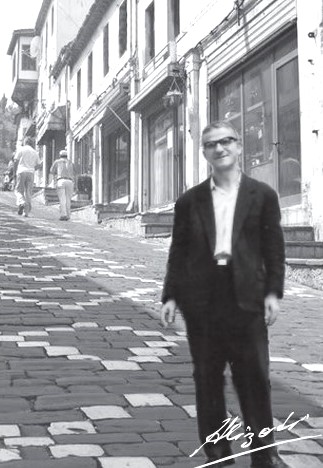
Excerpts from the book: ‘ALIZOT EMIRI – The Man, a Library of Noble Wit’
A FEW WORDS AS AN INTRODUCTION
Memorie.al / Whenever we, Alizot’s children, shared “Zotia’s” (Alizot’s) stories in joyful social settings, we were often asked: “Have you written them down? No? What a shame, they will be lost…! Who should do it?” And we felt increasingly guilty. If it had to be done, we were the ones who should do it. But could we write them?! “Not everyone who knows how to read and write can write books,” Zotia used to say whenever he leafed through poor-quality books. As we, Zotia’s children, discussed this “obligation” – this Book – we naturally felt our own inability to complete it. It was not a task for us! By Zotia’s “yardstick,” we were incapable of writing this book.
– IMPRESSIONS AND MEMORIES OF ALIZOT EMIRI –
EVANTIA ZIKU
ALIZOTI IN BUDAPEST
I was astonished when our daughter, Almira – Alizot Emiri’s granddaughter – told me excitedly over the phone that, by chance in Budapest, she had met a Greek woman whose family in Greece held an unforgettable memory of her grandfather, Alizot Emiri!
How could this be?!!
Alizot had no connections there; he had never even been to Greece!
Furthermore, since childhood, we had heard of the massacres and horrors caused by the Greeks in southern Albania. In Gjirokastra, the bitter memory of those atrocities has been passed down. We always looked at the open hole at the foot of Çerçiz Topulli’s monument, caused by a burst of gunfire from armed Greek bands in Gjirokastra.
“Try to clarify why they hold such respect for your grandfather,” I instructed my daughter. “It might be something interesting to include in the book of memories for Alizot.”
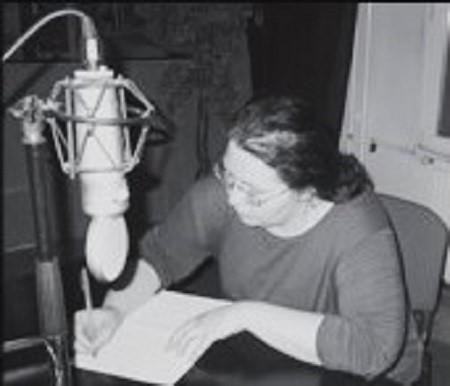
The daughter of Mr. Jorgji Ziko (Zikos Georgios), Ms. Evantia, is an announcer and music program editor at Radio Tilos (Tilos – Forbidden) in Budapest, Hungary.
This radio station presented a music program at a cultural center in Budapest. Surprisingly, the music was Balkan. Almira, as the director of the artistic activity at this cultural center, was particularly pleased and went to congratulate the organizers, telling them she was Albanian and that the program felt as if it had been prepared just for her…! They told her that the person who formulated the program was also from those parts.
She went to meet her at Radio Tilos, thinking she would “discover” an Albanian woman. She met a lady. Her name was Evantia; she was Greek.
“Oh, how wonderful, we are neighbors!” Almira said, leaving it at that.
“I am Albanian, from Gjirokastra, my name is Almira Emiri!”
“From Gjirokastra?! In Gjirokastra, our family in Greece has an unforgettable memory!” Ms. Evantia replied enthusiastically. “The name of a good man called Alizot Emiri is engraved in our family memory!”
“My grandfather!” Almira burst out.
“How is it possible…?!”
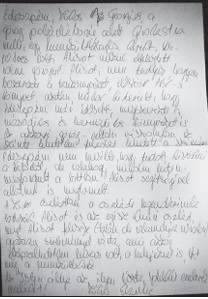
Ms. Evantia gladly accepted to write down this memory, which evokes respect and kindness. Born and raised in Budapest, Ms. Evantia wrote it in Hungarian.
The Emiri Family, Part of the Legend
(Original Hungarian text preserved)
Édesapám Zikos Georgios a görög polgárháború alatt Gjirokaster mellett egy menekült táborba került, körülbelül 10 éves volt, Alizot nélkül elfelejtett volna görögül. Alizot nem tudjuk hogyan, beszerezte a tankönyveket, elöszõr abc-s könyvet aztán amikor kiderült hogy édesapám már idõsebb, megszerezte a másodikosok és harmadikos könyveket is. Az akkori görög albán viszonyban ez szinte lehetetlen feladat lehetett a számára. Édesapám nem mesélte el hogy tudott kiszökni a táborból, de valahogy minden héten megfordult a boltban, Alizot segitségével albánul is megtanult. A Zikos családban családi legendánkban tartózik Alizot és az egész Emiri család mert Alizot felesége talán vagy valamilyen nõrokon) gyakran süteményel várta, ami akkor elképzelhetetlen lukszus volt a helyieknek is, hát még a menekülteknek. Isten áldja az ilyen tiszta és jó emberek emlékét.
Evantia Ziku, Budapest March 7, 2011
[Translation of the testimony:]
My father, Zikos Georgios, during the Greek Civil War, was sent to a refugee camp in a village near Gjirokastra. He was only 10 years old, and without Alizot, he would have forgotten Greek. Alizot – we do not know how – found him Greek books; first an ABC book and later, when he realized he was older, he found second or third-grade books.
Given the Albanian-Greek relations at the time, this was an almost impossible task for him (Alizot). My father never told us how he managed to slip away from the refugee camp, but every week, he was at Alizot’s shop. With his help, he also learned Albanian.
In the Zikos family, Alizot and the Emiri family are part of our family legend, because Alizot’s wife (or perhaps another female relative) often prepared sweets for him. Such humane behavior is inconceivable because, even for the locals, these were luxury items, let alone for refugees.
May God bless the memory of such pure and good people? / Memorie.al
Evantia Ziku, Budapest, March 7, 2011