By Prof. Dr. Aleksandër Meksi
Part Two
Memorie.al / Throughout the centuries, Mirdita, with the Holy Mountain (Mali i Shenjtit) rising above Orosh, has been a center of great veneration for the Christian population, not only of the region but also beyond. This speaks to the significance and renown of the local abbey and its role in history. Indirect evidence of this is found in the vast number of legends and stories associated with it, the saint, and the province.
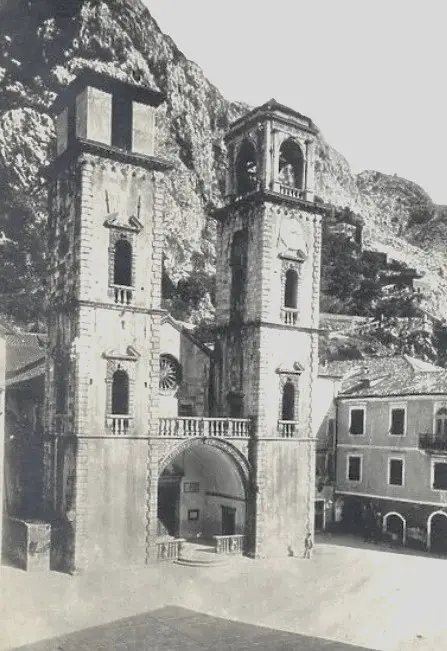
The first mention of an Albanian bishopric, “Lazarus episcopus Albanensis,” is encountered in the act of consecration of the Church of Saint Tryphon in Kotor in 1166. Alongside Lazarus, who consecrated the altar to the left of the main one, “Andreas prior Albanensis” also participated.
Continued from the previous issue
The creation of a new Bishopric under medieval conditions – breaking away from long-established ecclesiastical structures – cannot be understood without the support of a state power or a feudal lord. We are inclined to believe that this Bishopric must have been linked to a local feudal lord who, under certain circumstances, managed to create a principality. This act of independence was accompanied by the creation of a Bishopric to ecclesiastically administer his lands, which, we wish to emphasize, were part of medieval Arbëria (Albania), but not the entirety of it.
In the absence of data, it is difficult to determine to what extent political and religious circumstances influenced this new creation within the church’s administrative structures. However, we must also consider the desire of the rulers and prelates of Arber to align them with the Latin Church, specifically the Archbishopric of Bar (Tivar). It seems that, among other factors, the Abbey of Saint Alexander on the Holy Mountain – connected at the time with the Benedictines or Basilians – played a role, as did other Catholic abbeys like that of Rubik, whose church clearly demonstrates architectural links with the Catholic world.
The other issue we must determine, as far as possible, relates to the time this Bishopric was created. From what was mentioned above, it is understood that this occurred under specific political circumstances that favored such an action. That is, during a period of weakening – even if relative – of Byzantine power, while simultaneously seeking opportunities for alliances that could secure this act of “rebellion” by a local feudal lord, archon, or lord of a province.
Such was Andreas, who in the aforementioned ceremony is titled “Andrea prior Arbanensis,” if not his predecessors. As the lord of this province, Andreas managed to secure from his clergy the election of a bishop in the person of Lazarus, whose acceptance could only be granted by the Catholic Church – in this case, the Archbishopric of Ragusa (Dubrovnik). The inclusion of the Bishopric of Arber in the lists of suffragans of the Archbishopric of Ragusa is linked to an old notice from the Roman Curia dated 1181, where, for the first time, the Bishopric of Arber is mentioned among the suffragans of Ragusa.
This shows that after a period of hesitation regarding its recognition, the Bishopric managed to fully assert itself, testifying to the stronger position of the lords of this province and the clergy linked to Rome. The same is evidenced by the participation of the Archpriest of Arber in 1199 in a council held in Bar. From this time onward, throughout the High Middle Ages, mentions of the Bishopric or Bishops of the Diocese of Arbëria, under the jurisdiction of the Archbishopric of Bar, are not lacking.
Two other interrelated problems we wish to address are: the territory and the seat of this Bishopric, and whether the Bishopric of Kruja is identical to the Arbanense one? Many researchers have stated that the Bishopric of Kruja is the same as the Arbanense one, but preserved ecclesiastical documentation, although scarce, suggests otherwise.
In the absence of notices from the Patriarchate of Constantinople regarding the end of the 12th century and the first half of the 13th century, this thesis has been presented with ease. However, the presence of an Orthodox Bishopric in Kruja after these territories fell under the rulers of Epirus – precisely documented in 1216 – refutes this claim. Meanwhile, starting with Romanus Crohensis in 1279 and continuing until the 15th century, we always find two parallel lines of Catholic bishops in Arbëri and Kruja. While the former continued to depend on the Archbishopric of Bar, the Catholic Bishopric of Kruja depended on the Archbishopric of Durrës.
Supporting the thesis that the Bishopric of Kruja is distinct from that of Arbëria are the letter of Pope John XXII addressed to bishops Michael of Arber and Andrew of Kruja on June 6, 1318, and that of Pope Callixtus III from 1457, which distinguishes the Church of Saint Mary of Trafandina in the Diocese of Arber from Saint Veneranda of Kurbin in the Diocese of Kruja. Here we should note that when the Bishoprics of Central Albania converted to Catholicism, they were the same ones that the Orthodox Metropolis of Durrës had previously held – namely four – meaning Kruja was never replaced by Arbëria.
By determining that the Bishopric of Arbëria was distinct from that of Kruja, we have also separated their territories. To determine the territory of the Arbanense Bishopric, the location of three churches helps us, which, according to documentation, were under its jurisdiction. In 1166, in the known act of consecration of Saint Tryphon in Kotor, the abbot of the church of the Monastery of the Savior in Rubik (Sancti Salvatori Arbanensis) is mentioned, titled as such to distinguish him from the one in Bar, who was also present.
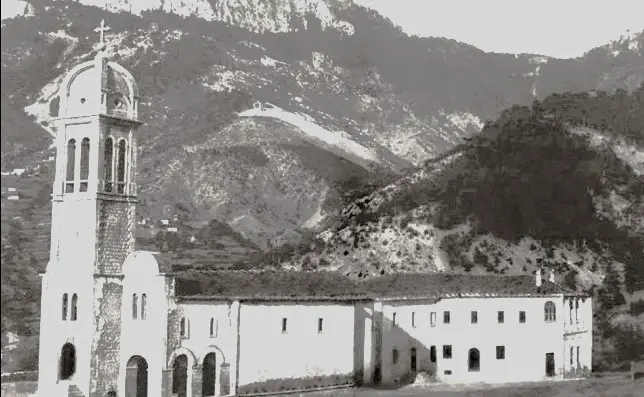
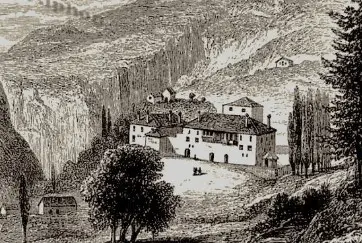
The second monastery is that of Saint Alexander (Shën Llezhdrit) in Orosh or on the Holy Mountain, the abbey known in documentation as “San Alexandri Maior de Albania” and “Sancti Alexandri diocezis Albanensis.” This should be distinguished from the other monastery of Saint Alexander in Bokian, above the village of Spiten, known in documents as “San Alexandri di Collematia,” which was under the jurisdiction of the Bishopric of Lezha. The third structure is the church of Gëziq, which is rightly identified with “Sancta Maria di Trafandina in diocesis de Albania.”
These three structures clearly define the extent of the Catholic Bishopric of Arbëria within the province of Mirdita in its traditional scope, bordering to the west with the highlands of Lezha (the Bishopric of Lezha), to the north with the region of Pult and its namesake Bishopric, and to the south and east with the territories of the Bishoprics of Stefaniaka and Kruja. Regarding the episcopal seat, given the importance of the Abbey of Orosh in this region and the fact that centuries later it is mentioned as a mitred abbey, we believe the seat should be sought precisely at Saint Alexander of the Holy Mountain.
The Bishopric of Arber must have been created with territories and churches that previously belonged to the Bishopric of Lezha and likely that of Stefaniaka. The roots of the dispute between the Bishoprics of Arbëria and Lezha over 12 churches should be sought in this fact – a dispute we learn of from a 1407 letter that Venice sent to the Pope, prompted by the intervention of Gjon Kastrioti, and which was repeated other times.
Thus, it results that the Arbanense Bishopric was created under specific historical conditions in the mid-12th century by the lords of the principality of the same name, becoming linked to and later included as a suffragan of the Archbishopric of Bar. Its territory – at least in the first period and that of the principality that created it – lay between the valleys of the Drin and the Mat, between the highlands of Lezha and those of Lura, while its neighbors were the Bishoprics of Lezha, Pult, Stefaniaka, and Kruja. Furthermore, we note that the Arbanense Bishopric does not ecclesiastically cover the entire medieval region of Arbanon, by which medieval documentation implies the lands inhabited by Albanians.
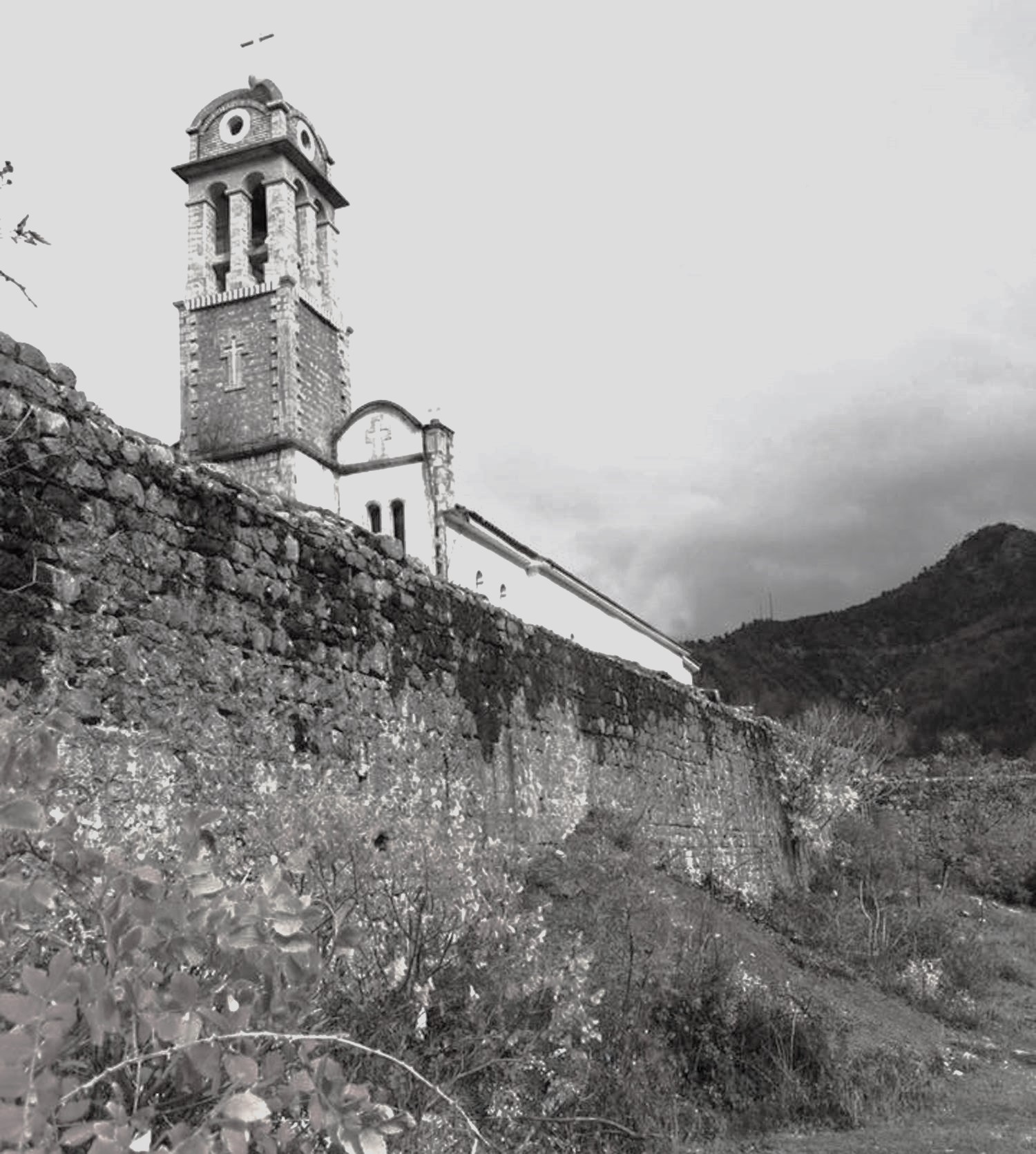
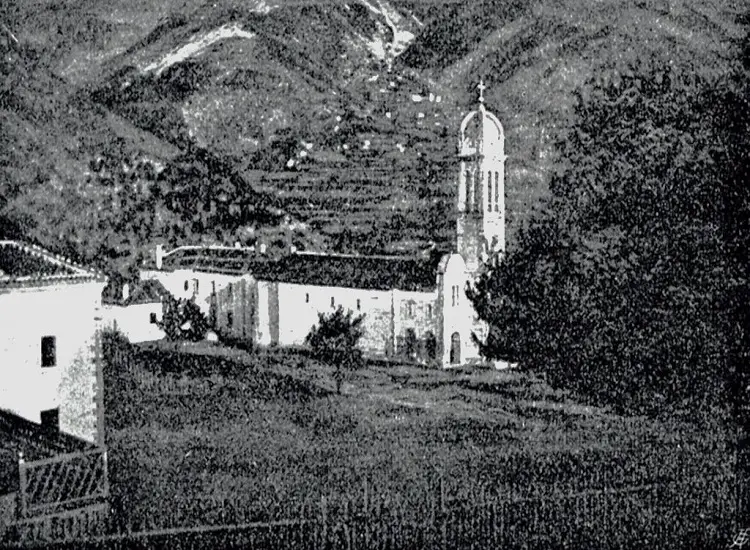
The most important monument of this bishopric remains the ruins of the Abbey of Saint Alexander on the peak of the Holy Mountain, built and rebuilt several times over the centuries, burned and ruined several times by the Turks and for the last time by the communists in the year of madness, 1967. For centuries, they were a place of veneration and pilgrimage for the Christians of Northern Albania. Foreign travelers and researchers who visited it at the end of the 19th century speak, among other things, of two old crosses: one dated 1447 with Latin inscriptions donated by Pal Dukagjini, the ruler of the province; the other, older, with Byzantine reliefs and writings, indicating the earlier period of the monastery.
This was when the church followed the Orthodox rite and depended on the Metropolis of Durrës. Of even greater interest to believers was the silver reliquary, decorated with precious stones, said to hold the head of the Saint and a nail from the True Cross. All of these were lost in the fire that broke out at the end of the 19th century. Precisely from this early period, the toponym Orosh remains, from the word for “mountain” in Greek (oros), the language of liturgy for the Orthodox monks there, at least in the 11th-12th centuries.
As is known, in the ruins of the church named Gëziq (Sancta Maria di Trafandina in diocezis de Albania), the famous construction inscription was found with the names of the rulers of the Principality of Arber, Demetrios and Progon (1190-1216), along with their coat of arms—a single-headed eagle with wings raised. Additionally, there is historical documentation and acts of trade agreements that speak of other rulers of the principality of Arber, testifying to its importance during the middle Ages and its significant role in the history of Albania.
But we wished to dwell on the use of this coat of arms, with very few changes, by the famous Dukagjini family, which, for us, is the successor to the first leaders of the Principality of Arber. Their name also gave the name to the province of Dukagjin, which later expanded to the north and north-east, a result of the expansion over time of the family’s holdings.
During the Turkish occupation, the ecclesiastical organization underwent many changes under the difficult conditions of operation and Islamic pressure. Some episcopal centers changed, some were suppressed, others merged, and boundaries between them shifted or seats were relocated. The Bishopric of Arber, which is no exception to these phenomena, is encountered in historical documentation until the last bishop, Mark Skurra (year 1644). Meanwhile, in 1638, the Vatican transferred the former churches of Mirdita under the jurisdiction of the Bishopric of Lezha.
In this view, taking the opportunity, we wish to correct the opinion of official Albanian historiography that the Assembly of 1602 was held in the village of Dukagjin in Mat, where there is also a church of Saint Alexander. In the letter that the leaders of Albania gathered there sent to Venice, it is stated quite clearly: “nel paese di Dukagini a Sant Alessandro” and when the date is given: “…di San Alessandro della provintia di Dukagini.” Furthermore, in the listing of participating leaders, those of Dukagjin are listed first, followed by others, including those of Mat, in a very clear alignment from North to South.
Similarly, the abbot of Saint Alexander is mentioned. And there is no reason to be surprised here, because the province of Mirdita was secure; the abbey of the Holy Mountain held a special position of veneration and respect from the Christian believers of Northern Albania. We have tried to highlight and evaluate an important monument of our history in a province that wrote brilliant pages in the history of the Albanian people during the middle Ages. / Memorie.al