




By Dashnor Kaloçi
Part sixteen
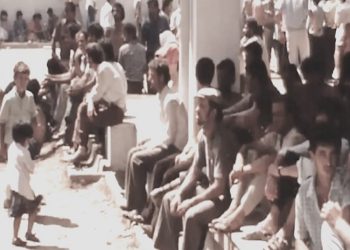
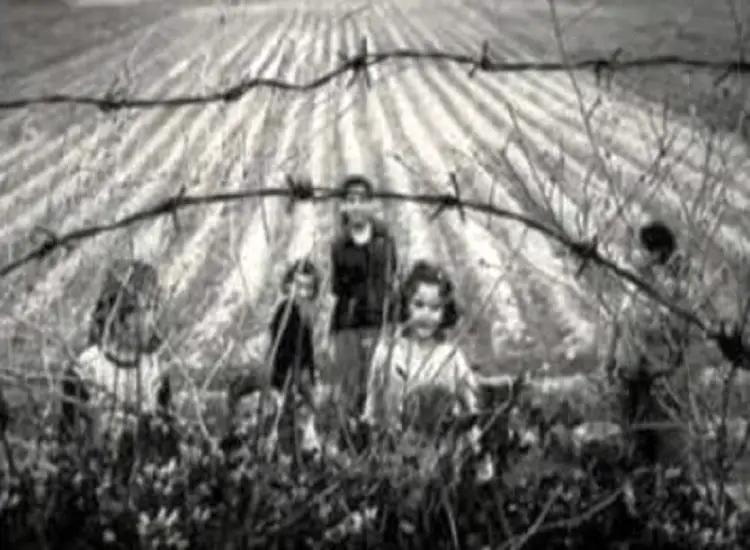
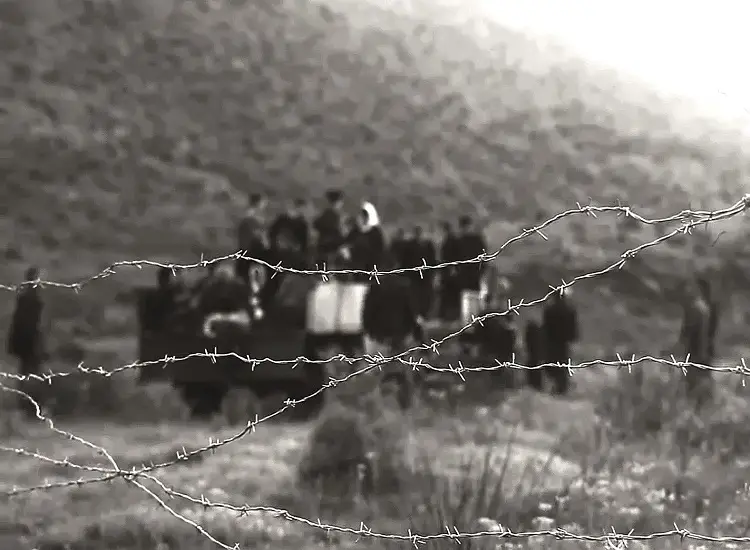
Memorie.al / From 1944, when it came to power, until the end of 1990, the communist regime of dictator Enver Hoxha and his successor Ramiz Alia – based on the theory and “teachings of Marx, Engels, Lenin, and Stalin” as well as the ideology they devised and applied across nearly half the world – continuously waged class warfare, executing, imprisoning, or interning their political opponents. In this context, starting from December 1944, when Enver Hoxha and the government he headed descended from the mountains and took power, alongside executions with and without trial, the internment of tens and hundreds of families began. These were families they considered “overthrown classes” or accused of being “enemies of the people” – mainly wealthy or middle-class families, former officials of King Zog’s Monarchy, who during the occupation period had joined or supported the nationalist organizations “Balli Kombëtar” or “Legaliteti.”
This punitive “practice” of internment and deportation would also be applied to hundreds upon hundreds of communists (ranging from the simplest members to former members of the Political Bureau of the Central Committee of the APL), deputies, ministers, military officers, and high-ranking officials, along with their families, whom Enver Hoxha and the communist regime in power would declare “traitors, revisionists, enemies of the people,” etc. From 1944 until 1949, decisions for internment and deportation were made by the “Commission for Deportations and Confiscation of Assets,” which operated under the Ministry of Internal Affairs. In the following years, this commission changed its name several times until 1954, when it was placed under the jurisdiction of the Prime Ministry and named the “Internment-Deportation Commission,” which functioned regularly until 1990.
From 1954 until 1974, the chairman of that commission was Beqir Balluku, a member of the Political Bureau of the Central Committee of the APL, who held the position of Minister of People’s Defense and simultaneously that of Deputy Prime Minister in the government headed by Mehmet Shehu. The vice-chairman of the commission was the Minister of Internal Affairs, Kadri Hazbiu, while the members included the Attorney General Dhori Panariti and the Chairman of the Supreme Court, Aranit Çela. (After the sentencing of Beqir Balluku in 1974, the role of Chairman of Internment-Deportations was taken by Deputy Prime Minister Manush Myftiu, and after the sentencing of Kadri Hazbiu, the role of vice-chairman was taken by Hekuran Isai).
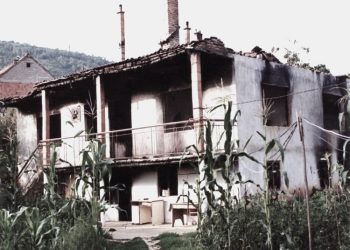
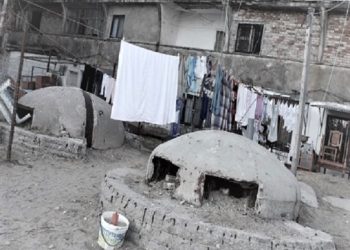
During its entire period of existence and operation, this commission issued hundreds and thousands of decisions, deporting and interning thousands of persons who were forcibly removed from their places of residence and compelled to live in remote villages and areas of the country, from south to north. The villages containing internment camps were primarily designated by the government in the Myzeqe area of Lushnje and Fier (Savër, Çermë, Bedat, Grabian, Gradisht, Plug, Gjazë, Zhamë, Sulzotaj, Kryekuq, Karavasta, Shtyllas, etc.) – specifically in the central part of the country – to keep them as far as possible from the state borders to prevent escape from Albania.
Based on the relevant law under which the Internment-Deportation Commission operated, a person or a family was initially interned for five years, but these terms were repeated, being extended every five years. As a result, entire families – mainly from Northern Albania, such as the Gjonmarkaj of Mirdita; the Kaloshi, Sina, Alia, Dema, Dine, Mena, and Ndreu of Dibra; the Bajraktari and Kolgjini of Kukës; the Kola, Allamani, and Sulkurti of Mat; the Merlika, Kupa, and Bami of Kruja; the Mirakaj of Puka; the Radi and Gjekaj of Shkodra; the Pervizi of Kurbin; and the Mulleti and Petrela of Tirana; or those from the South of the country, such as the Dosti of Gjirokastra; the Frashëri and Çela of Përmet and Kolonja; the Staravecka of Skrapar, etc. – remained in internment locations until 1991, when the communist regime collapsed. In fact, some of them remained there for many years afterward, as they had nowhere else to go, having no corner left to shelter their heads!
Regarding the above, Memorie.al has secured a voluminous file from the Archive of the Ministry of Internal Affairs (bearing the “Secret” stamp, but long since declassified), containing the decisions of the Internment-Deportation Commission, which we are publishing in full along with the relevant facsimiles. These include the names of the individuals and families who were deported and interned, as well as the specific charges against each of them.
Continued from the previous issue…
DECISION NO. 53 OF THE COMMISSION FOR INTERNMENT AND EXPULSION
PEOPLE’S REPUBLIC OF ALBANIA TOP SECRET
COMMISSION ON INTERNMENT AND EXPULSION Tirana, 21.XI.1967
DECISION No. 53
The Internment-Expulsion Commission, convened on 21.XI.1967, in support of the decree of the Presidium of the People’s Assembly, No. 1906, dated 2.8.1954, after studying the materials and proposals submitted by the Ministry of Internal Affairs,
DETERMINED:
To transfer from the Vlora district to the Berat district, the following internees:
- Kristo Thoma Buda, born in 1925, born in Postenan, Kolonjë district and resident in Tirana, clerk, middle class, expelled from the Party.
He was interned by decision No. 78, dated 25/11/1961, for 5 years.
By decision No. 50, dated 29/X/1965, his term of internment was extended for another 3 years.
His internment began on 29/X/1966 and ended on 29.X/1969.
- Mark Ndue Ndoja, born in 1912, born in Puka and residing in Tirana, clerk, with higher education, married with 3 children, middle class, expelled from the Party.
He was interned by decision No. 49, dated 25/XII/1964, for 5 years.
His internment began on 25/XII/1964 and ended on 25/XII/1969.
VICE-CHAIRMAN OF THE COMMISSION CHAIRMAN OF THE COMMISSION
KADRI HAZBIU ————————
MEMBERS
PROSECUTOR GENERAL PRESIDENT OF THE SUPREME COURT
LEFTER GOGA ARANIT ÇELA
DECISION NO. 54 OF THE COMMISSION FOR INTERNMENT AND EXPULSION
PEOPLE’S REPUBLIC OF ALBANIA TOP SECRET
COMMISSION ON INTERNMENT AND EXPULSION Tirana, 4.XII.1967
DECISION No. 54
The Internment-Expulsion Commission, convened on 4.XII.1967, in support of the decree of the Presidium of the People’s Assembly, No. 1906, dated 2.8.1954, after studying the materials and proposals submitted by the Ministry of Internal Affairs,
DETERMINED:
For the reason that they pose a social danger, to internecine for 5 years, the following persons:
- Ilia Gavril Kuqi, born in 1915, born and residing in the city of Elbasan, middle class, married with one child, butcher by profession.
To be interned in the village of Belsh, Elbasan district
- Eftali Miti Shkira, born in 1921, born in Alarup, Pogradec district and residing in the city of Korça, poor class, working class, is disabled, married and now a widow.
- Kostandin Serafin Shkira, born in 1947, born in Sovjan and resident in the city of Korça, poor class, with 3rd year university education, state scholarship, son of Eftalia.
To be interned in Zerec, Korça district.
- Haxhi Gjoka, born in 1915, born in the village of Gjokaj and resident in the city of Tirana, wealthy class, with primary education, matrapaz, married.
- Kasianije Petrit Gjoka, born in 1923, born in Shkodër and resident in Tirana, wealthy class, housewife, wife of Haxhi.
- Ilir Haxhi Gjoka, born in 1951, unemployed, with primary education, son of Haxhi.
To be interned in the village of Shënpal, Tirana district.
- Lutfi Qazim Hambari, born in 1917, born in Dibër, Yugoslavia, residing in Tirana, of Albanian nationality and citizenship, with 7 years of education, unemployed, unmarried.
To be interned in Gjazë, Lushnje district.
- Kasandra Vasil Gjinopulli, born in 1918, born in the village of Sopik, Gjirokastër district, residing in the city of Gjirokastër, middle class, primary education, with Greek minority nationality and Albanian citizenship, housewife.
- Fridheriqi Thimio Gjinopulli, born in 1946, with secondary education, worker, daughter.
- Kristaq Thimio Gjinopulli, born in 1950, unemployed, son.
To be interned in Prongji, Gjirokastër district.
The internment began on December 4, 1967 and ended on December 4, 1972, for 5 years.
VICE-CHAIRMAN OF THE COMMISSION CHAIRMAN OF THE COMMISSION
KADRI HAZBIU ————————
MEMBERS
PROSECUTOR GENERAL PRESIDENT OF THE SUPREME COURT
LEFTER GOGA ARANIT ÇELA
DECISION NO. 55 OF THE COMMISSION FOR INTERNMENT AND EXPULSION
PEOPLE’S REPUBLIC OF ALBANIA TOP SECRET
COMMISSION ON INTERNMENT AND EXPULSION Tirana, 4.XII.1967
DECISION No. 55
The Internment-Expulsion Commission, convened on 4.XII.1967, in support of the decree of the Presidium of the People’s Assembly, No. 1906, dated 2.8.1954, after studying the materials and proposals submitted by the Ministry of Internal Affairs,
DETERMINED:
For the reason that they do not pose a social danger, to be released from internment:
- Hysnije Emin Jemini, born in 1950, born in Tirana, interned in Seman, Fier, by decision No. 28, dated 19.4.1964, for 5 years.
- Ali Riza Zaimi, born in 1920, born in Verlec, Korça and resident in the city of Vlora, interned in Petë, Vlora, by decision No. 44, dated 12.8.1966, for unworthy behavior in society.
- Kadri Brahim Koka, born in 1940, born and residing in the village of Letaj in Kukës, interned in 1961, and by decision No. 9, dated 17.3.1964, the measure of internment is converted into deportation, for another 5 years.
- Mariana Nikolla Plasoti, born in 1940, born in Korça, interned in Thumanë in the Krujë district, by decision No. 8, dated 2.3.1961, for 5 years, by decision No. 10, dated 8.3.1966, it is extended for 3 years.
VICE-CHAIRMAN OF THE COMMISSION CHAIRMAN OF THE COMMISSION
KADRI HAZBIU ————————
MEMBERS
PROSECUTOR GENERAL PRESIDENT OF THE SUPREME COURT
LEFTER GOGA ARANIT ÇELA
DECISION NO. 56 OF THE COMMISSION FOR INTERNMENT AND EXPULSION
PEOPLE’S REPUBLIC OF ALBANIA TOP SECRET
COMMISSION ON INTERNMENT AND EXPULSION Tirana, 4.XII.1967
DECISION No. 56
The Internment and Deportation Commission convened on 11.11.1967 in support of the decree of the Presidium of the People’s Assembly No. 1906 dated 2.8.1954, after studying the materials and the proposal submitted by the Ministry of Internal Affairs.
DECIDED:
- Din Vesel Dauti, from the village of Golaj in the district of Kukës, interned in Borsh in Saranda, by decision No. 56, dated 21.11.1963, to be transferred to Savë in the district of Lushnje.
His internment begins on 21.11.1963 and ends on 21.11.1968, for a period of 5 years.
VICE-CHAIRMAN OF THE COMMISSION CHAIRMAN OF THE COMMISSION
KADRI HAZBIU ————————
MEMBERS
PROSECUTOR GENERAL PRESIDENT OF THE SUPREME COURT
LEFTER GOGA ARANIT ÇELA
DECISION NO. 57 OF THE COMMISSION FOR INTERNMENT AND EXPULSION
PEOPLE’S REPUBLIC OF ALBANIA TOP SECRET
COMMISSION ON INTERNMENT AND EXPULSION
DECISION No. 57
The Internment and Deportation Commission, convened on 25.XII.1967 in support of the decree of the Presidium of the People’s Assembly No. 1906 dated 2.8.1954, after studying the materials and the proposal submitted by the Ministry of Internal Affairs,
DETERMINED:
- Ismail Hetem Spahiut, born in 1922, from Kolesjani in the Kukës district, interned in Lushnje, by decision No. 85, dated 25.12.1962, to be returned to deportation for a period of 5 years, on the grounds that his release poses a social danger, prohibiting him from circulating in all border districts, as well as in Tirana and Durrës.
His deportation begins on 25.12.1967 and ends on 25.12.1972 for a period of 5 years./Memorie.al
VICE-CHAIRMAN OF THE COMMISSION CHAIRMAN OF THE COMMISSION
KADRI HAZBIU ————————
MEMBERS
PROSECUTOR GENERAL PRESIDENT OF THE SUPREME COURT
LEFTER GOGA ARANIT ÇELA