By Luan Rama
Part two
Memorie.al / The history of the Durazzo family is undoubtedly one of the most brilliant and extraordinary stories of the Albanian diaspora throughout the centuries. Firstly, because this history, which originates in the 14th century, has not only withstood time but also constitutes one of the most astonishing contrasts. In the book “Distant In-Laws” (Argeta, 2001), I wrote a chapter about the unique life and adventure of this family, which in 1389 – at the time of the “Battle of the Swans” of the Serbian-Albanian-Hungarian coalition against the Ottoman hordes – had set off from the shores of Durrës toward the northern Adriatic. Documents of the time confirm this history, passed down in this family from one generation to the next.
Continued from the previous issue..
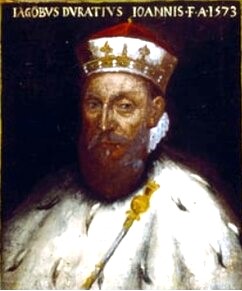
The Durazzo family was one of the noblest and greatest families in Genoa during the 16th-18th centuries and one of the most well-known Albanian families in all of Europe. The Durazzos were Albanians from Durrës. They left Albania in the 16th century and very quickly became masters of the Republic of Genoa. Generation after generation, they became the most famous people in Europe. They were senators, cardinals, diplomats, and advisors.
Many prominent people considered Giacomo Durazzo a “citizen of Europe,” and it can be said that he was among the most striking figures in this regard compared to his predecessors in the Albanian diaspora. He was an Italian-Albanian diplomat with a passion for the theater. In a publication on the life of Mozart, a French author also writes about the famous journey of Leopold Mozart with his son, Wolfgang Amadeus Mozart, who would land in Venice to give several concerts.
It was the year 1771, and this was their second journey, following the one a year earlier when the 14-year-old Amadeus had applied to register at the “Filarmonica di Bologna” academy, where its director had admitted him with the note: “sufficient.”
Now, they arrived after an itinerary of concerts given in Verona, Turin, and Milan. They reached Venice on February 10, after a seven-day journey. There, they were met by two of their friends, the merchant Giovanni Wider and Lorenz Hagenauer. In Venice, they spent a month visiting the charms of this city.
Abbot Giovanni Ortes, a political writer, was at that time one of the most influential voices of the republic. He promised them that he would introduce them to the most famous man of music in that city, Count Durazzo. Count Durazzo gave them a special reception at his residence, in the “Loredan” palace on the “Grand Canal,” where Durazzo resided.
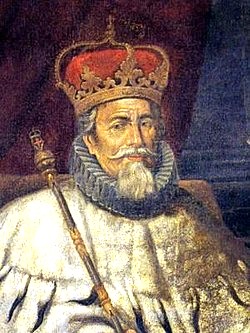
The palace where Durazzo received his guests is called so because it was built by the Doge of the Republic, Leonardo Loredan, and it was truly magnificent. The gifts were many. The water of the lagoon had crossed the threshold of the gate, and the lower floor had long been flooded.
A typical Venetian building with a wonderful facade, two carved balconies with arches, and two marble statues set into the wall. Later, this building would be called by the Venetians “The Ambassador’s Palace,” in memory of the famous ambassador Durazzo.
In Durazzo’s time, “Venetia,” as Venice was then called, was still experiencing hours of glory. Venice was more of a historical and cultural reference for all the intellectuals of Europe. Music, rich collections of Italian, Flemish, and Spanish paintings, the “Arsenal” where the famous Venetian ships were built, the amazing architecture of the city – everything attracted travelers from all over the world here.
Foreign ambassadors, as well as Durazzo, had special large gondolas at their disposal, decorated with velvet, which took them to the Doge’s Palace or to “San Marco” square, to the central cathedral, to the “Fenice” theater, along the Grand Canal, or as far as Mestre, where Durazzo had his villa outside the city.
The Venice of carnivals and masks was regarded at that time as the city with the largest number of prostitutes in the world in proportion to its population – a great crowd of “putti e putte,” courtesans and courtiers, who were characters in the plays or comedies of Goldoni, a friend of the Durazzos.
At that time, Mozart had been proposed to write the music for the libretto by the French writer Jean-Jacques Rousseau, “Le Devin du Village” (The Village Soothsayer), otherwise known as “The Love of Bastien and Bastienne.”
Undoubtedly, Durazzo and Mozart discussed this piece, as a few years prior; Count Durazzo had attempted to stage it in the Theaters of Vienna. Moreover, after negotiations with Rousseau, he had engaged the librettist Favart of the Opéra-Comique in Paris for a burlesque parody based on the piece by the French writer and philosopher.
For Leopold and his son, Count Durazzo was an important figure in the European musical world, having directed the theaters of Vienna for ten consecutive years. He had been a very close friend of the composer Hasse, about whom Mozart would write in one of his letters that year, on November 2:
“Today the opera ‘Ruggiero’ by Hasse is being performed, but since my father will not go out, I cannot hear or see this opera either. Fortunately, I know all its arias by heart. Thus, even closed at home, I can hear and see everything in my mind.”
On March 5 of that year, Count Durazzo would hear the concert of the 14-year-old young instrumentalist, who had already become famous in all the European princely courts for his talent and virtuosity. The concert was received with great applause by the entire Venetian aristocracy, with Durazzo, of course, in the front row. “Viva il Maestrino!” (Long live the little Master!), the nobles shouted.
All of Venice spoke of the astonishing talent of the instrumentalist Wolfgang, who at that time was also writing a theatrical serenade requested by the Empress of Austria herself, Maria Theresa. Precisely this year, Amadeus had created various symphonic pieces, which he demonstrated and performed in the settings and theaters of Italy and Europe. These were the symphony in D major K. 81, K. 89, the symphony in G major K. 111/120, K. 96, the famous overture “Ascanio in Alba,” or “Mitridate.”
We do not know if Count Durazzo wrote anything about the genius Amadeus, who would later shake the world with his music. On March 12, Amadeus and his father left Venice and departed for Salzburg. Venice was a capital of culture where famous personalities of European culture met.
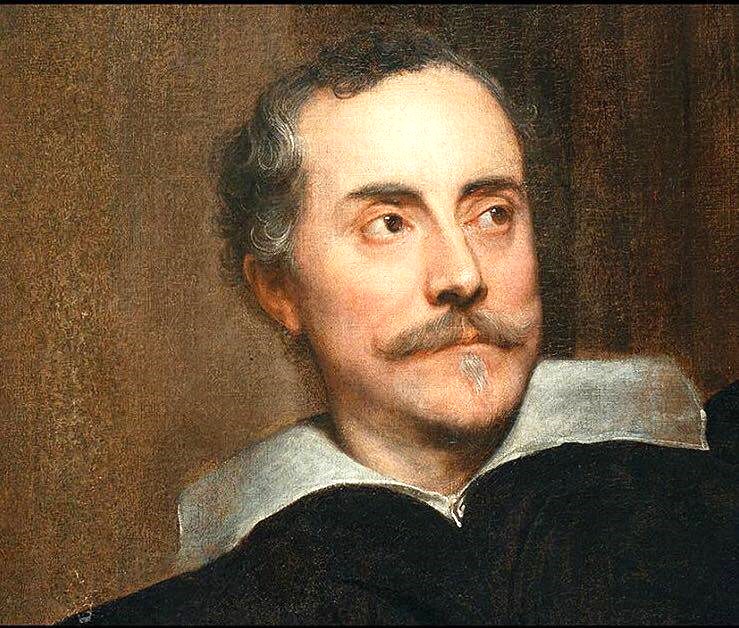
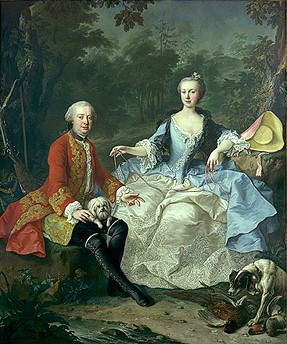
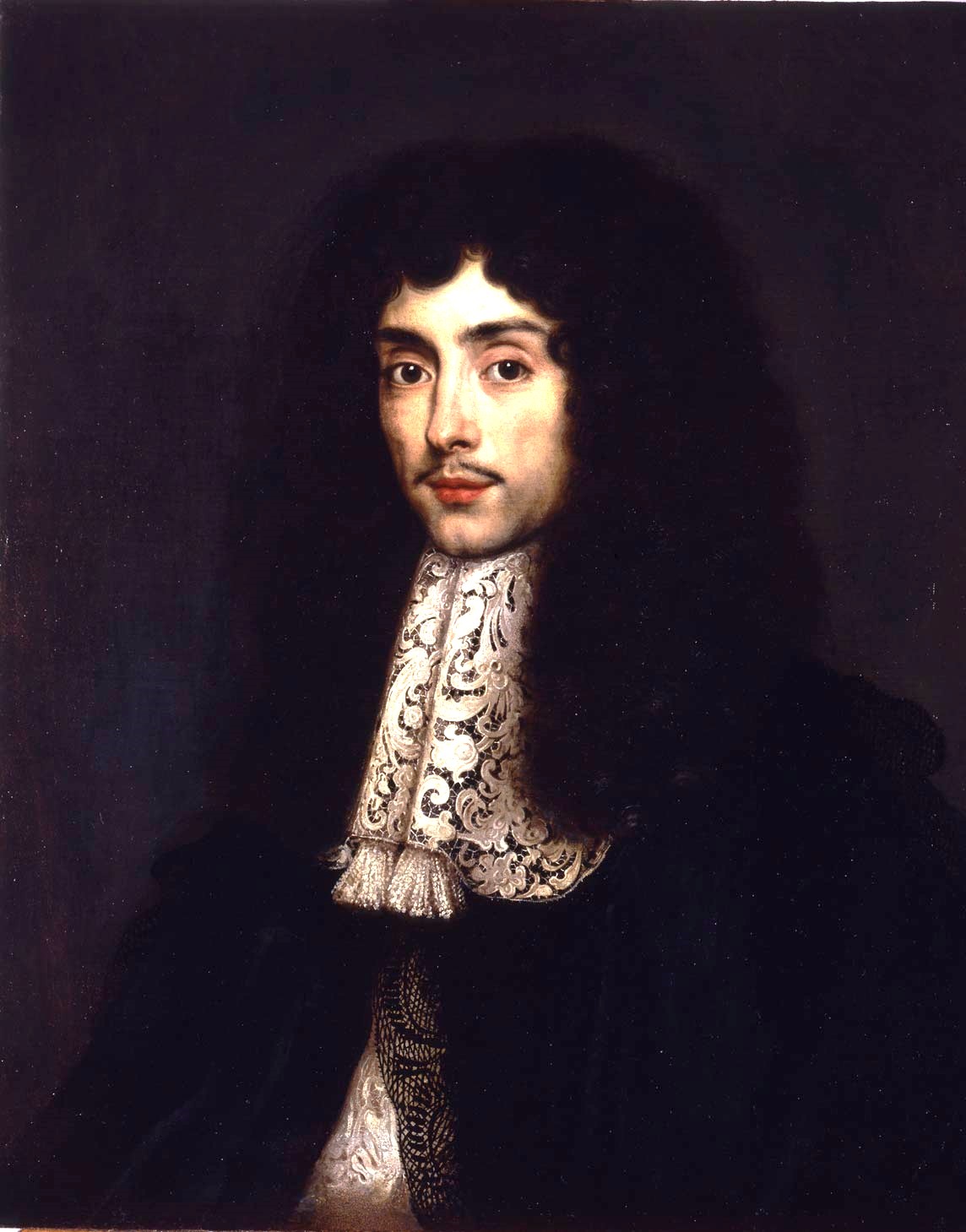
Also in Venice, Count Durazzo would be followed by his old friend, the painter Joseph Wagner, who, in addition to his portrait, would paint several other artists, among them their mutual friend, the famous castrato Farinelli, otherwise known as Carlo Broschi.
Giacomo Durazzo was also a great amateur not only of original scores by great authors and other music books, but also of engravings and graphics. His collection was amazing and of colossal value, as he put all his wealth into them, so much so that in the end, he became in need of money.
His library was divided among the family, but after the political and economic decline of this family, the library would end up in the “Foa-Giordano” fund of the National Library of Turin. Durazzo left the embassy of Venice in 1784 and dedicated himself to art.
It was during this period that he prepared a dictionary of drawing artists, where he collected prints from the greatest painters of Italy and Europe, including many drawings by the famous painter Mantegna.
Ten years later, on October 15, 1794, he died, leaving behind an extraordinary collection, especially the paintings, his rich library, and, above all, his collection of “prints” – wonderful engravings by great masters, collections well-known in the metropolises of Europe. This wealth would be divided among other family members, as he had no direct heirs.
As Angela Durazzo writes in her book, “I Durazzi, da schiavi a dogi della Repubblica di Genova” (The Durazzos, from Slaves to Doges of the Republic of Genoa), his library in Venice contained 25,000 titles, about 2,500 of which were old books and codices he had bought and collected over the years. Among them were 27 musical volumes, scores with red covers, most of them with the original autographs and writings of the authors.
He even possessed the greater part of Vivaldi’s creative work, which he had bought from the musician’s brother, Francesco Vivaldi – particularly pieces of his sacred music, compositions, and concertos, “andantes,” most of which were written for the “prostitutes” of the city gathered at the “Ospedale della Pietà.” This alone would be enough to make him an “Honorary Citizen” of Venice./Memorie.al