Memorie.al / Leo Freundlich, the Jew who protested against the mass extermination of Albanians by Serbians in 1912-1913. The Holocaust against Albanians: Serbs killed 500,000 people. His book “Screaming Accusations” (Die Albanische Golgatha) is the first testimony of the collective extermination of a European people prior to the Jewish Holocaust. The massacres undertaken by Serbs in Albanian territories. Over 250,000 Albanians massacred only in the ethnic north of Albania during the autumn of 1912. The only copy of Freundlich’s book “Screaming Accusations,” which contains the protest against a Europe that failed to react in defense of Albanians during the mass disappearance of the majority of the Albanian people in the Balkans was found in the Harvard University Library in the USA in 1982 by the U.S.-based researcher Safete Juka.
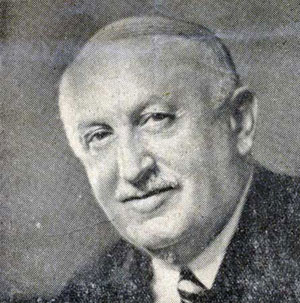
The Jewish writer Leo Freundlich, residing in Vienna, was one of the few intellectuals who maintained a collection of all the major newspapers of the time, which documented the extermination of at least half a million Albanians by Serbs in the years 1912-1913. Revolted, he raised his voice against what he called the “Albanian Golgotha,” which was accompanied by massacres of a type the world had never seen before. “I condemn the violence unjustly exercised against any people. He who does not do so today should not be surprised if tomorrow he himself becomes the victim of another Golgotha,” says the Jewish writer.
Only after 10 years, specifically in 1992, this book saw publication in three languages, thanks to the extraordinary assistance of the German Hans Peter Rullmann, residing in Hamburg. The English edition was made possible by Mr. Steve Tomkin, a Croat born in Kosovo. In Croatian, the book was translated and published by Dr. S. Leban, born in Bosnia. Meanwhile, the Albanian translation was carried out by Riza Lahi, under the sponsorship of Xhaferr Kastrati from Kosovo and the care of the “Eurorilindja” printing house in Tirana.
Serbia, “the cat that seeks to become a lion”
Following the Treaty of San Stefano, between a Turkey that lost successive wars and a victorious Russia, the Albanian nation was put at extraordinary risk, as the Balkan ally of the Tsarist Empire, Serbia, sought to expand its possessions to become a Balkan and European power, despite having a population of only 900,000 inhabitants. However, if Russian and Serbian aims in the Balkans failed until 1911, this was not due to the merit of the Turkish Empire, under which Albania was located, but simply due to the fact that Albanians, through the League of Prizren in 1878, did not permit such a thing and opposed it with arms. From 1906 to 1912, a series of Albanian uprisings for independence, mainly in the north of the ethnic Albanian territories, were suppressed with violence and barbarity by Turkish armies.
With the start of the Balkan War, Albania was half-desolated, and Serbian troops, in the name of the war against the Ottoman Empire, undertook a series of occupations accompanied by mass massacres against an entirely unarmed population, where according to the European press, 250,000 Albanians lost their lives. Meanwhile, there is reliable data that the figure could even be half a million. From 180,000 square kilometers with a population of about 2 million inhabitants counted within Albanian territories at the end of the 19th century, by the 1930s only 80,000 square kilometers of Albanian territory remained, and most of these were outside the Albanian state.
According to modern historians, the Slavic expansion, which was also accompanied by mass displacements and the disappearance of the ethnic populations of the aforementioned countries – equated with later communist expansion – took from the German, Hungarian, Albanian, Romanian, and Armenian peoples, etc., territories covering an area of about one million square kilometers, one-tenth of which belonged to Albanian territories. On the verge of the collapse of the rotten Ottoman Empire, the Albanian ethnicity lost more than half of its territories.
The regions of Tivar, Hoti, Gruda, Pazari i Ri (Novi Pazar), Sanxhak, Nish, the surroundings of Manastir – add to these the loss of the provinces of Janina and Chameria, which were depopulated or forcibly assimilated by Greece – constitute the most brutal anti-Albanian campaign of Slavic expansion against the oldest people in the Balkans and Europe. One of the books that shed light on the mass displacements of Albanians is Leo Freundlich’s historical book “Albanian Golgotha.” A witness to the Serbian crimes in 1912-1913 was also “Mother Teresa,” then a child. She saw with her own eyes how the Serbs poisoned her father, while other family members escaped by fleeing toward Tirana.
Albanians in a Holocaust before the Jews
(Notes by German journalist Hans Peter Rullmann)
In 1913, on Easter Sunday, just before the Balkan War broke out, a Viennese writer, the Israelite Leo Freundlich, published a book titled “Screaming Accusations” (Accusation Records). It includes accusatory documents narrating the mass barbarities committed by Serbs in the northern Albanian provinces no more than 80 years ago, or more accurately, about 30 years before World War II occurred. The first European Holocaust was planned and implemented by Serbia against the Albanian people. Leo Freundlich describes the events from mid-October 1912 to March 1913.
In a period of less than five months, the Serbian army and Chetnik gangs; “savagely and in the most anti-humane manner ever displayed by an occupier’s boot, committed indescribable barbarities. Hundreds of thousands of unarmed men slaughtered, women raped, elderly suffocated, hundreds of villages burned and razed to the ground.” During the European wars of the 18th and 19th centuries, there were never aims for the collective extermination of any nation. At worst, one country attempted to conquer another.
Before the Serbian war against the Albanians in 1912, no one had attempted to wipe out an entire people. In 1912, when the great catastrophe was happening to the Albanians, Freundlich had a premonition that Serbian rule against the existence of an entire nation had the proportions of a historical signal. He was aware that this sudden turn against civilization and the human spirit, as initiated by Serbia, would not fade in the future if the world did not punish it immediately.
Freundlich describes the massacre of Albanians
The way the Serbian army acted in 1912-1913 toward Albanians during the Balkan War constitutes the first case of a mass disappearance of one people by another. Although the Serbian Kingdom was notified that the International Boundary Commission would begin work to define borders as soon as the situation calmed, the army of this state ignored the warnings of the Great Powers and continued the occupation of non-Serbian territories. On October 22, 1912, Serbian infantry occupied the city of Prishtina in Kosovo. It then continued the attack in two directions: from the side of Skopje and the other from Prizren to enter toward the valley of the Black Drin. After a month, on November 20, 1912, the Serbs occupied almost all of northern Albania, and on November 29, 1912, the vanguard of this army was stationed in Durrës.
The Serbian war against the Albanians did not have a conquering character, but much more. It took on the character of ethnic cleansing and aimed to show the world within a short time that Albanians had disappeared from the Balkans. Precisely for this reason, they called the Albanians “Turks” and, with this justification, either displaced or massacred them. Freundlich describes the Serbian massacres in the autumn of 1912 – spring of ’13 in Albanian lands, Kosovo, and Macedonia as follows:
“Hundreds of thousands of massacred corpses floated in the river streams. Those who managed to escape disease; hunger, infantry bullets, and Serbian artillery shells were gathered in designated places and given a bullet to the head. Those hiding in their homes fared worse. After thorough searches for loot and gold, they were easily found and slaughtered like sheep. Albanian women suffered the greatest tortures; they were raped, then tied up, piled together, covered with straw, and burned alive. If they were pregnant, their bellies were ripped open with bayonets, and after the child was removed from the womb, it was placed on the tip of the bayonet or stakes. After the massacre, the Serbs drank wine, sang, and danced. There were cases where, during the slaughter, they collected blood in cups and opened the feast with it.”
Following the crimes, Edith Durham begins to hate the Serbs
During the time that Albanians were being massacred in their homes in ethnic Albania, the Englishwoman Mary Edith Durham worked for the “Macedonia Relief Organization.” When she first set foot in the Balkans, the English historian and anthropologist was an admirer of the Serbian people, like many others in the West. But as the member of the English Parliament, Aubrey Herbert, noted, “it was only the cruelty of the Serbs that turned her love into contempt.” After successive massacres, she decided to come out openly against the Serbo-Montenegrins: “I wrapped the gold medal given to me by King Nikola, making it clear that I could not accept a medal from those who were friends with Abdul Hamid and took his decorations and money.”
“I have understood,” Durham writes to the Montenegrin King, “that your followers are much crueler than the Turks, and I can no longer hold for a single moment decorations stained with the blood of the innocent.” She communicated her decision to the English and Austrian press. Since she had no opportunity to meet the Serbian King Peter, she told the English press that she would wait for a suitable occasion to return the Order of “Saint Sava” at the first meeting.
Data on Albanians before the Serbian massacres
Ami Boué, a French botanist, geographer, and geologist born in Hamburg, Germany, at the beginning of the 19th century, undertook a journey to the Balkans in 1836–’37, which at that time belonged to the Great Ottoman Empire. Upon returning to Germany in 1840, Boué summarized his travel impressions of Southeast Europe in four volumes, each with 400 large pages. His scientific accuracy was exceptionally valued even by the Serbs themselves.
Academician Aleksandar Belić wrote that; “Boué’s books are a true encyclopedia, which cannot be compared in accuracy to any other publication of this kind.” According to the scientist, Serbia in the first half of the 19th century had fewer than 900,000 inhabitants, while Albania had over 1,600,000 inhabitants. In his geographical analyses, ethnically pure Albania was a space of about 180,000 square kilometers. In the peninsula – always according to him – there were many more Albanians than Greeks and at least twice as many Albanians as Serbs.
Chronology of Serbian crimes against Albanians
- Spring 1912: About 6,000 Albanian families are forcibly displaced from the Niš area toward Turkey. At the same time, Montenegrin massacres begin in the Albanian regions of Hoti and Gruda.
- November 12, 1912: “Daily Chronicle” writes that 2,000 Albanians in the Skopje region and 5,000 near Prizren have been massacred en masse.
- December 1912: The Parisian newspaper “L’Humanité” writes that in Drenica and Palikura, all inhabitants were killed. In this place, a string of mass graves was discovered, some of which use human skulls as tombstones. At the end are the graves of those who were burned alive. During the massacres, 31 villages and towns are completely exterminated.
- 1913: 300 Albanians are massacred in the Luma region. The German newspaper “FRANKFURTER ZEITUNG” writes that children were burned in straw before their parents’ eyes, and then the parents were massacred with rifle volleys and bayonets.
- Spring 1945: 40,000 Albanians are killed in the Kosovo region under the pretext that they were anti-communists and sold out to the West.
- 1930: The forced assimilation of all Albanians of Sanxhak is completed.
- 1949-1950: About 300,000 Albanians are forcibly removed from the border areas of Eastern Kosovo and Serbia following a Turkish-Yugoslav agreement.
- 1989: Over 6,000 small Albanian children are poisoned in primary schools by the Serbian army.
- March 1998: 32 residents of the village of Raçak in Kosovo are massacred.
- March – June 1999: During the war in Kosovo, 1 million Albanians are expelled from their homes and over 12,000 women, men, children, and elderly are killed.
- 2000: Eastern Kosovo (Presheva, Medvegja, Bujanoc) remains occupied by Serbia, under a state of siege. Over 300 Albanians were killed from the summer of 1999 to the summer of 2000 in this region. / Memorie.al