
By Llambi Kotta
Part Three
Memorie.al / In November 2009, my home phone rang and a voice from afar introduced herself, saying: “I am Elida Jorgoni. Am I speaking with Mr. Llambi Kotta?” – “Speaking,” I replied. – “I wanted to ask you,” she continued, “what was your grandfather’s name?” – “Llambi Kotta,” I answered. – “Then,” she said, “I have finally found you; listen to me carefully. On the occasion of the celebrations dedicated to the 100th anniversary of the Second National Congress of Manastir, which took place from April 9th to the 11th, 1910, in the city of Manastir, an organizing committee has been established to direct and lead all the work to realize the entire program defined for the organization of the festivities. Among other things, the committee is trying to find and invite Congress delegates to participate in the ceremony, or in their absence, their descendants – sons or daughters.”
Continued from the previous issue
The two committee members sent to Alexandria on December 14, 1918, organized a meeting of the Albanians of Alexandria, where, among others, Llambi Kotta and Leonidha Naçi pledged to cooperate with the other members of the established Commission. After the temporary commission fulfilled the tasks defined by the meeting, it would strive as quickly as possible to organize a general assembly, which would elect another General (permanent) Commission or Committee, which would represent all Albanians settled in the land of Egypt for any matter pertaining to the national cause.
Another set of minutes dated December 8, 1918, was kept at a meeting organized in Cairo at the home of Filip Shiroka. The meeting decided to draft a Memorandum, which would be sent to the ambassadors of the allied states (England, France, and Italy – H.K.) of America in Cairo. The Memorandum would be drafted by a commission, of which Llambi Kotta was also appointed a member. This commission would deliver the Memorandum to the ambassadors of the aforementioned states. Furthermore, the meeting decided to send telegrams to the Ministers of Foreign Affairs of France, England, Italy, and America.
Telegrams were to be sent by agreement to the “Vatra” Society in Boston, Mr. Mehmet Bey Konica in London, Pandeli Cale in Lausanne, Pandeli Evangjeli in Bucharest, Kol Rodhe and Tefik Mborja in Rome, Kristo Luarasi in Sofia, Sotir Kota in Korça, and the “Bashkimi” Society in Shkodra. Telegrams were also to be sent to pro-Albanian figures: Herbert in London, Miss Durham in Boston, and Nerve in Paris. It was decided that two members of the Commission would go to Alexandria to talk and reach an agreement with the Albanian brothers there.
The minutes of January 5, 1919, reflect the proceedings of the meeting of the commission of the Albanians of Misir (Egypt). The nine-member commission, one of whom was Llambi Kotta, as noted above, had been elected on the first day of winter 1918 (I believe this refers to the date December 1, 1918 – H.K.). This body, which had been elected and represented all Albanian immigrants in Egypt, was created to organize and direct all their activities in favor and in the interest of protecting the rights of the independent and sovereign Albanian state against the anti-Albanian ambitions and aims that neighboring chauvinist states had presented to the Peace Conference.
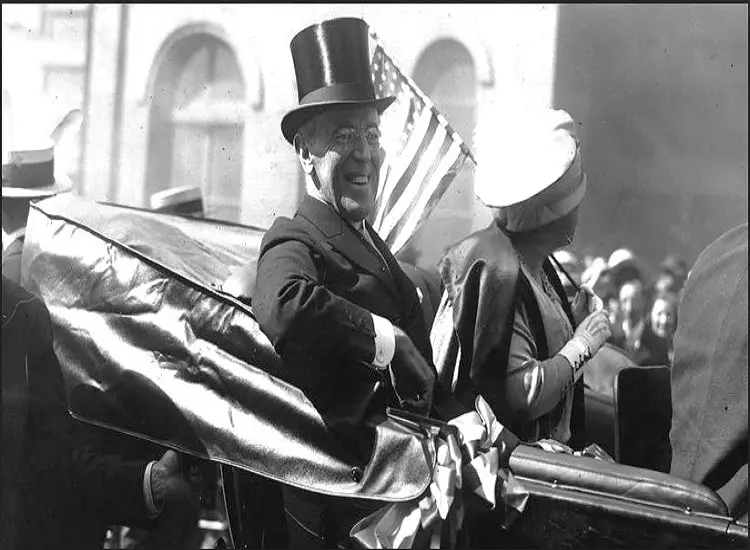
On the meeting’s agenda was the expression of opinions and the discussion of the text of the Memorandum to be given to the ambassadors of the Great Powers in Cairo, “to demand the rights of Albania.” A telegram was to be sent to the President of America, Dr. W. Wilson, which the Albanians of Alexandria (where Llambi Kotta lived and was quite active) had looked after for some time, during their meeting on November 15, 1918. It was discussed and decided that this telegram should be given to several European newspapers. Necessary measures were to be taken to send one or two representatives on behalf of the Albanians of Misir (Egypt) to the Peace Conference in Paris or elsewhere. A campaign was organized to collect the funds needed for the representatives’ expenses.
Also on the agenda was the discussion of the following issue: Whether it pertained to this commission to assume powers, at a time it deemed appropriate, to elect a General (permanent) Committee, which would represent the Albanians of Misir (Egypt) according to the regulation (statute) that would arise from this Committee. After approving the agenda, the meeting began the discussion and gave a decision for every problem.
It began with the discussion of the draft Memorandum prepared by N. Kasneci and Andon Zako, which, after being approved, was signed by all members of the commission. It was decided that they would strive to provide a copy to each of the ambassadors of America, France, England, and Italy in Cairo, with the request that each send it to the Ministries of Foreign Affairs of the states they represent, thereby reaching the hands of their delegates at the Peace Conference.
The meeting decided that the Albanians of Alexandria should take care to send the telegram they had prepared (for W. Wilson) themselves as soon as possible. After a long discussion, it was decided that the honor of the Albanians of Misir, as well as the importance of the work and the occasion, required that one or two representatives, to be chosen by the commission, be sent to the Peace Conference.
To secure the necessary funds for the expenses of the two representatives, a campaign was opened in all cities where Albanians were located. Mr. Andon Zako and Rustem Begu were assigned to Cairo, Vasil Thomaidhi to Alexandria, N. Kasneci and Xhaferr Begu to Mansur-Zagazig, S. Pluska to Bibeh-Beni Suef, Llambi Kotta to Shibin-el-Kom, Loni Logori to Minieh, and Jani Vruhoja to Fayoum.
The Commission paid great attention to the problem of electing a General (permanent) Committee and decided that after finishing the work for which it was elected, it would take the necessary measures for the creation of a “General Committee” (permanent) in a manner it deemed valid for the voting of all Albanians found in the land of Misir. The minutes of the Commission meeting were closed after all its members signed.
The Commission of Albanians of Misir, of which Llambi Kotta was a member, on February 5, 1919 – one month after the January 5, 1919 meeting – held a meeting at the home of Andon Zako (Çajupi) in Cairo. According to the minutes, the meeting discussed, among other things, whether and how to send one or two representatives of the Albanians of Misir to the Meeting of representatives of Albanians and other Albanian colonies in Europe, as decided in the January 5 meeting. If the collected money was not enough for two representatives, only one would be sent. The representative to be sent would be determined by a vote of the commission members.
The meeting also decided to discuss the appointment of the day and date for the general assembly, in which a General (permanent) Committee would be elected, whose task would be to create the new regulation. The February 5 meeting implemented the decision of the January 5 meeting regarding the election of a representative of the Albanians of Misir to be sent to the meeting of Albania’s representatives in Europe.
By secret ballot and a majority of votes, Leonidha Naçi was elected as the representative of the Albanians of Misir to the meeting of Albania’s representatives in Switzerland or elsewhere. It was decided that the general assembly for the election of the General (permanent) Committee would be held at the end of February or the beginning of March 1919, at the home of Filip Shiroka.
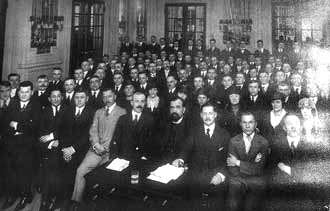
The General Assembly of the Albanians of Misir took place on March 9, 1919, in Cairo. Over 52 delegates were directly present, including Llambi Kotta. In addition to them, 7 people from Alexandria, 4 from Wasta, 2 from Beni-Suef, 11 from Bibeh, 9 from Shibin-el-kom (3 of whom gave their right of representation to Llambi Kotta), 6 people from Mansurah, 10 from Cairo, 4 from Fashnja, and 1 from Zagazig participated via letters of representation. Llambi Kotta was unanimously elected Chairman of the General Assembly that day, and he opened and directed the meeting. A vote was held to elect a Permanent Council (Pleqësia) of 9 people. Eleven candidates were proposed and voted upon.
Out of 114 voters, Sotir Pluska received 111 votes, Niko Kaznetsi received 109 votes, Llambi Kotta received 109 votes, Leonidha Naçi received 107 votes, Rustem Korça received 99 votes, Andon Zako received 98 votes, Jan Armodhi received 73 votes, Miltiadh Adhami received 59 votes, Filip Shiroka received 52 votes, Koço Donato received 39 votes, and Vasil Thomaidhi received 29 votes. Thus, of the 11 people voted for, the first 9 won; Koço Donato and Vasil Thomaidhi did not make it into the Permanent Council, but the general assembly decided they would be substitutes. The meeting decided that 3 members of the Council should be in Alexandria, 3 in Cairo, 2 in Upper Misir, and 1 in Lower Misir, and the Council was elected for two years.
The meeting failed to determine the Center of the Society and the Council, leaving the decision to the newly elected Council. During the discussion of this issue, Leonidha Naçi said that; “for many reasons, the center should be in Alexandria because it is on the coast and because the center of the previous ‘Brotherhood’ (Vëllazëria), which is known by many foreign centers and others, was there.” This problem was also not resolved by the General Assembly and was left to the Permanent Council to decide.
LLAMBI KOTTA WAS ELECTED CHAIRMAN OF THE PERMANENT COUNCIL OF THE BROTHERHOOD OF ALL ALBANIANS OF MISIR (EGYPT)
On that same day, March 9, 1919, at Andon Zako’s house in Heliopolis at 5:00 PM, the meeting of the Permanent Council elected that morning by the General Assembly took place. Of the 9 elected members, 8 participated (Andon Zako, Filip Shiroka, Llambi Kotta, Leonidha Naçi, Miltiadh Adhami, Nikola Kaznetsi, Rustem Qemal Korça, Sotir Pluska; Jani Armodhi was absent). The meeting was opened and conducted under the chairmanship of Llambi Kotta. The meeting elected the leaders of the Council.
Llambi Kotta was elected Chairman of the Council, Andon Zako Vice-Chairman, Leonidha Naçi Secretary, and Jan Armodhi Treasurer, with the other five serving as advisors (members). Changes to the articles (clauses) of the old regulation approved in 1910 – when the “Brotherhood of Albanians of Misir and Union” (Vëllazëria e Shqiptarëve të Misirit e Bashkim) was created and began its activity – were discussed and decided upon. Thanks to its systematic work and activity in service of the Albanian national cause, this society became known not only in Albanian territories but also in Egypt and many European countries.
The meeting decided that the “Center of the Brotherhood” of the Albanians of Egypt would remain in Alexandria. From March 9, 1919, when the first meeting of the Council was held, Llambi Kotta was elected Chairman of the Council for two years, thus becoming the leader of the main body that guided the entire activity of the Patriotic Movement of the “Brotherhood of Albanians” of Egypt.
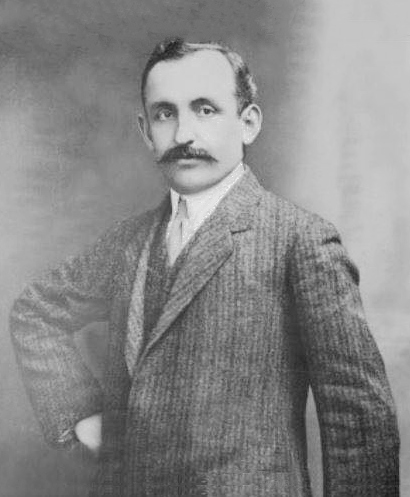
Rightly, he valued and appreciated this not only as a great trust and honor bestowed upon him by the entire Albanian community in Egypt – concentrated mostly in Cairo and Alexandria – but also as a duty with special responsibility. Thus, Llambi Kotta became one of the primary leaders of the “Patriotic Movement” of the Albanians of Egypt. He dedicated himself to the work of realizing the tasks dictated by the need for the progress of the patriotic movement in service of Albania.
On April 26, 1919, under his leadership, the Meeting of the Council of the “Brotherhood of Albanians” of Egypt was organized, which conducted its work in the temporary office of the “Brotherhood” in Alexandria. During the meeting, the minutes of the previous meetings – the general assembly held in Cairo and the Council meeting held in Heliopolis – were read and signed.
It was decided that after sending the proposed changes to the old regulation of the “Brotherhood” by the Council meeting on March 9, 1919, and by other key persons, and after being approved by the Council, the new regulation would be printed. Furthermore, the meeting decided to send an aid of 200 francs to the Albanian newspaper “Kuvendi” in Rome, and the “Brotherhood” would subscribe to the newspaper “Messaggero” for one year.
On June 15, 1919, in Alexandria, at the home of Sotir Pluska, the meeting of the “Council of the Brotherhood of Albanians” of Egypt took place. All nine of its members participated. Among other things, the meeting discussed and decided on the issue of moving the Center of the “Brotherhood” from Alexandria to Cairo. Due to this change, and since according to the “Brotherhood” regulation it was specified that the chairman, secretary, and treasurer must always be located where the center was, Chairman Llambi Kotta, Secretary Leonidha Naçi, and Treasurer Jan Armodhi were forced to resign. In their place, the Council elected:
Andon Zako as chairman and treasurer, Leonidha Naçi as vice-chairman, and Filip Shiroka as secretary. Thus, due to the change of the center from Alexandria to Cairo, Llambi Kotta, who lived in Alexandria, was forced to resign from the post of Chairman of the Council and remained a member of it.
This was the last set of minutes I have been able to find so far. Regardless, I have a firm conviction that even with these documents being published for the first time, the great patriotic work and activity of the exiled Albanians in Misir is revealed. Though far from the homeland, they raised the Albanian National Movement to new heights and worked with determination for their motherland. Among them, the work and national political-social thought of my grandfather, LLambi Kotta, stood out. Through this activity, he entered the annals of our national history, and his figure remained in the national memory of Albanians. / Memorie.al