BY HAMZA KAZAZI
Part Two
Memorie.al / Seventy-seven years after the event and twenty-nine years into democracy (a democracy of sorts), the truth about the Battle of Reç remain undisclosed. Particularly since 2013, it has been commemorated from only one perspective. Through the documents I have managed to find, the truth proves that the merit belongs primarily to the National Front (Balli Kombëtar) and Legality (Legaliteti); the communists are in third place. While they undoubtedly fought, they are being credited with all the merits while others are eliminated. Furthermore, the participation of the people of Reç and the surrounding area cannot be forgotten. This is a fraud against history and truth; the ruling politics of today usurps it, leaving it only to the communists, acting just as it was during the dictatorship. I must ask: Where is our current politics, which chooses to remain indifferent?
Continued from the previous issue
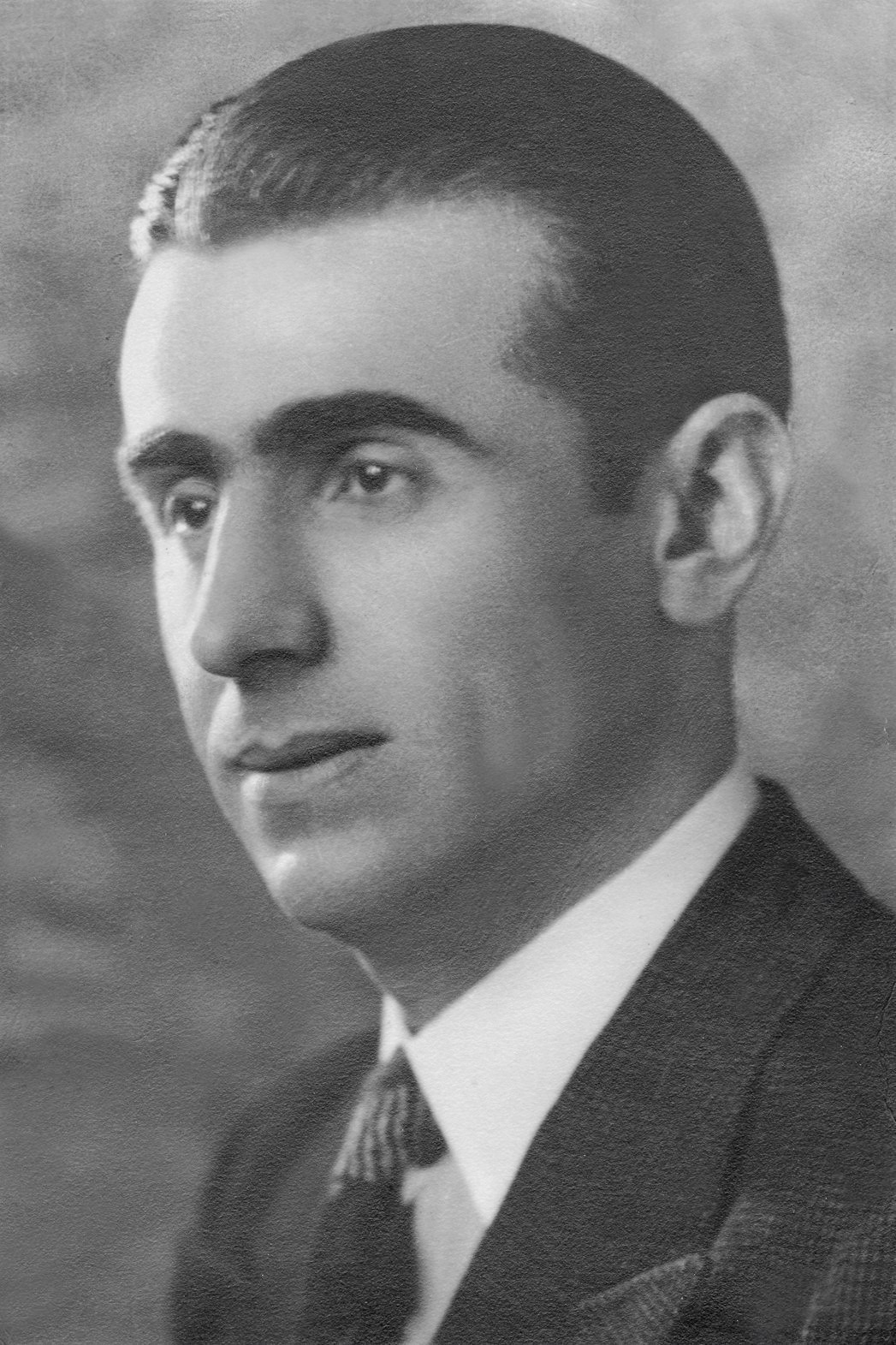
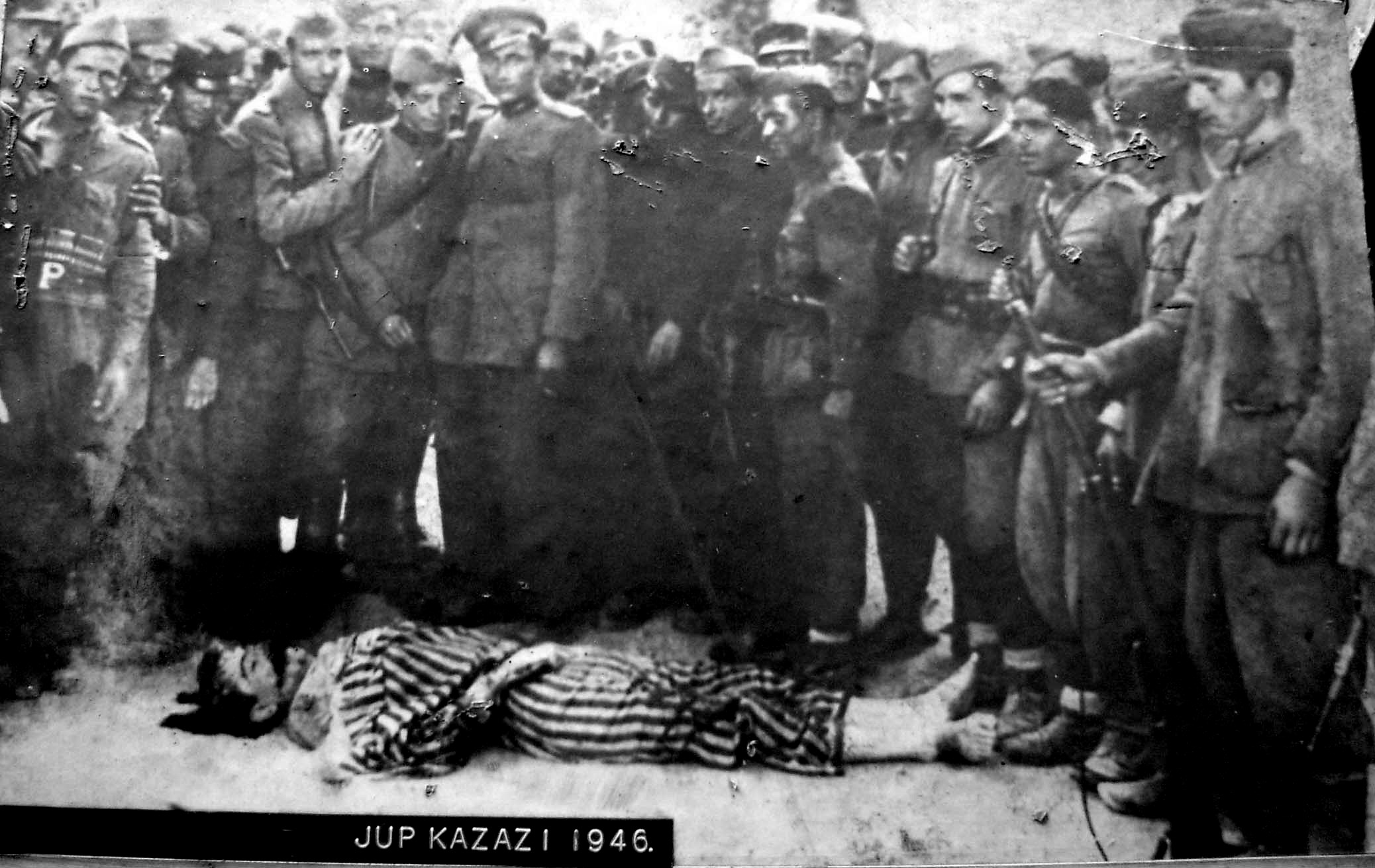
A prior document, a letter-telegram from the Prefect of Shkodra addressed to the Ministry of Internal Affairs (No. 635/106, dated 01-08-1943), states: “We are now informed by the District Command that in the villages of Linaj and Lepurosh of the Rrjoll municipality, a group of about 500 armed persons has gathered under the leadership of Jup Kazazi and Xhelal Sulo Beg Bushati, both from Shkodra. The purpose of this meeting is unknown. I am writing to the Sector Command here for the necessary measures. – The Prefect.”
On August 3rd, the Minister of Internal Affairs forwarded this to the Prime Minister’s Office. A coded telegram from the Minister to the Prefect (No. 635/136, dated 04-08-1943) states: “I am referred that the closest collaborators of Jup Kazazi for an uprising for a long time have been Ahmet Osi, Ujk Tahiri, and Elmaz Hoxha, all three from Koplik. If this proves true, arrest them. – The Minister.”
The phrase “for a long time” is very significant. Telegram 361/22 (dated 04-08-1943) accuses Jup of treason and preparing an uprising. Another telegram claims he was preparing an assassination attempt on the minister, which in fact, as I mentioned before, was intended for Jacomoni. Extremely important is the report of the Prefect of Shkodra to the Ministry of Internal Affairs regarding the Battle of Reç, dated 03-09-1943 (AQSH, Fund 252, File 124, Page 20, No. 4), which says:
“I have the honor to inform you that the army operations against the rebel bands of Jup Kazazi and associates began on the 30th of last month at 4:00 AM, and the army withdrew on 31/8/1943. In the clashes, it is said that from the bands, Rifat Nuz Sokol Bajraktari – the son of the Bajraktar of Reç – fell, along with Dr. Bahri Kopliku and 10 other unidentified persons, who were buried by the bands. (Note: They are mistaken; Dr. Kopliku was a fighter with Balli Kombëtar but lived until much later.)
From the [Italian] army, 8 soldiers fell who are not yet buried, one captain was killed in the Prel Nikaj neighborhood, and one carabineer in the Kuç neighborhood; they could not be retrieved because these villages remain in the hands of the bands. The population of Reç and Lohe has fled to the mountains, and most of the residents of Reç have joined the bands. The army damaged 10 houses during operations. A militia sergeant was wounded… Following information from Shkrel, the rebel bands have approached that municipality; the volunteer forces have taken up suspicious positions. – The Prefect.”
(Note: The report miscounts the casualties, as there were fewer on our side and many more among the Italians. It was early, and they lacked updated information. Also, the “volunteer forces” were created by an Italian colonel and were in their service). Thus, the communists are not mentioned, yet they have falsified historical truth, usurped the leading role, and continue to do so. I clarify: Llesh Marashi was briefly connected to the communists for 20 days and became their commander, but broke away as soon as he saw their true intentions. He remained with Jup until the end of his life, fighting for freedom and against communism.
The Bajraktar of Reç was a friend of Jup’s and politically unaligned. His son, Rifat Nuzi, one of the martyrs, was affiliated with Balli Kombëtar. Meanwhile, Ramadan Reçi was the nephew of the Bajraktar and a communist commander. Shaqir Vukaj mistakenly presents the meeting for the “Committee for the Salvation of Albania” as occurring on August 13th without many key figures; this is debunked by the 3-page document of the August 15th meeting where all three political forces approved the Committee.
Ultimately, the Italians attacked Reç with all their forces to eliminate the organized strength of the “Committee for the Salvation of Albania,” which included units from Balli Kombëtar, Legality, and the communists – all together against the occupier to attack and liberate Shkodra. Even Catholic clergy were spread out to prepare the people and spread propaganda.
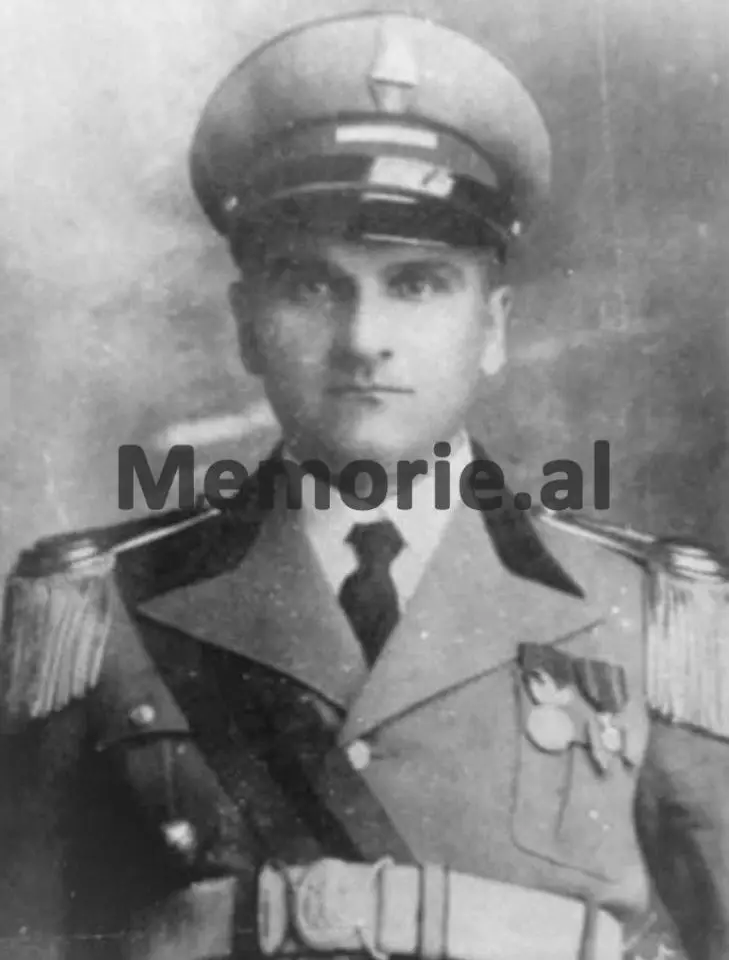
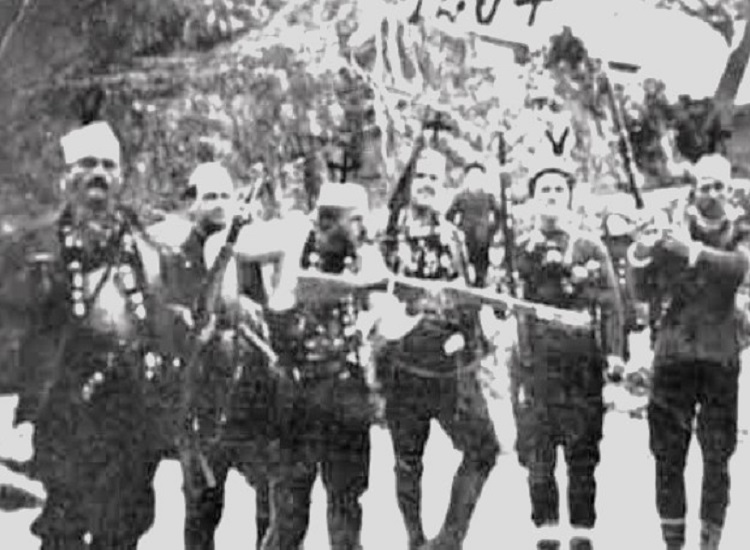
In the Battle of Reç, Balli Kombëtar participated with Jup and his men (including the units of Xhelal and Enver Bushati and Llesh Marashi). Legality had two units under commanders Shaqir Meta (son-in-law of Bajram Curri), Shaban Elezi, Hysen Lohja, and Fadil Dizdari. The communists had about 30 people. Very important were the soldiers of the 3rd Regiment of the Albanian National Army who had deserted and come from Ulqin. They were led by academic officers Colonel Fuat Dibra (whom the communists later handed over to the Yugoslavs to be executed), and Majors Zenel Kazazi and Dilaver Dine, who were linked to Balli Kombëtar.
Zenel Kazazi led the regiment from Ulqin to Reç. When they crossed the Buna River, they were met by Halit, Jup’s eldest brother and a career officer, who guided them to Reç. While communist participants like Qazim Kapisyzi later claimed there were 140 partisans, in 1993 he admitted there were “40 partisans, not 140.”
The military organization by academic officers Zenel Kazazi and Dilaver Dine led to the breaking of the Italian army. The Italians arrived with about 1,000 men and, despite being prepared, left about 40 dead and 100 wounded. Our side lost 5 in combat and 8 innocent civilians from aerial bombardment. The hospital in Shkodra was filled with wounded Italian soldiers.
A rare act of bravery occurred when the Bajraktar of Reç, after being told his son Rifat had fallen, told Zenel: “My son gave his life for the fatherland, just turn him over [bury him properly],” and continued the fight with even more fury.
Jup’s mother was told by him that the communists tried to kill him in Reç. An Italian anti-fascist soldier who had deserted to join Jup was killed right next to him by a bullet intended for Jup, fired from the communist positions. It was later said that Lilo Zeneli – later a high-ranking State Security (Sigurimi) official – had shot at Jup under the orders of Sadik Bekteshi.
After the victory at Reç, the goal was to liberate Shkodra. The Italian army was demoralized. However, the communist leadership, specifically Sadik Bekteshi, did not want Shkodra to be liberated if the merit went to others. They even pushed the commander of the “volunteer forces” (pro-Italian) to warn Jup that they would fight him if he attacked Shkodra. Jup withdrew to avoid fratricide. Similarly, when Italy’s surrender (capitulation) came, Jup called on all forces to liberate Ulqin before Tito’s Yugoslavs, but Sadik Bekteshi said: “They are our brothers, it is better if they liberate it.” They preferred Slavic liberation over Albanian.
Finally, Jup was so wanted by the Italians that they planned to intern his pregnant wife, Nasibe, and their 2-year-old son in Italy. On August 18, 1943, she gave birth to a daughter in hiding. Jup sent word from the mountains to name her Lirije (Freedom), as they were fighting for freedom.
With this writing, I call upon the political forces – primarily those of Shkodra and Malësia e Madhe – and state institutions to contribute to the truth. Let us leave a clean and just history for the next generation, closing the path to the old, negatively politicized system./Memorie.al