









By Dashnor Kaloçi
Part four
Memorie.al / From 1944, when it came to power, until the end of 1990, the communist regime of dictator Enver Hoxha and his successor Ramiz Alia – based on the theory and “teachings of Marx, Engels, Lenin, and Stalin” as well as the ideology they devised and applied across nearly half the world – continuously waged class warfare, executing, imprisoning, or interning their political opponents. In this context, starting from December 1944, when Enver Hoxha and the government he headed descended from the mountains and took power, alongside executions with and without trial, the internment of tens and hundreds of families began. These were families they considered “overthrown classes” or accused of being “enemies of the people” – mainly wealthy or middle-class families, former officials of King Zog’s Monarchy, who during the occupation period had joined or supported the nationalist organizations “Balli Kombëtar” or “Legaliteti.”
This punitive “practice” of internment and deportation would also be applied to hundreds upon hundreds of communists (ranging from the simplest members to former members of the Political Bureau of the Central Committee of the APL), deputies, ministers, military officers, and high-ranking officials, along with their families, whom Enver Hoxha and the communist regime in power would declare “traitors, revisionists, enemies of the people,” etc. From 1944 until 1949, decisions for internment and deportation were made by the “Commission for Deportations and Confiscation of Assets,” which operated under the Ministry of Internal Affairs. In the following years, this commission changed its name several times until 1954, when it was placed under the jurisdiction of the Prime Ministry and named the “Internment-Deportation Commission,” which functioned regularly until 1990.
From 1954 until 1974, the chairman of that commission was Beqir Balluku, a member of the Political Bureau of the Central Committee of the APL, who held the position of Minister of People’s Defense and simultaneously that of Deputy Prime Minister in the government headed by Mehmet Shehu. The vice-chairman of the commission was the Minister of Internal Affairs, Kadri Hazbiu, while the members included the Attorney General Dhori Panariti and the Chairman of the Supreme Court, Aranit Çela. (After the sentencing of Beqir Balluku in 1974, the role of Chairman of Internment-Deportations was taken by Deputy Prime Minister Manush Myftiu, and after the sentencing of Kadri Hazbiu, the role of vice-chairman was taken by Hekuran Isai).
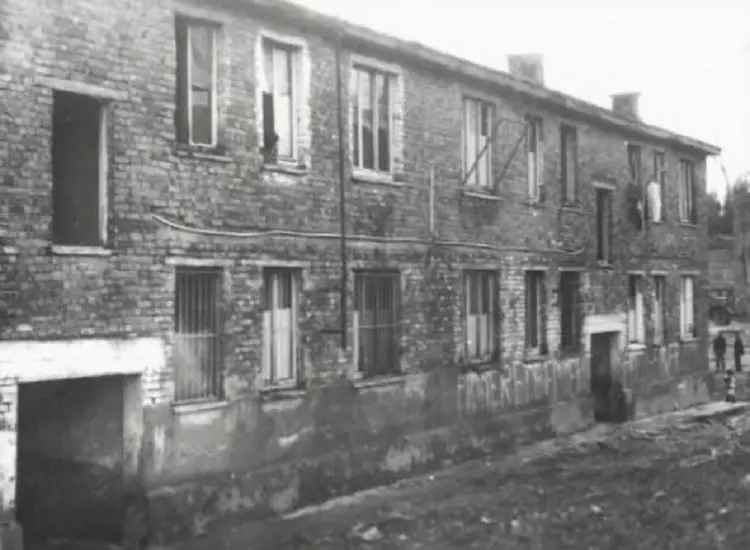
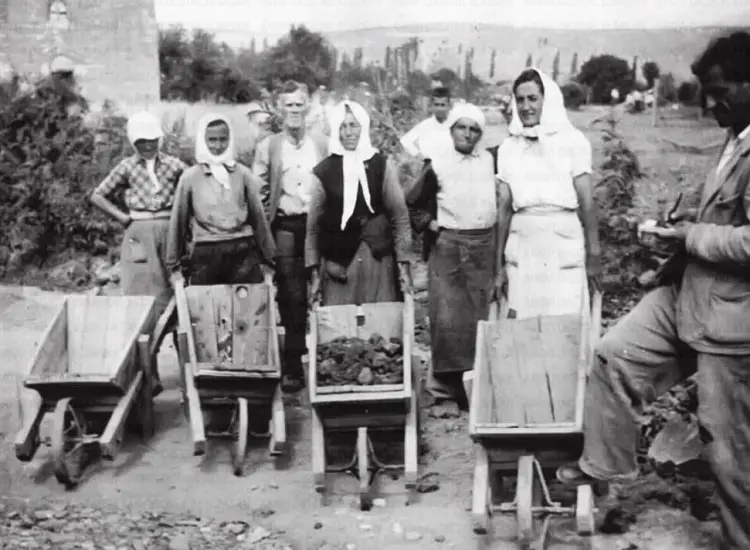
During its entire period of existence and operation, this commission issued hundreds and thousands of decisions, deporting and interning thousands of persons who were forcibly removed from their places of residence and compelled to live in remote villages and areas of the country, from south to north. The villages containing internment camps were primarily designated by the government in the Myzeqe area of Lushnje and Fier (Savër, Çermë, Bedat, Grabian, Gradisht, Plug, Gjazë, Zhamë, Sulzotaj, Kryekuq, Karavasta, Shtyllas, etc.) – specifically in the central part of the country – to keep them as far as possible from the state borders to prevent escape from Albania.
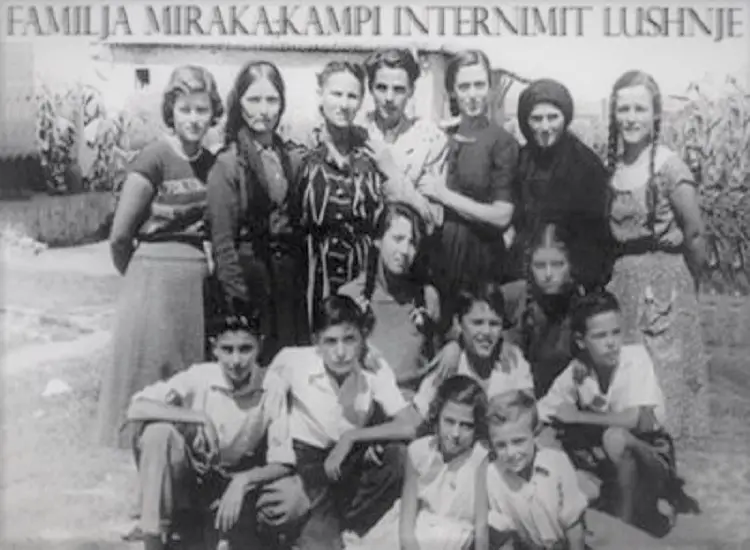
Based on the relevant law under which the Internment-Deportation Commission operated, a person or a family was initially interned for five years, but these terms were repeated, being extended every five years. As a result, entire families – mainly from Northern Albania, such as the Gjonmarkaj of Mirdita; the Kaloshi, Sina, Alia, Dema, Dine, Mena, and Ndreu of Dibra; the Bajraktari and Kolgjini of Kukës; the Kola, Allamani, and Sulkurti of Mat; the Merlika, Kupa, and Bami of Kruja; the Mirakaj of Puka; the Radi and Gjekaj of Shkodra; the Pervizi of Kurbin; and the Mulleti and Petrela of Tirana; or those from the South of the country, such as the Dosti of Gjirokastra; the Frashëri and Çela of Përmet and Kolonja; the Staravecka of Skrapar, etc. – remained in internment locations until 1991, when the communist regime collapsed. In fact, some of them remained there for many years afterward, as they had nowhere else to go, having no corner left to shelter their heads!
Regarding the above, Memorie.al has secured a voluminous file from the Archive of the Ministry of Internal Affairs (bearing the “Secret” stamp, but long since declassified), containing the decisions of the Internment-Deportation Commission, which we are publishing in full along with the relevant facsimiles. These include the names of the individuals and families who were deported and interned, as well as the specific charges against each of them.
Continued from the previous issue…
DECISION NO. 33 OF THE INTERNMENT-EXPELLATIONS COMMISSION
PEOPLE’S REPUBLIC OF ALBANIA Secret
INTERNMENT-DEPORTATION COMMISSION Group II
Tirana, on 13.V.1972
DECISION No. 33
The Internment and Deportation Commission, convened on May 13, 1972, pursuant to the Decree of the Presidium of the People’s Assembly, No. 1906, dated August 2, 1954, having reviewed the proposal submitted by the Ministry of Internal Affairs,
DECIDED:
Due to the fact that they do not pose a social danger, the internment measure shall be lifted for:
- Gafur Nexhip Lloçi, born in 1933, born and residing in the village of Lojmë, Kukës district.
- Liri Zaim Lloçi, born in 1949, born in Shtiqën and residing in the village of Lojmë, wife of Gafur.
They were interned by Decision No. 31, dated May 6, 1972, for a period of 5 years in the village of Klos, Kukës district.
VICE-CHAIRMAN OF THE COMMISSION CHAIRMAN OF THE COMMISSION
KADRI HAZBIU BEQIR BALLUKU
MEMBERS
PROSECUTOR GENERAL PRESIDENT OF THE SUPREME COURT
DHORI PANARITI ARANIT ÇELA
DECISION NO. 34 OF THE COMMISSION ON INTERNMENT AND EXPULSION
PEOPLE’S REPUBLIC OF ALBANIA Secret
COMMISSION ON INTERNMENT AND EXPULSION Group II
Tirana, 13.V.1972
DECISION No. 34
The Internment and Deportation Commission, convened on May 13, 1972, pursuant to the Decree of the Presidium of the People’s Assembly, No. 1906, dated August 2, 1954, having reviewed the proposals and materials submitted by the Ministry of Internal Affairs,
DECIDED:
Due to the fact that they do not pose a social danger, the internment measure shall be lifted for the following persons:
- Murat Idriz Barolli, born 1895, born in Trestan and formerly residing in the city of Korça, pensioner, kulak.
- Alide Musa Barolli, born 1918, worker, wife.
- Manushaqe Murat Barrolli, born 1947, worker.
- Lumturi Murat Barrolli, born 1952, worker.
- Sabri Muharrem Zhuli, born 1911, born and residing in the village of Nikolicë, Korça district, farmer.
- Drita Hajdar Zhuli, born 1919, born and residing in Nikolicë, Korça district, wife of Sabri.
- Etem Sabri Zhuli, born 1950, farmer.
They were interned for a period of 5 years by Decision No. 38, dated July 6, 1967, in the village of Moglicë, Korça district.
- Muhamet Sabri Zhuli, born 1948, farmer, interned by Decision No. 2, dated February 14, 1968, for a period of 5 years in the village of Moglicë, Korça district.
- Artemisi Irakli Papa, born 1950, born and residing in Durrës, interned by Decision No. 40, dated December 2, 1969, for a period of 5 years in Patok-Milot, Durrës district.
- Shyqëri Mersin Sopaj, born 1947, born and residing in Tirana, interned within the Tirana district for a period of 5 years, by Decision No. 24, dated May 23, 1968.
- Ibrahim Isuf Sokoli, born 1911, born in Shkodra and interned in Lushnja since 1954.
VICE-CHAIRMAN OF THE COMMISSION CHAIRMAN OF THE COMMISSION
KADRI HAZBIU BEQIR BALLUKU
MEMBERS
PROSECUTOR GENERAL PRESIDENT OF THE SUPREME COURT
DHORI PANARITI ARANIT ÇELA
DECISION NO. 36 OF THE COMMISSION ON INTERNMENT AND EXPULSION
PEOPLE’S REPUBLIC OF ALBANIA Secret
COMMISSION ON INTERNMENT AND EXPULSION Group II
Tirana, 16.V.1972
DECISION No. 36
The Internment and Deportation Commission, convened on May 16, 1972, pursuant to the Decree of the Presidium of the People’s Assembly, No. 1906, dated August 2, 1954, having reviewed the proposals and materials submitted by the Ministry of Internal Affairs,
DECIDED:
To intern the following persons for a period of 5 years in the village of Fushë-bardhë, Gjirokastër district, due to the fact that in October 1971, a member of their family, Besnik Aliko, escaped abroad to Greece.
- Ymer Godo Aliko, born 1920, born in the village of Zhulat, residing in Fushë-bardhë, Gjirokastër district, farmer, wealthy peasant (fshatar i pasur), with no prior criminal record.
- Gaze Isuf Aliko, born 1920, wife of Ymer.
- Adelina Ymer Aliko, born 1947.
The period of internment begins on May 16, 1972, and ends on May 16, 1977.
VICE-CHAIRMAN OF THE COMMISSION CHAIRMAN OF THE COMMISSION
KADRI HAZBIU BEQIR BALLUKU
MEMBERS
PROSECUTOR GENERAL PRESIDENT OF THE SUPREME COURT
DHORI PANARITI ARANIT ÇELA
DECISION NO. 37 OF THE COMMISSION ON INTERNMENT AND EXPULSION
PEOPLE’S REPUBLIC OF ALBANIA Secret
COMMISSION ON INTERNMENT AND EXPULSION Group II
Tirana, 8.VI.1972
DECISION No. 37
The Internment and Deportation Commission, convened on June 8, 1972, pursuant to the Decree of the Presidium of the People’s Assembly, No. 1906, dated August 2, 1954, having reviewed the proposal and materials submitted by the Ministry of Internal Affairs,
DECIDED:
Due to the fact that he conducts hostile activity and poses a risk of escaping abroad, to intern for a period of 5 years in the village of Shetaj, Durrës district:
Mahmut Kovaçi, son of Mustafaj and Alije, born and residing in the village of Laçaj, Dibër district, married with 4 children, from the middle-class peasantry (shtresë e mesme fshatare), farmer, previously convicted.
The period of internment begins on June 8, 1972, and ends on June 8, 1977.
VICE-CHAIRMAN OF THE COMMISSION CHAIRMAN OF THE COMMISSION
KADRI HAZBIU BEQIR BALLUKU
MEMBERS
PROSECUTOR GENERAL PRESIDENT OF THE SUPREME COURT
DHORI PANARITI ARANIT ÇELA
DECISION NO. 38 OF THE COMMISSION ON INTERNMENT AND EXPULSION
PEOPLE’S REPUBLIC OF ALBANIA Secret
COMMISSION ON INTERNMENT AND EXPULSION Group II
Tirana, 14.VII.1972
DECISION No. 38
The Internment and Deportation Commission, convened on July 14, 1972, pursuant to the Decree of the Presidium of the People’s Assembly, No. 1906, dated August 2, 1954, having reviewed the proposals submitted by the Ministry of Internal Affairs,
DECIDED:
Due to the fact that members of their family have escaped abroad, the following persons are to be interned for a period of 5 years within the Kruja district, specifically in the “Skënderbe” Sector – Thumanë:
- Zef Kol Shyti, born 1945, born in Theth (Shkodra) and residing in Milot, married with two children, middle-class, worker, previously convicted, head of the household.
- Luçie Nikoll Pjetër Shyti, born 1947 in the village of Jubicë (Shkodra), residing in Milot, middle-class, his wife.
- Drane Kol Shyti, born 1923, residing in Milot, worker, his mother.
- Ndue Preç Rexha, born in Vermosh in 1939, residing in Milot, middle-class, unemployed.
- Mrike Kol Shyti (Rexha), born 1944, born in Theth (Shkodra), residing in Milot, wife of Ndue Rexha.
For the aforementioned individuals, the internment period begins on July 14, 1972, and ends on July 14, 1977.
VICE-CHAIRMAN OF THE COMMISSION CHAIRMAN OF THE COMMISSION
KADRI HAZBIU BEQIR BALLUKU
MEMBERS
PROSECUTOR GENERAL PRESIDENT OF THE SUPREME COURT
DHORI PANARITI ARANIT ÇELA
DECISION NO. 39 OF THE COMMISSION ON INTERNMENT AND EXPULSION
PEOPLE’S REPUBLIC OF ALBANIA Secret
COMMISSION ON INTERNMENT AND EXPULSION Group II
Tirana, 14.VII.1972
DECISION No. 39
The Internment and Deportation Commission, convened on July 14, 1972, pursuant to the Decree of the Presidium of the People’s Assembly, No. 1906, dated August 2, 1954, having reviewed the proposals submitted by the Ministry of Internal Affairs,
DECIDED:
Due to the fact that members of their family have escaped abroad, to intern for a period of 5 years within the Kruja district, in the “Skënderbe” Sector – Thumanë, the following persons:
- Enver Sulo Xhezo, born 1919, resident of the city of Tirana.
- Sofije Pandeli Xhezo, born 1917, wife of Enver.
- Islam Enver Xhezo, born 1948.
- Petrit Enver Xhezo, born 1947.
- Viktorija Enver Xhezo, born 1952.
They were interned by Decision No. 35, dated May 16, 1972, for a period of 5 years. The internment begins on May 16, 1972, and ends on May 16, 1977.
VICE-CHAIRMAN OF THE COMMISSION CHAIRMAN OF THE COMMISSION
KADRI HAZBIU BEQIR BALLUKU
MEMBERS
PROSECUTOR GENERAL PRESIDENT OF THE SUPREME COURT
DHORI PANARITI ARANIT ÇELA
DECISION NO. 41 OF THE COMMISSION ON INTERNMENT AND EXPULSION
PEOPLE’S REPUBLIC OF ALBANIA Secret
COMMISSION ON INTERNMENT AND EXPULSION Group II
Tirana, 14.VII.1972
DECISION No. 41
The Internment and Deportation Commission, convened on July 14, 1972, pursuant to the Decree of the Presidium of the People’s Assembly, No. 1906, dated August 2, 1954, having reviewed the proposals submitted by the Ministry of Internal Affairs,
DECIDED:
Due to the fact that members of their family have escaped abroad, to intern for a period of 5 years in the village of Povel-Hoxharë, in the locality of Ballsh, Fier district, the following persons:
- Kasem Sherif Pasho, born 1903, born in the village of Psar i Zi, Kolonja district, residing in Hoxharë, Fier, middle-class, married with children, farmer.
- Pashako Ali Pasho, born 1910, his wife.
- Pasho Ali Pasho, born 1947, single, previously convicted, his son.
The period of internment begins on July 14, 1972, and ends on July 14, 1977.
VICE-CHAIRMAN OF THE COMMISSION CHAIRMAN OF THE COMMISSION
KADRI HAZBIU BEQIR BALLUKU
MEMBERS
PROSECUTOR GENERAL PRESIDENT OF THE SUPREME COURT
DHORI PANARITI ARANIT ÇELA
DECISION NO. 42 OF THE COMMISSION ON INTERNMENT AND EXPULSION
PEOPLE’S REPUBLIC OF ALBANIA Secret
COMMISSION ON INTERNMENT AND EXPULSION Group II
Tirana, 14.VII.1972
DECISION No. 42
The Internment and Deportation Commission, convened on July 14, 1972, pursuant to the Decree of the Presidium of the People’s Assembly, No. 1906, dated August 2, 1954, having reviewed the proposals submitted by the Ministry of Internal Affairs,
DECIDED:
- Mitro Ilia Jani, born 1912, from the village of Bodrishtë, Gjirokastër, interned in Gradishtë, Lushnja, by Decision No. 30, dated September 2, 1971. To be transferred under the measure of internment to his village, Bularat, Gjirokastër district.
- Xhafer Mehmet Kanani, from Kalivaç, Tepelena, interned in his village of Kalivaç, by Decision No. 14, dated February 25, 1972. To be transferred under the measure of internment to Selenica, Vlora district.
VICE-CHAIRMAN OF THE COMMISSION CHAIRMAN OF THE COMMISSION
KADRI HAZBIU BEQIR BALLUKU
MEMBERS
PROSECUTOR GENERAL PRESIDENT OF THE SUPREME COURT
DHORI PANARITI ARANIT ÇELA
DECISION NO. 43 OF THE COMMISSION ON INTERNMENT AND EXPULSION
PEOPLE’S REPUBLIC OF ALBANIA Secret
COMMISSION ON INTERNMENT AND EXPULSION Group II
Tirana, 14.VII.1972
DECISION No. 43
The Internment and Deportation Commission, convened on July 14, 1972, pursuant to the Decree of the Presidium of the People’s Assembly, No. 1906, dated August 2, 1954, having reviewed the proposals submitted by the Ministry of Internal Affairs,
DECIDED:
Due to the fact that he does not pose a social danger, the internment measure shall be lifted for:
- Maliq Levzat Skëndyli, born 1923, born in Gjirokastër, formerly residing in Tirana, interned in 1967 in Beçisht, Tepelena district. By Decision No. 29, dated May 5, 1972, his internment had been extended for another 5 years.
VICE-CHAIRMAN OF THE COMMISSION CHAIRMAN OF THE COMMISSION
KADRI HAZBIU BEQIR BALLUKU
MEMBERS
PROSECUTOR GENERAL PRESIDENT OF THE SUPREME COURT
DHORI PANARITI ARANIT ÇELA
DECISION NO. 46 OF THE COMMISSION ON INTERNMENT AND EXPULSION
PEOPLE’S REPUBLIC OF ALBANIA Secret
COMMISSION ON INTERNMENT AND EXPULSION Group II
Tirana, 21.VIII.1972
DECISION No. 46
The Internment and Deportation Commission, convened on August 21, 1972, pursuant to the Decree of the Presidium of the People’s Assembly, No. 1906, dated August 2, 1954, having reviewed the proposal and materials submitted by the Ministry of Internal Affairs,
DECIDED:
Due to the fact that he conducts hostile activity and poses a social danger regarding the risk of escaping abroad, to intern for a period of 5 years:
- Nikoll Filip Zaho, born in Lugar, Gjirokastër and residing at the Llakatund Farm, Vlora district, married with one child, from a wealthy class (shtresë e pasur), affected by the reforms (i prekur nga reformat), with a primary education, mechanic by profession, of Greek nationality and Albanian citizenship. Previously convicted once to 18 years of deprivation of liberty for attempted escape; has a brother abroad who actively acts against our country; has a brother, Mihal Zaho, who was arrested for hostile activity.
The aforementioned individual is to be interned at his place of residence at the Llakatund Farm, Vlora district.
The internment begins on August 21, 1972, and ends on August 21, 1977.
VICE-CHAIRMAN OF THE COMMISSION CHAIRMAN OF THE COMMISSION
KADRI HAZBIU BEQIR BALLUKU
MEMBERS
PROSECUTOR GENERAL PRESIDENT OF THE SUPREME COURT
DHORI PANARITI ARANIT ÇELA
DECISION NO. 47 OF THE COMMISSION ON INTERNMENT AND EXPULSION
PEOPLE’S REPUBLIC OF ALBANIA Secret
COMMISSION ON INTERNMENT AND EXPULSION Group II
Tirana, 11.IX.1972
DECISION No. 47
The Internment and Deportation Commission, convened on September 11, 1972, pursuant to the Decree of the Presidium of the People’s Assembly, No. 1906, dated August 2, 1954, having reviewed the proposal submitted by the Ministry of Internal Affairs,
DECIDED:
To transfer from Libofsha to Roskovec, Fier district, the following persons:
- Pëllumb Jakup Dishnica, born 1911, born in Korça, married.
- Amalia Petro Dishnica, born 1922, born in Vlora, wife of Pëllumb.
They were interned by Decision No. 3, dated February 14, 1968, for a period of 5 years.
VICE-CHAIRMAN OF THE COMMISSION CHAIRMAN OF THE COMMISSION
KADRI HAZBIU BEQIR BALLUKU
MEMBERS
PROSECUTOR GENERAL PRESIDENT OF THE SUPREME COURT
DHORI PANARITI ARANIT ÇELA
DECISION NO. 48 OF THE COMMISSION ON INTERNMENT AND EXPULSION
PEOPLE’S REPUBLIC OF ALBANIA Secret
COMMISSION ON INTERNMENT AND EXPULSION Group II
Tirana, 4.X.1972
DECISION No. 48
The Internment and Deportation Commission, convened on October 4, 1972, pursuant to the Decree of the Presidium of the People’s Assembly, No. 1906, dated August 2, 1954, having reviewed the proposal submitted by the Ministry of Internal Affairs,
DECIDED:
Due to the fact that on August 21, 1972, his son, Odhise Ksera, escaped abroad to Greece, to intern for a period of 2 years in the village of Shetaj, Durrës district:
- Jani Sevo Ksera, born 1921, born and residing in the village of Derviçan, Gjirokastër, with a primary education, carpenter, employed at the State Collection Enterprise (Ndërmarrja e Grumbullimit) in Gjirokastër, of the Greek minority, with no prior criminal record, married with children, from the poor class (shtresë e varfër).
The internment begins on October 4, 1972, and ends on October 4, 1974./Memorie.al
VICE-CHAIRMAN OF THE COMMISSION CHAIRMAN OF THE COMMISSION
KADRI HAZBIU BEQIR BALLUKU
MEMBERS
PROSECUTOR GENERAL PRESIDENT OF THE SUPREME COURT
DHORI PANARITI ARANIT ÇELA