
Memorie.al / Anyone who has closely followed the extensive literary creativity of Spiro Mëhilli has certainly noted that he is a writer who is not only prolific but also highly cultured – a democrat, irreconcilable with any form of dictatorship, an analyst, and a keen observer of the literary, historical, and political developments of every era.
After the collapse of communism, there are few writers, journalists, or politicians who devote proper attention to exposing the wounds and the great evil that the system brought, both to our country and the world. Considering the influence that people of letters and the media in general have on the public, this apathetic stance toward what happened to us is deeply mistaken.
Spiro, however, has never ceased for a moment to analyze and demonstrate the damage brought to our people and country by the blind embrace and implementation of the most absurd ideology humanity has ever known, as well as its resemblance to historical despotisms – especially those of the twentieth century, such as Fascism and Nazism.
Regardless of the faded fairytales claiming that “the masses make history,” it has been proven over centuries that the masses are often nothing more than cannon fodder for the whims, megalomania, thirst for glory, and even the madness of narcissist leaders. These leaders are intoxicated by power and the primitive belief that they are demigods. Spiro rightly emphasizes those individuals who lead nations toward unimaginable crimes and massacres, where, as they themselves claim, the killing of millions is nothing more than a statistic.
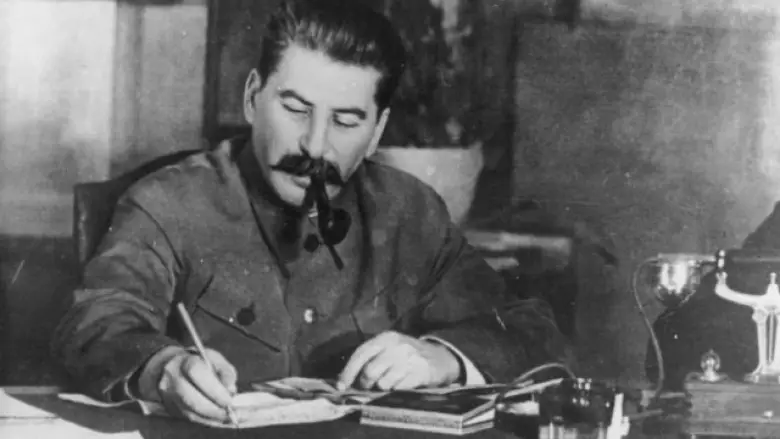
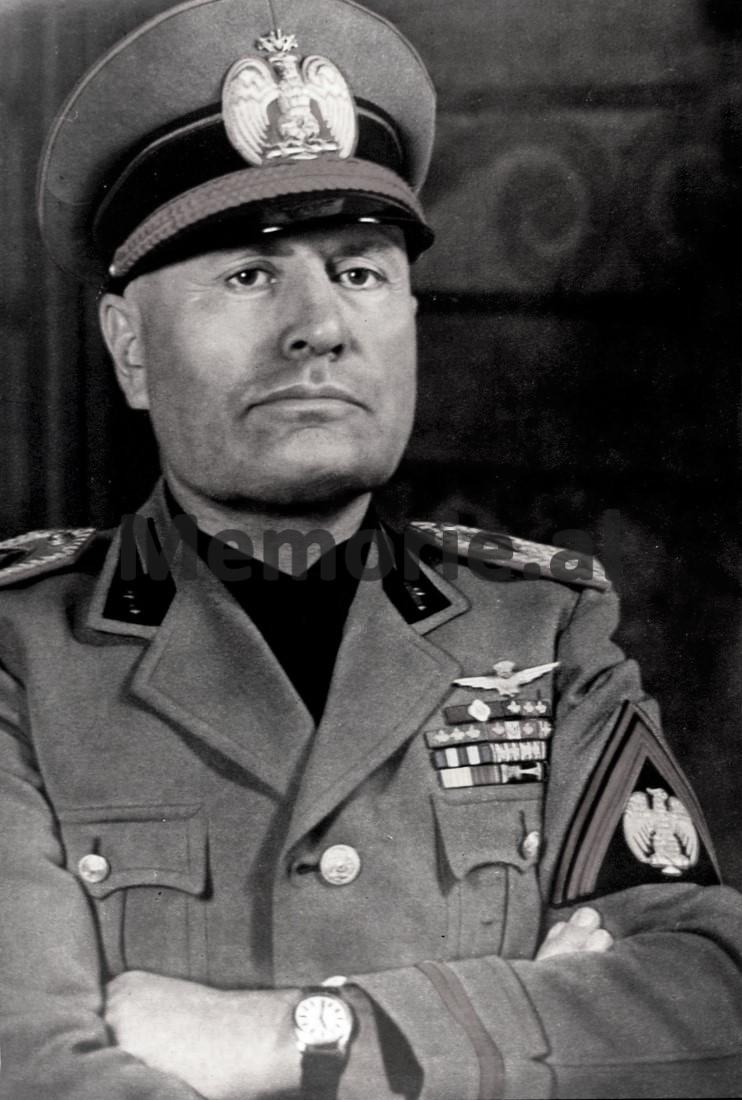
In his recently published book, titled “Dictators and Adventurers” (Diktatorë dhe Aventurierë), the author deals with the public and private lives – often unknown – of three well-known figures: Adolf Alois Hitler, Benito Amilcare Andrea Mussolini, and Joseph Vissarionovich Dzhugashvili (Stalin). These are the three most hated figures, physically dissimilar, yet total copies of one another in the damage they inflicted upon humanity. All three came from nothing, through adventures, including thefts and repeated imprisonments.
All three were ungrateful to the point that their consciences remained untroubled even when they executed their closest comrades – those who had stood by them during their most difficult days. Hitler killed his early companion, Röhm, and the victor of many battles, Rommel; Mussolini executed his own son-in-law, Count Ciano; while Stalin killed even Lev Kamenev, who had sheltered him in 1904 when he was persecuted by the police, as well as old members of the Politburo and the Central Committee who had supported him in countless political battles.
All three turned the numbing activity of propaganda into an institution to create their personality cults. All three achieved – through deception or terror – the idolatrous loyalty of the broad masses. All three created the impression that they were developing the economy and aiming for the well-being of their peoples, despite countless sacrifices. All three staged pretexts to justify invasions. All three led treacherous attacks on other countries: Hitler began with Czech students and Poland; Mussolini rushed into Abyssinia, Albania, and Greece; and Stalin targeted Finland and the Baltic republics.
All three created camps of mass death, regardless of the names they gave them: Concentration Camps or the Gulag. All three deported millions of innocent men, women, and children, sending them to certain death. All three empowered the most heartless secret services. All three carried out genocides, especially against the Jewish people. All three were unquestionable orators. All three relied on the glory of the past to inspire the masses. All three sought to convince their peoples that they were a superior race. All three aimed to spread their ideology and influence across the globe.
All three were degenerate and depraved; they preached morality while being unscrupulous themselves. All three had an inglorious end: the first, whom Golo Mann calls “a monster,” committed suicide in the bunkers of the Reich Chancellery; the second, whom authors Belusov and Petrushev called “a stallion,” breathed his last with nine bullets in his body by the wall of Villa Belmonte near Lake Como, only to be hung by his feet from an electric pole in Milan; and the third died in his own urine, perhaps poisoned by that other beast, Lavrentiy Beria, with the anticoagulant warfarin – only to be finally tarnished at the 20th Congress of the Communist Party of the Soviet Union as the greatest sadist of all time. Regarding him, his former comrade in the high leadership, Zinoviev, would shout before his execution: “Since the world has existed, there has been no more terrible monster on earth than Joseph Dzhugashvili!”
The wives of all three also shared the same fate; they died by bullets. The philosopher Lao Tzu once said: “To lead the people, walk behind them.” But these monsters – with their arrogance, prepotence, treachery, and social climbing, always desiring to remain in history like ancient Roman emperors – led the masses during their reigns as absolute autocrats down dangerous paths at an incalculable cost. There is no doubt they were geniuses, but geniuses of evil.
It is precisely these evils that writer Spiro Mëhilli has tracked and highlighted. He does not maintain a strict chronology of their political and military progress; other authors have done that, and the book would have become too academic. That was not his goal. He wanted, through irrefutable facts, to show us the animalistic face of these leaders, whose atrocities make the names of Nero and Genghis Khan seem forgotten. What remains in the reader’s mind is the intersection of moral decay with unparalleled crimes.
Thus, to the parallels between the Three, one must add: All three surpassed the Sultans in terms of the women they slept with; descending into filth, including affairs with the wives of their comrades and leaving behind illegal children.
The writer intentionally lists the prostitutes, ordinary women, high-society ladies, dancers, and singers with whom they engaged in orgies and perversions. He wanted to show how paradoxical and villainous those leaders were, whom nations followed with shameful submission. He reminds us to be careful, for such villains and vagabonds exist even to this day. Therefore, we should never close our eyes and idealize them. We live in a different time and have no reason to believe or behave like a submissive herd toward anyone who, in one form or another, seeks to convince us that they – and only they – are the Messiah, our savior.
Reading this book also brings to mind our own monster, Enver Hoxha, who, by declaring himself the greatest Stalinist – copying him to the letter – became the greatest criminal against Albanians.
Look at the spine-chilling facts collected by the patriotic writer Spiro Mëhilli, and you will understand that what happened in the former Soviet Union – where intellectuals, scientists, artists, writers, generals, war leaders, “kulaks,” and millions of others were killed without guilt – was the prelude to the terror the communist dictatorship exercised against us Albanians, a terror that, by not being remembered, is being forgotten. This is what compels me to bring to mind the repeated expression of Franz Kafka: “Those who do not remember the past are condemned to repeat it!”/Memorie.al