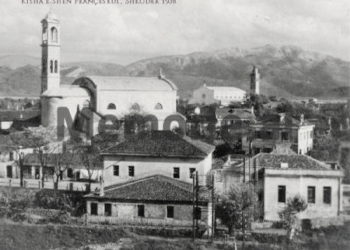
Memorie.al / Gjirokastra are distinguished for its multitude of prominent families who have made invaluable contributions to the history of the Albanian nation. Karagjozi is the name of one of the most renowned and famous clans in Gjirokastra. The oldest documents testifying to the origins and roots of this tribe were found in an ancient book of the Metropolis of Gjirokastra. Meanwhile, the word “Karagjozi” originates from the Turkish language, meaning “black-eyed” in Albanian.
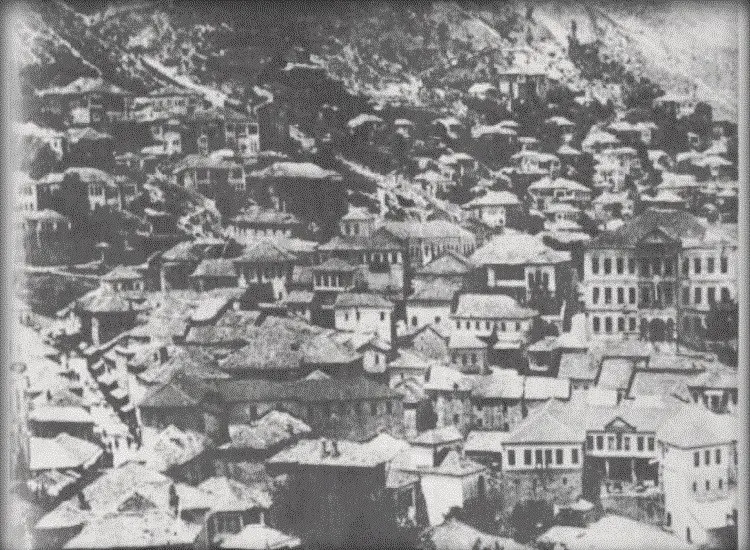
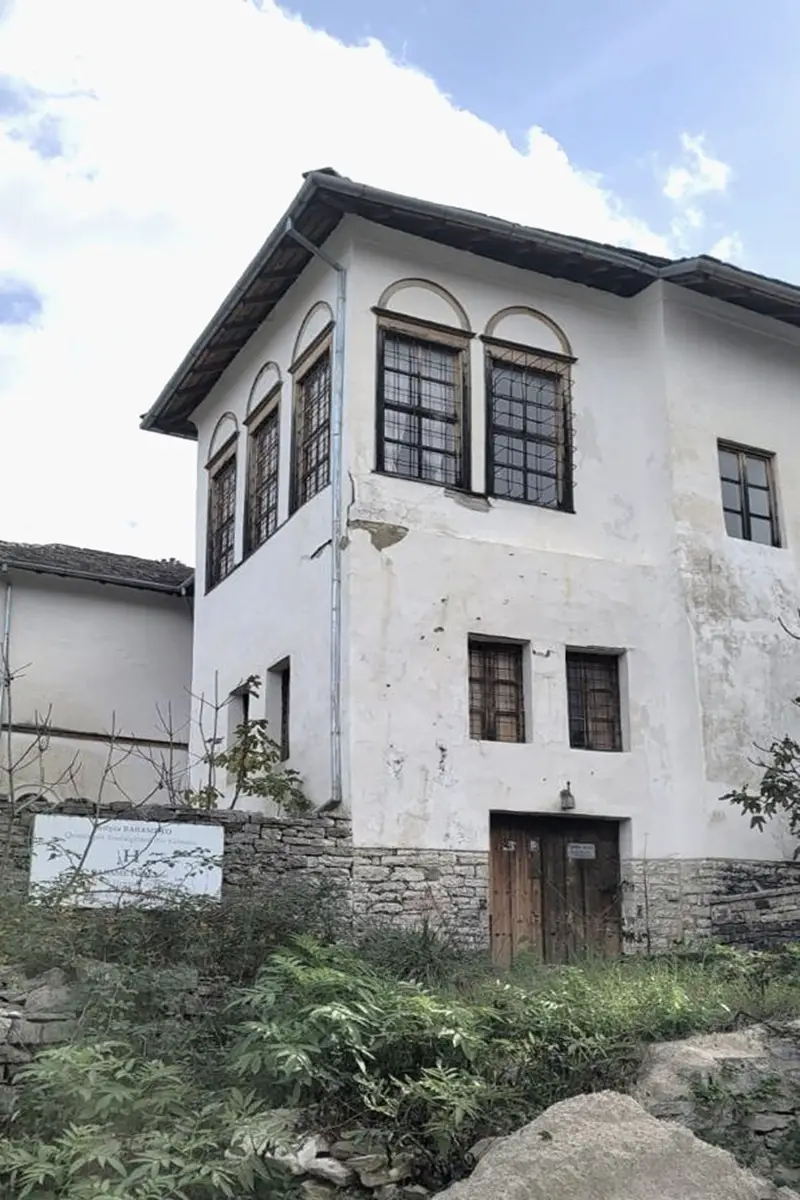
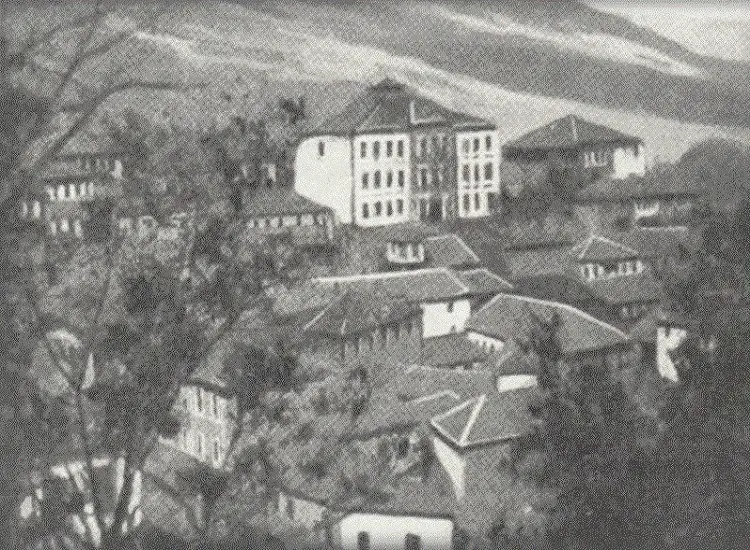
In the archives of the Metropolis, it was stated that: “Jani Karagjozi, residing in the ‘Dunavat’ neighborhood, was the ephors (overseer) of the ‘Ajio Maria’ monastery.” According to documents, the Karagjozi family home was among the first built outside the city’s fortress walls. The foundations of the house were laid over 250 years ago, on land that belonged to the “Ajio Maria” Monastery.
What is striking are the connections between the most famous clans of the “Stone City.” The Karagjozis are linked to many renowned families of Gjirokastra, such as the Kokalaris, Hoxhas, Çabejs, Topullis, Hasanajs, Hadërajs, Xhaxhiajs, Selfos, Çoçolajs, and many others. It is well known that Gjirokastrians have always been closely connected, often arranging marriages within the city. Similarly, they share matrimonial ties with the Xhaxhiaj and Selfo families.
The Karagjozi house was located in “First Dunavat,” and their neighbors were the Topulli clan, of whom it is said they split from the same fire (ancestry). A historical account tells that two of Çerçiz Topulli’s brothers were captured and tortured by the Greeks; however, they did not break and resisted. The captors described them as stoic – Topullos. From that point on, their last name was changed from Karagjozi to Topulli in honor of that resistance. Thus continue the connections of this highly reputable family with the Kokalaris, who lived next to the house of Enver Hoxha.
Do the Karagjozis have ties to the Hoxha family? The first Karagjozi residence was located to the left of the fortress gate, at its entrance. Over time, the house complex expanded over a wider area, remaining below the “Dunavat” neighborhood. Native Gjirokastrians associate the name Karagjozi with many events, stories, and well-known figures.
Among the most interesting facts is the common root they share with the Topulli clan in Gjirokastra. This story has been passed down orally in the city and has proven to be true, not merely a rumor. The split into two different surnames is linked to an early event. Archival documents state that: “when the foundations of the Karagjozi house were laid, the brothers Sali and the first Mehmet Karagjozi lived together.” Later, Mehmet took the surname Topulli because he was the first to fire the cannons (topat) of the Gjirokastra fortress. The word “Topulli” in Turkish translates to “son of the cannons.”
Furthermore, the documents state: “from that time on, Mehmet Karagjozi retained the surname Topulli, as did all generations of descendants who followed.” Thus, the famous heroes Bajo and Çerçiz Topulli come from the same root as the Karagjozi clan. They were not only warriors but also wealthy. The people of the Karagjozi tribe were among the richest in the city of Gjirokastra, a fact reflected in the construction of their houses.
In the “Dunavat” neighborhood, people generally lived with modest means, engaged in livestock or menial labor. Among them, the Karagjozis stood out; while they also dealt in livestock, they had managed to amass great wealth. Many historical facts and testimonies regarding the famous names of this clan during the period before the Turkish occupation have disappeared. Among the most prominent figures was Bahri Karagjozi, one of the most educated, intellectual, and patriotic individuals.
He completed his higher studies in Istanbul, Turkey, and was one of the initiators of the flag-raising on November 4, 1912, in Gjirokastra. Meanwhile, Sheraf Karagjozi was one of the wealthiest and wisest men in the city. He was the only person in Albania who, during the Zog regime, managed to trade goods with America. He exported cheese to the USA under his firm “Delja” (The Sheep).
He owned the richest pastures in the Gjirokastra district, including Çajupi, Lilqëthi, and others. Fifty years later, representatives of the American firm he collaborated with came to Gjirokastra to thank his son, Ferid, for the honesty, quality, and integrity his father had shown in their business relations. His descendants recount that his wealth grew continuously because of his great spirit. He worked with the motto: “let’s work together and earn together,” sharing a significant portion of the profits with the shepherds and the people who processed the milk.
Traits of the Karagjozis
Another patriotic figure was Parashqevi Karagjozi. Documents in the Gjirokastra museum show that “Parashqevi Karagjozi previously aided education in Gjirokastra, covering teachers’ salaries and other school needs in 1783.” Besides their contributions to education, patriotism, and politics, this clan is also noted for its longevity.
A curious fact is that one of the descendants, Sali Karagjozi, lived to be 120 years old. Even the physical appearance of the people of this tribe was distinctive. They were handsome, robust, and strong individuals, standing out for traits such as generosity, pride, and stubbornness. From generation to generation, these virtues were passed down to their descendants.
The Activity of Siri Karagjozi
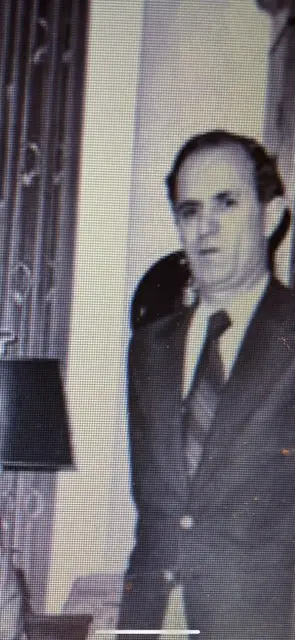
Siri Karagjozi remains in the memory of Gjirokastrians as a man of integrity, honesty, and tireless work. A large portion of the documents referred to in this writing were collected by Siri himself. He created his own archive, which was kindly provided to us by his granddaughter, Elvira Shapllo (Karagjozi).
Siri completed his law studies in Turkey. In the years 1912–1913, he became part of the Albanian patriotic circles in that country. He was a well-traveled man; he lived in the USA from 1915 to 1920, where he became a member of the “Vatra” society. He maintained contact with Fan Noli, with whom he exchanged thoughts on the fate of Albania against the claims of foreign powers. He took an active part in progressive movements. In his memoirs, he describes meetings with Avni Rustemi, how they experienced his act, his differences in conviction with Mufit Bej Libohova, meetings with Rexhep Pash Mati, and many other personalities of the time.
During the war, his brother, Njazi Karagjozi, was killed and declared a “Martyr of the Fatherland.” In 1945, Siri voluntarily opened the first literacy course, which operated for three consecutive years, teaching about 400 illiterate people. Last year, the Municipal Council of Gjirokastra decided to name one of the city’s neighborhoods after him.
The Karagjozis Today
Today, very few descendants of the Karagjozi clan remain in Gjirokastra. They have settled in various cities and countries, showcasing their inherited talent. After 1990, a good portion of their properties was returned to the Karagjozis, but descendants claim that many other properties have not yet been restored.
No documents exist for some of these because certain ancestors burned them out of fear of the communist regime. Their properties stretch from the fields across the city to the borders of Dropull, and on the other side of the Drino valley, not to mention the numerous and rich pastures on the mountain slopes.
One of the worthy descendants of the tribe living in Gjirokastra is Elvira Shapllo (Karagjozi). She has served as the director of the museum and as a Member of the Parliament of Albania during 1991–1992. Today, Mrs. Elvira is a lecturer at the Faculty of Social Sciences in the Department of History at “Eqrem Çabej” University. / Memorie.al