By Jonida PLAKU
Part Two
Memorie.al / History are full of labyrinths, and no one can claim to navigate it straight from the beginning, following all the details it carries within human lives. Especially when its paths have been closed or obstacles have been placed by those who, after declaring they victors, wrote it as it suited their interests. Within a 50-year span, truths cannot be easily “buried,” yet describing them as they truly were is no easy task for a journalist. But when the portrait of one of those – even if described by his opponents – meets you again with the grandeur of a man grown with time, conscience and professional duty push you into the unknowns of his life and those around him.
This is how Mr. Protopapa continues in his memoirs about those days of 1943: “Following the work I had done with Kristaq Tutulani, I went to work in the press sector of the Communist Party, in the prefecture building. Meanwhile, I maintained contact with the branch of the Berat youth group led by Resul Dollani, Namik Mehqemeja, Fatbardh Guri, Enver Karagjozi, Neti Fuga, etc.
This group decided to issue a statement signed by Resul Dollani, Namik Mehqemeja, Fatbardh Guri, and Enver Karagjozi regarding the formation of the National Communist Party. I say with regret that the only copy of that declaration I gave to Dr. Stavro Skëndi when I reached New York in 1947.
The contradiction between the terms ‘nationalist’ and ‘communist’ in the party’s name was more than evident, but those crazy times justified even such a thing. It should be noted that when Resul Dollani had been imprisoned by the Italian fascists, he was boycotted by his communist cellmates because the Communist Party had decided to destroy the ‘Youth Group’…! Even Namik Mehqemeja’s father and three other prominent Ballists, among them the leader of the Balli Kombëtar, lawyer Skënder Muço, had been mistreated and boycotted by the communists.”
According to the memoirs of contemporaries and the protagonist himself, who witnessed the relations between groups of different convictions within a small city like Berat – where the German occupier was absent – this was the precise moment of the great divide between them. This split was caused not by the members themselves, but by the leaders of these groups for the sake of future governing interests.
The “Sali Protopapa” of the Movie
Almost all of us remember the character Sali Protopapa. If we haven’t read about him in the great writer Dritëro Agolli’s novel “Commissar Memo,” we have seen him in the movie “The Eighth in Bronze” (I teti në bronx). Sali Protopapa is a complex figure whose character is etched into every reader’s mind, while visually; he was fixed in the film as an Anatolian-like figure that seemed to care only about eating.
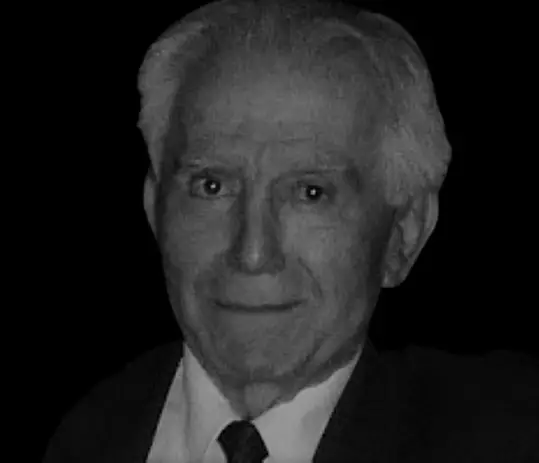
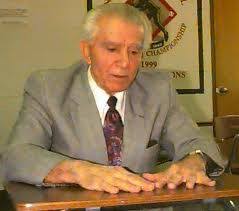
The role was masterfully performed by the renowned actor Pirro Mani. However, the real Sali Protopapa – who even has a different first name (Sejfi) – is a completely different character. He lives in America, where he enjoys a reputation entirely contrary to the one created in Albania. In his accounts, he is a Protopapa far removed from the one in the film.
“Enver’s Letter That Turned Me from Communist to Ballist”
The history of the early years before 1944 is as unknown as it is unbelievable. Our predecessors told it as they thought best and judged it should be transmitted to future generations, based on their convictions or mandates to build the society they dreamed of. This cannot burden those who did not know the future or the damage caused to subsequent generations.
But after more than 60 years, there is another panorama of what was fed for years – the deeds of those years inflated by the megalomania of the post-WWII winners. Perhaps for a reader with fixed convictions, this has little value in influencing the fact that history is not just something to be enjoyed in the moment as it is served to you, but a science that deserves attention.
The passages and notes of the character Sejfi Protopapa, given his mentality and historical conditions, do not aim to denigrate history. He, more than anyone, knows that it cannot change the course of his life as a great physicist and American citizen.
The calvaries of suffering cannot erase memory at turning points, despite the retouching done to the life of an entire community during a historical period. This is how Sejfi Protopapa describes the moment of his break from Berat for Roskovec:
“It was August 1943, and in the communist press office (which was in the Prefecture of Berat and under the command of the Communist Front forces), I came across a letter signed by ‘Shpati,’ which was Enver Hoxha’s pseudonym during the War. The letter informed the communist leadership of Berat that the Communist Party did not recognize the Mukje Agreement and instructed the start of the war for full political and military control of the country.
After reading that letter, I consulted with my uncle, Veli Protopapa, and he suggested that I show that letter to Abaz Ermenji, the commander of the Balli forces in the Berat area, who was stationed at the municipality. After doing this, it was decided that the members of the youth group would join the Balli forces, and I would stay with Abaz Ermenji’s staff.”
Sejfi Protopapa, regardless of the political stance of the time, stood by his decision and the relationships he had with Berat society – a society intertwined with communist relations in this city of strange labyrinths, much like the streets and alleys of its ancient neighborhoods.
How Did Sejfi Protopapa Flee Berat?
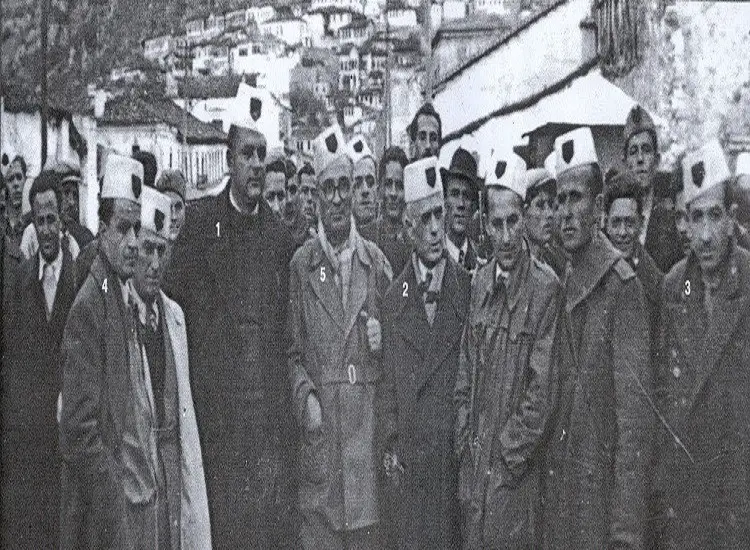
According to the protagonist’s memoirs, events were aggravating between the groups in Berat. After two or three days, only the Balli forces returned to Berat, settling at the Dyrmove Hotel, while the Front found it difficult to enter the city.
According to Sejfi Protopapa, no one intended to cut off relations between friends who had operated together for the same goal, albeit with different political convictions. To describe the moment of Protopapa’s departure from Berat, we bring his memoirs:
“It was lunchtime, and I was taking my father home on a bicycle. Two armed Ballists accompanied us from behind. I was entering my alley when, at the turn near the prefecture, a group of 7 partisans led by Çano Velmishi, a distant cousin of mine, came toward me.
They asked me to go to the prefecture, but I asked Çano to let me take my father home first; he refused. My father intervened and resolved the situation, after which I returned to the municipality via secondary roads. That day marked the first day I was placed in the communist crosshairs.”
A Contemporary Speaks: “How Did the Fratricide Begin in Berat?”
One of Sejfi Protopapa’s contemporaries in Berat, but aligned with the opposing front, Pelivan Nurja, tells “Tirana Observer” how the fratricide began – something that in Berat, until then, was unimaginable.
“How did you experience that time and what can you tell us about the start of the war?”
“In October 1943, after the fall of Italy, there were no Germans in Berat because they were in Ura Vajgurore. I don’t remember if it was the first or second Sunday of October, but it was a Sunday when the war began between the Balli and the Party, or the Front, call it what you will.
I was young, and that day I went to the cyclists – where the bust of Margarita Tutulani stands today – and rented a bicycle at the shop of Islam and Nure Gjeroveni. They were brothers and had moved their shop to ‘Çelepias’ due to their connections with the communists and the Front.”
“But what does this have to do with the fratricide?”
“That same day, after I had done a few laps on the rented bicycle, a partisan standing at the crossroads where the bust of Babë Dudë Karbunara was, shot Kiço Bezhani, one of the Balli exponents, who was traveling near the bank (where the ‘White House’ is today, below the Mangalem neighborhood). After this killing, Balli machine guns began firing from the ‘Colombo’ hotel and the municipality building, while the Front’s machine gun fired from the prefecture buildings.”
“From where did they fire and how did the situation go?”
“They fired wherever they could. Shortly after, Myrto Qafa came out, asking both sides to reach an agreement over what happened, saying it wasn’t about fratricide. After two hours, the situation calmed down and it seemed the groups met to negotiate, but a German squadron arrived from Ura Vajgurore to establish order. After that, the war began again between the Ballists and partisans, both of whom the Germans pushed out of Berat.”/Memorie.al