
By Dashnor Kaloçi
Part twenty-four
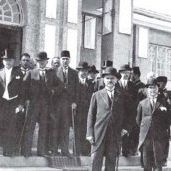
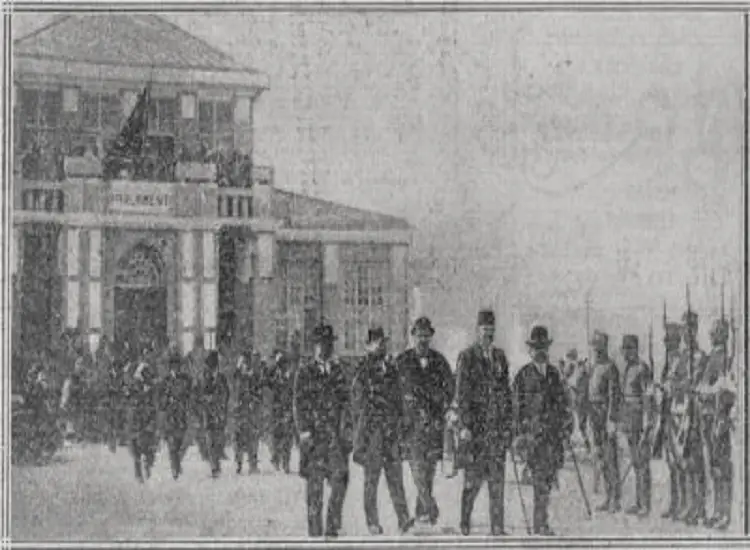
Memorie.al / The history of parliamentary elections in our country, or more accurately, the attempts at elections, have its origins in the era of Ottoman rule when Albania was part of the Turkish Empire. One of the first Albanian deputies elected to the first Turkish Parliament, which opened its proceedings in December 1877, was Abdyl Frashëri. However, that parliament did not last long, as it was dissolved by the Sultan himself due to the outbreak of the Russo-Turkish War. Following the dissolution of Turkey’s first parliament, there were several other attempts at elections, but they all failed for various reasons. The first regular elections in Albania were held only in 1908, when the Young Turks came to power in Turkey. Those elections were not direct but were held through representation, otherwise known as the two-tier voting system (secondary electors).
The first Turkish Parliament opened on December 10, 1908, and out of 266 deputies, 27 were Albanians elected from the four vilayets of Albania. At that time, members of the “Committee of Union and Progress” in Turkey, which included many Albanians, split and grouped into three political factions. The first group was “Union and Progress” (the Turkish-Macedonian party) with 164 deputies, consisting of 130 Turks, 5 Arabs, 1 Greek, and 15 Albanians, led by Hasan Prishtina, a deputy from Kosovo.
The second group, called “Liberal Union” (the Greek-Albanian party), consisted of 45 deputies and included 12 Albanians led by Ismail Qemali. Among the other Albanian deputies in the Turkish Parliament at the time were Esad Pashë Toptani, Nexhip Draga, Rexhep Pashë Mati, etc. After 1908, there were several other elections where Albanians continued to vote for their representatives in the Turkish Parliament, a process that lasted until November 1912, when Independence was proclaimed and Ismail Qemali was elected head of the Government.
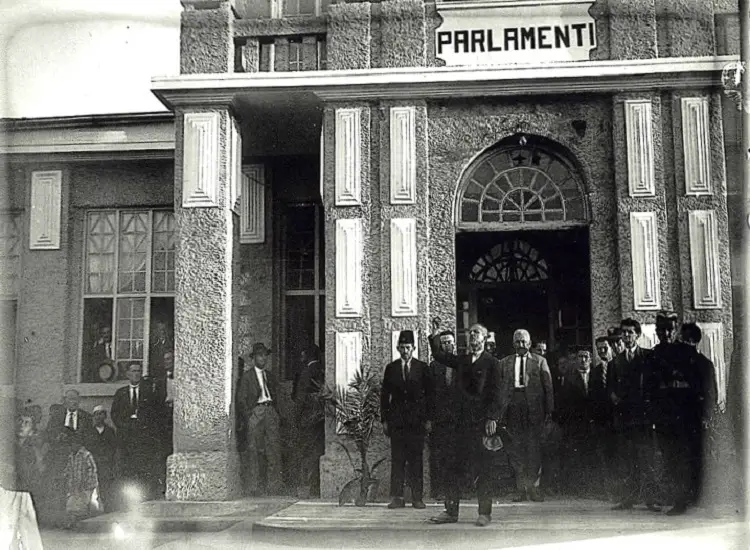
Meanwhile, the first parliamentary elections in Albania took place in the spring of 1921, as they had not been held until then due to World War I, in which Albania was also involved. The first Albanian Parliament opened on April 21 of that year; the first building of the Albanian Parliament was located where the Academy of Sciences stands today. In that parliament, 76 deputies participated, elected following a relatively regular process from the nine prefectures of the country: Berat, Durrës, Elbasan, Gjirokastra, Korça, Kosovo, Shkodra, Vlora, and the Albanian colony in the USA.
As in the past, those elections were conducted through a system of representation, or secondary electors, where based on territorial division, representatives of each province had the right to elect their deputy. The aforementioned, along with a brief history of parliamentary elections in Albania from that period until 1991, has been published by Memorie.al in previous issues. Here, we are publishing the complete Basic Statute of the Albanian Republic (the Constitution) of 1925, where a special place is held by the parliamentary election legislation of that time, as well as the Parliament’s regulations regarding the rights and duties of deputies, published by the “NIKAJ” Printing House in 1925.
Continued from the previous issue…
PENAL CODE 1928
BOOK III
CHAPTER V: Contraventions Concerning Spectacles, Establishments, and Public Exercises
ARTICLE 497. – Whoever opens or keeps open places for public spectacles or clubs, without respecting the orders issued by the Authority in the interest of public safety, shall be punished with light imprisonment for up to one month and a light fine; and in the case of a recidivism of this offense, the light fine cannot be less than three hundred gold francs.
ARTICLE 498. – Whoever, without the permission of the Authority, organizes spectacles or games or other entertainments of any kind in public places or those open to the public, shall be punished with a light fine from twenty to two hundred gold francs; and if the offense is committed against a prohibition of the Authority, they shall be punished with light imprisonment for up to one month and a light fine from fifty to five hundred gold francs, and in the case of a recidivism of this offense, in addition to other consequences of recidivism, a temporary ban from their profession or craft shall be imposed.
ARTICLE 499. – Whoever opens business agencies, or establishments, or public exercises without first obtaining the permission of the Authority, when such permission is required by law, shall be punished with a light fine of up to three hundred gold francs; and in the case of a recidivism of this offense, light imprisonment for up to one month shall be added to the aforementioned fine.
If they have requested that permission and it was refused, the punishment is a light fine of up to five hundred gold francs, and in the case of recidivism of this offense, light imprisonment for up to three months shall be added to the aforementioned fine.
ARTICLE 500. – The owner or director of an agency or one of the establishments or public exercises mentioned in the preceding article, who does not respect the orders established by law or by the Authority, shall be punished with a light fine of up to one hundred gold francs, to which, in the case of a recidivism of this offense, shall be added light imprisonment for up to fifteen days and the suspension of the exercise of their profession or craft for up to one month.
ARTICLE 501. – Whoever, for payment, provides a place for sleeping or takes in as a boarder, or to watch over and care for a person, without respecting the orders of the law that require them to register, declare, or notify the Authority regarding that person, shall be punished with a light fine from ten to one hundred gold francs; and in the case of a recidivism of this offense, with a light fine from fifty to three hundred gold francs.
If the industry is exercised against the prohibition of the Authority, the punishment is a light fine from twenty to two hundred gold francs, and in the case of a recidivism of this offense, with a light fine from one hundred to five hundred gold francs.
CHAPTER VI: Gathering of Combatants Without Authority Permission
ARTICLE 502. – Whoever, outside the cases provided for in Articles 122, 132, 144, 279, and 280 of this Code, and without the permission of the Ministry of Internal Affairs, opens centers to enroll and gather volunteers, shall be punished with a light fine [correction: light imprisonment] from fifty to one thousand gold francs [Note: original text says “burgim” but lists a fine amount; likely implies fine or imprisonment].
CHAPTER VII: Begging
ARTICLE 503. – Whoever, having the strength to work, engages in begging, shall be punished with light imprisonment for up to ten days, and in the case of a recidivism of this offense, with light imprisonment for up to one month.
The same punishment applies to whoever begs under a pretext or by appearing to serve alongside a person or as if selling items, as well as whoever begs while having the means for living.
ARTICLE 504. – Whoever begs in an intimidating manner or by harassing or annoying people, taking into account the circumstances of time, place, means, or person, shall be punished with light imprisonment for up to one month, and in the case of recidivism of this offense, with light imprisonment from one to six months.
ARTICLE 505. – The court may order that the punishment of light imprisonment determined in the preceding articles be carried out in any of the manners provided for in Article 23.
ARTICLE 506. – Whoever permits a minor under fourteen years old, who is under their authority or has been entrusted to them for protection or observation, to wander while begging or permits them to be used by others to beg for them, shall be punished with light imprisonment for up to two months and a light fine of up to three hundred gold francs; and in the case of a recidivism of this offense, with light imprisonment from two to four months.
With light imprisonment from ten days to two months and a light fine of one hundred gold francs, shall also be punished whoever, for the purpose of profit, gathers such minors and puts them to beg.
In the case of recidivism of this offense, the light imprisonment is no less than one month, and the light fine no less than fifty gold francs.
CHAPTER VIII: Disturbance of Public Peace
ARTICLE 507. – Whoever, by shouting or making an uproar, or by ringing bells or chimes or other instruments out of order, or by exercising professions or crafts with noise against the provisions of the law or regulations, disturbs the work or the peace of the people, or public gatherings, shall be punished with a light fine of up to thirty gold francs, which may be extended up to one hundred gold francs in case of a recidivism.
If the act is committed at night, the light fine is from fifty to two hundred gold francs, and in case of recidivism, light imprisonment of up to twenty days may be added to the fine.
If the act is of such a nature as to cause fear among the people, the light imprisonment may extend to one and a half months, and the light fine up to three hundred gold francs.
ARTICLE 508. – Whoever publicly and in a shameful manner harasses another and disturbs their peace shall be punished with a light fine of up to one hundred gold francs or with light imprisonment for up to fifteen days.
ARTICLE 509. – Whoever knowingly gives or spreads false news concerning any person that causes the disturbance of the peace of others shall be punished with light imprisonment for up to ten days, or with a light fine from thirty to three hundred gold francs.
CHAPTER IX: Slight Abuse of Trust
ARTICLE 510. – Whoever, in public places or those open to the public, seeks by any kind of charlatanism to abuse public trust in a way that may cause harm to others or disturb public order, shall be punished with light imprisonment for up to fifty days and, in case of a recidivism, with light imprisonment for up to one month.
TITLE II: Contraventions Concerning Public Integrity
CHAPTER I: Contraventions Concerning Weapons and Explosive Materials
ARTICLE 511. – Whoever, without obtaining permission from the Administrative Authority, establishes a weapons factory or brings weapons into the State, except for those necessary for personal use, shall be punished with light imprisonment for up to six months or with a light fine from fifty to one thousand gold francs.
ARTICLE 512. – Whoever, without permission, manufactures, brings into the State, sells, or offers for sale concealed weapons, shall be punished with light imprisonment for up to six months and suspension from the exercise of their profession or craft.
ARTICLE 513. – Whoever, without permission, manufactures or brings into the State gunpowder or other explosive materials shall be punished with light imprisonment for up to three months and a light fine of up to five hundred gold francs.
ARTICLE 514. – Whoever sells or offers for sale weapons without having a permit from the Administrative Authority, where such a permit is legally required, shall be punished with light imprisonment for up to one month and a light fine from fifty to five hundred gold francs.
ARTICLE 515 (Carrying Weapons). – Whoever, without permission and outside their residence or its dependencies, carries weapons for which a permit is required, shall be punished with light imprisonment for up to one month or a light fine of up to two hundred gold francs?
The offender shall be punished:
- With light imprisonment for up to four months and a light fine of up to two hundred gold francs, if the weapon is a pistol or a revolver.
- With light imprisonment from one month to one year and a light fine from fifty to five hundred gold francs, if the weapon is concealed.
ARTICLE 516 (Aggravating Circumstances). – The punishments in the preceding article shall be increased:
- By one-third if the weapon is carried in places where people gather or at night in inhabited places, or if the offender has been convicted of begging.
- By one-third to one-half if the offender has prior convictions for crimes against persons or property committed with violence, or for violence or resistance against Authority, or is under special supervision; in these cases, the punishment shall always be light imprisonment.
ARTICLE 517 (Negligence with Weapons). – A fine of up to one hundred gold francs shall be imposed on anyone who, even though they have a permit to carry firearms:
- Gives or allows such a weapon to be held while loaded by a minor under fourteen years old or any person who does not know or cannot use the weapon with sound mental judgment.
- Fails to take necessary measures in the storage of weapons to prevent them from falling into the hands of the aforementioned persons.
- Carries a loaded rifle in places where people gather.
ARTICLE 518 (Discharging Firearms). – Whoever, without permission or without absolute necessity, discharges firearms, sets off fireworks or explosive machines, or causes other dangerous or unreasonable explosions in or near an inhabited place or along a public road, shall be fined up to two hundred gold francs. If the act is significant, light imprisonment for up to one month may be added.
ARTICLE 519 (Hidden Stocks). – Whoever secretly or against the law keeps in their home or elsewhere rifles or ammunition (except for hunting), or pieces of artillery, explosive or flammable materials that are dangerous due to quantity or quality, shall be punished with light imprisonment of no less than three months. If the weapons are hidden, they may be placed under special supervision.
ARTICLE 520. – Whoever transports gunpowder or explosives beyond personal or industrial needs without permission or without following legal safety measures shall be punished with light imprisonment for up to one month or a light fine of three hundred gold francs.
ARTICLE 521 (Definition of Concealed Weapons). – For the effects of the penal law, the following are considered concealed weapons:
- Bayonets, daggers, and kamas of any form, and knives with fixed blades or those with springs/mechanisms that prevent the blade from folding.
- Firearms with a barrel length (measured internally) not exceeding fifteen centimeters, bombs, and all explosive machines or wrapped objects that explode.
- Cutting, pointed, or firearms of any size concealed within canes, staffs, or sticks.
CHAPTER II: Collapse and Failure to Repair Buildings
ARTICLE 522. – Whoever participated in the planning or construction of a building, if it collapses due to their negligence or lack of training, even if not causing danger to others, shall be fined no less than one hundred gold francs; they may also be suspended from their profession. This applies to the collapse of bridges or scaffolding as well.
ARTICLE 523. – When a building is in danger of collapsing, the owner or person responsible who fails to take necessary measures to prevent the danger shall be fined from ten to one hundred gold francs; and up to one thousand gold francs if they violated a direct order from the Authority. If the building is already partially or fully ruined and the person fails to prevent the resulting danger, the fine is from fifty to one thousand gold francs. /Memorie.al