

By Dashnor Kaloçi
Part twenty-three
Memorie.al / The history of parliamentary elections in our country, or more accurately, the attempts at elections, have its origins in the era of Ottoman rule when Albania was part of the Turkish Empire. One of the first Albanian deputies elected to the first Turkish Parliament, which opened its proceedings in December 1877, was Abdyl Frashëri. However, that parliament did not last long, as it was dissolved by the Sultan himself due to the outbreak of the Russo-Turkish War. Following the dissolution of Turkey’s first parliament, there were several other attempts at elections, but they all failed for various reasons. The first regular elections in Albania were held only in 1908, when the Young Turks came to power in Turkey. Those elections were not direct but were held through representation, otherwise known as the two-tier voting system (secondary electors).
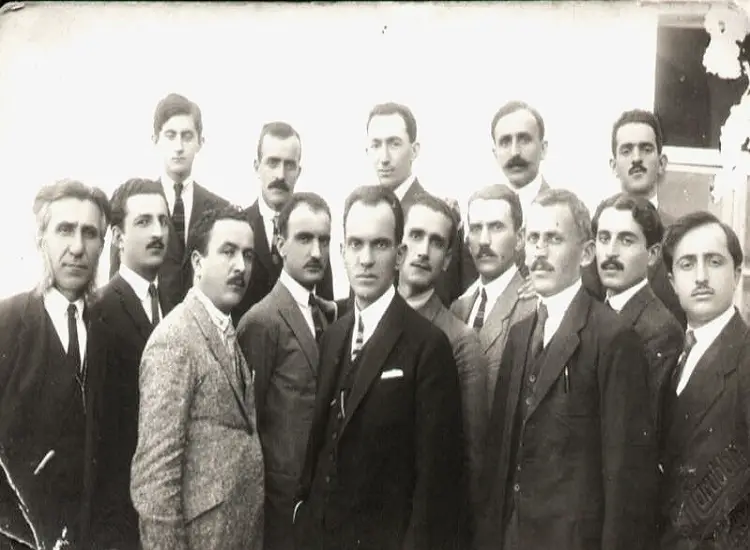
The first Turkish Parliament opened on December 10, 1908, and out of 266 deputies, 27 were Albanians elected from the four vilayets of Albania. At that time, members of the “Committee of Union and Progress” in Turkey, which included many Albanians, split and grouped into three political factions. The first group was “Union and Progress” (the Turkish-Macedonian party) with 164 deputies, consisting of 130 Turks, 5 Arabs, 1 Greek, and 15 Albanians, led by Hasan Prishtina, a deputy from Kosovo.
The second group, called “Liberal Union” (the Greek-Albanian party), consisted of 45 deputies and included 12 Albanians led by Ismail Qemali. Among the other Albanian deputies in the Turkish Parliament at the time were Esad Pashë Toptani, Nexhip Draga, Rexhep Pashë Mati, etc. After 1908, there were several other elections where Albanians continued to vote for their representatives in the Turkish Parliament, a process that lasted until November 1912, when Independence was proclaimed and Ismail Qemali was elected head of the Government.
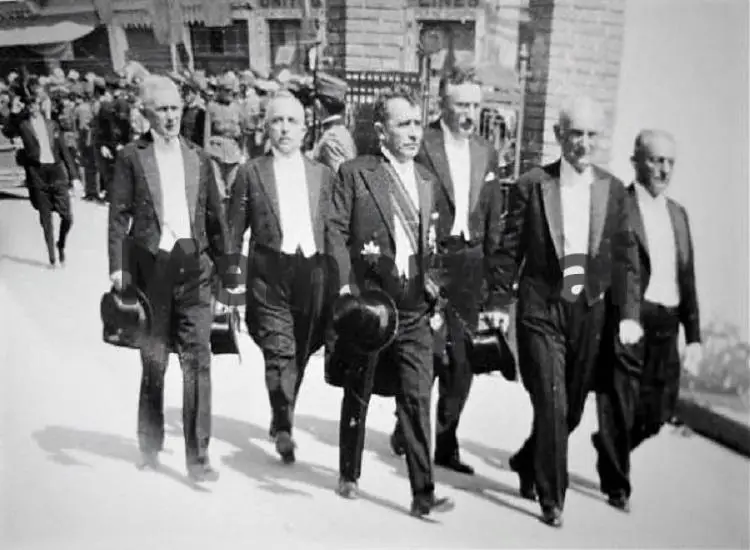
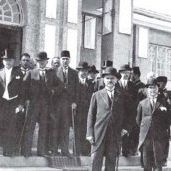
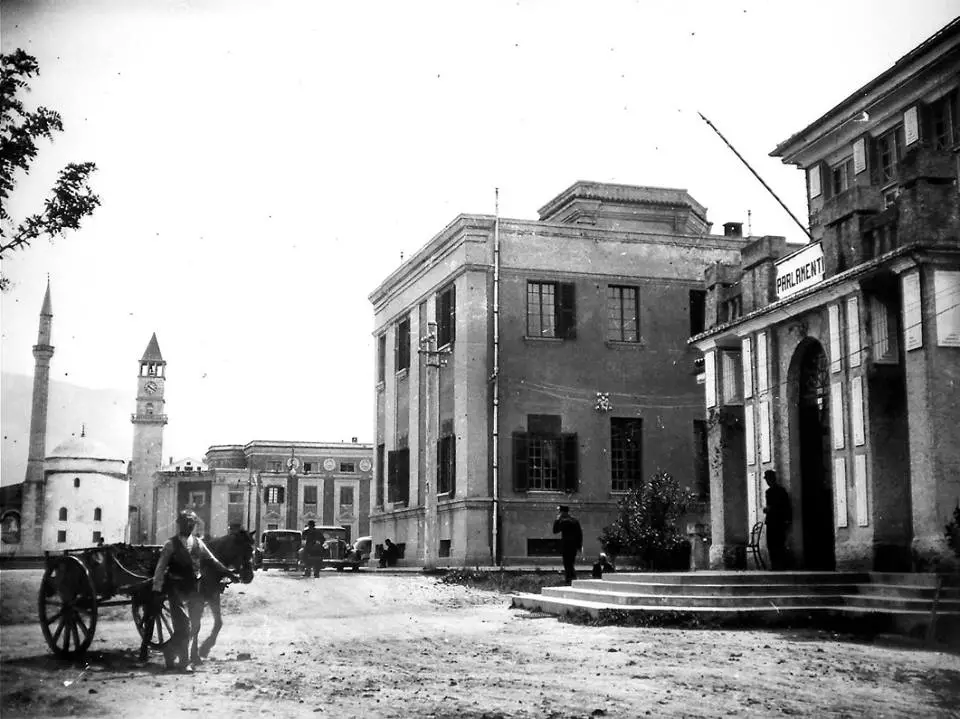
Meanwhile, the first parliamentary elections in Albania took place in the spring of 1921, as they had not been held until then due to World War I, in which Albania was also involved. The first Albanian Parliament opened on April 21 of that year; the first building of the Albanian Parliament was located where the Academy of Sciences stands today. In that parliament, 76 deputies participated, elected following a relatively regular process from the nine prefectures of the country: Berat, Durrës, Elbasan, Gjirokastra, Korça, Kosovo, Shkodra, Vlora, and the Albanian colony in the USA.
As in the past, those elections were conducted through a system of representation, or secondary electors, where based on territorial division, representatives of each province had the right to elect their deputy. The aforementioned, along with a brief history of parliamentary elections in Albania from that period until 1991, has been published by Memorie.al in previous issues. Here, we are publishing the complete Basic Statute of the Albanian Republic (the Constitution) of 1925, where a special place is held by the parliamentary election legislation of that time, as well as the Parliament’s regulations regarding the rights and duties of deputies, published by the “NIKAJ” Printing House in 1925.
Continued from the previous issue…
PENAL CODE 1928
SECOND BOOK
TITLE VII: Crimes Against Public Integrity
CHAPTER VII: Damage
ARTICLE 472. – Whoever destroys, causes to disappear, ruins, or in any way damages (deteriore) movable or immovable property of another, shall be punished, upon the request of the injured party, with imprisonment for up to one year and a heavy fine of up to five hundred gold francs.
The punishment shall be imprisonment from one month to three years and a heavy fine of up to three thousand gold francs, and prosecution shall be initiated ex officio, if the act is committed:
- Out of revenge against a State official due to their function.
- With violence against a person or using any of the means specified in numbers 4 and 5 of Article 448.
- Upon public buildings or those intended for public use, public benefit, or the exercise of a religion; or upon buildings/works of the type described in Article 335, or public monuments, cemeteries, or their dependencies.
- Upon paths, barriers, or other works intended as public protection against hazards, or upon apparatuses/signs intended for public service.
- Upon canals, ditches, or other works intended for irrigation.
- Upon vines, trellises, or trees/seedlings that bear fruit.
ARTICLE 473. – When the offense provided in the preceding article is committed during an act of violence or resistance against the Authority, or by a gathering of more than seven persons, all who cooperate in the offense shall be punished: in the case of Section I, with imprisonment from one month to two years and a heavy fine of up to two thousand gold francs; and in the cases of Section II, with imprisonment from two months to four years and a heavy fine of up to four thousand gold francs. Prosecution shall always be initiated ex officio.
ARTICLE 474 (Damage by Animals). – Whoever causes damage to another’s land by unlawfully leading or leaving animals within it shall be punished, upon the request of the injured party, according to the provisions of Article 472.
For the sole act of leading or unlawfully leaving animals to graze, the offender shall be punished, upon the request of the injured party, with imprisonment for up to three months or a heavy fine of up to five hundred gold francs.
Whoever, through negligence or imprudence, causes animals to enter and damage another’s land, shall be punished with imprisonment for up to one month or a heavy fine of up to two hundred gold francs.
ARTICLE 475 (Trespassing). – Whoever arbitrarily enters another’s land that is enclosed by a fence or hedge, by ditches or paths, shall be punished, upon the request of the injured party, with a heavy fine of up to one hundred gold francs; in the case of a recidivism of this offense, they shall be punished, in addition to the fine, with imprisonment for up to one month.
ARTICLE 476 (Unlawful Hunting). – Whoever hunts on another’s land after the owner has forbidden entry in the manners prescribed by law and when signs indicating this prohibition are posted, shall be punished, upon the request of the injured party, with a heavy fine of up to fifty gold francs; in the case of a recidivism of this offense, with imprisonment for up to fifty days.
ARTICLE 477 (Abuse of Animals). – Whoever, without necessity, kills or renders useless an animal belonging to another, shall be punished, upon the request of the injured party, with imprisonment for up to three months and a heavy fine of up to one thousand gold francs.
If the damage is minor, the offender may be punished only with a heavy fine of up to three hundred gold francs.
If the act caused the maiming of the animal or a decrease in its value, the punishment is imprisonment for up to one month or a heavy fine of up to three hundred gold francs.
No punishment applies to one who commits this act upon poultry from a coop or cage when they are causing damage to their land.
ARTICLE 478 (Defacement). – Whoever, outside the cases provided in the preceding articles, defaces or soils movable or immovable property of another, shall be punished, upon the request of the injured party, with a heavy fine of up to five hundred gold francs.
If one or more of the circumstances in Article 473 coincide, imprisonment for up to three months shall be added to the fine, and prosecution shall be initiated ex officio.
CHAPTER VIII: Common Provisions for the Preceding Chapters
ARTICLE 479. – In the offenses provided for in this title, if the value of the object forming the subject of the offense or that which corresponds to the resulting damage is very high, the court may increase the punishment by up to half; and if it is very small, it may reduce it by up to one-third.
In the case of point I of Article 446, if the value of the stolen object is negligible and the offender acted being compelled by extreme poverty, the court may even exempt them from punishment.
To determine the value, there shall be taken into account the value the object had and that of the damage caused at the time the offense was committed, as well as the profit made by the offender.
The reductions of punishment as above shall not apply if the offender is a recidivist of an offense of the same kind, or if the offense committed is among those provided for in Chapter II of this title.
ARTICLE 480. – When the offender of any of the offenses provided for in Chapters I, III, IV, and V of this title, and in § I of Article 472 and in Articles 474 and 477, before any judicial prosecution against them, returns the taken object or, when by the nature of the act or other circumstances return is not possible, fully compensates the robbed or damaged party, the punishment shall be reduced by one-third to two-thirds.
The punishment shall be reduced by one-sixth to one-third if the return or compensation is made during the ongoing prosecution and before the case is sent to trial.
ARTICLE 481. – For the acts provided for in Chapters I, III, IV, and V of this title and in point I of Article 472, as well as those of Articles 474 and 477, the person who committed the offense to the detriment of the following shall not be criminally prosecuted:
- An un-divorced or not legally separated spouse;
- An ascendant or a descendant, or a father-in-law or mother-in-law, or their parents, a son-in-law, or a daughter-in-law, or an adoptive father, mother, son, or daughter;
- A brother or a sister who cohabitates with them in one family.
If the act is committed to the detriment of a legally separated spouse, or a brother or sister who do not cohabitate in one family with the perpetrator of the offense, or an uncle or aunt, nephew or niece, brother-in-law or sister-in-law who cohabitate in one family with the perpetrator, the prosecution shall be initiated only upon the request of the injured party and the punishment shall be reduced by one-third.
BOOK III: CONTRAVENTIONS
TITLE I: Contraventions Concerning Public Order
CHAPTER I: Refusal to Obey Authority
ARTICLE 482. – Whoever violates an order lawfully issued by the competent Authority, or does not respect a measure taken according to the law by that Authority in the interest of justice or public security shall be punished with light imprisonment from three days to three months, or with a light fine from fifteen to five hundred gold francs.
ARTICLE 483. – Whoever, in the event of a disturbance or a calamity or a flagrant offense, refuses, without any reasonable cause, to give their assistance or service, or refuses to give information or accounts requested by a state official in the exercise of their function, shall be punished with a light fine of up to two hundred gold francs, or with light imprisonment of up to fifteen days; and if they give false information or accounts, with a light fine from one hundred to five hundred gold francs, or with light imprisonment from three days to two months.
ARTICLE 484. – Whoever refuses to state to a state official in the exercise of their function their name, surname, status (etat), or profession, place of birth or residence, or other personal qualities, shall be punished with a light fine of up to fifty gold francs; and if they give false accounts, they shall be punished with a light fine from fifty to three hundred gold francs, or with light imprisonment for up to one month.
ARTICLE 485. – Whoever, against the lawful prohibition of the competent Authority, leads or directs religious ceremonies outside the places intended for faith, or religious or civil processions in public squares or streets, shall be punished with a light fine of up to five hundred gold francs, or with light imprisonment for up to ten days; and if the act causes public disturbance, they shall be punished with light imprisonment for up to two months and a light fine from fifty to one thousand gold francs.
ARTICLE 486. – A cleric who exercises the function of external prayer against the measures lawfully taken by the competent Authority shall be punished with light imprisonment for up to three months and a light fine from fifty to one thousand gold francs.
CHAPTER II: Omission in Reporting Offenses and in the Care of the Helpless and the Sick
ARTICLE 487. – A physician, surgeon, midwife, or other health officials who, having provided their professional aid in a case where signs of an offense against a person may appear, omit or delay to notify the judicial Authority or that of public security – except when the notification places the assisted person in a criminal prosecution – shall be punished with a light fine of up to five hundred gold francs.
ARTICLE 488. – Whoever, finding abandoned or lost a minor under seven years old or another person who, due to mental or physical illness, cannot look after themselves, does not immediately notify the Authority or its agents, shall be punished with a light fine from twenty to five hundred gold francs.
The same punishment applies to whoever finds a person wounded or otherwise in danger, or a human body that is or appears dead, and does not provide the necessary help or does not immediately notify the Authority or its agents, when this does not bring them any harm or does not place them in any personal danger; and if they have hidden the found corpse, they shall be punished with light imprisonment for up to one year.
ARTICLE 489. – Physicians, surgeons, and midwives who are called by a sick person to provide their professional aid, if without any reason they omit or do not hasten the visit, as well as pharmacists who refuse in this manner to provide the medicines or tools requested from them, shall be punished with a light fine of up to one thousand gold francs.
If they knew that the person for whom they were called to provide help was in danger, the punishment is light imprisonment for up to six months, or a light fine of no less than one hundred gold francs.
CHAPTER III: Contraventions Concerning Currency
ARTICLE 490. – Whoever, having kept as genuine coins of a total value of more than two gold francs, later recognizes that they are counterfeit or altered and does not surrender them to the Authority within three days – stating as far as possible where these coins came from – shall be punished with a light fine of up to three hundred gold francs.
ARTICLE 491. – Whoever refuses to accept, at their value, coins that have legal tender in Albania, shall be punished with a light fine of up to two hundred gold francs?
CHAPTER IV: Contraventions Concerning the Exercise of a Typographic Craft, Sale of Printed Matter, and Posters
ARTICLE 492. – Whoever exercises the typographic, lithographic, or any other such craft that produces many copies by mechanical or chemical means, while not respecting legal rules, shall be punished with a light fine from one hundred to one thousand five hundred gold francs.
ARTICLE 493. – Whoever sells or distributes in public places or those open to the public printed papers, drawings, or manuscripts without government permission, when such permission is required by law, shall be punished with a light fine of up to fifty gold francs.
If the Authority has ordered the seizure of the printed papers or drawings, the punishment is light imprisonment for up to one month and a light fine from fifty to five hundred gold francs.
ARTICLE 494. – Whoever, while selling or distributing printed papers, drawings, or manuscripts in public places or those open to the public, announces by voice news that may disturb the peace of the people, shall be punished with a light fine of up to two hundred gold francs; and if that news is false or defamatory, the punishment is a light fine from one hundred to three hundred gold francs, or light imprisonment for up to one month.
ARTICLE 495. – Whoever, without the permission of the Authority or outside the places where posting is allowed, posts themselves or through another printed papers, drawings, or manuscripts, shall be punished with a light fine of up to fifty gold francs.
ARTICLE 496. – Whoever pulls down or tears, or soils or by other means makes unusable printed papers, drawings, or manuscripts posted by the authority, shall be punished with a light fine of up to one hundred gold francs; and if they have done this act to humiliate the Authority, they shall be punished with light imprisonment for up to one month and a light fine of up to two hundred gold francs.
If the printed papers, drawings, or manuscripts were posted by private individuals in places and manners accepted by law or by the Authority, and the act was done before two days had passed since the day of posting, the punishment is a light fine of up to fifty gold francs./Memorie.al