
By Dashnor Kaloçi
Part twenty
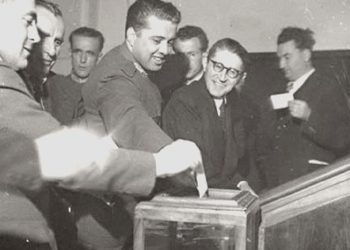
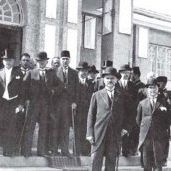
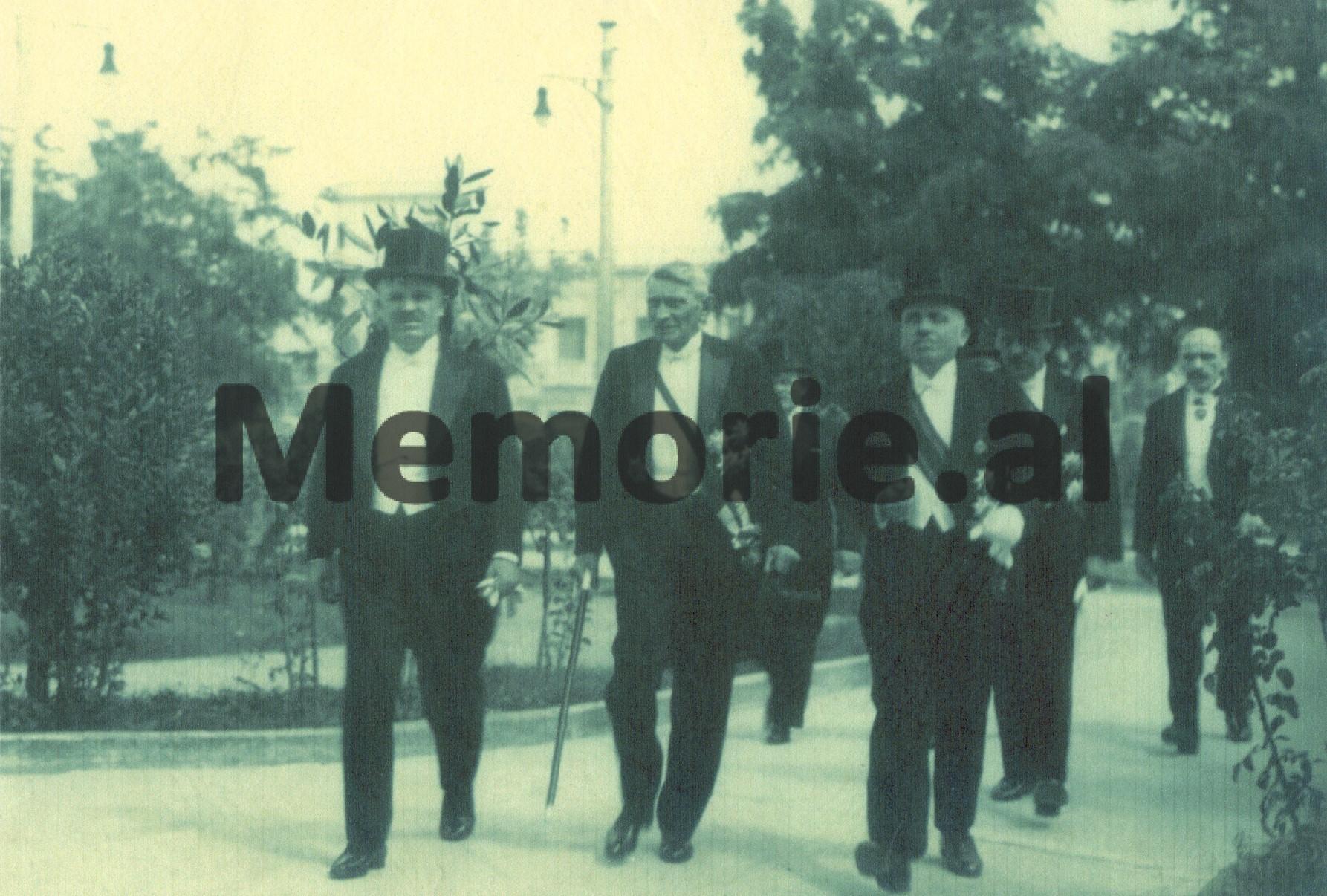
Memorie.al / The history of parliamentary elections in our country, or more accurately, the attempts at elections, have its origins in the era of Ottoman rule when Albania was part of the Turkish Empire. One of the first Albanian deputies elected to the first Turkish Parliament, which opened its proceedings in December 1877, was Abdyl Frashëri. However, that parliament did not last long, as it was dissolved by the Sultan himself due to the outbreak of the Russo-Turkish War. Following the dissolution of Turkey’s first parliament, there were several other attempts at elections, but they all failed for various reasons. The first regular elections in Albania were held only in 1908, when the Young Turks came to power in Turkey. Those elections were not direct but were held through representation, otherwise known as the two-tier voting system (secondary electors).
The first Turkish Parliament opened on December 10, 1908, and out of 266 deputies, 27 were Albanians elected from the four vilayets of Albania. At that time, members of the “Committee of Union and Progress” in Turkey, which included many Albanians, split and grouped into three political factions. The first group was “Union and Progress” (the Turkish-Macedonian party) with 164 deputies, consisting of 130 Turks, 5 Arabs, 1 Greek, and 15 Albanians, led by Hasan Prishtina, a deputy from Kosovo.
The second group, called “Liberal Union” (the Greek-Albanian party), consisted of 45 deputies and included 12 Albanians led by Ismail Qemali. Among the other Albanian deputies in the Turkish Parliament at the time were Esad Pashë Toptani, Nexhip Draga, Rexhep Pashë Mati, etc. After 1908, there were several other elections where Albanians continued to vote for their representatives in the Turkish Parliament, a process that lasted until November 1912, when Independence was proclaimed and Ismail Qemali was elected head of the Government.
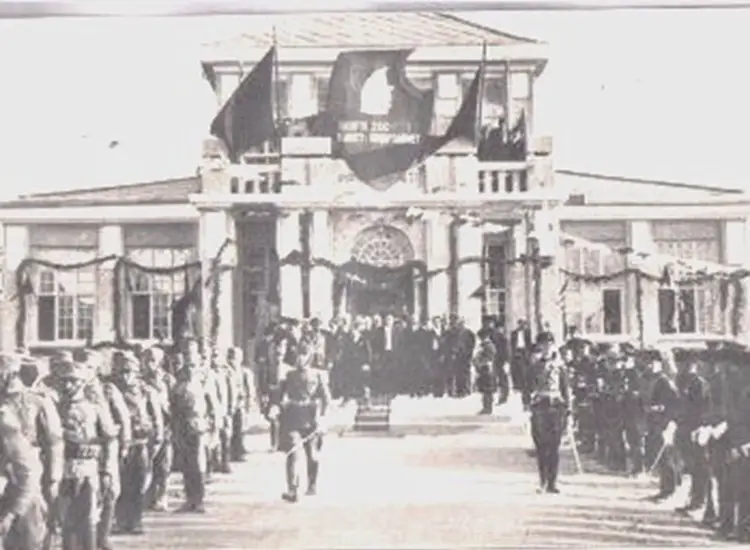
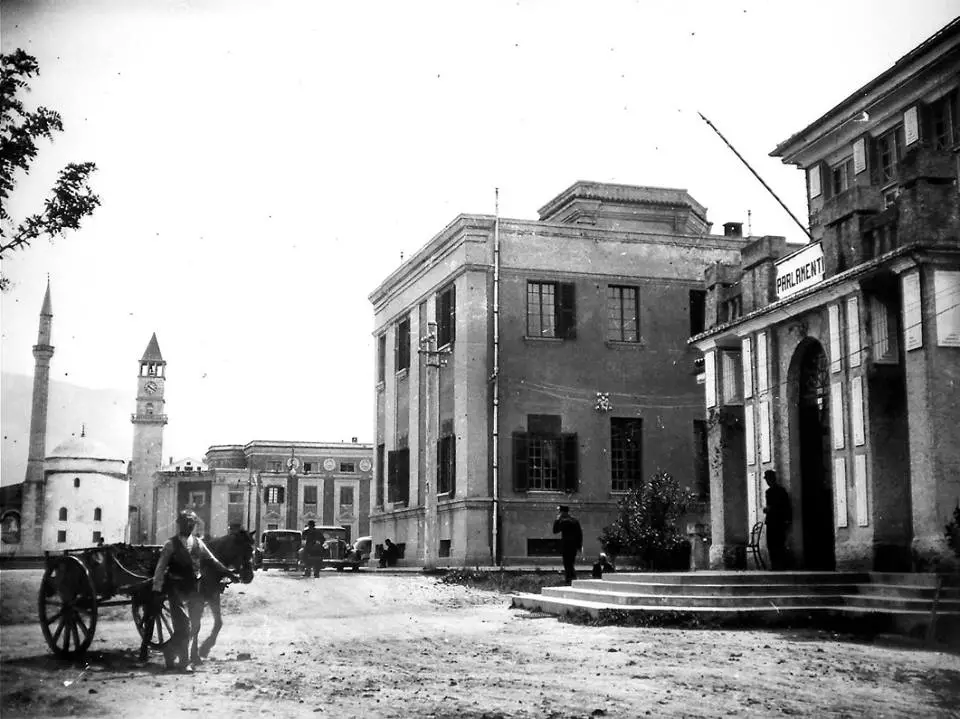
Meanwhile, the first parliamentary elections in Albania took place in the spring of 1921, as they had not been held until then due to World War I, in which Albania was also involved. The first Albanian Parliament opened on April 21 of that year; the first building of the Albanian Parliament was located where the Academy of Sciences stands today. In that parliament, 76 deputies participated, elected following a relatively regular process from the nine prefectures of the country: Berat, Durrës, Elbasan, Gjirokastra, Korça, Kosovo, Shkodra, Vlora, and the Albanian colony in the USA.
As in the past, those elections were conducted through a system of representation, or secondary electors, where based on territorial division, representatives of each province had the right to elect their deputy. The aforementioned, along with a brief history of parliamentary elections in Albania from that period until 1991, has been published by Memorie.al in previous issues. Here, we are publishing the complete Basic Statute of the Albanian Republic (the Constitution) of 1925, where a special place is held by the parliamentary election legislation of that time, as well as the Parliament’s regulations regarding the rights and duties of deputies, published by the “NIKAJ” Printing House in 1925.
Continued from the previous issue…
PENAL CODE 1928
SECOND BOOK
TITLE VII: Crimes Against Public Integrity
CHAPTER III: Abduction
Continued in the next issue…
TITLE VII
ARTICLE 408. – When the crime provided for in Article 403 is committed against an infant not yet registered in the civil status records and within the first five days of its birth, with the intent to save one’s own honor or that of a wife, mother, descendant, adopted daughter, or sister, the punishment shall be imprisonment from three to twelve years.
ARTICLE 409. – Whoever causes another to decide (determine) to commit suicide or assists them in committing suicide, if the act occurs, shall be punished with heavy imprisonment from three to ten years; if the act does not occur due to preventative causes independent of the will of the initiator, instigator, or assistant, the heavy imprisonment shall be from three months to two years.
ARTICLE 410. – Whoever, toward their wife or any of their ascendants or descendants or their sister with whom they cohabitate, behaves in such a bad and inhumane manner as to cause them to decide on suicide, shall be punished with heavy imprisonment from five to fifteen years; if the suicide is not completed due to preventative causes independent of the will of the instigator or the initiator, the punishment shall be heavy imprisonment from one to five years.
ARTICLE 411. – Whoever, through negligence, imprudence, lack of skill in their trade or profession, or failure to observe regulations, orders, or discipline, causes the death of anyone, shall be punished with imprisonment from three months to five years and a heavy fine from 100 to 3,000 gold francs.
If the act causes the death of two or more persons, or the death of one person and injury to one or more others, and this injury results in the effects described in Nos. 1 and 2 of Article 412, the punishment shall be imprisonment from one to eight years and a heavy fine of no less than 300 gold francs.
CHAPTER II: Bodily Injury
ARTICLE 412. – Whoever, without intent to kill, causes anyone bodily harm, health damage, or mental disturbance, shall be punished with heavy imprisonment from one month to one year.
The punishment shall be:
- Heavy imprisonment from one to five years if the act causes: permanent weakness of a sense; a permanent scar (balafre) on the face; danger to life; a mental or physical illness lasting twenty days or more; incapacity for ordinary work for the same duration; or if committed against a pregnant woman, causing premature birth.
- Heavy imprisonment from five to ten years if the act causes: a mental or physical illness that is certain or probable to be incurable; loss of a sense, a hand, a foot, the ability to speak, or an organ; permanent facial deformation; or if committed against a pregnant woman, causing a miscarriage.
Outside the cases in numbers 1 and 2, if the act does not cause illness or incapacity, or if such lasts no more than ten days, prosecution occurs only upon the request of the injured party, and the punishment is heavy imprisonment for up to three months or a heavy fine from 100 to 1,000 gold francs.
ARTICLE 413. – When the act in the preceding article is combined with circumstances in Nos. 1, 2, 3, 4 of Article 404, or is committed with concealed weapons, any object considered a weapon by nature, or corrosive substances, the punishment shall be increased by one-sixth to one-third. If combined with circumstances in Article 405, it is increased by one-third.
ARTICLE 414. – When the consequences of the act exceed the offender’s intent (pretermintentional), the punishments shall be reduced by one-third to one-half.
ARTICLE 415. – Whoever, through imprudence, negligence, lack of skill in their trade or profession, or failure to observe regulations, orders, or discipline, causes anyone bodily harm, health damage, or mental disturbance, shall be punished:
- With imprisonment for up to three months or a heavy fine of up to 1,000 gold francs; prosecution occurs only upon the request of the injured party in cases involving the first and last points of Article 412.
- With imprisonment from one to twenty months or a heavy fine from 100 to 6,000 gold francs in other cases.
If two or more persons are injured under this article: in cases of No. 1, imprisonment may be extended to six months and the fine to 2,000 gold francs; in cases of No. 2, the punishment is imprisonment from three months to three years, or a heavy fine exceeding 1,000 gold francs.
ARTICLE 416. – In cases of the last point of Article 412 and No. 1 of Article 415, where prosecution is based on the injured party’s request, the withdrawal of the penal suit by the plaintiff before the final judgment is rendered shall dismiss the penal action.
CHAPTER III: Common Provisions for the Foregoing Chapters
ARTICLE 417 (Self-Defense): – He who commits any of the offenses in the preceding chapters is not punishable if compelled by necessity:
- To protect their property against the perpetrators of offenses in Articles 450, 451, 452, 455 or against robbery.
- To repel perpetrators of an intrusion (escalade), break-in (ruptur), or arson committed in a house or other inhabited buildings and their dependencies, if this occurs at night; or, even during the day, if the building is isolated and there is a well-founded fear that the safety of those inside is in danger.
The punishment is reduced by one-third and heavy imprisonment is changed to simple imprisonment if the offender exceeded the limits of defense in case No. 1, or if the act occurred while repelling intruders where the specific conditions of No. 2 were not met.
ARTICLE 418 (Killing for Honor – Absolute Excuse): – Likewise, he who commits any of the acts in the preceding chapters is not punishable if the offense is committed by a husband against his wife, by a parent against a descendant, by a descendant against their mother or grandmother, by a brother against his sister, by a father-in-law against a daughter-in-law, or by an uncle against a niece – provided they live in the same house – against their accomplices, or both, when found in the act of adultery/shameful act, or in a state that leaves no doubt that they have committed or are about to commit the act at that moment.
ARTICLE 419 (Killing for Honor – Mitigated Punishment): – The punishment is reduced by one-half to one-sixth (changing heavy imprisonment to simple, and life/death sentences to at least six years) if, under the circumstances in Article 418, the act is committed by: a wife against her husband, a parent against an adopted daughter, a son-in-law against a mother-in-law, a brother-in-law against a sister-in-law, a stepson against a stepmother, an adoptive son against an adoptive mother, or a father-in-law/uncle against a daughter-in-law/niece when they do not live together.
The punishment is reduced by one-sixth to one-third (life/death sentences changed to at least fifteen years) if the act is committed by a first cousin against a first cousin, a nephew against an aunt, or by someone with legal authority over the victim.
These reductions also apply to a parent or brother who finds a descendant or brother in a state of pederasty and acts against them or their accomplices.
ARTICLE 420 (Unidentified perpetrator in a group): – When two or more persons participate in the crimes in Articles 403, 404, 405, 412, 413, and the specific perpetrator of the death or injury is unknown, all participants are punished with the prescribed penalties reduced by one-third to one-half (life imprisonment to 15 years, death to 20 years). This reduction does not apply to those who directly cooperated in the crime.
ARTICLE 421 (Brawls): – Except for the case provided in the preceding article, and besides the heavier punishments resulting from offenses committed individually, when in a brawl (rixe) someone is killed or suffers a bodily injury, all those who have laid hands on the injured party shall be punished:
- With heavy imprisonment from three months to five years if someone is killed or has suffered a bodily injury resulting in death.
- With heavy imprisonment for up to two years in other cases, but not exceeding one-third of the punishment that would have been assigned to the [specific] perpetrator.
Those who participated in a brawl without laying hands on the injured party shall be punished with heavy imprisonment for up to six months.
ARTICLE 422: – Punishment for those who, having caused a brawl, draw a weapon to intimidate, is imprisonment from one to six months; in the event that a weapon is discharged with that intent, the punishment is up to one year.
ARTICLE 423: – For the compensation of damages arising from the offenses provided in Articles 411 and 415, the employers (patronat) are civilly liable alongside the offenders when the offense was committed during the course of service.
CHAPTER IV: Abortion
ARTICLE 424: – A woman, who, by any means used by herself or by another with her consent, aborts the infant, shall be punished with imprisonment from one to four years.
ARTICLE 425: – Whoever, with the consent of a woman, procures an abortion for her shall be punished with heavy imprisonment from thirty months to five years.
If the outcome of the act or the means used to procure the abortion causes the death of the woman, the punishment is heavy imprisonment from four to seven years; if death resulted from the use of means more dangerous than those for which the woman had given consent, the punishment is heavy imprisonment from five to ten years.
ARTICLE 426: – Whoever uses means intended for abortion on a woman without her consent or against her will shall be punished with heavy imprisonment from thirty months to twelve years, if the abortion occurs.
If the abortion or the means used for it causes the death of the woman, the punishment is heavy imprisonment from fifteen to twenty years.
The punishments specified in this article shall be increased by one-sixth if the offender is the husband of that woman.
ARTICLE 427: – Whoever sells, offers for sale, causes to be sold, distributes, or causes to be distributed by any means, medicines, substances, tools, or other objects which they know are intended for abortion, shall be punished with imprisonment from six months to three years and a heavy fine from 100 to 3,000 gold francs, even if the abortion does not occur or is not initiated, or if the medicines/tools given as effective (efficace) were incapable of producing the effect.
ARTICLE 428: – When the offender of any of the crimes in the three preceding articles is a person practicing a health profession or a trade under government supervision for public health interests, and this person has suggested, procured, or used the means resulting in abortion or death, the specified punishments shall be increased by one-sixth.
The conviction always results in the suspension of the practice of the profession or trade for a period equal to the term of heavy imprisonment or simple imprisonment imposed.
ARTICLE 429: – When the abortion of the infant is performed to save one’s own honor or that of a wife, mother, descendant, adopted daughter, or sister, the punishments specified in the preceding articles shall be reduced by one-third to two-thirds, and heavy imprisonment shall be changed to simple imprisonment. / Memorie.al