



By Dashnor Kaloçi
Memorie.al / Around the end of 1467 and the beginning of 1468, the ancestors of the Bezhanis are thought to have migrated from the Shpat area of Elbasan to the village of Lekël in Tepelena. While around the second half of the 15th century, the Bezhanis settled in the Monastery of Saint Elias (or as it was later known: the Monastery of Shën-Dellia) located near Mount Golik, and on the lands of that monastery, they laid the first foundations upon which the village of Lekël was later formed, which is still located in that area of Tepelena today. From that time, the Bezhanis engaged in trade, which they conducted mainly with Venice, Greece, and Egypt.
As a result of this trade that the Bezhanis developed for years, they became so wealthy that they later bought other lands and properties, spreading to different places. After the dispersal of a part of that family to other locations, the following remained in the village of Lekël, Tepelena at that time: Haxhi, Guda, Pasho, and Mërtir Bezhani. According to documents recently found in the Istanbul archives, Haxhi were born in 1690, Guda in 1720, Pasho in 1750, and Mërtiri in 1780.
Meanwhile, around the year 1800, Mërtir Bezhani went to Istanbul and in the land registry offices of the capital of the Ottoman Empire, he found all the title deeds of the lands and properties that the Bezhanis had owned in the village of Pishkash. After returning from Istanbul to the village of Lekël, Mërtiri distributed to his kin copies of the cadastral documents of the lands and properties he had found there, and from that time, the Bezhanis began to claim them in Pishkash. But the Bezhanis were unable to take possession of those properties that their ancestors had owned, because they encountered strong resistance from local residents who had occupied their properties.
The adventure of the Bezhanis in search of their properties in Pishkash continued from 1800 (when they found the deeds in Istanbul) until 1810, and it cost them dearly as they left about eight men killed. Among the Bezhanis killed in search of the lands were: Petro, Apostol, Thimio, and Aleksandër Bezhani. Along with them, several other relatives from the female branch of the family were killed, such as Thoma Qëndro and his son, who owned an inn in the village of Qukës, one from the Gjonaj family, and another from the Muçaj family. From this family, it is thought that the one killed was Vladimir Muçi.
Regarding the numerous murders that occurred in the Bezhani clan by the residents of Pishkash, a mourning song was also composed at that time, which among other things says: “Apostol, son of a merchant / how did you fall from your horse / Why didn’t you kill him, but he killed you / what happened, may your arm wither”! After the killing of those men of the Bezhani clan, other men were born, raised, and inherited from that clan, such as Petro (born in 1810), Thimio (1820), Apostoli (1840), Josifi (1850), Thanasi, Pavllo with his three children (Erifili, Leka, and Evrionomi), Pandeliu, Leonidha and his daughter (Olimbia), Ksenofoni, Epaminonda, Athanasi, and Pavllo.
The Private Bank of the Bezhanis in Vlora in 1850
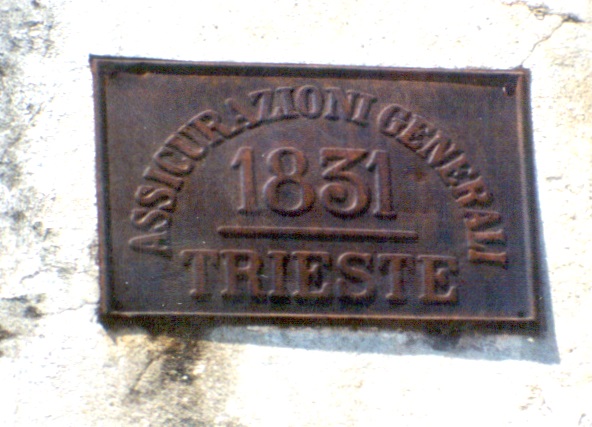
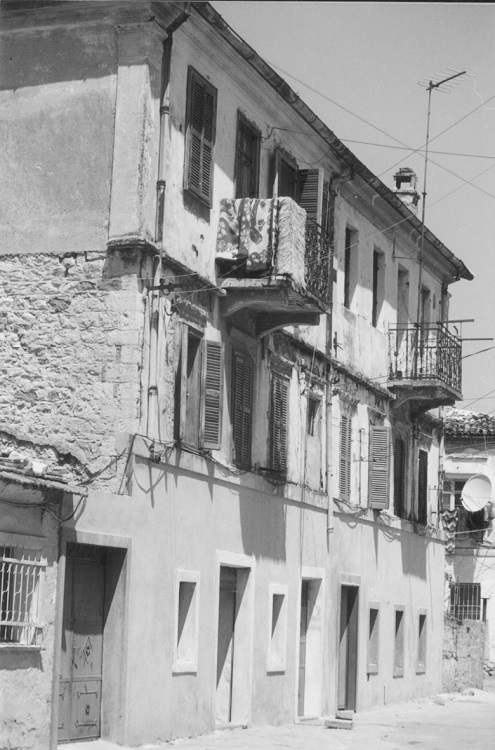
Around the end of the 18th century, a large part of the Bezhani clan moved from the village of Lekël in Tepelena and settled in the city of Vlora, but even after this relocation, they never lost their ties with Lekël and the trade they were doing at that time with Greece. After settling in the city of Vlora, around the year 1800, the Bezhanis began and built a three-story building in the “Muradie” neighborhood, which is still there today, but without the brilliance of past years. Around 1831, for its financial purposes, the Bezhani family insured that house with the Insurance Institute (“ASSIGURAZIONI GENERALI TRIESTE”) in the city of Trieste, Italy.
On the old walls of that three-story house, which is still located today in the “Muradie” neighborhood, there is still an oxidized bronze plaque from the years, on which the name of the Trieste insurance company and the year 1831, when it was insured, are written. About twenty years later, around the beginning of 1850, the Bezhani family, or more precisely Petro Mërtir Bezhani, established the first private Bank in Albania, which at that time was known as the “Pandeli and Lefter Bezhani Bank.” The fact that this Bank is the first founded in Albania is also made known by a Banking Almanac published in London in 1936.
In that same Almanac, the banks that existed during the years of Zog’s Monarchy in Albania are also mentioned, such as the “National Bank of Tirana,” with its branches in Shkodër, Korçë, Durrës, Vlorë, Sarandë, and Gjirokastër, and alongside them at the end, the private bank of “P.I. Bezhani” is listed. From the creation of that Bank until the first years of the last century when the Independence of Albania was declared, the Bezhanis dealt with that type of financial activity and simultaneously with trade with neighboring states, such as Italy, Greece, and as far as Egypt. Regarding the existence and economic power of the Bezhani family, three graves that are still preserved in good condition near the Monastery of Zvërnec Island testify, belonging to Josif and Olimbi Bezhani and dating to the years 1902 and 1918.
The Bezhanis are educated and graduate from European universities
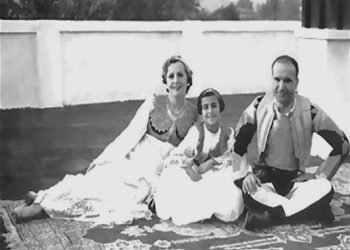
Regarding the past and activities of the Bezhani family in the early years of the last century, their descendant, 75-year-old Pavllo Bezhani, testified to us: “Alongside the commercial and financial activity with the Bank they established in 1850, the ancestors of our Bezhani family took care to educate their children in various schools and universities in Europe, thanks to the economic-financial power they possessed. One of them was my father, Lek Bezhani (whose mother, Amalia, was the sister of the prominent patriot, Sotir Kolea) and his three sisters: Amalia, Erifili, and Evrinomi. After finishing the ‘unike’ school (elementary/middle school) in the city of Vlora, my father Leka went to Switzerland in 1928, where he finished an economic secondary school and learned several foreign languages.
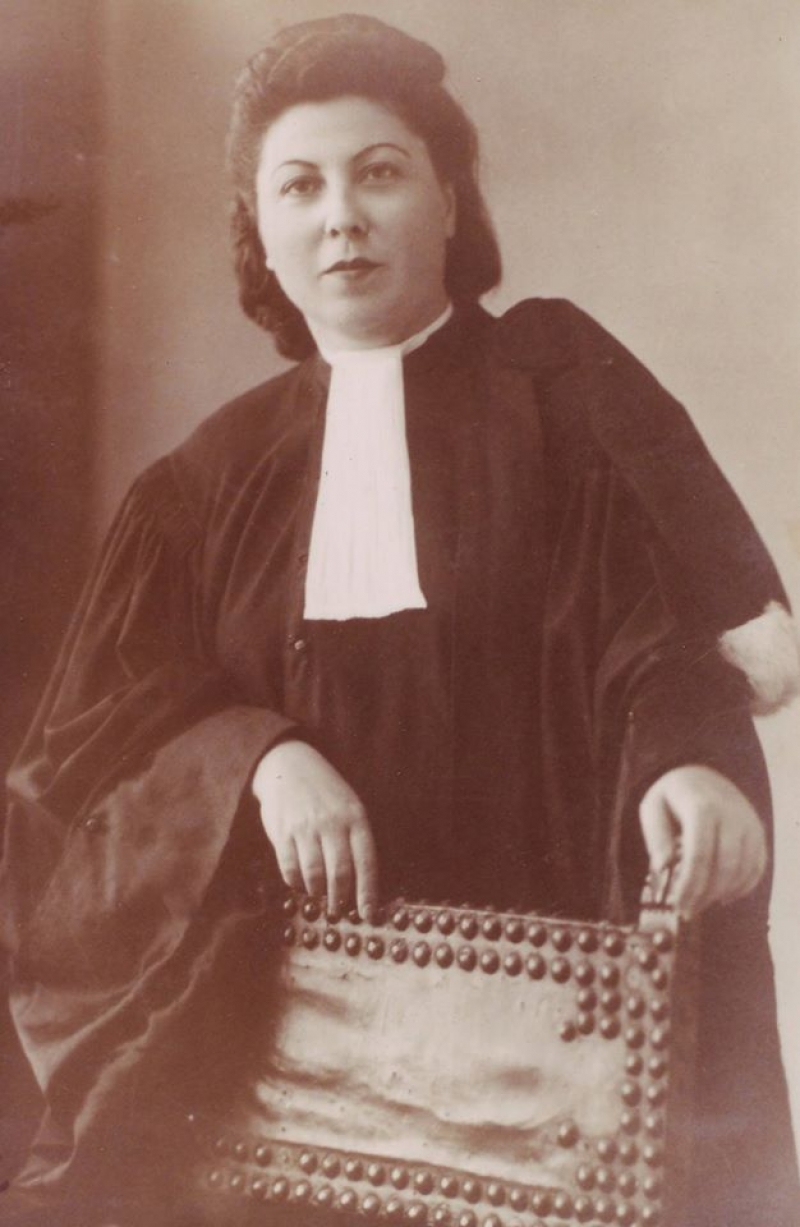
It is worth mentioning, and perhaps it is a unique case in Albania for the period of Zog’s Monarchy, that three sisters (Amalia, Erifili, and Evrinomi Bezhani) graduated from various universities in Europe. One of my aunts, Erifili, was sent to France at the age of nine and completed all school cycles there until she graduated with excellent results in Jurisprudence. Even though the Bezhanis were educated and graduated from different universities in Europe, they constantly stayed away from politics, dealing only with economic-financial activity. But even though they were indifferent toward political affairs, Pavllo Bezhani, who was my father’s father, along with his brother Leonidha, who were Josif’s sons, during 1912, supported without any reserve the declaration of Albania’s Independence by Ismail Qemali and other patriots of that time.
Around 1918 – when a large British warship arrived in the Bay of Vlora – my father Leka was called by them and served as an interpreter, as at that time he was among the few who knew the English language. Even during the years of Zog’s Monarchy, both my father Pavllo and other members of the Bezhani clan continued to stay away from politics and dealt only with the affairs of their trade and the bank they had established in the city of Vlora,” – recalled Pavllo Bezhani regarding the past of his clan, where many of them were educated in various universities in Europe.
Pavllo Bezhani with Sotir Kolea
Of all the members of the Bezhani family, the greatest patriotic activity was held by Pavllo Bezhani, who collaborated closely with his brother-in-law Sotir Kolea, who is very well known for his activities for the benefit of the Albanian cause. In the Bezhani family, besides many original documents of this family, a large part of the correspondence of Sotir Kolea, who was in Alexandria at the time, with Pavllo Bezhani in Vlora is still preserved. These letters, written in the Albanian alphabet from before the Congress of Monastir, belong to the years 1908-1910 and are written with very beautiful calligraphy.
They deal with family financial problems, exchange of banknotes, banking issues with Egyptian banks, etc. Likewise, they also address problems of the Albanian language, where the Congress of Monastir and Sotir Kolea ask Pavllo Bezhani to send them news from Albania. Among the many letters that make up the correspondence of Pavllo Bezhani with the well-known patriot Sotir Kolea (whom Pavllo had as his wife’s brother), there is also a letter where Pavllo informs Sotir that he has helped Mit’hat Frashëri with money.
In that letter, which bears the date of September 20, 1908, it says among other things: “I sent Midat Frashëri 190 silver gr. I am keeping the leftovers, I intend to buy some primers (abetare) of the time and distribute them to poor boys.” In another letter discussing the conclusion of the voting for Albanian deputies represented in the Turkish Parliament, among other things, Pavllo Bezhani informs Sotir Kolea by writing: “Here, i.e., in the Sanjak of Berat, Ismail Kemal Bey came out with 57 ‘guresë’ (votes) and Azis Pasha with 52 ‘guresë’. Omer Pasha took 35 g. and the others less.”
While in another letter talking about the financial and commercial problems of the family, among others, Pavllo Bezhani writes to Sotir Kolea, who was in Alexandria at the time: “As Vangjeli told me and as I spoke a bit with Leonida, it seems they are quite well off regarding ‘dynjallëku’ (worldly wealth), they have an income of 300-400 napoleons per year in Madagascar which, even if only half were true, for our place here is not little. I believe they will be true, because neither Leonida nor his brother, Mr. Kozma, seemed like boasters to me.
I also shook Vangjeli’s hand, for he finished this work. From your letters I saw that you bought me two bonds of Credit Foncier Egyptien of 1886 and I thank you. In the newspaper you sent me, I saw that this time He did not help us, but I hope He will help us another time,” – it is said among other things in the letters that Pavllo Bezhani sends to his brother-in-law, Sotir Kolea, in which the wealth of that Vlora family in the second half of the 18th century is best evidenced.
The Wealth of the Bezhanis and the education of their three daughters in Western universities
Even during the period of Zog’s Monarchy, the Bezhani family of Vlora continued to manage its wealth and the affairs of the trade and the Bank it had opened in the city of Vlora. During that period, that family never got involved in political matters, although it was a supporter of Zog’s monarchist government. At that time, the Bezhanis had purchased and owned an estate of 216 hectares in the Mifol area, which consisted of agricultural land and olive groves. Likewise, besides that large farm, they also owned about 5,000 olive trees on the outskirts of Vlora. But even though they were devoted only to the affairs of the family economy, the Bezhanis took care to educate their children in various colleges and universities in Europe.
They were the only family in Vlora and perhaps also in Albania that during the years of Zog’s Monarchy managed to graduate three daughters from the universities of Europe. Thus, one of the descendants of this family named Leko Bezhani (Pavllo’s son) and his wife Amalia, educated and graduated their two daughters, Erifili and Evrinomi Bezhani, at the universities of Paris and Marseille in France, for Jurisprudence and Literature. Likewise, a cousin of theirs named Marika Bezhani studied at the University of Bologna in Italy, graduating in Natural Sciences in the branch of Biology. After graduation, Marika returned to Albania and for years worked as a teacher at the gymnasium of Vlora.
In addition to these three daughters of the Bezhani family who were educated in Europe, other sons from that family were also educated and graduated. Thus, Leonidha Bezhani sent his three sons to study outside Albania. The eldest son, Viktor, studied in the city of Munich, Germany, where after graduating in Medicine, he returned to Albania and worked as a doctor in the city of Elbasan. During that time, besides serving as a doctor in that city of Central Albania, he also gave lessons at the “Normale” school of that city. Later, Viktor served as a diplomat in the Albanian representation in Greece, and during the War period, he died of a serious illness. Leonidha Bezhani’s other two sons, Qirjako and Harito, studied and graduated from the universities of Italy.
The education of the sons and daughters of the aristocratic Bezhani family in various universities in Europe best testifies to the cultural formation and emancipation they had since that time. Even during the years of the Nazi-fascist occupation of Albania, the Bezhani clan, which mainly resided in the city of Vlora, continued to manage their wealth and stay as far as possible from politics, as they had done in the past. But that strict rule of that family was “broken” only by one of them named Minella Bezhani, who in October 1943, participated as a representative of Vlora in the National Assembly that re-proclaimed the Independence of Albania and elected the Constituent Assembly, from which the provisional Government that governed during that period under the German occupation of the country was also elected.
The Expropriation of the Bezhanis by the communists in 1945
Although the Bezhanis of Vlora were known as a family that minded their own business and dealt only with trade, staying away from politics, with the arrival of the communists to power at the end of 1944 and the beginning of 1945, they faced a fierce blow against them, like hundreds and hundreds of other wealthy Albanian families of that time. The first victim of the Bezhani family was recorded at the end of 1944, when Aleko Bezhani (otherwise known by the name Leko), the former owner of the “Banka di Napoli,” left Albania and was killed under unknown circumstances. However, his murder is thought to have been carried out for robbery purposes by some ordinary Serbian thieves in Sarajevo.
Regarding the expropriations and persecution of the Bezhani clan during the period of Enver Hoxha’s communist regime, their descendant, 75-year-old Pavllo Bezhani, testified: “The history of the ruin of our Bezhani clan, which is known as one of the wealthy families of Vlora, has its origins at the end of 1944, with the arrival of the communists in power. At that time, our family and the entire Bezhani clan had all movable and immovable properties and assets sequestered, starting from the Bank which in 1938 had been turned into ‘Banka di Napoli’ with my father Aleko Bezhani as owner, and all the other estates we had on the outskirts of Vlora and in Mifol.
After the expropriation and confiscation of all the Bezhani family’s wealth, we were left in the middle of the four roads without any income and dispersed among other families in the city of Vlora,” recalled 75-year-old Pavllo Bezhani, about the murder of his father and the expropriation carried out by the communists in early 1945 against that family known as one of the wealthiest in Vlora.
Erifili Bezhani: 20 years in prison
Regarding the persecution of the Bezhani family by Enver Hoxha’s communist regime, Pavllo Bezhani testified: “As if all that robbery the communists undertook against our family were not enough, in 1947 they arrested and sentenced to 20 years in prison my aunt (my father’s sister), Erifili, who had graduated in Law in France. Seeing the policy of violence and terror that Enver Hoxha’s communist regime was following since its arrival in power in December 1944, Erifili joined and engaged with the social-democratic group led by her friend, Musine Kokalari.
The goal of that group was to somewhat sensitize the governments of Western countries through their diplomatic representations in Tirana about the policy of terror that Enver Hoxha’s government was installing, which had begun with the elections of December 2, 1945, where the opposition was not allowed to participate and be legally represented in those elections. As a result of that activity carried out by Erifili Bezhani, she was arrested and went to trial together with her friends, Musine Kokalari, Nurie Koculi (daughter of Qazim Koculi, the commander and hero of the War of Vlora), Raile Luzi, etc.
Erifili was sentenced to 20 years in prison but served only eight years, as she benefited from several amnesties given at that time. After leaving prison, she settled in Tirana together with her mother Amalia Kolea and her sister Evrinomi. After many efforts she made at that time, she could barely secure the exercise of her right to her profession as a lawyer. Erifili enjoyed the right to practice law for only a short time, as that right was taken away from her again, and after its removal, she did not live long and died in 1959.
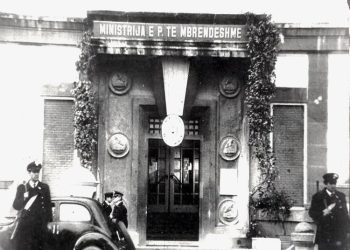
While the other aunt, Evrinomi, was called at that time to the Ministry of Foreign Affairs, where she was asked to teach foreign languages to the personnel and children of foreign diplomats in Tirana. During that time, she taught Italian and French and was forced to learn the Russian language, for which the communist regime had great need. After a few years, they removed and dismissed her from that job too, and Evrinomi was forced to work as a sanitary worker (cleaner) in the hospital. Until 2001, when Evrinomi passed away, she lived with us in our house,” – recalled Pavllo Bezhani, regarding the expropriations of the Bezhani family and the persecution of his father’s two sisters, Erifili and Evrinomi, who had graduated from the universities of France.
The Execution of Harito and the sentencing of Qirjako
The persecution of the well-known and wealthy Vlora family, Bezhani, did not end with Erifili’s 20-year prison sentence, but it continued further in the years that followed, with the arrest and death sentence of Harito Leonidha Bezhani. Regarding this, Pavllo Bezhani testified: “Harito, who had graduated in Italy during the years of Zog’s Monarchy, with the arrival of the communists in power until 1954, worked as a baker in a private bakery.
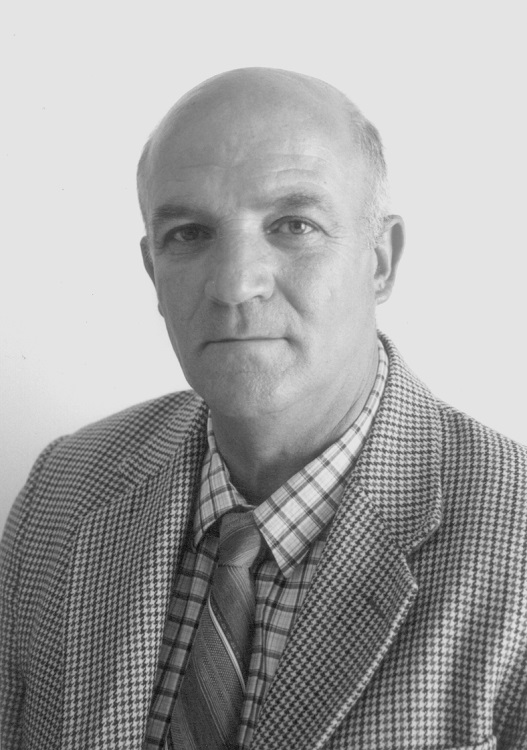
In 1954, Harito was arrested together with Eng. Dhimitër Doga, Vasil Kajana, Fuat Bimo, and Adnan Myftiu from Berat. Their trial took place at the ‘Ali Demi’ Cinema in Tirana and the charge against them was: ‘Creation of a group for attempt to escape.’ During the trial, Harito took all the charges upon himself in order to somewhat ease his friends’ burden, and as a result of that stance he held in court, he was sentenced to death.
While he was in prison and waiting for the day of execution, with an astonishing calmness, he read novels that his friends had brought to his cell. In July 1955, on the day they came and took Harito to execute him, he quite calmly folded the page of the novel he had in hand and went together with the policemen of the firing squad. Even today, it is not known where his grave and remains are located.
After Harito’s execution, the State Security (Sigurimi i Shtetit) also arrested his brother, Qirjako, who at that time worked as a head accountant at the Rice Factory, accusing him of not denouncing his brother, Harito. Qirjako was sentenced to five years of imprisonment and after being released from prison in 1960, he worked in heavy construction jobs,” – concludes his story 75-year-old Pavllo Bezhani, on the painful history of his family and clan under Enver Hoxha’s communist regime, who were known as one of the wealthiest families of that city, having opened the first private Bank in Albania as early as 1851. / Memorie.al