

By Adela Kolea
Part One
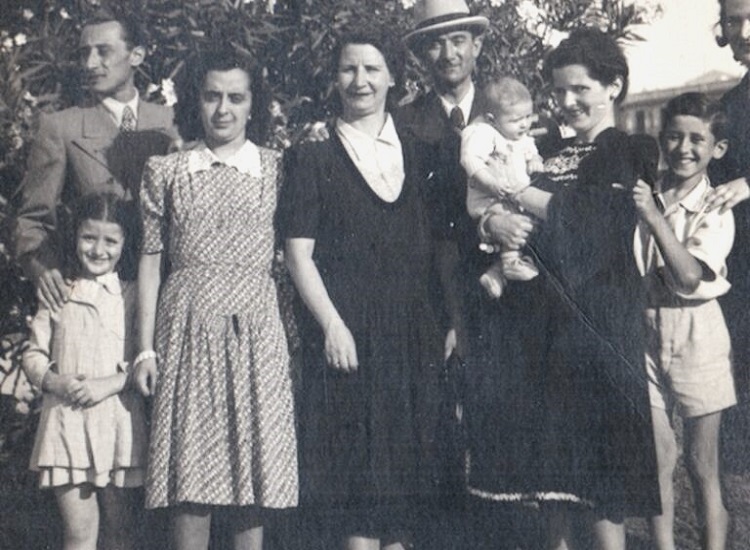
Memorie.al / Mr. Antonio woke up very early, as he did every morning. He was, however, the second member of the family to rise so quickly: the first was his wife, Mrs. Maria, who began the breakfast preparations. Since their family was accustomed to consuming pastries prepared by the lady of the house for breakfast, she took care that her husband and children would wake to a table spread with typical fresh sweets, fruit juice, and jam. Warm milk mixed with coffee released its aroma throughout the house – a scent which, mingling in the air with that of the freshly baked pastries, turned the awakening of this family into a true joy.
The daughters also contributed to the family’s happiness. They would descend from the upper floor where their rooms were located to the ground floor kitchen, laughing and joking with one another. While the older sisters prepared for high school, they would hurry the youngest, Anna, so they could walk at least part of the way together. They attended secondary school, while Anna was still in primary school.
Meanwhile, the girls’ father, Mr. Antonio, would leave the house and head to his enoteca (wine shop). That shop, for him, meant life. With the greatest care, he stood at the head of his employees to personally oversee the selection of grapes for his cellar’s wines, the preservation of the finest must, the fermentation process, the ambient temperature, and the periodic siphoning from one demijohn to another until the wine was ready. This dedication brought him a unique personal satisfaction and considerable well-being for his family.
Little Anna had made it a habit to stop by her father’s shop after school. She adored him for the way he dedicated himself to both his family and his profession. Anna enjoyed spending a few hours in the shop before her mother called her home. In their shop, wines were sold easily, and clients sought them with confidence and pleasure due to their high quality. The shop was full of visits – customers, friends, and other local merchants coming and going.
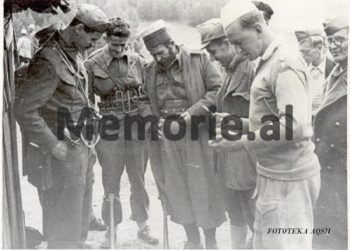
There was one moment in particular when Anna felt a bit frightened – or more accurately, she felt a deep shyness. It was the moment when Mr. Antonio’s shop would fill with several tall merchants, almost all of them with mustaches, usually wearing the traditional clothing of their region, with a type of hat on their heads that Anna didn’t know how to name, but which she described as a small, white, woolen hat on the top of the head…!
They called it a “Qeleshe,” and they had even gifted one to Anna’s father. These merchants came from a country neighboring Italy, so close to the shores of her beautiful city. They came from a place Anna had heard her father call the “Land of the Eagles,” and they themselves were called Albanians. From their appearance, Anna remembers them as very manly, somewhat rugged, but with a good command of Italian, thanks to the fact they traveled that route often. She recalls their high ability to communicate with her father and an indescribable, innate spirit for trade. It sometimes happened that when these gentlemen entered the shop, Anna would hide under the counter.
The 10-year-old girl had developed this feeling toward them, and although they tried to say kind words to her, she felt a certain shyness and distrust – perhaps simply because they were foreigners, dressed differently from the residents of her city, even though she saw that they got along so well with her father, joking and conducting good trade and exchanges of goods.
Years later, Anna – now 80 years old – would tell this pleasant fragment of her life to her grandchildren with a smile. However, this story gained a truly special effect: her grandchildren would bear a last name which (call it a joke of fate or what you will) came precisely from the place of origin of those merchants Anna used to avoid: the grandchildren’s last name, and her own new married name, would be Albanian!
Anna would marry a wonderful Albanian boy! “Eh, who would have thought that you would marry an Albanian boy – you, who as a child would hide under the counter when the Albanians came into the shop?” her sisters would later remind her.
Truly, fate is strange but often so pleasant – thought Anna, who now lived happily with her husband in Albania, beside that truly special man. For his love, she had to fight the nostalgia for her family and her land, but she was rewarded with the same love and the creation of a wonderful family.
Meanwhile, the voice of her father echoed in her ears, having adopted a saying by Galileo Galilei: “Wine is a mixture of humor and light.” Her life was a mixture of emotions with a strong and typical flavor, like the wine her father produced; deep emotions, like that sea on whose shores, from both sides, such unexpected things happened.
How could Anna have known that so many years later, this special fragment of her life story would be told by me, her granddaughter, who inherited from my beloved grandmother those Mediterranean traits – both in appearance and in heart – the best of a mixed Italo-Albanian heritage.
“Anna, to whom do you owe this change in yourself?”
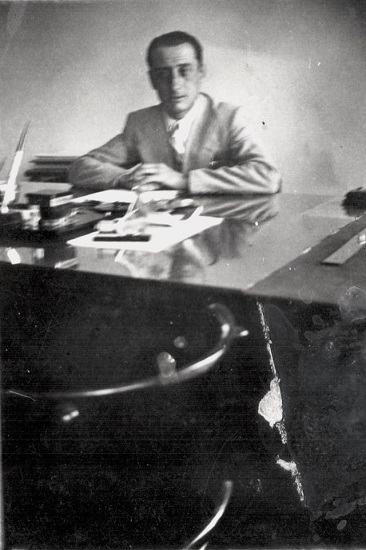
Xhulio, the protagonist of this story, in Naples. Never more than that day had the morning felt so ‘desired?’ Or rather, someone was waiting for it impatiently – someone who hadn’t closed their eyes all night. The morning arrived with the usual fresh breeze, which brought into the houses, along with the scent of the sea, the sound of wooden shutters clattering against the walls, the first noises from the street, and the ritual of fresh ‘sfogliatelle’ pastries and the aroma of freshly prepared coffee.
“Mother, I’m going to my aunt’s to greet Michele, who just arrived from Calabria!” Anna, now a teenager, told her mother as she rushed down the stairs. She left her upstairs room beautifully dressed and her hair carefully done. She was going to greet her cousin, to whom she was very close. He had recently been living outside Naples, pursuing university studies in another province.
Arriving in a hurry at her aunt’s house, the aunt herself was waiting at the door with her son, and the two cousins embraced with great affection. They got along very well, like siblings, and understood each other perfectly. But for some time, Michele had not been coming alone for his holidays.
From the city where he studied, he was always accompanied by a classmate who found in Michele’s house warmth and hospitality that reminded him of his own country’s traditions – a country where these traditions were characteristic – along with the tradition of good cuisine. This classmate of Michele’s was slowly entering Anna’s heart.
Gradually, as the improvised holidays of these boys became more frequent, so did Anna’s visits to her aunt’s house. Anna’s mother – like all mothers – was the first to notice a change in her daughter’s behavior. Eventually, Mrs. Maria asked her sister for information about all these frequent visits.
Later, Anna felt even more relieved after telling her mother about the feelings she had been cultivating for Xhulio, this Albanian boy, her Cousin Michele’s best friend. Her love was returned with the same force by Xhulio. Years passed, and their bond grew stronger.
Years passed, and the wine trade also continued well, especially the trade between Anna’s father in Naples and those “merchants with qeleshe” who came from the Land of the Eagles. Anna’s initial distrust toward them was slowly taking on new dimensions, shrinking until it disappeared completely.
But her father, noticing this change in his daughter’s attitude toward the Albanian merchants – from whom she used to hide – asked her: “Anna, I see that you now behave more freely with my Albanian friends. You no longer avoid them. Can you explain to me what this change is due to? Not that I disapprove, on the contrary, but just out of curiosity, I would like to hear you explain why you were once so frightened and shy around them.”
Anna, blushing, tried to explain: “Father, what can I say? It has been years now that these gentlemen have held trade relations with you, frequenting our cellars and our shop; I have known them for years. Besides, I am grown up now, and their traditional clothes, their hats, their mustaches, and their strange language no longer make such an impression on me – effects I only felt when I was little.”
At that moment, the voices of two friends calling Anna to go out seemed so liberating, allowing her to avoid a deeper conversation with her father on the subject. Mr. Antonio seemed convinced, but only to a point. He was a man who did not give his trust easily, and he recognized this trait in his daughter – a character that was slowly changing, which began to raise his suspicions.
At lunchtime, Antonio returned home a bit earlier than usual. Taking advantage of the daughters’ absence, he began a conversation with his wife: “Maria, listen, don’t you think Anna has changed lately? Has she fallen in love and doesn’t want to talk to me about it? You know I am a very understanding father; they can trust me with any trouble, can’t they?”
Mrs. Maria felt a bit surprised her, as she had never kept secrets from her husband until then. However, she tried to keep her promise to Anna not to reveal her secret to her father until the right moment came for Anna to speak to him herself. This was something new – news that would shake her family, for better or worse.
And that is exactly what happened! Anna, seeing that her relationship with Xhulio was growing and had become serious, decided one day that the right moment had come to tell her father everything. Mr. Antonio, as a father of many daughters, appeared harsh, critical, and prejudiced at first glance, but deep down, he was the kindest, most communicative, and most understanding man, and his daughters knew this well.
Anna’s confession was followed by a calm conversation – as long as she hadn’t revealed the boy’s nationality. But when she made it known that the boy was Albanian, Mr. Antonio had to take a deep breath.
Partly because he was traditional, and partly because, as if having a premonition, he often told his daughters a wise Italian proverb: “Moglie e buoi, dai paesi tuoi” (Wives and oxen should be taken from your own land), adding: “This applies to husbands too, my daughters.” Nevertheless, Anna knew how to be wise, persuasive, and objective in describing her lover to her father, exactly as the boy deserved – as Mr. Antonio would discover when he met Xhulio in person. Thus, finally, Anna’s father gave his blessing to their union.
Mr. Antonio realized that his suspicions about Anna’s change in attitude toward his Albanian trading colleagues had not deceived him. Xhulio, for his part, had significantly reduced his visits to Albania during university breaks just to stay with Anna at her home in Naples. He was one of the best students in their economics faculty, one of the most prepared, someone who received the highest marks in every exam.
Even though he was consumed by this burning passion for this girl – the most beautiful and best girl he had ever known – he strove to ensure it didn’t cause problems with his studies. With iron will, he managed to finish his studies with excellent results and receive his university degree in Italy in the minimum time required!
This was a true victory for this Albanian boy, who had distinguished himself both in the faculty and outside it. An accomplished young man, considering his age and his life journey – as intense as it was complete from many perspectives. His intelligence, manners, and persistence had been nurtured since childhood by his family, and these bore the good fruits that were needed.
“A meal without wine is like a day without sunshine” was an expression Mr. Antonio often used. Despite his daughter’s young age, knowing her determined and persistent character, he was convinced that a single day without her beloved Xhulio would be, for Anna, much more than a day without her sun.
The Weight of That Decision
“This land is so welcoming and so close to mine. For me, despite the differences, being beside the person I love means, in a way, a continuity of my traditions and customs – of hospitality, good cuisine, and a strong popular identity,” Anna thought, seeing everything through the eyes of love the moment her feet touched Albanian soil. “I will surely preserve all my traditions and my language, but at the same time, I will gladly learn those of my husband’s land, whom I love so much.”
“The distance from my country is so small. It would be enough for me to approach the seashore to feel the pleasant breeze of the waters arriving from my side, which will surely relieve any sense of distance from my loved ones. And whenever the longing for them grips me, I will run to them, and they will be able to come and meet me whenever they wish.”
Anna felt reassured, primarily because her desire was supported and respected by her parents – though they did so with that understandable heartache that characterizes any child’s departure, especially from one country to another. Embarking on this adventure – though it gave them some confidence because their daughter was beside a wonderful boy like Xhulio, who had received their blessing immediately – took the form of a challenge. /Memorie.al