


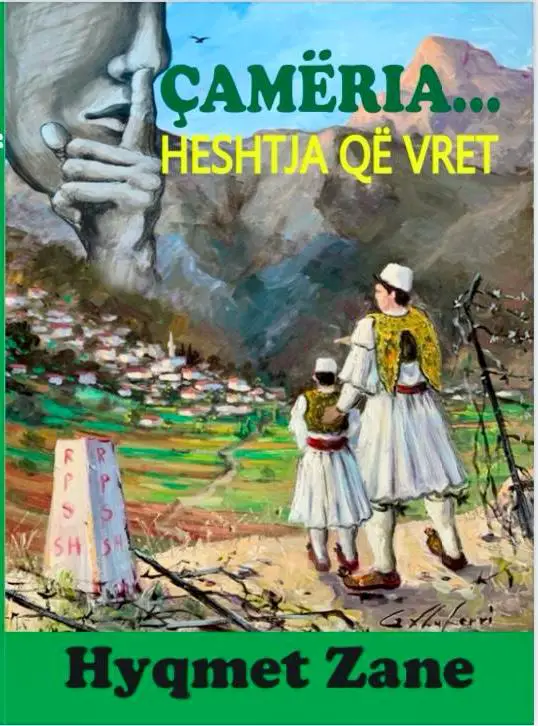
Memorie.al/ The author of this book, so welcomed by the readers of such literature – especially the writings of Hyqmet Zane – could be called from the very beginning of this preface an “undefeated warrior of the Chameria cause and Cham civilization.” Despite the enthusiasm and glorifying notes for Chameria and for Cham individuals with distinct merits in Albanian history, throughout the book, one feels a sense of despair and indignation regarding the treatment of the Chameria issue which, more and more, appears and disappears as if it were an occasional advertisement, outdated against various historical backdrops.
The content of the book unfolds across several thematic axes. In terms of importance, the treatments of these themes carry almost the same weight. However, the call for justice, for the recognition of the Cham genocide exercised by Greek andartes, and for the victory of the righteous Cham cause, resonates strongly throughout the articles collected in this book. We are dealing with a significant number of articles published primarily in the “Telegraf” newspaper. Taken individually, published at different times and in various issues of a well-known newspaper in our diverse media world, those writings acted with a concentrated impact.
Yet, even when collected into a voluminous book, their impact remains prominent. The distinctive feature – the uniqueness of Hyqmet’s writing – is the pathos, passion, and empathy that develop within him as soon as he begins to write about Chameria, its sons, and the Chameria cause. To this feature is joined documentation, argumentation, and facts. Hyqmet’s writings are “mines” of documents, histories, and authentic accounts.
It is remarkable where he gathered them and how he has preserved them; with such fanaticism (!). With the abundance of information offered to us by the author, Hyqmet Zane shows that Cham history must be written and rewritten, not only based on known sources but also on new ones that were previously missing.
The narrative of author Hyqmet Zane especially that of the massacre against the defenseless Cham people, has found echo and resonance in various subjects and institutions. In a special publication of a humanitarian organization dealing with the protection of the rights of Muslim populations in Europe – within a critical study of Greek assimilationist policy – Chameria occupies a prominent place: the genocide against the Chams, the historical framework, the patriotism of Cham men, and the friendly or hostile stances of international bodies, etc.
I thought I would dwell a bit on this material for the sake of comparison and identification. In such processes of confrontation, both sides of the comparison are mutually illuminated. We, the readers, finding ourselves before such cases, draw our own conclusions and shape our perceptions with greater certainty and strength. In the German text, it is stated:
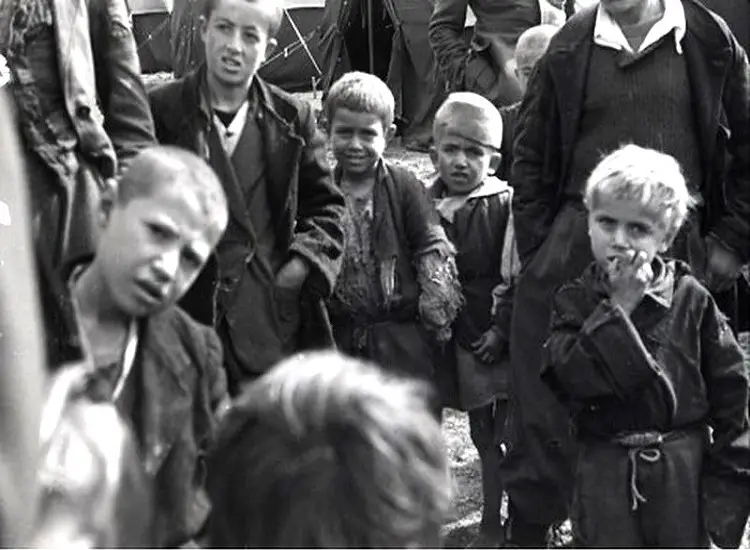
“The extermination operation against the Albanians in the region of Chameria began on June 27, 1944. It was genocide of killings and slaughter, the severing of limbs and the disembowelment of pregnant women…”
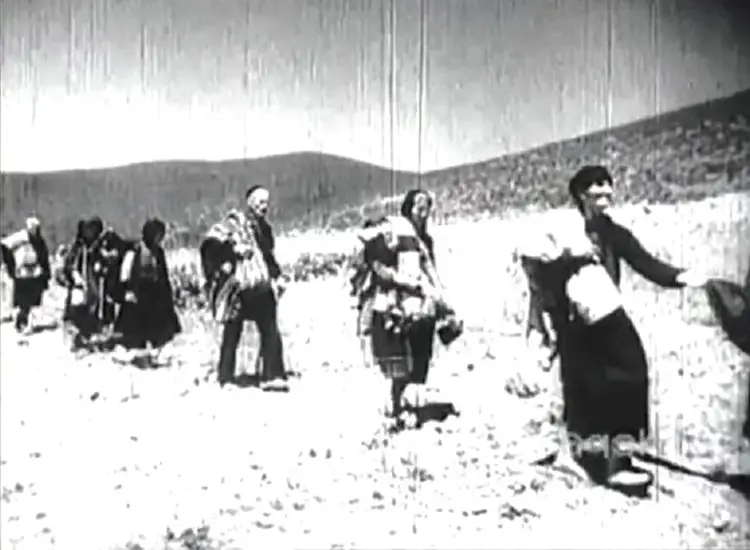
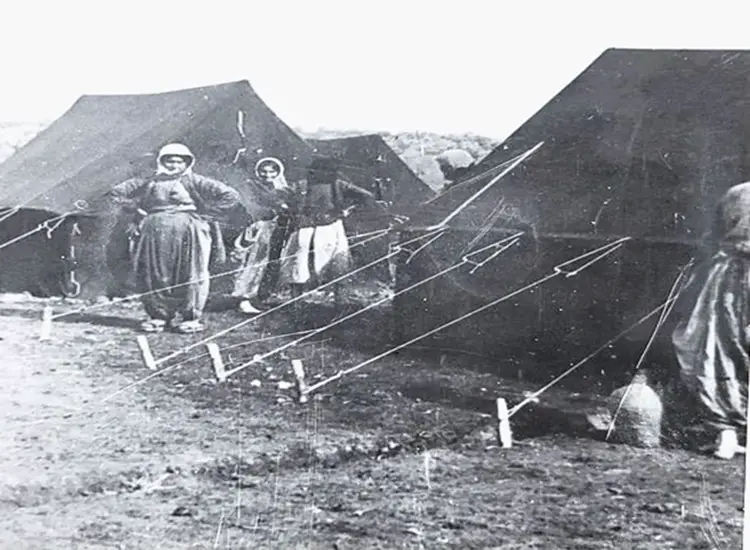
“From June 27, 1944, until March 1945, throughout the region of Chameria, 3,242 people from the civilian population were killed. 2,900 of them were men, young or old; 214 were women and 96 were children; 714 women were raped, 76 women were kidnapped, 32 babies were killed, 68 villages were completely destroyed, and 5,800 houses and mosques were leveled. After these atrocities, the surviving Cham Albanians fled their homeland. The properties of the displaced were distributed to newcomers. All place names were Hellenized…” (Newsletter: Federation of Western Thrace).
In this new collection of published and unpublished articles, the theme of Greek, Albanian, and international attitudes toward the Chameria issue and genocide is explored once again with new vigor. The author raises his voice once more amidst the general deafness regarding the tragic past and the present of the Cham descendants, which is full of problems and injustices.
He solidifies his stance with the militant attitude of the Chams in America. As Hyqmet describes it, the Cham population in the USA is liberated from many complexes that still weigh upon the life, mind, and psychology of the Cham ethnos living in Albania – yesterday socialist, today (supposedly) democratic!
Individuals of Cham origin living in America have more courage, are more militant, and articulate with more strength and confidence…! Many warriors of the Chameria cause living in Albania constantly refer to the developments, movements, and declarations of their brothers in the USA.
In several of his writings, transitioning from the Greek massacres against the Chams, Hyqmet dwells on the persecutions that continued in Albania, the motherland, where the Chams sought salvation only to find themselves attacked with prejudice, contempt, persecution, and vandalous imprisonments. The trials for the “Group of Teme Sejko and Tahir Demi” are well-known in Albania.
The author dwells extensively, through conversations with family members, on the cruel and anti-human treatment of the families of the so-called “Cham group.” I cannot find the words to repeat once more what Hyqmet says about the striking and terrorizing of families who had already received a blow with the brutal arrest of their relatives.
In this collection, much space is given to the commemoration and portrayal of distinguished figures, sons of Chameria. Alongside the highlighting of their heroism, there often follows the disappointment of neglect and disregard. This is illustrated, among other things, by the forgetting of the 80th anniversary of the death of the “Hero of the People,” Ali Demi. This moment is emphasized and further burdened by the intervention of the hero’s sister from Boston, America: “What is happening there, have you forgotten our martyrs?!”
The author often links these instances of forgetting and undervaluation to the work of the “Chameria” Association and the PDIU. Criticism toward them occupies a visible place in the book – resentment and anger toward the “Chameria” Association, which “vegetates” with its representatives in the Albanian Parliament without providing any real representation, even though it was voted for by Cham citizens. In the final view, this association is declared non-existent.
In addition to the militant-patriotic side of the Cham ethnos, the author also focuses on its education-loving spirit; individuals, schools, educations, and educational courses both within and outside Chameria are mentioned.
Another thematic axis is the treatment of issues related to Kosovo. The author, Hyqmet Zane, often coordinates the Cham genocide with that of Kosovo (p. 181: Serbia in Northern Kosovo and Greece in Southern Albania, the two most anti-Albanian countries in Europe). When coordinated in this way, the genocides against Albanians gain a special accusatory and denouncing force.
The efforts and engagement of the Chams to resolve their issue – their struggle for justice and dignity – constitute a theme of their own. Those macabre massacres and killings led by General Napoleon Zerva were clearing actions, a genuine genocide. The great German philosopher Karl Jaspers, in his book “Für Völkermord gibt es keine Verjährung” (Munich, 1979) (“For Genocide, There Is No Statute of Limitations”), included a conversation with journalist Rudolf Augstein, also published in Spiegel in 1965. With his scientific horizon and scrupulousness, Jaspers distinguishes genocide as a crime from other crimes.
While war crimes are monstrous acts against enemies and their supporters, in the case of genocide, we have crimes against humanity, where one grants oneself the right to decide which groups of people shall remain and which shall be wiped off the face of the earth. This claim is realized through extermination. Such extermination is called genocide…! In principle, genocide means the fulfillment of a sentence for a group of people, for a population that does not “deserve” to live on earth.
Those who support and carry out this monstrous extermination are criminals against humanity… no one has the right to judge that a human group should no longer exist…! Those who decide it and those who execute it are criminals of a special kind compared to the rest of the criminal population… (See more: Jaspers, Karl: Für Völkermord gibt es keine Verjährung / ‘For Genocide There Is No Amnesty’, pp. 104 – 110). Jaspers speaks clearly and decisively: the punishment for people involved in genocidal crimes is only one – death.
He is convinced that even those who are against the death penalty would accept this sentence for crimes of such dimensions. The conversation also treats the issue of laws and judicial instances for such matters. What happened and is happening with the Cham genocide – its recognition and punishment – is the opposite of Jaspers’ attitudes and proposals. Philosopher Jaspers lived intensely through the time of deportation to concentration camps and the action of exterminating the Jews, as a German citizen and as the husband of a Jewish woman.
For this reason and for the great reason that he is one of the founders of existentialism (where human existence is viewed in all its aspects), his thought and voice carry a special human and scientific weight. Journalist Augstein often aims to relativize and generalize the phenomenon of mass extermination, seeking to soften Jaspers’ radical thought regarding the death penalty for the executors in genocidal exterminations at any time and in any case. On page 106, in his words, Jaspers emphasizes once more clearly that crimes against humanity, in the form of genocides, are not amnesties. But what is happening with the official stances toward the Cham genocide?!
Both in the material of the book by the well-known author Hyqmet Zane and in a wide range of national and international literature, the struggle and efforts (often unsuccessful) to sensitize public opinion on the Chameria issue, both inside and outside the country, are analyzed.
The author mentions and dwells with special interest on persons with significant contributions to Chameria, the Cham ethnos, and the Chameria cause. We would single out Resul Musa Demi from Filiates, Chameria. In fact, the author begins the book with a requiem for Resul Demi, who passed away recently. A special laudatio is also deserved for Tahir Muhedini, who as a representative of the Cham community knocks on the State Department, with the conviction that America is the land of freedom, of respect for human rights, and the condemnation of genocides.
In the article titled “A Memory After 60 Years,” Hyqmet Zane returns once more to the “Cham Group,” this time through conversations held with the family members of the victims – the sons of Teme and Taho Sejko: Rajmond and Hektor Sejko; the son of Tahir Demi, Ilir Demi, etc.
The descriptions by the surviving family members are such that they make your “flesh crawl”: and the question never leaves you: How is it possible for a human to torture another in such a monstrous way?! Furthermore, the so-called “Cham Group” was fabricated by the party and the investigators. All those who were tortured and monstrously strangled – failing even to reach the execution by firing squad as determined by the court – were innocent. The punishment fell mercilessly upon their families as well…!
Political polemics with current Greek institutional heads, which appear with traditional historical stances to the detriment of and against the Chameria issue, occupy an important place in the book. In such cases, the author argues with facts and events that are undeniable in their reality. Knowing well the power of comparison in the description and analysis of situations, Hyqmet often confronts the Cham genocide with that of Kosovo.
Both genocides speak of the tragic fate of the Albanians of Chameria and Kosovo; more broadly, they show that peoples, small ethnic groups, and small countries have often been trampled by great aggressive powers. However, history has been on their side; they have always imposed themselves through resistance and a patriotic, freedom-loving spirit. As we have repeatedly said, the author of this book is always in search and analysis.
A new theme in this edition is the story of the young Cham, Nusret Alizoti, who was executed without trial at the beginning of the socialist era. After reading and receiving so much information on crimes, massacres, and injustices, it seems that in that narrow Cham zone, there were not and could not be joys and celebrations to promote existence and the continuation of human life. But the author does not only “cast” bitterness, venom, and indignation in the content of the writings in this edition.
Somewhere, on page 170, a ray of joy flickers: the Cham wedding with its songs, dances, and Cham customs colors the entire gloomy horizon of history and the (still unresolved) issue of the Cham ethnos. Although the author uses as base material the description of a wedding by an anonymous person (in the years 1936 – 1937), his approval and enthusiasm for such events – witnesses to a high spiritual and cultural level – are clearly understood and felt.
Having become acquainted with the materials of this book, having been surprised by the abundant information – often unknown from previous publications – one remains forever curious and expectant of other new themes, events, and treatments. We wish the author a successful journey in the work he has begun, to bring to the reader the Cham “world” so rich, full of effort, suffering, joy, and vitality!/Memorie.al