

By Dashnor Kaloçi
Part eleven
Memorie.al / The history of parliamentary elections in our country, or more accurately, the attempts at elections, have its origins in the era of Ottoman rule when Albania was part of the Turkish Empire. One of the first Albanian deputies elected to the first Turkish Parliament, which opened its proceedings in December 1877, was Abdyl Frashëri. However, that parliament did not last long, as it was dissolved by the Sultan himself due to the outbreak of the Russo-Turkish War. Following the dissolution of Turkey’s first parliament, there were several other attempts at elections, but they all failed for various reasons. The first regular elections in Albania were held only in 1908, when the Young Turks came to power in Turkey. Those elections were not direct but were held through representation, otherwise known as the two-tier voting system (secondary electors).
The first Turkish Parliament opened on December 10, 1908, and out of 266 deputies, 27 were Albanians elected from the four vilayets of Albania. At that time, members of the “Committee of Union and Progress” in Turkey, which included many Albanians, split and grouped into three political factions. The first group was “Union and Progress” (the Turkish-Macedonian party) with 164 deputies, consisting of 130 Turks, 5 Arabs, 1 Greek, and 15 Albanians, led by Hasan Prishtina, a deputy from Kosovo.
The second group, called “Liberal Union” (the Greek-Albanian party), consisted of 45 deputies and included 12 Albanians led by Ismail Qemali. Among the other Albanian deputies in the Turkish Parliament at the time were Esad Pashë Toptani, Nexhip Draga, Rexhep Pashë Mati, etc. After 1908, there were several other elections where Albanians continued to vote for their representatives in the Turkish Parliament, a process that lasted until November 1912, when Independence was proclaimed and Ismail Qemali was elected head of the Government.
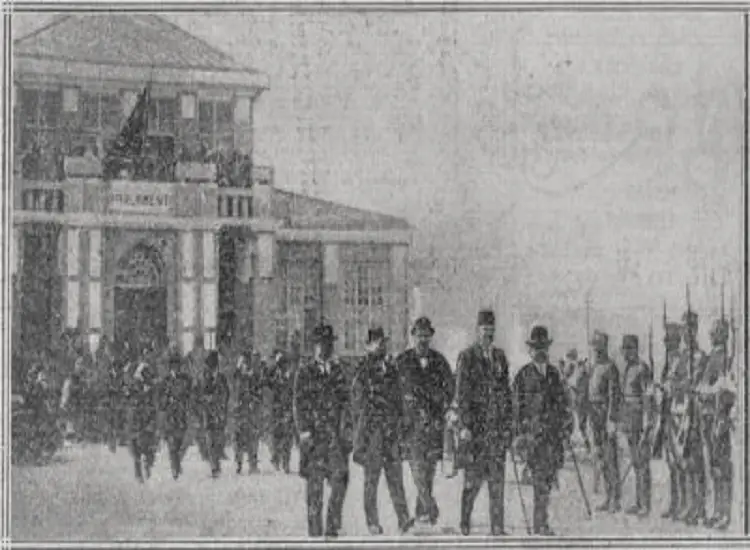
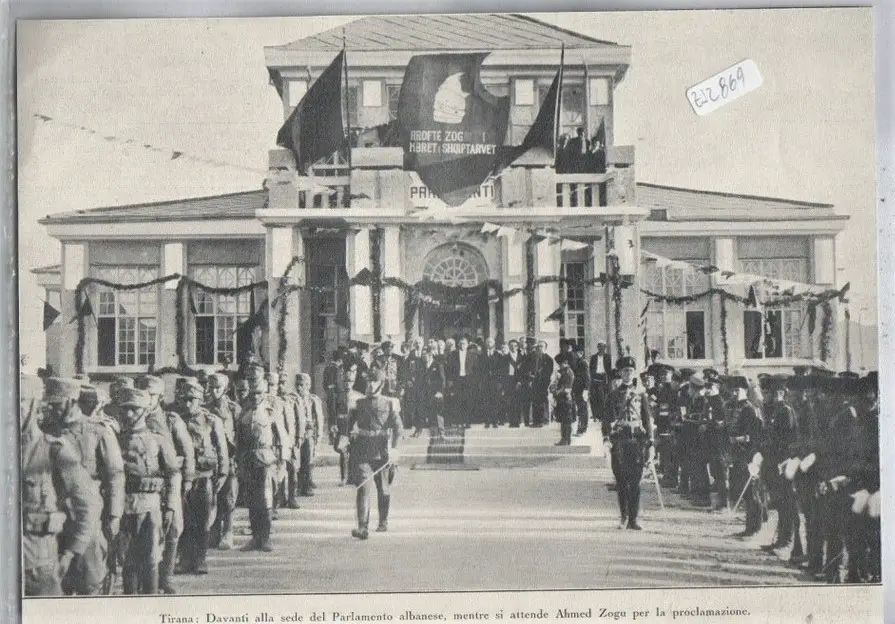
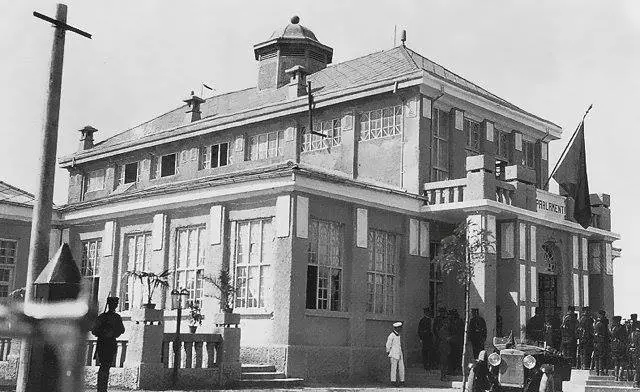
Meanwhile, the first parliamentary elections in Albania took place in the spring of 1921, as they had not been held until then due to World War I, in which Albania was also involved. The first Albanian Parliament opened on April 21 of that year; the first building of the Albanian Parliament was located where the Academy of Sciences stands today. In that parliament, 76 deputies participated, elected following a relatively regular process from the nine prefectures of the country: Berat, Durrës, Elbasan, Gjirokastra, Korça, Kosovo, Shkodra, Vlora, and the Albanian colony in the USA.
As in the past, those elections were conducted through a system of representation, or secondary electors, where based on territorial division, representatives of each province had the right to elect their deputy. The aforementioned, along with a brief history of parliamentary elections in Albania from that period until 1991, has been published by Memorie.al in previous issues. Here, we are publishing the complete Basic Statute of the Albanian Republic (the Constitution) of 1925, where a special place is held by the parliamentary election legislation of that time, as well as the Parliament’s regulations regarding the rights and duties of deputies, published by the “NIKAJ” Printing House in 1925.
Continued from the previous issue
Fundamental Statute of the Albanian Republic (1925)
(Tirana, “Nikaj” Printing House, 1925)
Penal Code 1928
Book One
BOOK TWO
Offenses
CHAPTER V
Offenses against the Inviolability of Secrets
ARTICLE 175. – Anyone who without right opens a letter, a telegram, or a sealed packet not addressed to them, or without right takes possession of another’s open epistolary or telegraphic correspondence with the intent of gaining knowledge of its contents, shall be punished with rigorous imprisonment for up to fifteen days, or with a heavy fine ranging from fifty to one thousand five hundred gold francs (fr. ari).
If the offender, by disseminating the contents, causes any damage, the punishment shall be rigorous imprisonment from one month to three years, or a heavy fine from one hundred to three thousand gold francs.
ARTICLE 176. – Anyone who without right destroys or disposes of an epistolary or telegraphic correspondence not addressed to them, even if they have not opened it while sealed, shall be punished with rigorous imprisonment for up to one year, or with a heavy fine from one hundred to three thousand gold francs.
If the act causes damage, the rigorous imprisonment shall be no less than three months, and the heavy fine no less than five hundred gold francs.
ARTICLE 177. – Anyone who, being in possession of an epistolary or telegraphic correspondence whether addressed to them or not, which should not have been disseminated, makes its contents known without right in cases where the act may cause damage, shall be punished with a heavy fine from one hundred to two thousand gold francs.
ARTICLE 178. – Anyone who, being in the service of the post, telegraph, or telephone, and by abusing that capacity, takes possession of a letter, packet, telegram, or other unsealed correspondence, or opens them while sealed, with the intent of gaining knowledge of the contents, or delivers them, or makes their existence and contents known to persons other than the addressees, or disseminates telegraphic or telephonic conversations, shall be punished with rigorous imprisonment from one to thirty months.
The same punishment shall apply to any person who, being in the service of the post, telegraph, or telephone, and by abusing that capacity, destroys or disposes of an epistolary or telegraphic correspondence.
If any of the acts provided for in this article causes damage, the rigorous imprisonment shall be from six months to four years, with an additional heavy fine from one hundred to five thousand gold francs.
ARTICLE 179. – Anyone who, by reason of their status, function, profession, or craft, having knowledge of a secret which, if disseminated, could cause damage, discloses that secret without reasonable cause, shall be punished with imprisonment for up to one month or with a heavy fine from fifty to one thousand gold francs; and if damage occurs, the fine shall be no less than three hundred gold francs.
ARTICLE 180. – For the offenses provided for in articles 175, 176, 177, and 179, prosecution shall be initiated upon the request of the injured party, provided that the act has not caused public damage.
CHAPTER VI
Offenses against the Freedom of Labor
ARTICLE 181. – Anyone who, through violence or intimidation, restricts or prohibits in any manner the freedom of industry or trade, shall be punished with imprisonment for up to twenty months and with a heavy fine from one hundred to three thousand gold francs.
ARTICLE 182. – Anyone who, through violence or intimidation, causes or causes to continue a stoppage or suspension of work, in order to impose upon workers, patrons (employers), or contractors a decrease or increase in wages (salaries), or terms different from those previously contracted between workers and the patron or contractor, shall be punished with imprisonment for up to twenty months.
ARTICLE 183. – When the offenses provided for in the preceding articles involve leaders or main instigators, the punishment for them shall be imprisonment from three months to three years, and a heavy fine from five hundred to five thousand gold francs.
TITLE III
Offenses against Public Administration
CHAPTER I
Speculation by Officials
ARTICLE 184. – Any State official who removes, conceals, or embezzles money or other movable property, for which by reason of their office they have the administration, custody, or collection, shall be punished with permanent disqualification from public office, with rigorous imprisonment from one to ten years, and a heavy fine of no less than three hundred gold francs.
If the offender fully compensates the injured party before being sent to trial, or if the damage caused is minor, the punishment shall be rigorous imprisonment from six months to five years, a heavy fine of no less than two hundred gold francs, and temporary disqualification from public office.
ARTICLE 185. – When the offender, with the intent to cover up the offense provided for in the preceding article, has acted by keeping registers and postal books irregularly, or by creating false accounts and balance sheets, or by presenting false registers, documents, and books, or by misrepresenting the state of groups, bags, or packets of money, or by employing deceits and cunning to ensure the non-disclosure of his offense, he shall be punished with rigorous imprisonment from five to ten years, with permanent disqualification from public office, and with a heavy fine equal to the embezzled amount.
In the case mentioned above, if the damage is minor or the offender has fully compensated for this damage before being sent to trial, the disqualification from public office shall be temporary, and the rigorous imprisonment shall be reduced by half to two-thirds.
ARTICLE 186. – Any State official tasked with the control or inspection of the State’s movable property who, if they neglect the performance of their duty and thereby cause the State to be debited or the debt to increase, shall be punished with a heavy fine ranging from three hundred to two thousand gold francs.
ARTICLE 187. – Any State official tasked with purchasing, selling, or procuring any kind of items for the State, if they commit fraud in the sale or purchase, or in the value, quantity, or manufacturing of these items through deceit, shall be punished with rigorous imprisonment of no less than three months and no more than three years, and with disqualification from office for a period of three to ten years.
ARTICLE 188. – Any State official who fails to pay workers employed on behalf of the Office the wages established for work or transport, or pays them insufficiently, or unlawfully uses them for personal work, shall be punished with rigorous imprisonment from one month to two years, and with a heavy fine equal to double the amount gained from this abuse.
Specifically, they are obliged to pay the interested parties their rightful dues.
ARTICLE 189. – Any State official who, by employing fewer officials than the number established in the office’s cadre, takes the salaries or wages of the missing number, as well as anyone who removes officials entirely from their original services and puts them to personal work while reporting them within the cadre of that office, shall be punished with rigorous imprisonment from three months to three years and a heavy fine equal to the amount taken, and shall be obliged to return the embezzled funds.
If the removal of the original official and their use for personal work occurred only for a short time, the punishment shall be imprisonment for up to three months or a heavy fine from one hundred to one thousand gold francs.
CHAPTER II
Extortion (Concussion)
ARTICLE 190. – Any State official who, by abusing their office, compels another to give or promise to them or to a third party, money or other benefits without being obliged to do so, shall be punished with rigorous imprisonment from two to five years, a heavy fine of no less than three hundred gold francs, and disqualification from public office for a period of three to five years.
If the amount or benefit given or promised unlawfully is of small value, the temporary disqualification and rigorous imprisonment shall range from one to three years.
ARTICLE 191. – Any State official who, by abusing their office, induces another to unlawfully give or promise to them or a third party money or other benefits, shall be punished with rigorous imprisonment from one to three years, a heavy fine from one hundred to five thousand gold francs, and temporary disqualification from public office.
If the official, benefiting only from the error or ignorance of another, receives an item which they are not legally entitled to receive, the rigorous imprisonment shall be from six months to two years, and the heavy fine from one hundred to two thousand gold francs, in addition to temporary disqualification from public office.
If the amount or value of the benefit given or promised unlawfully is small, the punishment of rigorous imprisonment and disqualification shall be, in the first case, from three months to two years, and in the second case, from one month to one year.
CHAPTER III
Bribery (Graft)
ARTICLE 192. – Any State official who, in order to perform an act of their office which they were obliged to perform, or to not perform an act of their office which they were obliged to perform, or to not perform an act which they were obliged not to perform, receives for themselves or for another, in money or other benefits, a retribution they are not entitled to receive, or accepts promises for such retributions, shall be punished with rigorous imprisonment for up to one year, temporary disqualification from public office, and a heavy fine from fifty to three thousand gold francs.
ARTICLE 193. – Any State official who receives or causes to be promised money or other benefits for themselves or others, in order to delay or omit an act of their office, or to perform an act against the duties of that office, shall be punished with rigorous imprisonment from six months to five years, permanent disqualification from public office, and a heavy fine from one hundred to six thousand gold francs.
ARTICLE 194. – For the offense provided for in the preceding article, in addition to temporary disqualification and the heavy fine, the punishment of rigorous imprisonment shall be three to ten years if the act has resulted in:
- The granting of an office, salary, pension, honorary title, or the signing of a contract in which the Office they depend on is interested;
- Favoring or damaging a party or the defendant in civil or criminal matters.
If the act has resulted in a sentence of imprisonment for more than one year, the rigorous imprisonment shall be from five to fifteen years, and the heavy fine may be increased to the maximum.
In the event that the aforementioned effect is an executed death sentence, the rigorous imprisonment shall be no less than fifteen years.
ARTICLE 195. – Any State official who, after having performed an act of their office and without prior agreement, receives for that act, whether for themselves or for another, money or other benefits, a retribution they are not entitled to receive, or accepts promises for such retributions, shall be punished with imprisonment for up to three months and a heavy fine from fifty to one thousand gold francs, and shall be temporarily disqualified from public office.
ARTICLE 196. – Anyone who gives a bribe or induces a State official to commit any of the offenses provided for in the preceding articles, as well as anyone who mediates in a bribe, shall be punished in the case of Article 193 with imprisonment from one to six months, a heavy fine from fifty to two thousand gold francs, and temporary disqualification from public office; and in other cases, shall be punished with half of the penalties assigned to the person receiving the bribe.
ARTICLE 197. – [The text provided cuts off here].
Punishment shall not be imposed upon:
- The State official who, regarding a bribe promised to or received by him, notifies the competent Authority within three days from the day of the promise or receipt, surrendering also the money or items he has received.
- Anyone who, having repented of the promise or giving of a bribe to a State official, notifies the competent Authority within three days from the day they made the promise or gave the bribe.
In all such cases, for the offender to be exempt from punishment, the act for which the bribe was taken, accepted, given, or promised must not have been carried out, even partially, and no other public or private damage must have been caused.
ARTICLE 198. – In the cases provided for in this chapter, if the bribe-taker, despite having the means to complete the act for which the bribe was received or promised, willfully does not perform that act, the punishment prescribed by law shall be reduced by one-third to one-half.
ARTICLE 199. – In all cases provided for in the preceding articles, the item given as a bribe shall be confiscated.
CHAPTER IV
Abuse of Authority and Violation of Duties Related to Office
ARTICLE 200. – Any State official who, by abusing their office, orders or commits against the rights of another any kind of arbitrary act not provided for by any specific provision of the law as an offense, shall be punished with imprisonment from fifteen days to one year; and if these acts were committed for a private purpose, the punishment shall be increased by one-sixth, and rigorous imprisonment shall be imposed instead of simple imprisonment.
The same penalty applies to any official who, in the exercise of their function, incites another to violate the law or measures taken by the Authority.
ARTICLE 201. – Any State official who, directly or through an intermediary, or through simulated acts, secures for themselves a private interest in any kind of act of the public administration in which they exercise their office – provided the act does not constitute an offense as defined in articles 187, 188, and 189 – shall be punished with rigorous imprisonment from one month to five years and a heavy fine from one hundred to five thousand gold francs.
ARTICLE 202. – Any State official who discloses or disseminates documents or facts that they possess or know by reason of their office, and which must remain secret, or in any way facilitates their disclosure – if the documents or facts in question are not among those included in Chapter I of Title I and Chapter V of Title II – shall be punished with imprisonment for up to thirty months and a heavy fine of no less than one hundred gold francs.
ARTICLE 203. – Any State official who, under any pretext, including the silence, obscurity, contradiction, or insufficiency of the law, omits or refuses to perform an act of their office shall be punished with a heavy fine from fifty to one thousand five hundred gold francs.
If the offense is committed by two or more officials by prior agreement, the heavy fine shall range from one hundred to three thousand gold francs.
If the State official belongs to the judicial branch, for such an act of omission or refusal to be considered an offense, all conditions required by law for filing a civil lawsuit against them must exist./Memorie.al