


By Dashnor Kaloçi
Part ten
Memorie.al / The history of parliamentary elections in our country, or more accurately, the attempts at elections, have its origins in the era of Ottoman rule when Albania was part of the Turkish Empire. One of the first Albanian deputies elected to the first Turkish Parliament, which opened its proceedings in December 1877, was Abdyl Frashëri. However, that parliament did not last long, as it was dissolved by the Sultan himself due to the outbreak of the Russo-Turkish War. Following the dissolution of Turkey’s first parliament, there were several other attempts at elections, but they all failed for various reasons. The first regular elections in Albania were held only in 1908, when the Young Turks came to power in Turkey. Those elections were not direct but were held through representation, otherwise known as the two-tier voting system (secondary electors).
The first Turkish Parliament opened on December 10, 1908, and out of 266 deputies, 27 were Albanians elected from the four vilayets of Albania. At that time, members of the “Committee of Union and Progress” in Turkey, which included many Albanians, split and grouped into three political factions. The first group was “Union and Progress” (the Turkish-Macedonian party) with 164 deputies, consisting of 130 Turks, 5 Arabs, 1 Greek, and 15 Albanians, led by Hasan Prishtina, a deputy from Kosovo.
The second group, called “Liberal Union” (the Greek-Albanian party), consisted of 45 deputies and included 12 Albanians led by Ismail Qemali. Among the other Albanian deputies in the Turkish Parliament at the time were Esad Pashë Toptani, Nexhip Draga, Rexhep Pashë Mati, etc. After 1908, there were several other elections where Albanians continued to vote for their representatives in the Turkish Parliament, a process that lasted until November 1912, when Independence was proclaimed and Ismail Qemali was elected head of the Government.
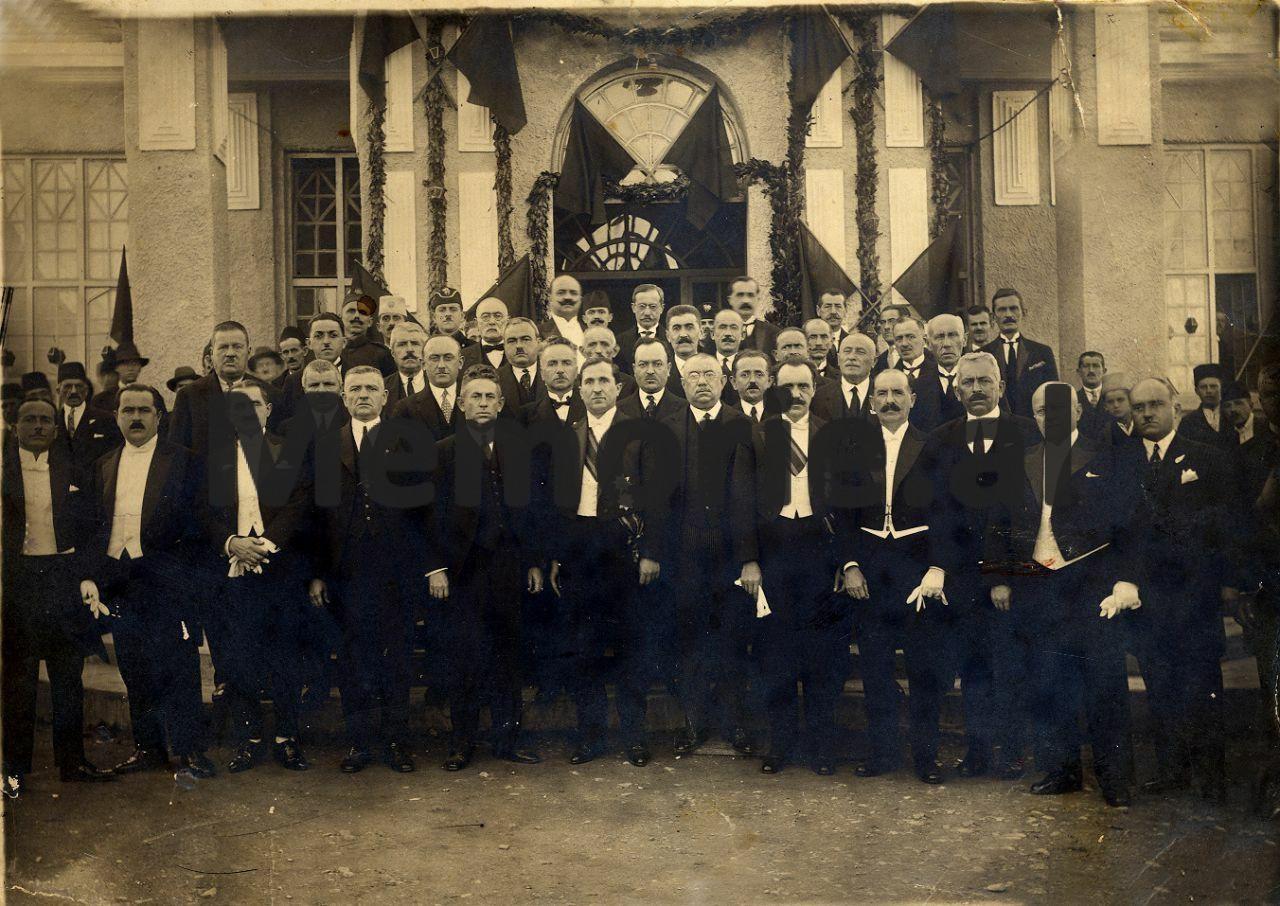
Meanwhile, the first parliamentary elections in Albania took place in the spring of 1921, as they had not been held until then due to World War I, in which Albania was also involved. The first Albanian Parliament opened on April 21 of that year; the first building of the Albanian Parliament was located where the Academy of Sciences stands today. In that parliament, 76 deputies participated, elected following a relatively regular process from the nine prefectures of the country: Berat, Durrës, Elbasan, Gjirokastra, Korça, Kosovo, Shkodra, Vlora, and the Albanian colony in the USA.
As in the past, those elections were conducted through a system of representation, or secondary electors, where based on territorial division, representatives of each province had the right to elect their deputy. The aforementioned, along with a brief history of parliamentary elections in Albania from that period until 1991, has been published by Memorie.al in previous issues. Here, we are publishing the complete Basic Statute of the Albanian Republic (the Constitution) of 1925, where a special place is held by the parliamentary election legislation of that time, as well as the Parliament’s regulations regarding the rights and duties of deputies, published by the “NIKAJ” Printing House in 1925.
Continued from the previous issue
The Fundamental Statute of the Albanian Republic (1925)
(Tirana, “Nikaj” Printing House, 1925)
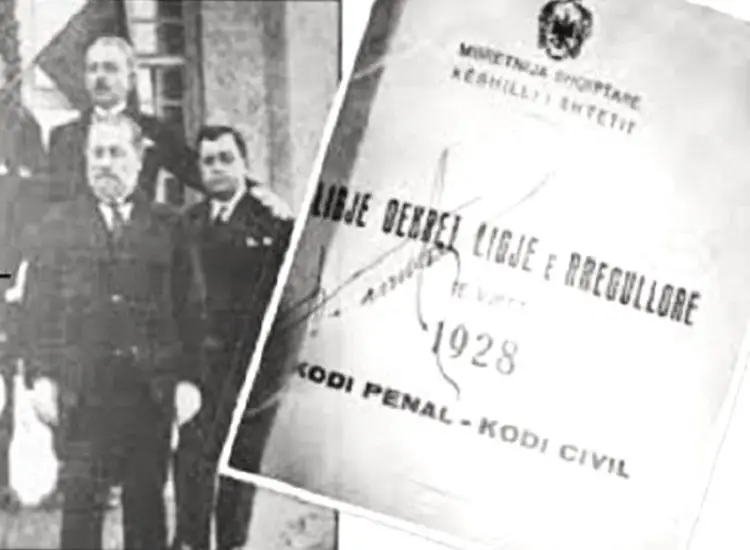
Penal Code 1928
Book Two: Offenses (Delicts)
TITLE I: Offenses Against State Security
ARTICLE 145. – Anyone who, outside of the cases provided for in Article 65, provides shelter, aid, or procures food, weapons, ammunition, or clothing, or assists or facilitates the actions of an association such as the one described in the preceding article, shall be punished by imprisonment from one to five years.
If the perpetrator committed these acts after the gang had already commenced its activities, the provisions of Article 134 shall apply.
ARTICLE 146. – The following are exempted from punishment for the offenses provided for in the two preceding articles:
- Those who, before or as soon as they are ordered by the Government, disband the gang or prevent the gang from committing the offense for which it was formed.
- Those who, without having participated in the formation or command of the gang, withdraw without resistance and surrender or abandon their weapons before or as soon as they are ordered by the Government.
ARTICLE 147. – When two or more persons associate and decide to commit any of the offenses provided for in Articles 111, 126, 127, 129, 130, 133, and point II of Article 141 through designated means, each of them shall be punished.
- In the cases of Articles 111, 126, and 127: with heavy imprisonment from eight to fifteen years.
- In the cases of Articles 129 and 130: with imprisonment from five to fifteen years; and in the case of Article 133: with imprisonment from three to seven years.
- In the case of point II of Article 141: with heavy imprisonment from two to eight years.
Punishment shall not apply to anyone who withdraws from the association before the offense begins to be executed and before any prosecution has commenced.
ARTICLE 148. – Anyone who, outside the cases provided for in Articles 64 and 65, publicly incites the commission of any of the offenses provided for in Articles 111, 126, 127, 129, 130, and 133, shall be punished for this sole offense with heavy imprisonment or imprisonment from three to five years (for Articles 111, 126, and 127) and from twelve to thirty months (for Articles 129, 130, and 133), adding in every case a heavy fine of three hundred to three thousand gold francs.
ARTICLE 149. – When the perpetrator, while committing any of the offenses provided for in this title, commits another offense that entails a temporary punishment against personal liberty of more than five years, one-sixth shall be added to the punishment resulting from the application of Article 77.
ARTICLE 150. – The provision of the preceding article also applies to anyone who, in order to commit one of the offenses provided for in this title, occupies a public or private building, or removes by force or deception weapons, ammunition, or food from a place where they are sold or stored, even if the act results in a punishment against personal liberty of no more than five years.
ARTICLE 151. – Anyone who becomes certain of the formation of a gang or association intended to commit the offenses indicated in Articles 111, 126, 127, 129, 130, and 133, and fails to notify the Government if those offenses are carried out, shall be punished by imprisonment from three to six months.
ARTICLE 152. – The spouse (conjoint), parents, ancestors, descendants, father-in-law and mother-in-law, brothers and sisters, brothers-in-law and sisters-in-law, son-in-law and daughter-in-law, and uncles and aunts of the perpetrator are exempted from the punishment specified in the preceding article.
ARTICLE 153. – To punishments of imprisonment exceeding five years specified in this title, a placement under special supervision by the Public Security Authority may also be added.
TITLE II: Offenses Against Liberty
CHAPTER I: Offenses Against Political Liberty
ARTICLE 154. – Anyone who, through violence, intimidation, or tumult (potere), prevents – totally or partially – the exercise of any type of public right, shall be punished, when the offense is not provided for by special provisions of the law, with imprisonment from one to thirty months and a heavy fine of one hundred to one thousand gold francs.
If the perpetrator is a State official and has committed the offense by abusing their office, the imprisonment shall be from one to five years.
CHAPTER II: Offenses Against Freedom of Religion and Conscience
ARTICLE 155. – Anyone who, in order to insult any of the religions honored by the State, prevents or disturbs the exercise of religious functions or religious ceremonies, shall be punished with imprisonment up to three months and a heavy fine of fifty to five hundred gold francs. If the offense is committed using violence, intimidation, or desecration, the perpetrator shall be punished with imprisonment from three to thirty months and a heavy fine of one hundred to one thousand five hundred gold francs.
ARTICLE 156. – Anyone who, in order to insult any of the religions honored by the State, publicly insults a practitioner of that religion, upon the request of the offended party, shall be punished with imprisonment up to three months or a heavy fine of one hundred to three thousand gold francs.
PENAL CODE 1928
CHAPTER II (Continued): Offenses Against Freedom of Religion and Conscience
ARTICLE 157. – Anyone who, in order to insult any of the religions honored by the State, destroys, damages, or in other ways desecrates in public places objects intended for the exercise of that religion, shall be punished by imprisonment from ten days to two months and a heavy fine of up to three hundred gold francs.
If the insult is committed during the actual exercise of the religion, or if violence is used against a practitioner, or if they are insulted during or because of the exercise of their function, the punishment shall be imprisonment from one to six months and a heavy fine of one hundred to one thousand gold francs.
ARTICLE 158. – Anyone who, in places intended for religion or in cemeteries, damages, disfigures, or defiles statues, paintings, or graves, shall be punished by imprisonment from one month to one year and a heavy fine of up to five hundred gold francs.
ARTICLE 159. – Anyone who performs insulting acts upon a human corpse or its remains, or with the intent to desecrate or for any other unlawful purpose, removes the corpse or remains in whole or in part, or violates in any way the grave, the casket, or other items buried with the corpse, shall be punished by imprisonment from one to six months and a heavy fine of up to one thousand gold francs.
Outside the cases mentioned above, anyone who removes in whole or in part, or without permission disinters a human corpse or steals its remains, shall be punished by imprisonment of up to one month and a heavy fine of up to three hundred gold francs.
If the act is committed by persons entrusted with or appointed to guard cemeteries or other burial sites, or by persons entrusted with the care of corpses, the punishment in the case of the first paragraph of this article shall be imprisonment from two months to one year and a heavy fine of fifty to one thousand five hundred gold francs, and in the case of the second paragraph, imprisonment up to two months and a heavy fine of up to three hundred gold francs.
ARTICLE 160. – Anyone who publicly insults another because they do not practice the rites of a religion, shall be punished upon the request of the offended party with imprisonment of up to three months or a heavy fine of up to one thousand gold francs.
CHAPTER III: Offenses Against Personal Liberty
ARTICLE 161. – Anyone who places a person in slavery or other analogous conditions shall be punished by heavy imprisonment from twelve to twenty years.
ARTICLE 162. – Anyone who, outside the law, deprives a person of their personal liberty shall be punished by heavy imprisonment from one month to five years and a heavy fine of up to one thousand gold francs.
If the perpetrator, during the commission of the act or its duration, uses intimidation, torture, or deception, or commits the act for the purpose of revenge or profit, or under a religious pretext, or hands the person over for military service outside the State, the punishment shall be heavy imprisonment from three to eight years and a heavy fine of five hundred to three thousand gold francs.
If this act is committed against a parent, a spouse, a member of the Legislative Chambers, or against a State official because of their office, or if the act causes the victim serious damage to their person, health, or property, the punishment shall be heavy imprisonment from five to fifteen years and a heavy fine of one thousand to five thousand gold francs.
The punishment shall be reduced by one-sixth to one-half if the perpetrator voluntarily releases the person before any prosecution begins, without having achieved their goal and without having caused any damage.
ARTICLE 163. – A State official who, by abusing their office or without following the conditions or formalities prescribed by law, deprives a person of their personal liberty shall be punished by imprisonment from three months to seven years. If the act involves any of the circumstances indicated in paragraphs II and III of the preceding article, the imprisonment shall be from six to fifteen years.
The punishment shall be reduced by one-sixth to one-half in the case provided for in the final paragraph of the preceding article.
ARTICLE 164. – Anyone who, without the intent of lust, marriage, or profit, but for any other purpose, removes a person under fifteen years of age, with their consent, from their parents, guardian, or caretaker, even temporarily, or with their consent keeps them unlawfully, shall be punished by heavy imprisonment of up to one year.
If the act is committed without the consent of the person removed or kept, or if the minor has not reached twelve years of age, the provisions and punishments specified in the preceding articles shall apply accordingly.
ARTICLE 165. – A State official who, by abusing their office, orders or conducts a personal search (perquisition personelle), shall be punished by imprisonment of up to six months.
ARTICLE 166. – A State official in charge of a prison who admits anyone into the prison without an order from the competent Authority, or refuses to obey an order for the release of a person, shall be punished by imprisonment of up to one year.
ARTICLE 167. – The competent State official who, despite having gained knowledge of an unlawful imprisonment, fails to act, or delays or refuses to take action for the release of the prisoner, or to refer the matter to the Authority duty-bound to take measures for that release, shall be punished by imprisonment of up to two months.
PENAL CODE 1928
ARTICLE 168. – A State official entrusted with the custody or transportation of a detained or convicted person, or who holds authority over that person by virtue of their office, shall be punished by imprisonment from one to thirty months if they commit arbitrary acts against that person or employ rigors not permitted by the regulations.
ARTICLE 169. – A State official who, while committing any of the offenses provided for in the preceding articles, acts for private purposes, shall be punished in the case of Article 167 with heavy imprisonment from one to five months and dismissal from office for a period of up to one year; in other cases, one-sixth shall be added to the punishment, and the imprisonment shall be converted into heavy imprisonment.
ARTICLE 170. – Anyone who uses violence or intimidation to compel a person to do, tolerate, or omit something, shall be punished by heavy imprisonment of up to one year and a heavy fine of up to one thousand gold francs; if the objective is achieved, the heavy imprisonment shall be no less than one month and the heavy fine no less than one hundred gold francs.
If the violence or intimidation is committed with weapons, or by a person in disguise, or by two or more persons together, or via anonymous writing or symbolic means, or by employing the intimidating power derived from secret societies (whether existing or supposed), the heavy imprisonment shall be from two to five years, and if the objective is achieved, the punishment shall be no less than three years.
In cases where heavy imprisonment is set for no less than six months, placement under special supervision by the Public Security Authority may also be added.
ARTICLE 171. – Whenever this law does not decree otherwise, the word “weapon,” when considered an aggravating factor of an offense shall mean:
- Concealed weapons (insidieux) and everything naturally defined as a weapon (proprement dit) that can be used for assault.
- The aforementioned weapons and any other type of tool fit for assault whenever carried in a manner that intimidates people.
When an offense is committed by two or more persons together, it is considered committed with weapons if at least one of them was overtly armed with a weapon naturally defined as such, or at least two were armed with other types of tools.
ARTICLE 172. – Anyone who, outside of other cases provided by law, intimidates someone by threatening to cause them a serious and unjust harm shall be punished by heavy imprisonment of up to six months.
If the intimidation is carried out via any of the means indicated in paragraph II of Article 170, the punishment shall be heavy imprisonment from three months to one year; if the heavy imprisonment exceeds six months, special supervision by the Public Security Authority may be added.
For any other type of intimidation, the punishment shall be a heavy fine of up to three hundred gold francs, and prosecution shall occur upon the request of the injured party; however, if the intimidation in this case is done with weapons, the punishment shall be imprisonment from fifteen days to six months, and prosecution shall occur ex officio.
CHAPTER IV: Offenses Against the Inviolability of the Domicile
ARTICLE 173. – Anyone who arbitrarily enters or remains in another’s dwelling or its dependencies against the prohibition of the person entitled to forbid entry or to expel them, as well as anyone who enters or remains there covertly or through deception, shall be punished by heavy imprisonment from one to thirty months and a heavy fine of up to three hundred gold francs.
If the offense is committed at night or with violence against a person, or with weapons, or by two or more persons together, the punishment shall be heavy imprisonment from one to six years and a heavy fine of no less than two hundred gold francs.
Prosecution shall occur only upon the request of the injured party.
ARTICLE 174. – A State official who, by abusing their office or by failing to respect the conditions and formalities prescribed by law, enters another’s dwelling or its dependencies shall be punished by imprisonment from three months to three years.
If the official who enters in this manner conducts a search (perquisition) or other arbitrary acts, they shall be punished by imprisonment from one to five years and a heavy fine of one hundred to one thousand gold francs.
If the perpetrator has acted in these cases for a private purpose, one-sixth shall be added to the punishment, and the imprisonment shall be converted into heavy imprisonment.
If the search is conducted in warehouses, offices, or commercial shops without observing the formalities decreed by law, the perpetrator shall be punished by heavy imprisonment from two months to two years./Memorie.al