By Njazi Nelaj & Petrit Bebeçi
Part Three
– Fate, that morning, was not with the commissar! –
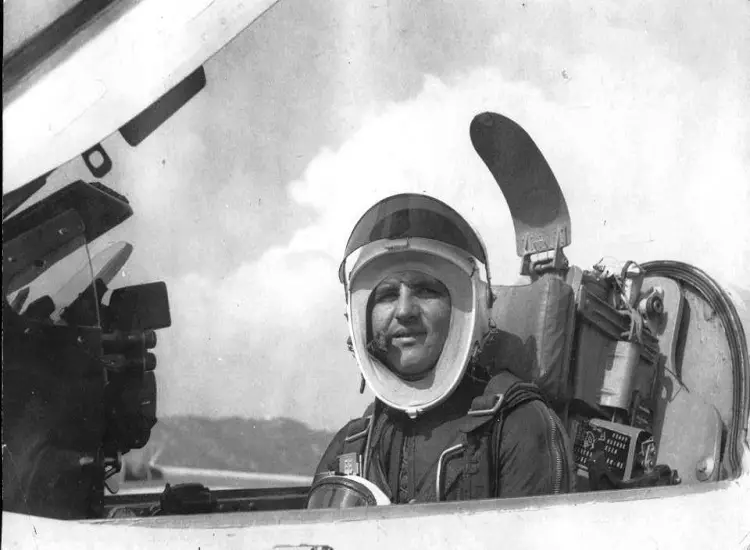
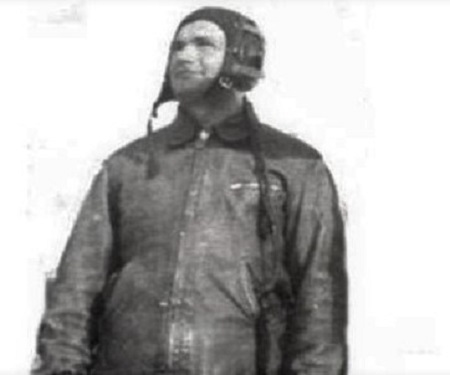
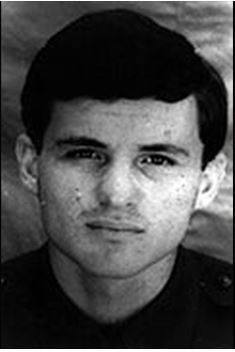
Memorie.al / Luto Refat Sadikaj enter the ranks of the “elite” pilots of Albanian aviation of all time. He was one of the pilots of the first group that was prepared, from the very beginning, in our aviation school in Vlorë. Thus, Luto Sadikaj is a “domestic product,” one hundred percent. Not only that. Luto Sadikaj was “kneaded” and perfected up to the sophisticated aircraft of the time, the MiG-21, in Albanian airfields, with local instructors, according to the combat preparation course and Albanian aviation regulations, under conditions where limits were constantly being reduced and without having two-seater aircraft. We are perhaps dealing with a unique case in the world history of combat aviation.
Continued from the previous issue
I am pleased to emphasize that the born pilot, Petrit Sado Bebeçi, continuously from 1959 until Luto’s death separated them prematurely, both were distinguished as companions, friends, and talented pilots. As Petrit knew Luto, I do not believe even his own kin knew him, from whom he had separated early. On that day when the great tragedy occurred, Petrit Bebeçi was serving as the squadron commander in the Gjadër regiment. Petrit felt a double obligation to help Luto; as a subordinate and as his old friend. Petrit was one of the most renowned flight specialists. He was known as one of the specialists in the exploitation of the sophisticated ‘MiG’-21 aircraft. Therefore, he felt it an obligation to be near Luto at every moment and to assist him with qualified flight help. Luto Sadikaj would listen to Petrit’s qualified opinion and keep it in mind.
The society and friendship between the two quality pilots was born in the auditoriums and dormitories of the “Skënderbej” Military High School; it grew during the years of the Aviation School in Vlorë; it was cemented year after year during their shared life and work in the aviation units, and it gave its fruits in Gjadër, when they both flew the supersonic ‘MiG’-21 aircraft in the third squadron of the regiment. Petrit Bebeçi and Luto Sadikaj were and felt like brothers.
Let us take a brief look at the life and career as a pilot of Luto Refat Sadikaj, from 1964, when he entered the Aviation School in Vlorë, until he departed from this life in that unfortunate flight of March 29, 1982:
In 1964, Luto Sadikaj began the path to become a pilot at the Aviation School in Vlorë. Initially, Luto began flying light training propeller planes of the ‘Yak’-18 A type. As his flight technique instructor, he had the good-natured man from Devoll, Admir Fllaga, who had completed the Soviet aviation school. Admir, complete in both theoretical and practical aspects, had become one of the best specialist instructors of his kind. He possessed a clean piloting technique and taught Luto the secrets of the air and the difficulties that must be overcome in the life of a pilot.
Entering the grooves of air navigation day after day, the teenager Luto Refat Sadikaj became convinced of the truth of Stalin’s sayings, in that quote told to him before departing for Vlorë by that aviation veteran dressed in the beautiful aviator’s uniform. Instructor Admir was pleased when he saw that Luto Sadikaj was part of the student list of his group. The sharp-eyed piloting technique instructor had observed and studied the students since they first arrived at the aviation school auditoriums. Indeed, Luto Sadikaj was a “giant” and his physique stood out immediately. After being presented by the school command, the instructors and students got to know each other more closely. Admir saw in Luto a healthy, powerful, agile, smart, and smiling boy. Deepening the acquaintance made instructor Admir aware of the features of Luto’s character and behavior.
Luto manifested a community spirit, love and respect for his comrades, benevolence, correctness, and civic education. He was quite educated and cultured and with a strong and conscious discipline. The boy who came from the “Skënderbej” Military High School showed that he had taken the path of the air seriously. He loved the airplane and the flight very much. After he “tasted” the air and fell in love with it, he could hardly wait for the next day to ascend again to the heights. As instructor Admir recounts, Luto Sadikaj reached qualitative indicators in theory and practice. Because he loved the airplane so much, he delved into knowing its details and had a thirst to learn the elements of flight as soon as possible. Luto had a conviction on the necessity of performing flight elements with precision, which he caught and mastered quickly, and he was a “fanatic” about performing every element with scientific discipline.
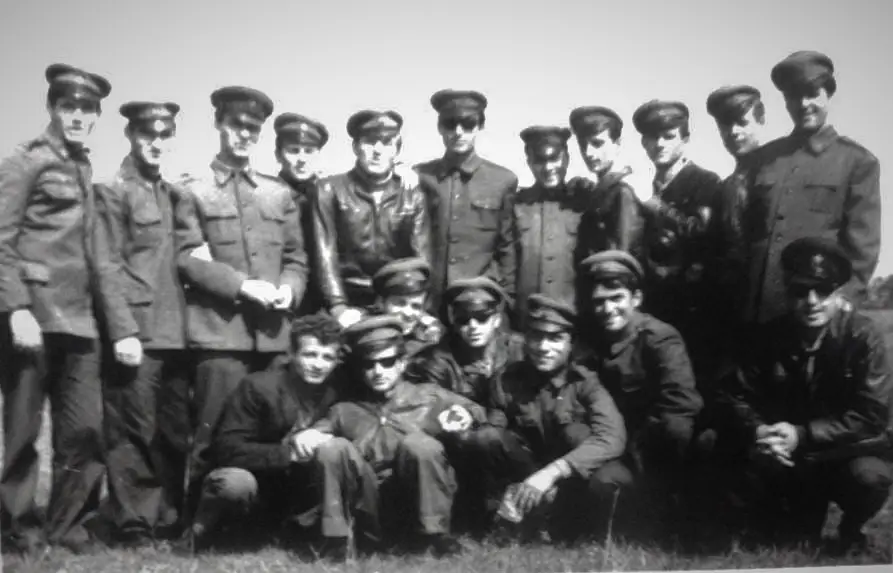
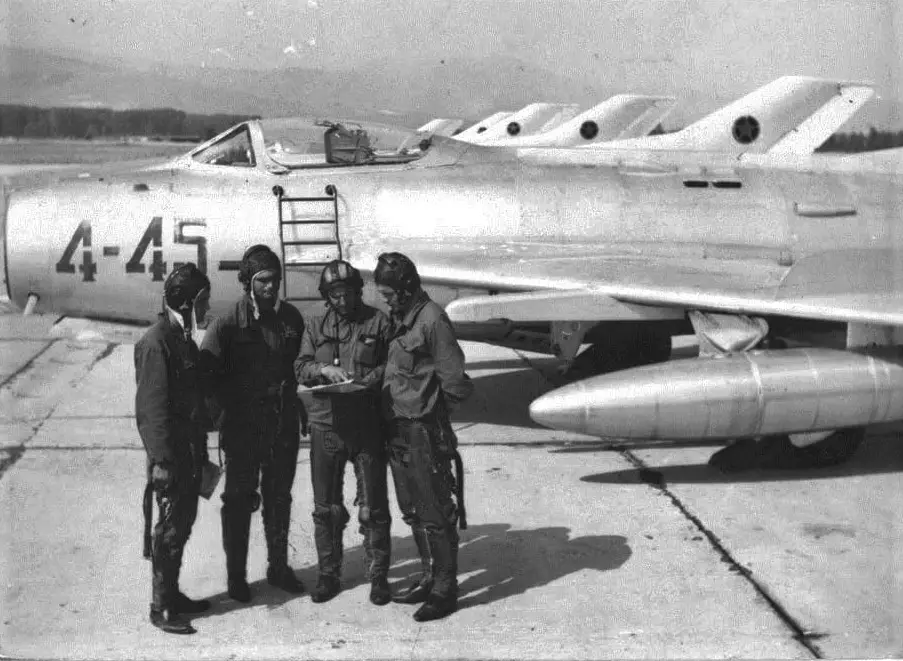
He knew very well the special cases that can happen in flight and described them with truthfulness and rigor. Knowing the extraordinary cases in detail, Luto Sadikaj not only did not know fear but had a desire to encounter them in flight practice. In the third year of aviation school, when he flew for the mastery of the elements of combat use of the ‘MiG’-15 Bis aircraft, the flight instructor was the pilot from Sasaj, Zija Shyqo Memi. Both sincere, both wise men, who understood each other beautifully and realized the program qualitatively. Group mates of the pilot students at the time when Luto Sadikaj flew in Pishëporo with ‘MiG’-15 planes were: Petrit Bebeçi, Vangjel Koroveshi, Sabri Toçi, Dhimitër Vasho, Delo Isufi (Seraj), Sali Peçi, Flamur Pupa, Isa Arapi, Lutfi Jaho, Stiljan Tanka, Rafail Bulgareci, Lutfi Hysenaj, Bilal Sinaj, Hetem Alia, Azis Alla, Eqerem Tu1ga, and Skënder Mesiti.
I can say, without hesitation, that Luto Refat Sadikaj was the forehead of the group among the 20 boys selected to become pilots in every direction. The adolescent boy originally from Çorrush of Mallakastra was distinguished from his peers by his character traits and his clean figure. Healthy education and the culture of behavior stood out from the very first meeting with him. With a well-developed and well-tempered physique, naturally smart, calm, wise, a fierce brave, extremely correct and benevolent, sociable and attentive to others, with his will and persistence to enter the secrets of the pilot’s profession and with the tendency to penetrate toward the knowledge of the unexpected, he made you feel humble. He took the side of the new and was cut out to move with the times. In his genes, Luto Sadikaj had the interest to learn and interpret every phenomenon that appeared commonly in daily life.
After finishing the aviation school with high indicators at the end of 1966, Luto Refat Sadikaj graduated as a fighter-bomber pilot and was commissioned as an officer. He was appointed to the Aviation Regiment in Rinas, near the capital, initially in the function of crew commander. Within the year 1967, Luto applied himself to the work of flying, simultaneously, in two types of aircraft different from each other; in the ‘MiG’-17 F and in the ‘MiG’-19 S. This is perhaps a unique case in the history of our aviation. He did not have the degree of classification, nor the experience as a flyer and the amount of necessary hours to transition to supersonic planes, but he had on his side: unshakeable will, persistence (not stubbornness), and a perfect piloting technique for the little seniority he had as a pilot. These justified and made possible the premature transition to this sophisticated aircraft of the time.
It is worth noting that Luto Sadikaj and his colleagues of the transition group realized the transition here, in Albania, at the Rinas airfield, without having two-seater aircraft in use. The piloting technique instructor, who taught them the features of using the new airplane, was the charming man from Korça, agile and with a piloting technique to be envied: Roland Mandi Sofroni. It was the first group of pilots performing the transition to the supersonic ‘MiG’-19 S aircraft in our conditions, which did not resemble those of our Eastern-European allies. Luto’s group mates in this transition were: the late Bego Hoxha and Sabri Toçi, as well as Alqiviadh Dede. The transition was performed in record time and with high indicators. The striking force of our aviation was increased with young talents.
When the flight hours for every pilot, due to the lack of engine resources, had begun to be reduced significantly, Luto Sadikaj made the transition to the most sophisticated aircraft of the time, the fighter-bomber with a speed more than twice the speed of sound, the ‘MiG’-21. Even the transition to ‘MiG’-21 planes was performed in Albania, specifically at the Rinas airfield. As his piloting technique instructor, he had the talented pilot from Picari of Gjirokastra, Gezdar Riza Veipi. As group mates in that transition, which was being done for the first time in our country, Luto Sadikaj had the late Dhimitër Robo, Klement Aliko, Musa Kame, and Kujtim Kryekurti. Thus, Luto Refat Sadikaj can be called with a full mouth a “24-carat, pure Albanian pilot.” The flights, in general, went well for pilot Luto Sadikaj. He endured the load and sacrifices with his essential traits, with prominent preparation, and with high-level flight qualities.
However, the air does not easily show all the secrets it covers within itself. In some cases, it appears suddenly and dangerously with its adversities and puts the pilot to a serious test. One such was reserved for Luto Refat Sadikaj in September of 1973. Here is how it happened: The Rinas Regiment was flying at night, in simple weather conditions, according to the annual flight plan. ‘MiG’-19 S and ‘MiG’-21 planes were taking off from the same airfield. Luto was flying in the ‘MiG’-21 planes. After the plane passed into the altitude-gaining regime, the ‘MiG’-21 in which Luto Sadikaj was flying suddenly had its cockpit canopy detach in the air, and the pilot remained unprotected in the face area. The powerful air currents did not allow Luto even to see the instrument panel, where the main indicators that make the piloting of the plane possible are located. The piloting instruments and those of navigation and system control were completely disrupted.
The noises did not allow for radio communication between the pilot in the air and the flight leader at the airfield. As Luto’s brother, Sadiku, an aviation man, tells it: “Luto didn’t know where he was; he leaned forward to minimize the negative effect of the air currents and held the control stick with his legs. He was flying blindly. He was surprised when he spotted two lights in the cockpit. He thought he was seeing the runway lights, but he was wrong. The flight leader, to come to the aid of the pilot in distress, directed the two landing searchlights upward. Later, Luto noticed the airfield lights, lowered the wheels, and came to a precise landing, as only he knew how to land. His comrades waited for him enthusiastically and embraced him, tearfully, congratulating him for that miracle he performed. The state authorities of the time told him: ‘You have done your duty!’ This unworthy behavior touched not only the pride of pilot Luto Sadikaj, who sacrificed his life to save the plane, but also insulted his colleagues, who had Luto as their ‘idol’.”
The unusual case that happened to Luto Sadikaj is rare, perhaps unique for that time. According to technical literature and the relevant instructions of the time, when a pilot flying a ‘MiG’-21 has the cockpit canopy detach in the air, he must necessarily abandon the plane by ejection and save his life. Luto Refat Sadikaj was a winged brave and did not follow this path. He loved the airplane and the flight very much, but abandoning the plane, the fierce brave Luto Sadikaj valued as unmanliness, as abandoning a comrade in a grave aerial situation, and an evasion of danger. Therefore, pilot Luto Sadikaj decided instantly (a matter of seconds) to stay in the cockpit with the detached canopy until the last drop of fuel. He did not choose the path recommended by instructions, even though he knew it well. After all this time, people are free to judge the action with a cold mind and in comfortable conditions, but in the critical situation in which that noble boy found himself, when his life was at risk, the action he took turned out fortunate, and Luto returned to the airfield with victory over the eminent danger that threatened him.
Such a manly stance of rare bravery can only be held by a pilot with flight and human values like Luto Refat Sadikaj. At that time, Luto Sadikaj was married to a model woman, a captain and noble, like Margarita. He loved his wife and their daughter, Gresa, very much, who in her infancy had felt the immense parental love of her caring father. The Sadikaj couple lived at that time in Tirana, in the (Laprakë) neighborhood, in the same building as the families of pilots: Koço Biku, Sefedin Tomçini, Roland Sofroni, Bajazit Jaho, Mahmut Hysa, etc. “When the canopy detachment happened in the air – recounts the elder brother, Sadiku, as Luto had told him – ‘Gresa’s face appeared before me; her presence in the cockpit pushed me to fight until the last drop of fuel. Before my eyes came Rita, my wife, a “Great Lady,” my father and mother who had barely raised me. So, in that dangerous situation in the air, I was not alone, and I had to stay for them too’.”
The aviation doctor Lulzim Bilbili, who that night led the team providing health security for the flights, explained the case quite humanely. In his book, among other things, he writes: “The air currents pierced his face like nails. The plane’s instruments were disrupted and he (the pilot) could not see the speed, altitude, or RPMs. The flight leader’s voice was heard faintly. Luto was shaken. What should be done? Jump? But the plane, where would it fall? Love for his wife and daughters appeared to him and, instinctively, he whispered: Oh, daddy’s soul! And he decided: ‘I will not jump,’ even contrary to the instruction, he made a forced landing at the airfield, without goggles. We took him to the hotel; his comrades came out; they congratulated and embraced him. His eyes were red. As if filled with blood.
His face was red-to-blue (cyanotic). He told the doctor: ‘It feels as if my eyes are filled with sand!’ To the question: Why didn’t you jump? He answered shortly: ‘Regret for the airplane and great love for my eldest daughter, Gresa!’ When he went to his family, Luto, as a caring parent with a great world and a sensitive soul, went to the bed where his ‘angel’ Gresa was sleeping, kissed the girl, and on the little girl’s cheek, along with the warmth of parental love, fell two drops of tears from the caring father’s eyes.”
When the Gjadër airfield opened in the Zadrima field, Luto Sadikaj was among the first to transfer his young family to the city of Lezhë, together with Gëzdar Veipi, Petrit Bebeçi, Hamza Koçi, Klement Aliko, Ilija Marjani, etc. Gëzdar Veipi, one of the elite pilots of Albanian aviation, told me: “Luto Sadikaj was a good boy, physically strong, and flew very well. He transitioned to the ‘MiG’-21 planes here in Rinas, together with Dhimitër Robo, Klement Aliko, Musa Kame, and Kujtim Kryekurti. It was the first group of pilots to transition to the ‘MiG’-21 aircraft in the country. I was their flight instructor.”
And Gëzdar moves his narrative in time, showing the ordeal of the journey from Rinas, where they flew, to Lezhë, where their families were waiting. Regarding this, he remembers: “After the flights in Rinas, we traveled together in a military bus to Lezhë to go to our families. During the journey, Luto would tell us about the case when the canopy detached in flight at night. He described that unfortunate case with such feeling that, when he recounted it, his forehead would wrinkle and he would drip with sweat. He described the event with precision and feeling, as if it had happened the day before! When Luto Sadikaj was killed, I was in the air. I was flying at the Rinas airfield and I was not there!” At every step and in all the links he passed, up to the duty of the regimental commissar, Luto Refat Sadikaj was distinguished for will, persistence, and a spirit of sacrifice. He was not only a rare pilot but also a quality football and volleyball player.
When he approached the field where football was played among comrades, Luto Sadikaj was easily distinguished. His well-formed body, muscular and powerful, the strong shot with his left foot, and his resistance were the factors that made them choose him first in the lots that were drawn, and the team he was included in always came out as the winner, also thanks to his play and goals. He was the base of the team and a protagonist in the game. This side of Luto’s personality is convincingly described by the quality pilot and good man Myzafer Zaho, who was a close friend of his and followed the professional progress of the character of this writing with care. As Myzafer remembers: “It was football that joined us with Luto. Initially, we met when we were both at the ‘Skënderbej’ military high school in 1960. Like Luto, I played football with the ‘Partizani’ youth team. As Tirana residents who played football well, we were incorporated into this team, together with the late Foto Andoni, with Neptun Bajko, and with other boys our age. In school and in the ‘Partizani’ youth team, we stayed together for three years. Luto Sadikaj was powerful and played football hard and was result-oriented.
The ‘Partizani’ youth team had interest in him, as Luto’s role in the team was significant. In free conversations, we spoke about Tirana, our common city, and about Çorrush, the village where he had spent his early childhood. When I was in my senior year, he spoke to me about aviation. Luto Sadikaj and Bego Hoxha strongly influenced me to enter the paths of the sky. Bego, whom I had as a cousin and listened to, told me one day: ‘don’t go to another place, you will become a pilot!’ And so I became. Even when we came to Tirana, near our families, the three of us would meet and stay long in each other’s company! When Luto was on duty in Gjadër, he came to Tirana often to his family. Again, we would stay together and talk about the most diverse topics! He was among my closest friends from the student groups before me. He participated in every sports activity and gave the tone to the activity. His developed physique and powerful body favored this.”/Memorie.al