By Harallamb KOTA
Part One
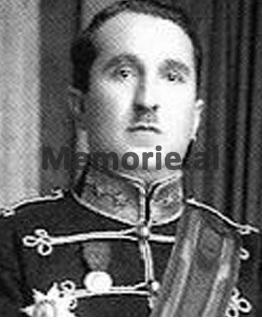
Memorie.al / Strict Albanian anti-communists, among them Mit’hat Frashëri and Koço Kota, foresaw early on the danger of the Slavic-communist invasion, which swept furiously into the Balkans and Albania. From Eugen Shehu’s perspective, the events of the autumn of 1944 unfolded such that with the fall of the Third Reich, the Albanian national-liberation forces gained time and the opportunity to fight their political opponents. Under these conditions, dozens of Albanians left their homeland. Such a fate also befell Nuçi Kotta, the son of the former Prime Minister Koço Kota. He left for Italy, and from there moved to France, where it is known he found it easy to climb the career ladder. However skeptical in their predictions, Mithat Frashëri and Koço Kota had not foreseen the exodus of the Cham Albanians that occurred in the years 1944-1945, nor the organized persecutions by the Tirana regime in the coming years against Albanian nationalism and the elements supporting the return of King Zog.
After the establishment of the communist regime in Albania, “Koço Kota” street, which had been named “Galeazzo Ciano” by the Italians, would be renamed “Qemal Stafa” by the communists. Not satisfied with this alone, a very grim fate would follow the Prime Minister of the Albanian Kingdom, Koço Kota.
The communist regime established in Albania after the end of World War II was in search of officials of the Zogist Kingdom, quislings, and regents. Among them, the former Prime Minister Koço Kota was sought, declared an enemy by:
- The Nazi-fascist occupiers;
- The Slavic-communist neighbors;
- The Greek nationalists and communists;
- The Albanian communists.
Betrayed by the Greek communists, Koço Kota fell into the hands of segments of the Yugoslav and Soviet secret services, whose mission was: “To kidnap him, send him to Albania, and hand him over to the Albanian communists.” Regarding the mafia-like operation in Thessaloniki, former Prime Minister Kota did not follow King Zog into exile but remained in the neighboring state of Greece to organize nationalists and legalists inside and outside the Albanian border in the fight against the Italian and later the German occupiers.
Dr. Koço Kota, a self-declared enemy of the “Slavic-communist danger,” had been living underground in the city of Thessaloniki for some time, as he had already been declared an enemy by both the Greek and Yugoslav communists. While the communist movement had engulfed all of Greece, in Thessaloniki, it had become the main political force.
One of the participants in the Marxist circles and the communist movement in Greek Macedonia had been the Albanian-Macedonian Koçi Xoxe, who was born in the village of Negovan in Florina and had completed high school in Thessaloniki. In 1931, the communist Xoxe came to Korça and participated in the organization of the “Puna” (Labor) Society, while the anti-communist Kota led the Albanian state and held the post of Speaker of Parliament.
On February 21, 1936, when King Zog’s Albanian government was headed by the liberal Mehdi Frashëri, Xoxe participated in the “Bread Demonstration” in Korça, while Koço Kotta headed the Albanian Parliament. During the period from December 1936 to April 7, 1939, when the Albanian government was led by the authoritarian Koço Kotta, Xoxe left Albania and took refuge in Yugoslavia. After the Italian fascist aggression on April 7, 1939, Xoxe returned to Albania and participated in the anti-fascist demonstration in Korça.
He Organized the Anti-Fascist Movement in Chameria
During the years of the Nazi-fascist occupation, former Prime Minister Koço Kotta organized the anti-fascist movement in Chameria, while in Albania, among many anti-fascists participating in the movement against the Italian occupier were the communists Jorgji Kota and Kozma Kota, as well as the legalist Nuçi Kota.
The fight against the Italian occupier was the point of convergence between the Royalist former Prime Minister Kota and the communist Deputy Prime Minister Xoxe, who was elected at the meeting of the Anti-Fascist National Liberation Council in Berat in October 1944. Apparently, the point that divided them was communist ideology.
The Arrest in Thessaloniki
After the end of the War, on December 25, 1944, Koçi Xoxe was appointed chairman of the Special Court. The anti-communist and anti-Yugoslav stance of the man from Korça, Koço Kota, could not be tolerated by the Yugoslav Communist Party and the Albanian-Macedonian Koçi Xoxe. The hour for punishing former Prime Minister Kota had come for Xoxe. On January 1, 1945, three persons suddenly appeared at the door of the house of Mr. Gjik Dallamanga, the father-in-law of former Prime Minister Koço Kota. At first, they presented themselves politely, asking Koço to come with them to Albania.
According to them, they had direct orders from Enver Hoxha that the Royalist former Prime Minister should return to Tirana, as the state needed his contribution. Koço understood that this was a trap organized to liquidate him and refused to follow them. After this refusal, the three persons drew pistols and pointed them at his head. A state of anxiety, fear, and terror was created in the house, because everything was carried out in front of his wife and her parents. The family members inside the house resisted and opposed the taking of Koço, but the effort was in vain.
Immediately, a van arrived near the house, from which five or six other persons emerged. After surrounding the Royalist former Prime Minister Kota and dragging him along, they forced him into the van. The kidnappers spoke Albanian and threatened the former Prime Minister of Albania throughout the journey from Thessaloniki to Tirana. The entire operation was directed and commanded by Major General Koçi Xoxe.
The Special Court of the Anti-Fascist National Liberation Council
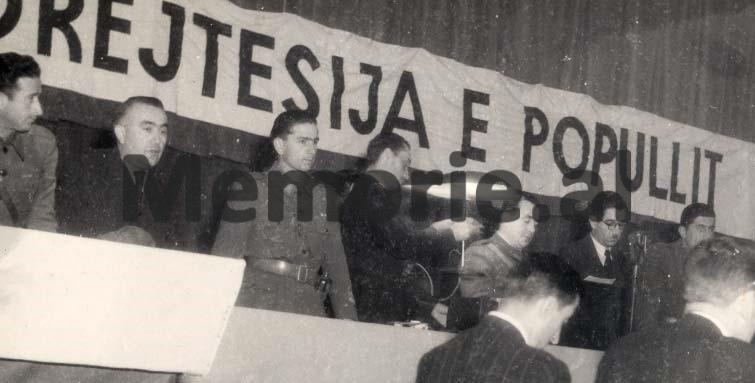
The trial opened on March 1, 1945, at the “Kosova” cinema in Tirana. The judicial body, headed by the Minister of Interior Koçi Xoxe, had placed the most important personalities of Albania in the dock. The defendants were: former Prime Ministers Kostaq Kotta and Ibrahim Biçakçiu, former Speakers of Parliament Terenc Toçi, Fejzi Alizoti, Mihal Zallari, etc.
The charge against them was: “War criminals and collaborators of the occupier.” On April 13, 1945, the Special Court sentenced to death the high officials of the fascist and Nazi governments: Fejzi Alizoti, Kol Tromara, Kostandin Kote, Hilmi Leka, Reshit Merlika, Ismail Golemi, Terenc Toçi, Zef Kadare, Gustav Mirdash, Aqif Përmeti, Shyqyri Borshi, Bahri Omari, Beqir Valteri, Dik Cami, Daut Çarçani, Tasim Bishqem1i, and Javer Hurshiti, as well as many others with heavy sentences.
The Special Court found no evidence against former Prime Minister Koço Kota. However, under pressure from the servant of the Yugoslavs, the communist Deputy Prime Minister Koçi Xoxe, the Special Court made a political decision and sentenced the former Albanian Prime Minister Koço Kotta to 30 years in prison, in Burrel Prison. Considering it a political trial and a farce, I see it appropriate to bring before the interested reader only a few of the ridiculous accusations made against the Albanian personality, former Prime Minister Koço Kota.
The Debate between Koçi Xoxe and Kostaq Kote
Koçi Xoxe: You have acted against the high interests of the fatherland. You have helped and contributed to the spread of Italian fascist imperialism and the preparation of the ground. You have been in contact with the quisling government of Tirana and with the traitorous organizations, Balli Kombëtar and Legaliteti.
You have attempted to realize an agreement aimed at uniting the Albanian reaction with the Greek one, in order to extinguish the popular liberation movement in Albania—an agreement that was not reached for reasons independent of your will. For this agreement, you were the representative of Legaliteti; what do you have to say?
Kostaq Kota: …I can be held responsible only for the two periods I was in the government….
Koçi Xoxe: We are not interested in you giving us a history lesson, but in telling us why no resistance was organized from the day of April 7th?
Kostaq Kota: On April 7, 1939, our government was not only not intimidated, but it also organized armed resistance, doing what even the Czechoslovak government—which was many times better armed than our government – could not do. Precisely what the Czechoslovak government failed to do, the small government of the Albanian people did.
Koçi Xoxe: You said in your depositions during the investigation that the government did not engage in active or passive resistance because it lacked means?
Kostaq Kota: No, no, on the contrary, the government decided on active resistance.
Koçi Xoxe: Was this resistance carried out?
Kostaq Kota: I can even tell you that I personally suggested this resistance to King Zog. The decision for resistance was made by the government, and the Italian note was rejected.
Koçi Xoxe: But you, in your depositions, said that we lacked the means to offer resistance?
Kostaq Kota: I did my part as the government. If there was any negligence, that falls upon the Armed Forces.
Koçi Xoxe: When did you leave here?
Kostaq Kota: On the day of April 7th, the King went to Zemblak, while I went to see what was happening in Korça.
Koçi Xoxe: Did Veli Vasjari tell you that the people were ready for resistance?
Kostaq Kotta: On the contrary, the prefect of Korça, Veli Vasjari, told us not to go there, as peace had been disturbed and the prisoners had escaped from prison. The gendarmerie could not secure the government. Despite all this, I went to Korça myself, and there the Mayor told me that the people and the gathered merchants wanted to fight and offer resistance.
Koçi Xoxe: I was at the Municipality myself as a member, and together with 16 other delegates and 3,000 volunteers, we were waiting for Koço Kota to organize the resistance. / Memorie.al