Part Two
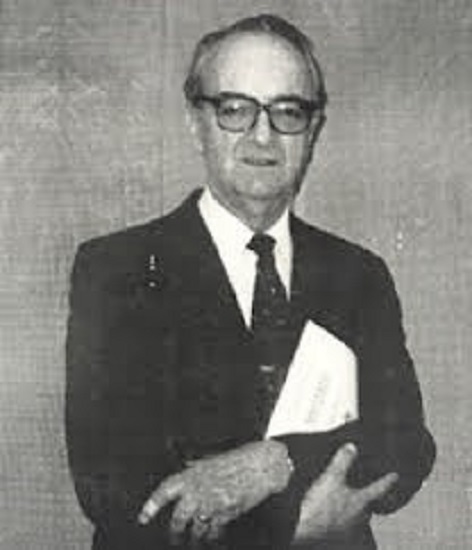
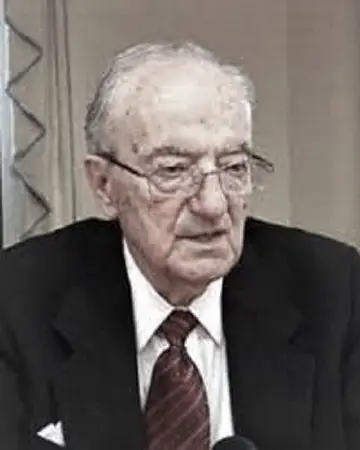
Memorie.al / Professor Sami Repishti is an enlightened figure of the Albanian nation; he is an eyewitness to the communist hell, having been imprisoned for years in communist Albania (1946-56) and communist Yugoslavia (1959-60). This ordeal of suffering was carried on their backs by him and his long-suffering family. As an erudite scholar, through his writings, he has made a valuable contribution to journalism, literature, and politics. The messages he conveys from time to time regarding Albania and Kosovo – from American auditoriums to the White House – are clear: he hopes that one day true democracy and complete freedom will come to our long-suffering motherland and to the entire human family… one and inseparable!
Continued from the previous issue
Repishti, how did you survive that regime, and how did you realize your dream of stepping onto the blessed land of America?
From the day of my release from prison (July 1956) until the day of my unenthusiastic departure from the motherland (August 1959), I was despised and persecuted by the State Security (Sigurimi) – I have since discovered the two agents who surveilled me. Three days before my departure, a friend working in the police notified me that I was on the list for arrest. I contacted a former prison mate whose house was near the border, and we decided on the date and method of escape. He assisted me in the journey until I crossed the border without incident. (Later, he was killed during an escape attempt).
I had a similar experience in October 1956, during the Hungarian Revolution. He [the friend] informed me that I was one of the 400 persons designated for execution if the revolution started in Albania. In Yugoslavia, I was held in prison for a year, accused of being “pro-Western.” Later, in refugee camps in Yugoslavia and Italy, I applied for political asylum and the right to immigrate to the USA. Fortunately, my request was approved within 24 hours. I arrived in New York on April 9, 1962. I obtained American citizenship in January 1969.
During your stay in America, did you have contact with your family?
I had contact only until 1967. After that, no. This situation was a true torture, especially because of my elderly mother, who died without seeing me again. Furthermore, the financial aid I sent every month for their daily bread was also cut off!
When you were a student in Italy, did you have a girlfriend there, and what was your promise when you parted?
During my student life, I was a “bookworm.” I did not handle emotionally difficult situations well…!
You have testified from time to time about the monstrous crimes of the communist dictatorship before American audiences and in federal official circles, including the White House; have you encountered any negative reactions from American politicians?
No! On the contrary. The American administration knew the situation in Albania well, especially from the reports of the French and Italian embassies in Tirana. I collaborated closely with Amnesty International for Human Rights and followed the development of the situation in Albania very closely.
What were some of your meetings with the elite of the Diaspora, where you debuted for years as President of the National Albanian American Council for the National Cause, and what symposiums did you organize for Kosovo before its Independence?
Contacts for Kosovo with the Albanian elite in the USA began especially after the 1968 demonstrations in Prishtina; the problem of Kosovo took first place in my activity. I testified before the American Congress as early as April 1965, and I believe I am the first Albanian to do so. There are two reasons why Kosovo took priority:
First, communist Albania was an independent state and a member of the UN. Its independence and territorial integrity were secured by the international community. If communism fell, Albania would also become free, and naturally independent as an internationally recognized state. Kosovo had two “enemies”: communism and the Serb. If communism fell, Kosovo would remain under Serbia. Therefore, we had to concentrate on Kosovo to help it in the event of communism’s collapse in Yugoslavia. This political diagnosis proved correct, and our work for Kosovo continued until Independence, and now continues with support for strengthening the new state.
Second, there was a personal reason. My family had been interned in Berat and Veliqot of Tepelena. There existed communist legislation that did not allow amnesty for those sent to a camp for a second time. This meant that any open activity of mine against the Albanian communists would send my family to an internment camp. Such a consequence was not justified by my actions, and for me, it was immoral to sacrifice my family for my acts. To this day, I am convinced that my assessment of the situation at that time was correct. My reason and my conscience dictated the orientation of my activity.
We held symposiums and conferences for Kosovo almost every year. The most important one was the International Conference on Kosovo, November 2, 1982, at the Graduate Center of the C.U.N.Y., organized by Prof. Arshi Pipa and myself. Fourteen European and American professors participated, all of whom spoke, without exception, in defense of Kosovo. Their studies were published in Studies on Kosova (Col. Univ. Press: 1984). Equally important are the testimonies before Congress and reports for the State Department and the White House. In those years, we represented Kosovo in the outside world.
You have personally met with President Rugova; what are some of the most important moments you have captured in your memory regarding this “Knight of Freedom”?
I first met Dr. Ibrahim Rugova in April 1990, in Washington, D.C. Two groups came from Kosovo: Albanian and Serbian, to present their views. Later, our contacts were continuous, and we had close cooperation. In September 1986, I requested the opening of an American Information Office in Prishtina. The request was refused “due to lack of funds.” It opened in 1996 and later became the American Embassy in Kosovo. My request was fiercely opposed by the communist government of Albania, which tried to maintain control over every initiative related to Kosovo. On that occasion, I received a letter of thanks from Dr. Rugova, and in 2005: the “Gold Medal of the League of Prizren.” I miss him very much.
As a professor with a doctorate in French literature, what is your opinion regarding Kadare’s contribution to the nation and literature?
Ismail Kadare is undoubtedly the best living writer of Albanian literature. I hope his value is recognized and appreciated even more in the outside world and by prestigious international institutions. In France, he is adored.
You worked for a long time as a professor in several high schools and universities in America; what differences have you noticed between European education – specifically the university in Italy where you studied – and the American educational system?
This is a question that requires broad explanations. Briefly, education in America has its own characteristic. Elementary and high school students are not under the pressure of families to study constantly, as is the case in Europe, and especially in the Far East. The real work begins at the university. Here, the need for the emotional and social development of young people is emphasized; their “youth is not robbed” by heavy schoolwork. A characteristic of American education is the free spirit in the classroom, where teacher and student freely exchange their thoughts.
There is a tendency to orient the student toward “research,” constant questioning, and about everything – to satisfy curiosity not just for formal knowledge but also for aspects of daily life. At the end of high school, European students have accumulated a larger amount of facts; however, American students have a broader horizon, think more systematically, and express themselves more freely regarding the problems they face. In university, study becomes rigorous, more systematic, and offers the latest developments in science, art, and literature. Here in America, there is also the system of “selective schools,” both high schools and universities, for distinguished students. Most of the American elite is prepared in these “schools” and they are capable of leadership.
You have constantly been in favor of opening the [secret police] files; do you think their opening will be done honestly by the party in power?
The process of opening communist files is necessary and unavoidable. We must turn the light on in the dark rooms of the dictatorship. The truth must come out. We must know our history. We must know the stance of our society. And we must weigh the barbaric acts committed at the expense of our people, know the depth and scale of the crime, reflect on how low Albanian society fell, and consequently learn how low Albanian society can fall under certain conditions. All of this has nothing to do with punishment and revenge. Revenge is a cancer that destroys those who nourish it.
But we must be informed above all, to learn from the lessons of the past, to condemn without condition, without hesitation, without reserve the “evil” that kills that dehumanizes, and that destroys the freedom and dignity of every human being, regardless of political belief, gender, social class, physical qualities, etc. Opening the files helps us in this process of informing our future. As long as “black shadows” hang over our heads, Albanian society will languish from the sickness of fear and the mania of persecution. I do not believe that the political class in Albania has the will, the ability, and the readiness for such a process.
What is your family like, and how did you meet your noble wife, Mrs. Diana Çipi?
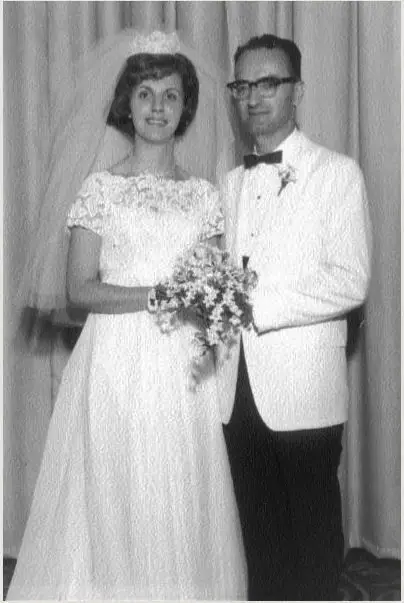
I am the head of a happy family. My wife, Diana, was born in America to parents from Gjirokastra, and she speaks Albanian. We met through the mediation of the late Prof. Nexhat Peshkëpia, an intellectual of character and a friend to both. We married in August 1964 and have two children: Daren, a doctor, married with three children; and Ava (named after my mother), a lawyer, married with two children. As a grandfather and grandmother, we are a happy couple with a full house.
Finally, do you hope that your collective tragedy, as you describe it in your book “In the Shadow of Rozafa,” will finally be an inspiration for a crusade against torture?
I am not sure if Albanian society has learned from the past. What encourages me is that Albania is moving toward Western civilization, which today is a united Europe. The international documents that the Albanian state has signed disdainfully exclude torture. Only an unexpected and unimaginable situation could bring back state-sanctioned torture. Individually? I am not sure. We are still uneducated [in this regard].
The nationwide forum “Alb-Shkenca” honored you with its highest title as an honorary member of “Alb-Shkenca,” and you are an active member there; how do you value this forum?
The “Alb-Shkenca” Institute is a group of Albanian scholars, most of who were educated in Western universities and now serve in university institutions or research centers around the world. Their goal is to join at a “round table” and, via the internet, investigate, discuss, and possibly advise Albanian authorities in Albania and Kosovo on the most appropriate ways to solve the problems currently present in the Albanian space in the Balkans.
The goal is good, the dedication is to be praised, and the work being done is at a satisfactory level. Certainly, it has the flaws of a beginning, but it also has the promise of a brighter future. I am proud that my colleagues at the Institute have given me the title of “Honorary Member,” and I will try to deserve it.
Thank you for the interview, Prof. Repishti!
It was my pleasure, Mrs. Zylo, for this interview! / Memorie.al