



By DASHNOR KALOÇI
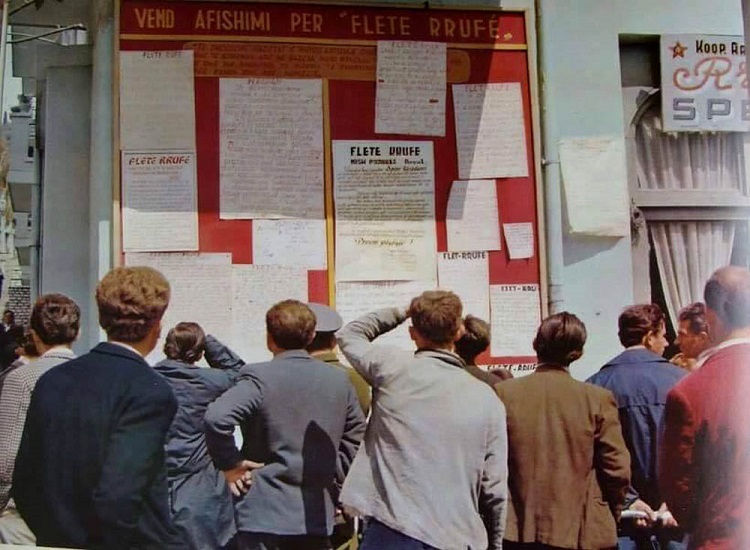
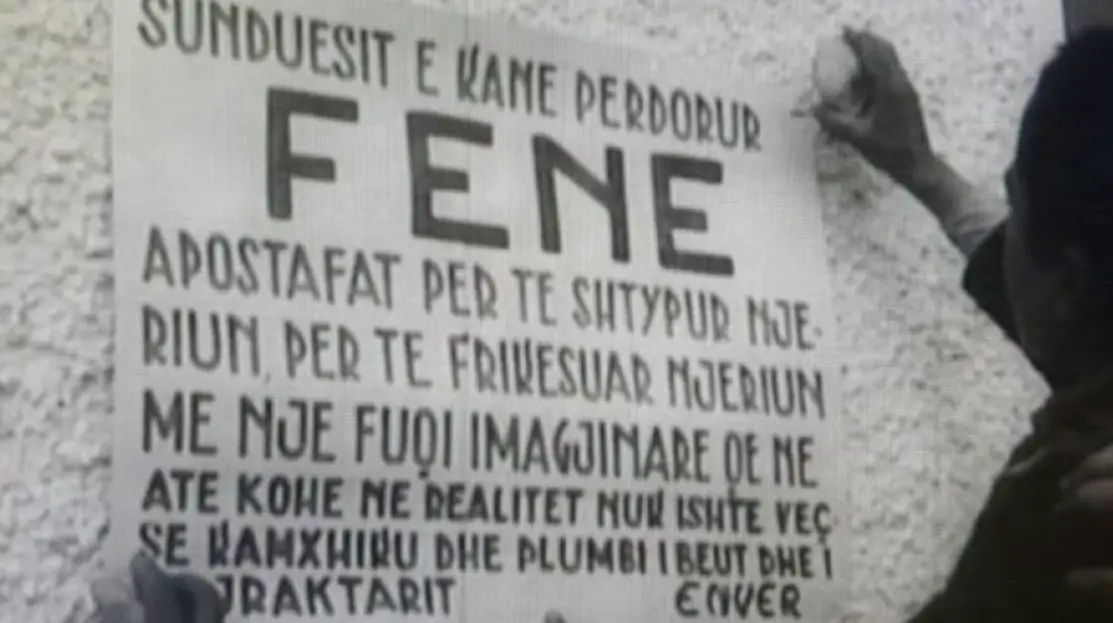
Memorie.al / Although the communist regime of Enver Hoxha had begun its struggle and crackdown on religious institutions and various clerics of all three faiths since its arrival in power in December 1944 – when it started mass executions, imprisonments, and internments of hundreds upon hundreds of clerics – the total ban on religion and the destruction of cult objects and religious institutions was undertaken only in 1967. At that time, after sanctioning the ban on religion with a specific law, official Tirana declared Albania the only atheist country in the world.
Against that absurd and unprecedented decision taken by the high communist leadership of the PPSH (Labor Party of Albania) and personally Enver Hoxha – which was initially camouflaged by attributing it as an initiative and request from several school youth organizations of the high schools in Durrës and Tirana – there were many oppositions and harsh reactions from both believers and clerics of the three faiths practicing their religious activity in our country.
However, the reactions and opposition from various clerics and believers intensified even further when the directive for the legal ban on religion and the destruction of cult objects was being realized by senior party and government leaders in various districts of the country. Camouflaging themselves under the slogan “Let us declare war on backward customs,” they immediately began attacks on churches, mosques, shrines, tekkes, monasteries, and other cult objects, destroying and leveling the majority of them, which were subsequently turned into cultural centers, stables, warehouses, grain silos, etc.
In those attacks against religious institutions, school students, military units, and fanatical activists of youth organizations were initially sent, acting according to the directives and instructions they received from the regional party committees.
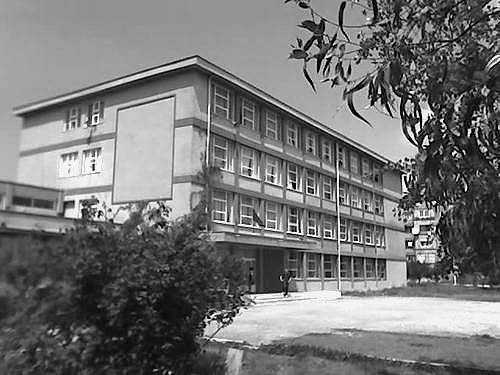
Initially, this task was entrusted to the youth organization of the “Naim Frashëri” general high school in the city of Durrës. Under the patronage and instructions of the regional Party Committee, headed by First Secretary Rita Marko, they became the “flag-bearers of that initiative,” which was undertaken only a few months after the creation of a special sector within the Institute of Marxist-Leninist Studies (led by Nexhmije Hoxha), which was to handle the publication of the documents and materials of the Labor Party of Albania. In fact, this meant: “The publication of the works of Comrade Enver.” Thus, from then on, Albanians were to believe in only one God, and that was Enver Hoxha.
At that time, when the attack on religious faiths and the destruction of cult objects had just begun, some high-ranking clerics and many believers from across the country believed that it was truly an initiative of the school youth organizations. To prevent what was happening, they began sending letters addressed to the First Secretary of the Central Committee of the PPSH, Enver Hoxha, where they denounced the actions taken against religious objects by regional party and government leaders. With these letters and complaints, they hoped that the main leader of the Party would intervene with his absolute authority and stop the actions being carried out.
While a large portion of these letters containing reactions and protests sent to Enver Hoxha (found in the Central State Archive in Tirana) are already known, as many have been published by Memorie.al, in this article, we are publishing an archival document that speaks of an event in the city of Durrës – specifically at the “Naim Frashëri” high school, from where the initiative for the destruction of cult objects began by order from “above.”
At a time when the “Naim Frashëri” high school was “boiling” with the initiative to destroy churches, mosques, monasteries, and tekkes, 52-year-old Ahmet Xhemal Mezini (originally from Peqin and resident in Durrës), a devoted believer, wrote several leaflets with “counter-revolutionary content” in late December 1967 (on the occasion of Christmas) and threw them within the premises of that high school. Unfortunately, he was discovered by the State Security (Sigurimi) organs, which arrested him. The trial, held precisely within the “Naim Frashëri” school premises, sentenced him to 10 years of political imprisonment.
For more on this event and the tragic fate of Ahmet Xhemal Mezini after his release from prison in 1978, we are informed by the documents in question, extracted from the Archive of the Ministry of Internal Affairs and published for the first time (along with relevant facsimiles) by Memorie.al. By a twist of fate, while squares and parks in Durrës are now named after those who led the youth to destroy cult objects, the name of Ahmet Xhemal Mezini has been entirely unknown and is mentioned for the first time in this article!
SECRET DOCUMENT OF THE MINISTRY OF INTERNAL AFFAIRS
OPERATIVE COMMUNIQUÉ DATED JUNE 8, 1978, ANNOUNCING THE SUICIDE OF AHMET XHEMAL MEZINI
PEOPLE’S SOCIALIST REPUBLIC OF ALBANIA SECRET
MINISTRY OF INTERNAL AFFAIRS Tirana, June 8, 1978
OPERATIVE COMMUNIQUÉ NO. 133
DURRËS
On June 7, 1978, Ahmet Xhemal Mezini, aged 63, born in Peqin and resident in Durrës, was found hanged in his residence. He was previously convicted for hostile activity and was released from prison on May 20, 1978.
He left a letter stating: “Testament, I, Ahmet Mezini, resident in Durrës, today end my life, for no reason, without condemning anyone else, without having a complaint against anyone else. All the clothes here belong to Shaban Mezini. They should be given to him.”
Investigations reveal that after his release from prison, his wife and children did not accept him home, while one of his brothers found him a rented room, where he was found hanged. The case is under investigation.
NOTE BY THE MINISTER OF INTERNAL AFFAIRS, KADRI HAZBIU, ON THE OPERATIVE COMMUNIQUÉ REGARDING THE SUICIDE OF AHMET MEZINI, WITH INSTRUCTIONS TO DEPUTY MINISTER FEÇOR SHEHU:
To Feçor: Find and see why he was convicted, as well as how he stood during the investigation, trial, and prison, and what kind of people his family members are who did not prevent this; the goal is to see if it’s worth it, if there is a diagnosis, and the stance held and requested towards people who are convicted, both by society and family.
Kadri Hazbiu
REPORT – INFORMATION FROM THE SECOND BRANCH OF THE INVESTIGATION DIRECTORATE
SENT TO THE MINISTRY OF THE INTERIOR REGARDING THE REASONS FOR AHMET MEZINI’S SUICIDE AND HIS PAST
S E C R E T — Tirana, June 7, 1978
INFORMATION ON THE SUICIDE OF FORMER CONVICT AHMET MEZINI FROM DURRËS
In implementation of the instruction given by the Minister in operative communiqué No. 133, regarding the suicide of Ahmet Mezini, we clarify that:
On June 7, 1978, in the residence of Citizen Irini Muço, in neighborhood 15 Spitallë – Durrës, Ahmet Mezini (born 1915) was found hanged with a bedsheet. He was divorced, with 6 adult children. Based on this, the investigation sector opened a criminal case, and the investigation revealed:
Ahmet Mezini was arrested in late 1967 by the Durrës Internal Affairs Branch for the crime of agitation and propaganda. Opposing the initiative of the “Naim Frashëri” high school in the struggle against old religious customs, he prepared and threw several leaflets with counter-revolutionary content into the school’s courtyard, such as:
- “Communist youth, the camp of humanity is a prison,”
- “Youth, in every way fight communism,” etc.
During the investigation and the trial held at the “Naim Frashëri” school, Ahmet Mezini fully admitted to the crime committed and was sentenced to 10 years of deprivation of liberty.
On May 28, 1978, Ahmet Mezini was released from prison. In Durrës, he was met by his brother, Shaban Mezini, previously sentenced to ten years for an attempted escape. However, his wife, who divorced him immediately after his sentencing, and his children, who never visited him during his sentence, did not accept him home. With his brother’s intervention, the victim was settled in a rented room at Irini Muço’s house.
During the days following his release, Ahmet Mezini made efforts to reconcile with his family. On June 6, 1978, he met one of his sons and asked what the family was discussing regarding a reunion. The son replied that no member of the family agreed. Revolted by this answer, Ahmet told his son: “I will never lay eyes on you again.”
In these circumstances, with no other cause, on June 7, 1978, Ahmet Mezini hanged himself. At the scene, a letter written by him was found: “Testament, I, Ahmet Mezini, resident in Durrës, end my life, without any complaint, without condemning anyone else… these clothes belong to my brother, Shaban Mezini.”
Since no circumstances were proven regarding inducement to suicide, but only the fact that the family did not accept him home, the case was dismissed on June 28, 1978, for lack of a crime.
DIRECTION OFFICER, BRANCH II, INVESTIGATION DIRECTORATE
OSMAN DASHI
Note: The case was reported to the Minister, who agreed with the verification results. He ordered the material to be archived. / Memorie.al