
Memorie.al / Shaqir Kodra (May 1, 1948 – June 27, 1996) is one of those artists who persistently follow their own star throughout their lives. Regardless of the time he lived in or the decisions made by others, Shaqir ran tirelessly on the one-way road of music. Çyli, as they continue to call him today, 19 years after his death, was not simply a musician. Haig Zacharian, another composer from Durrës and a few years younger, recalls while we talk the unique tastes of his colleague, but above all, underlines his desire to always see music differently. Today’s notes would be impossible without the numerous conversations with colleagues, friends, artists, peers, and family members of Çyli – the “charming, fragile, and fair-haired lad who resembled a Scandinavian more than a Balkan person,” as described by his classmate, Mirush Kabashi.
The Challenging Student
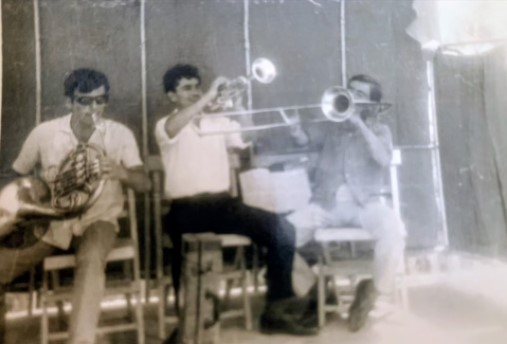
In 1966, the high school graduate Shaqir Kodra refused the branch of architecture, insistently requesting to study music at the Higher Institute of Arts in Tirana. He was an excellent student at the “Naim Frashëri” high school in Durrës and had not studied at art schools or lyceums. As he had done before, the elegant youth proved that music was not just a pastime for him. At only 12 years old, almost self-taught and inspired by the image of his uncle, Bedri, he had begun playing the trumpet, taking his place in the front row of the city’s Brass Band. A few years later, as a high schooler, the early instrumentalists of the “Vollga” ensemble made room for him, giving him the opportunity to perform as a soloist and earn the respect of his fellow citizens.
In the afternoons, he found time to listen to Dr. Muhamet Agolli, his aunt’s husband, who played the piano and violin. Along with his daughters, Lejla, Vjollca, and Fatma, Dr. Agolli became a sort of musical mentor for the youth hungry for every note. Equipped with knowledge of the trumpet and piano, and above all with a solid cultural background, Çyli began the most important adventure of his life: the Music School in Tirana.
The Young Artist in the Heart of the City
Shaqir Kodra was born on May 1, 1948, in Durrës and grew up in the heart of the city, in Neighborhood 11. Çyli came from a civic, noble, and intellectual family of Dibra origin. This is how actor Mirush Kabashi remembers him – a peer only two weeks older than the famous composer. Their houses were very close to each other in “Kumin” alley, and they attended the same class at the “10 Korriku” school. “We often ate ‘hashure’ with the money given to us by Uncle Sami, Çyli’s father, an honest but frail man who owned a bookstore in the row of shops where the Theater stands today,” Mirush recalls of the 1950s.
“I often slept at the Kodra family villa – a beautiful house, though quite small for all the brothers and their families living together,” Kabashi testifies. This was the time when Shaqir, with the difficult instrument of the trumpet, became a member of the brass orchestra. Ilir Dedja, a well-known trumpeter in Durrës, tells of Çyli’s performances with the “Vollga” formation, directed by his father, Rifat. “Çyli became a modern composer and conductor, and he showed this character at a very young age, when he would stand up and play among 4-5 experienced instrumentalists in front of dozens of fellow citizens,” says Ilir.
When he began his studies in Tirana, the piano became his preferred instrument. He also created a modern and “dangerous” repertoire – as the scores of Ravel or Stravinsky were considered at the time – which he began to adapt with the group playing at the “Adriatik” hotel at the beach. Their rivals from Tirana, led by the master Gaspër Çurçia, viewed the boys from Durrës with respect.
A Concert in Social Networks
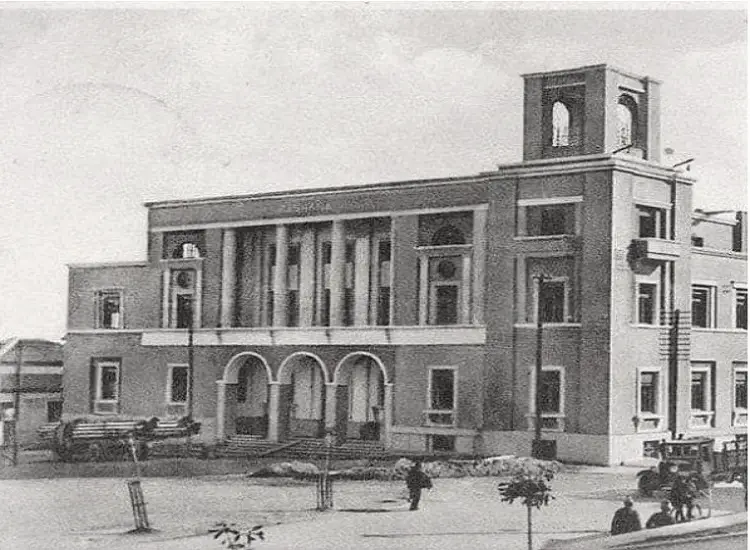
In 1970, Shaqir Kodra graduated in composition and was appointed to the Palace of Culture in Durrës. As expected, his first works were unrelated to his academic training. Çyli began organizing song festivals in Durrës, regularly presenting his own creations, and among other things, taking care of the songs of amateur artists, who were not few in Durrës during this period. Cultural leaders tasked him with recreating the city’s symphony orchestra – another challenge among the many he faced in his short life.
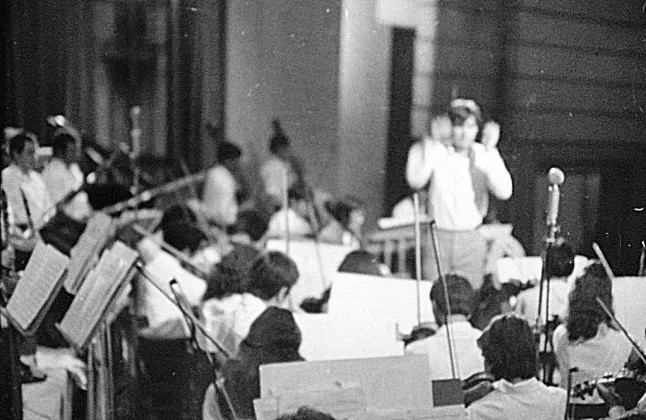
He reassembled the instrumentalists, selected the pieces, and began rehearsals for the national competition held in Korçë in 1972. The program included Zoraqi’s overture, Grieg’s “Peer Gynt,” and Beethoven’s “Coriolan.” The soloist was another talented young violinist: Vladimir Caku from Durrës. Facing 50 instrumentalists of all ages, the conductor Shaqir Kodra was only 24 years old, becoming the protagonist of a significant event for the artistic life of Durrës and the entire country. The symphony orchestra of the coastal city was unanimously awarded First Prize by specialists.
Aleksandër Bonati, Vaso Llapa, Pirro Dollani, and his sister Natasha – all connected to the event from 43 years ago – shared their honors for conductor Kodra on Facebook, recalling the emotions of the concert. Pirro highlights the words of composer Limos Dizdari in his analysis: “How could a professional orchestra play this concert any better?” In the Korçë Theater hall that evening was also a teenage girl, Engjëllushe Kodra (Luçi), the only sister of the young conductor. “I felt very proud,” Luçi says after all these years. “I didn’t understand the music; I only looked at my brother, and my heart was nearly bursting with joy because the applause was only for him.”
Ten Golden Years
The 1970s stand out in Shaqir Kodra’s artistic life. The elegant musician from Durrës tried everything he could, following his star. He organized musical activities of all levels, gave music lessons at the city’s art school, directed the symphony orchestra and other smaller formations, but above all, he created: Çyli composed in almost all genres, receiving praise from critics and the public alike. Just as at the Institute of Arts, colleagues and friends would gather at the theater to listen to the music he selected.
“Is there any work more important than listening to music?” Çyli would ask in surprise when any of them were absent from the afternoon “Artistic Mecca” meetings. Here too, always original, the young artist offered music that was different. His uncle, Shpëtim, has preserved 19 official awards, starting from his debuts as a trumpeter when he was 15.
By now, Shaqir was an established musician and was applauded on the grand stages of Tirana – the city he loved as much as Durrës. Renowned names of music, from Vaçe Zela to Ema Qazimi, came to his home, invited by Çyli to sing in activities organized in Durrës. His songs “Lulet e mollës” (Apple Blossoms), “Me çiltërsinë e fëmijëve” (With Children’s Candor), “Heronjtë e lumit Ebro” (Heroes of the Ebro River), and many others, were honored at local and national festivals. In 1975, the anthem-like song of the Durrës composer, “Shokët” (The Comrades), was sung by Vaçe Zela, Albania’s greatest light music singer, as well as by Luan Zhegu.
Distinguished conductors and instrumentalists, starting from Ferdinand Deda or Didi Tartari, chose to conduct and perform the works of the now-affirmed composer Shaqir Kodra, which, as “People’s Artist” Çesk Zadeja stated, were distinguished “for their seriousness and depth of thought.” The symphonic poem for violin and orchestra, Rhapsody for orchestra, Poem for orchestra, or Fantasy for piano and orchestra – which was honored with Second Prize in 1979 – are just some of the works written by Shaqir Kodra during his fruitful decade.
Çyli’s Regrets
No one knows why Shaqir Kodra was transferred from being a music specialist at the Palace of Culture in Durrës to one of the district’s villages as a drawing and handcraft teacher. His contributions to the city’s and national culture were not enough to stop the egoism of the malicious. Our good Çyli had to teach children how to draw or how to make jam at home. The elegant youth began to withdraw into him. He had suffered spiritually when his appointment to Tirana was refused, but this transfer to the village was heavier.
Now, the connection with music began to be consumed differently. His works were not accepted into the “May Decades” festivals, as he was considered a “district composer.” Commissions from directors Hysen Hakani, Xhezair Dafa, and Petrit Llanaj for the soundtracks of the films “Mysafiri” (The Guest) and “Udhëtim i vështirë” (Difficult Journey) gave him only the pleasure of creative work but could not overcome the sadness and depression that had begun to plague him.
The ten golden years of intensive creativity seemed very far away. His marriage, which did not last long, and the birth of his daughter, could not pull him out of the gloom. The period of the Institute of Arts, with photos of a happy and smiling student, was left behind. Çyli finally bonded only with the piano and the scores. For him, nothing else existed anymore.
The Insidious Disease
“An insidious and soulless disease,” is how his childhood friend, Mirushi, calls Çyli’s depressive state. His family was alarmed and tried to help him at all costs. Friends all around were shocked. They withdrew, unable to support him. 30–40 years ago, depression was considered an unacceptable illness, almost in contradiction with the “happy socialist reality.” His mother, Kimetja, would have given anything to restore the vitality of her only son.
“Çyli asked us to take him to the hospital in Tirana constantly. It was painful, but he felt better there in his loneliness,” recalls his sister Luçi of the ordeal of her artist brother’s illness. “When he was calm, he wrote tirelessly. He asked us to listen to his compositions.” Çyli self-isolated and found peace only in musical scores. Rexhep Hasimi, one of his closest friends, stayed by his side until the end, just as back then when they secured the scores of modern contemporary composers almost clandestinely.
In his final years, he gained a lot of weight and began to have his first heart troubles. His life was cut short by a cardiac arrest on the morning of June 27, 1996. Shaqir Kodra had just turned 48 when he passed away. Composer Feim Ibrahimi would call his composition student a “colleague.” A year after his passing, people of art and culture honored his activity in a meeting attended by composers from Tirana, where singer Luan Zhegu sang “Shokët,” Kodra’s well-known song.
In 2006, the Municipality of Durrës awarded him the title “Honorary Citizen” with the motivation: “For outstanding contribution in the field of art and especially music, as an instrumentalist, composer, educator, and conductor, standing out for intellectualism and civic virtue.” The scores he wrote over the years await review by specialists, and perhaps one day to be heard in a special orchestral concert featuring only the repertoire of composer Shaqir Kodra.
19 years since the day of his death, Çyli is remembered as a good friend for whom we should have had more attention. As Mirush Kabashi writes, “few are those who, in such a short life, leave behind such a valuable product and so many good memories.”
An Artist with a capital A, as Shaqir Kodra surely was, who even now in the afterlife, I believe, is following the star of his life: music. / Memorie.al