
By Dodë Bardhok Melyshi
Memorie.al/ “You must go to Zef Pertena, and tell him that he must come to roast coffee for us, because my mother has passed away. Be careful that no one sees you on the road, or that no one finds out why and where you are going,” my father told me. It was the middle of May in 1987, the 13th. Our grandmother had just passed away, shortly before seven in the morning. Her husband had also been killed on a May Day… but 42 years earlier! Zef Pertena’s house was about 40 minutes away, in the upper neighborhood of Bregu i Fanit. I set off, and before I had even walked for 10 minutes, at a place our village calls “Ferra e Madhe” (The Great Thorn), there was an old woman grazing a cow by hand, or perhaps two sheep.
“How did Bardhja of Bib Doda wake up today, boy?” the old woman addressed me after I gave her a ‘good morning.’ I hesitated for a few seconds. In my head echoed my father’s instruction: ‘be careful that no one finds out!’ But I felt ashamed to lie to the old woman, a contemporary of my grandmother. It felt like a sin…!
“In truth,” I replied, “she has just passed away,” and I continued my way with quick steps, while the comforting words of that mother followed from behind.
Fortunately, Zef Pertena was at home. He prepared what we call the ‘coffee set’ (takame kafeje), got ready, and we set off on the return journey together. Zef was a man of modest stature, dark-complexioned, thin, with large eyes and a pair of mustaches I remember well. He was golden-handed, a great worker, a positive and loyal man. Beyond a first appearance that seemed stern, a kind and noble soul was hidden. In that small frame, all the best virtues of a highlander were gathered.
“Be careful that no one sees you,” my father had told me. How one could travel 40 minutes without being seen, only my father could know! But a young boy, not even 14 at the time, was not allowed to argue. Especially in that situation. In fact, this request was based on a strong reason. Grandmother had just passed away. In my father’s head, a strategy was brewing on how to send word to society and the village! In such a way that they could solve the dilemma of coming to the funeral at the Melyshaj house themselves, independently, without pressure from certain segments of power.
It happened that people with evil souls, cloaked in power, would knock door to door to exert pressure and cancel as much attendance as possible. Such a fact had happened often! Therefore, the word had to be spread as late as possible. And in a way, as much by surprise as possible. Whoever wished to come for condolences should not have much time to think and deliberate. They would decide instinctively.
The two sons of that 76-year-old woman – who in her youth, along with her husband, likely formed the most renowned couple in the area – had no time to meditate for a single second before their mother’s lifeless body. Nor to lose them emotionally…! We were in the 80s, at the height of the class struggle. Thus, all of my father’s reflexes and senses were focused on organizing the funeral ceremony and the idea of how much the community would respect the door of a “kulak”!
Participation in funerals and weddings is very important for a person from Mirdita. Apparently, it is perceived and conceptualized that the respect a person has cultivated in their life is reflected by the large number of people who flock to their joys or sorrows! “To be separated for funeral and wedding” is an expression used in our parts, reflecting the worst state in a relationship between people, and also the unquestionable importance of not being separated. Even the class struggle during the dictatorship aimed to crush the individual morally by separating them from the rest of society in everything. Even for funerals and weddings.
“A plight to shave and a trial to die!” Such was the time. The hardship and bitterness of organizing the funeral ceremony were greater than the pain of a deceased mother. God witnessed miracles! A small number of participants in these events were judged as a shame for the mindset of a Mirditor! In fact, ironically, when someone’s small attendance at a wedding was mentioned, it was said: “there were two tables and a tajer!” Meaning, not even three tables. Twelve was out of the question. The “tajer” was a flat and round wooden object, where dough was rolled, naturally much smaller than a table.
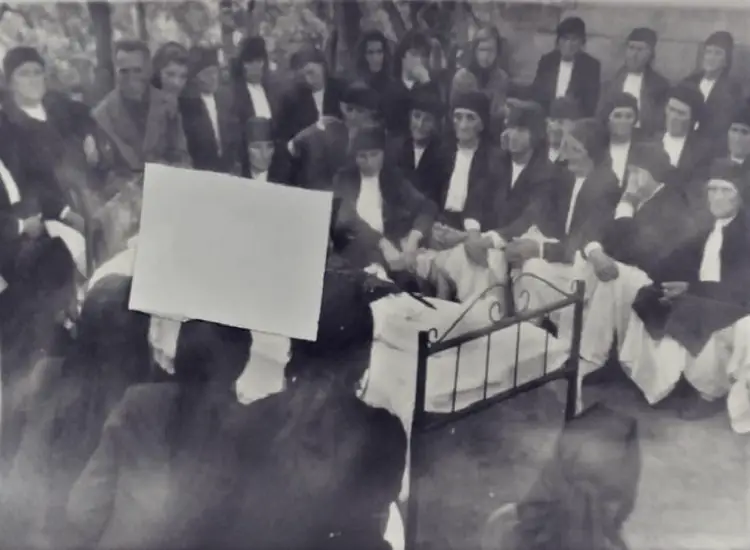
I remember the day of this ceremony as if in a movie. Almost the entire village came, en masse. But mostly women. As if they had planned it. A Mirditor, when they want, finds the solution – instinctive and diplomatic. They fulfilled their moral debt to the Melyshajs because no one was missing, and also, in the event of being called to account – as in, why did you go to the funeral of the ‘affected’ (politically touched) – the men could justify themselves more easily.
I remember that Zef Pertena, during those two days, had almost taken me ‘hostage,’ keeping me close to help him with the coffee, mostly grinding it with a large Ottoman-style mill. I followed everything from the kitchen window where we were, as it reflected our courtyard. Every time my reflexes tempted me to go outside, where a young boy of the house actually belonged – to line up with the men – Zef would catch my attention: “Don’t leave me, boy, or I will be disgraced!” In fact, the master of the house would be disgraced for poorly served coffee. But such was that man: he took the disgrace (or the honor) of the well-wishers upon his own shoulders. The dignity of a Mirditor!
The village society, as I stated, had come en masse. But with the men generally absent, a hitch arose: the digging of the grave! A grave is a very important thing for an Albanian. It is said that in early times, people were buried near or inside the house because from the graves, power, energy, and strength were borrowed for the living to face the difficulties and adversities of life. In fact, the words “vorr” (grave) and “votër” (hearth) have a common root, and perhaps a similar etymological explanation. The grave as the hearth!
In our parts, until a few years ago, unwritten but never violated rules existed. The grave was opened strictly by the society of the area where one lived. Such a thing was predetermined for the day of the funeral. Just as godfatherhood was predetermined on the day of birth. Or the first, second, and last wedding guest at a marriage. These special days in a person’s life functioned socially through rigorous regularities.
For our grandmother’s grave, it was impossible to respect such a rule. The Lekëgegajs – this noble door, the door of the parents, from Perlat – had apparently foreseen such a situation for the Melyshajs…! Wisdom and goodwill do not need the situation to be presented; they understand everything. Thus, having come in large numbers to the funeral, perhaps over 100 people together, they had instructed 3-4 young men to dig the grave of their daughter. That is what they told my father, and that is how it was done. Such a thing had never happened in our village! But we are talking about a period when Musine Kokalari, specifically in Rreshen, was accompanied to the cemetery only by a worker of the Municipal Enterprise!
In Mirdita, the class struggle was fiery, heated, and excessive. These Lekëgegaj boys, in digging the grave, had been joined by another. His name was Pjetër Zef Perleka, from Shtana, the outermost neighborhood of Kodër-Rrëshen. He had stopped while going to his house, the road to which passes near the cemetery. He had asked whose new grave was being opened, had taken off his jacket, and grabbed the pickaxe to help. In fact, he had opened almost all of it himself! In the name of the feeling of social obligation…!
Thus ended briefly the two-day funeral ceremony of our grandmother…!
But the story had a continuation with Pjetër Leka of Shtana. A few days later, they had fired him from work. “You opened a grave for the kulaks; hand over your weapon, and you are fired,” they threatened him. He worked as a night guard of facilities, armed.
“The whole earth blackened under my feet,” my father would recount the story of Pjetër Leka. He had met him by chance that very morning as he had been fired, depriving him of the bread for his children. “Go home, Pjetër,” I told him. “Don’t worry, in a few days we will solve this problem and you will return to work,” my father continued the story. Pjetër had been deprived of the right to work. But the purpose of the blow was clear; it wasn’t for him, but for the family to whom he had done a favor. As a good companion.
The firing of Pjetër Leka shows how difficult it was for society to participate in a ceremony in our towers. Open, fierce, suffocating, primitive pressure. The period of the dictatorship was very complex. It attracted, like a magnet to power, people with black hearts and an extreme devotion to doing evil. Not all were such, of course, but those who had such a vocation were many, and they were justified by “law.”
Precisely on the day our grandmother died, I want to mention a fact that left a strong impression on us. Aleksi, the eldest brother who was only 17 at the time, had the task of making “provisions” for the requirements of such ceremonies. That same morning, K. Ndoci, secretary of the basic party organization for the entire Agricultural Enterprise, and Sh. Leka, chairwoman of the United Council, had spotted him by chance. Upon hearing the news, since they were right in front of that enterprise called “Tregtia” (where few had access), they both rushed and bought two kg of coffee, giving it to him to take with him. We are in the years of the terrible crisis for coffee. A black crisis.
The gesture was as symbolic as it was indicative of unparalleled moral support. It seemed as if they were saying: “Times are hard, but we are with your pain. Even if we can do no more.”
So such were the consequences that came from the dictatorship. But there would always be a “Kolë Ndoc,” a secretary, on one side, who through coffee conveyed nothing less than an important human message in the form of condolences and solidarity from a distance (physical participation was not even expected). And always on the other side, there would be some “Kolë i Zi” (Black Kolë), undoubtedly more numerous, a scoundrel and a foul person who fired Pjetër Leka, who had done no harm to any person in the world, let alone the people’s power! As if the Central Committee of the Labor Party in Tirana would fall because Pjetër Leka had opened a grave in Kodër-Rrëshen. We were at the peak of misery and spiritual darkness.
Concluding note: “What the strong one does, the weak one wonders at” – is used as an expression in our parts. Pjetër Leka remained suspended from his job as a guard for only three days. Sometime in the future, perhaps we will be able to tell the story of how he returned to work. An almost unbelievable story. Where all the strength, dynamism, fearlessness, dignity, determination, cohesion, intelligence, and ability of the individual come to light. Whose only power he has and exercises is the weight of his word, thanks to a natural personality, foresight, courage, and leaning towards what is right…!
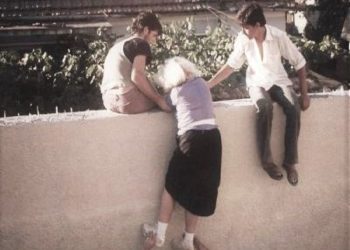
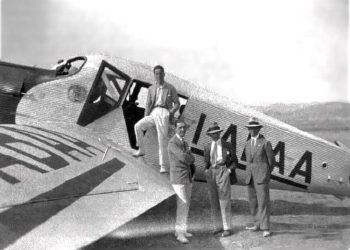
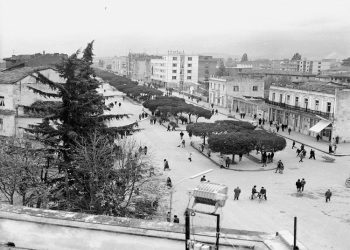
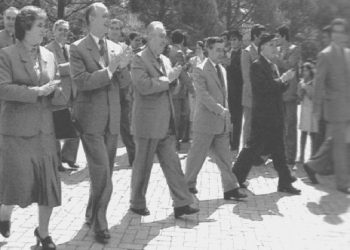
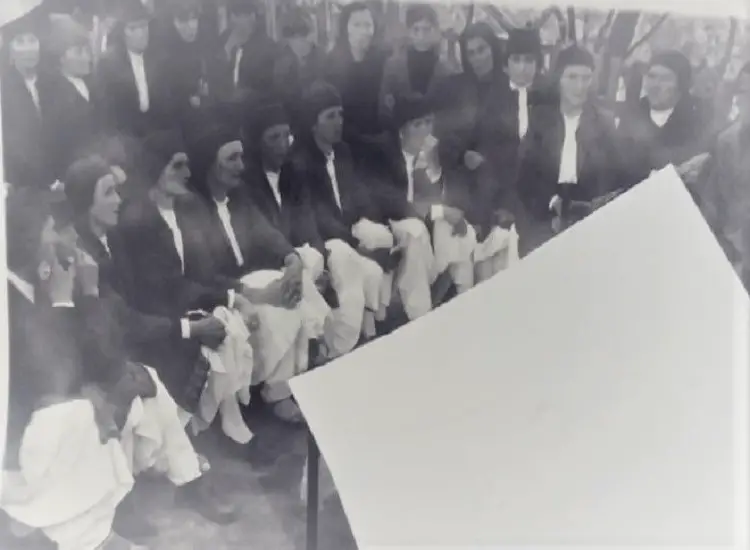
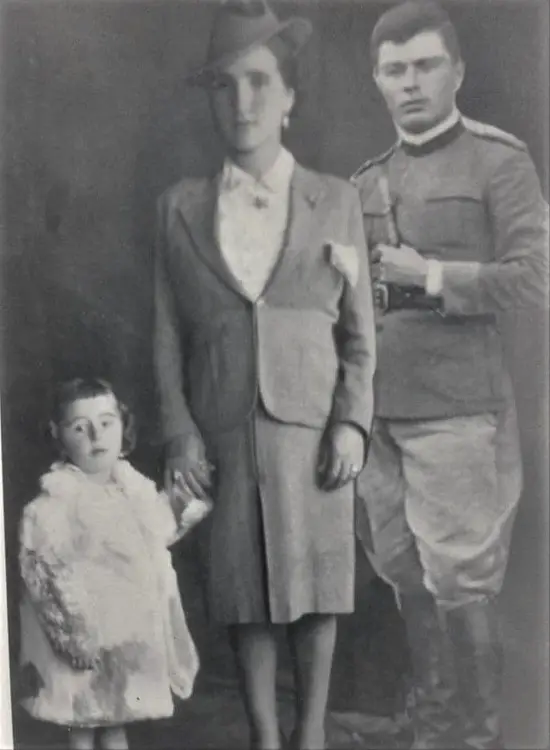
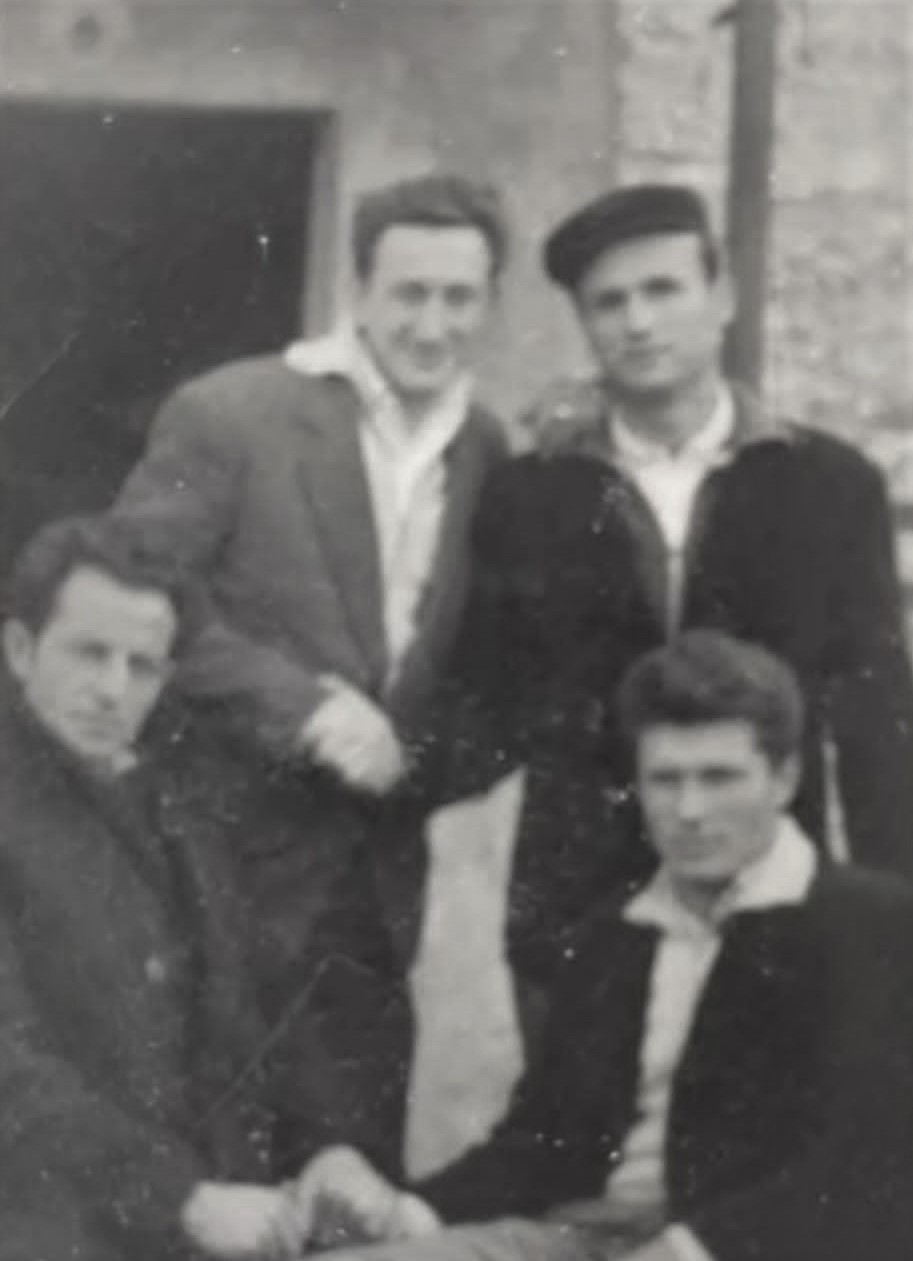
Attached to this writing, I am publishing the photo where: the grandfather, grandmother, and aunt are in Tirana in the late 30s; the photo of my father, Bardhok, taken with some of our cousins; as well as several other photos belonging to the funeral ceremony of that day we recount, which I am publishing also as a sign of honor and gratitude for all those friends and well-wishers who stood by our “kulak family” on that day of mourning (May 13, 1985), when we saw our grandmother to her final resting place. / Memorie.al