By Shkëlqim Abazi
Part sixty-six
S P A Ç I
The Graveyard of the Living
Tirana, 2018
(My memories and those of others)
Memorie.al / Now in old age, I feel obliged to confess my truth, just as I lived it. To speak of the modest men who never boasted of their deeds, and of others whose mouths the regime shut and buried in unmarked graves. In no case do I presume to usurp the monopoly on truth or to claim laurels for an event where I was only accidentally present, even though I desperately tried to help my friends, who tactfully and kindly avoided me: “Brother, open your eyes… don’t get involved… you only have two months and a little left!” A worry that clung to me like an amulet from the morning of May 21, 22, and 23, 1974, and even followed me in the following months until I was released. Nevertheless, everything I saw and heard those three days, I would not want to take to the grave.
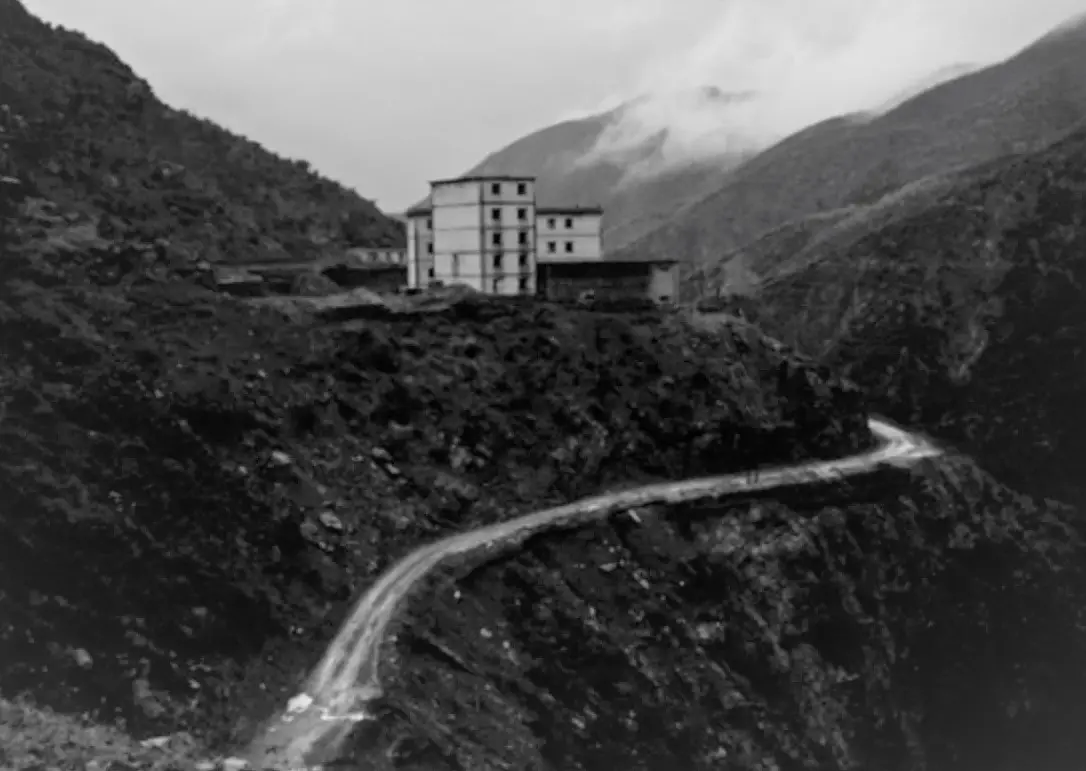
Doom now settled over “Camp 303.” The pain of losing comrades cast a mournful veil over every face. Spaç was condemned once and for all. Although they didn’t put all seven hundred men on trial, it was no longer merely a prison to lock up declared enemies; it had been transformed into a sort of testing ground to practice every atrocity the human mind has devised since the dawn of time.
Thus, the catacombs of Spaç, or the “Enemies’ Grave,” would surpass the Ninth Circle of Hell. Inhumane treatment and cruelties would indiscriminately grind down potential opponents of the regime – anti-communists and liberal democrats alike. The violence and terror would not cease for months, years, or decades, serving as a giant slab of granite laid over the hopes of the future by rulers who aimed to spread fear and panic among the people, advertising it as the poster of global evil.
Besides the four executed by the decision of the special court and the approval of the Presidium of the People’s Assembly – whose photos were displayed in the camp to instill terror – the eight others were sent directly to Burrel without contacting anyone; even their bedding and clothes were packed by their comrades.
Thereafter, the knife touched the bone; punishments became a ritual. Many poor souls ended up with Tuberculosis (T.B.C.), others vanished in the mine caverns or emerged with broken bones – useless to man or devil – and still others suffered irreversible trauma, populating psychiatric wards. Now, every infraction was punished without mercy: disobedience with a month of isolation, failure to meet the quota with being tied to posts for hours in the scorching sun or the Spaç frost, followed by a solitary cell.
Despite the brutal violence, a positive element prevailed in Spaç. The informants who testified in the criminal trials were viewed with hatred; no one approached them, and everyone despised them. But this intransigence did not suit the command or the General Directorate of Prisons, who feared the situation, might spiral out of control again.
So, they began sorting and selecting. Subversive elements were hauled off in the first prison-bus to Burrel or Ballsh, and young men were brought in from Tirana prison or other camps – even ordinary criminals who were slapped with a political article or those who had fallen from grace. By removing the “staunch” ones, they aimed to “improve” the structure, which nonetheless remained the most solid among political prisons.
After the court proceedings, friends who returned – haggard and crushed by over a month of violence in the cells of Koçi Xoxe – told us of the informants who testified against them, the accusations of alleged espionage or terrorism against state figures, and collaboration with foreign agencies. Through these fantastic fabrications, they increased sentences and de-motivated the rest; yet even the most naive did not believe that from the catacombs of Spaç – triple-fenced, guarded by heavily armed soldiers and border dogs – one could manage to maintain links with “capitalist-revisionist” agencies or the Vatican! But they also applied specific accusations to particular people.
For example, according to Tomor Allajbeu’s account, the following dialogue took place between him and the investigators:
“Tell us about your connections with your uncle (Abaz Ermenji)!” the investigator insisted.
“We haven’t seen each other since ’45, when I was five years old!” Tomor replied.
“We didn’t ask about meetings, but about connections!” the other intervened.
“I’d love to be connected. I miss my uncle, but you won’t let me!” Tomor teased.
“Speak, you scoundrel! We speak with authority because we have certain data!”
Clubs and rubber batons rained down on the man tied to the concrete chair until he fainted. They revived him with buckets of water and continued:
“Tell us, where did you hide the radio link with the galena stone?” one of the investigators insisted.
“You’ve lost your minds, gentlemen! I’ve spent the year going in and out of solitary, and you’re asking me for a radio?!”
“According to information, you installed the plant right there! That’s why you never leave the cells! But you won’t leave this office alive!” – and the beating continued.
“Ah, I remember now. The installation is two meters from the cells, under the guard’s lookout post and below the dog kennel,” Tomor pretended to recall.
“You son of a dog, do you dare show us the latrine pit!” and the clubbing resumed until they carried him out nearly dead.
In the position Tomor pointed out, near the latrines, they had actually installed an alarm system to signal if any detainee attempted to scale the barbed wire, though there was nowhere to go – one would end up either in the soldiers’ quarters or in the ordinary camp. With no facts, only because he had said: “I won’t work so that Nexhmije the whore can eat…!”, after a month of special investigation, they added 13 more years to his sentence. Thus, he went in for eight and came out after 22 years!
The case of Zef Asta was even more flagrant:
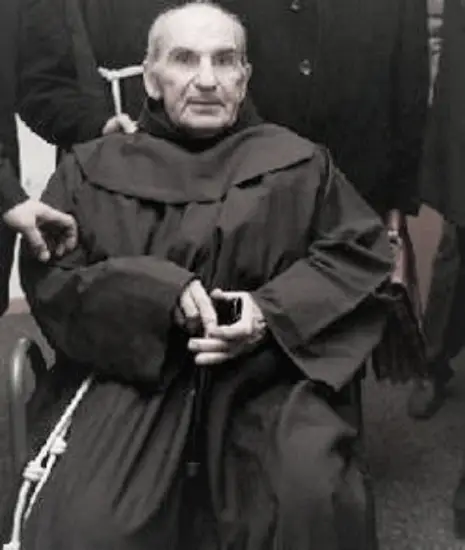
“We want to learn from you, priest, how you manage to link up with the Vatican from prison?” The investigators jumped on him, nearly choking the poor old man.
“First, gentlemen, I am not a priest, but an officer!” Zef clarified. “Second, it is naive to think someone can link up with foreigners from prison, especially the Vatican. And third: I am old and wasn’t involved in the revolt at all.”
“Sell those fairy tales to the blind, not to us who know you inside and out! As for the religious preaching, be straight with us, ‘Dove of Peace,’ or you’ll leave here a crow!”
They had mistaken him back at the camp. We heard the threat: “Now we’ll see how you’ll preach in Koçi’s cell, you priest.” The epithet “Dove of Peace” convinced him finally that they had taken him as a substitute for Zef Pllumi, who fortunately had been transferred to Ballsh camp a few days before the revolt. This intentional “mistake” showed clearly that the lists were pre-prepared at the start of the revolt, marking the targets. Thus, the game with the “Zefs” exposed the architects of the slaughter.
“Gentlemen, as for ‘inside and out,’ I don’t have a single tooth left in my mouth! As for being an officer, you can verify it – just open the documents and you will be convinced!” Zef defended himself again.
“Even if you are military, you are still a S.I.M. spy!” the investigator sneered after flipping through the file. This “mistake” cost the old man a month of torture, even though the court declared him innocent. The diabolical accusations and drastic sentences for my friends were predetermined.
After the trials ended and the newly sentenced returned to camp, violence and pressure reached their apogee. Every day the beatings raged; the punishment group worked with maximum efficiency. Many unfortunate souls ended up in the torture room for no reason at all, where they were beaten unconscious, blood splattering the walls until they turned from white to red. There was no more room in the solitary cells; the surplus spent the night tied to posts, counting stars in the firmament.
“Free” time turned into endless horror; everyone lived in fear of punishment. You didn’t know where the blow would come from! Swarms of police moved like a pack – in the square, the barracks, the rooms, the canteen, the latrines – everywhere they could catch someone in a “fault” to make their life a misery. And woe to the wretch who fell into their clutches; he would suffer enough to show it to the grave. On the other hand, you had to be hyper-vigilant – escape the pricked-up ears, sew your mouth shut, for you might utter a “gem” that an informant would record and take fresh to his masters; you had to plug your ears when they provoked you on purpose.
When we entered the galleries, it was as if we were liberated; although the mountain threatened our heads, at least we escaped the executioners and the spies who dared not enter for fear of revenge. The policemen who testified grew so enraged they were ready to tear us apart with their teeth, but this appearance was only for the outside; when it was their turn to escort the shifts to the work fronts, they guarded themselves like the devil from incense. None of them dared to penetrate deep into the mines, unless they came in a swarm.
Now the weather turned hot, and the sun burned like an oven. The first week of July, my family came for another visit, but I still didn’t know the exact date of my release, which I hoped would happen in the last two days of the month. I told my family this, and they promised they would definitely come, even if they had to spend a night or two outside. Thus, waiting for the 29th or 30th, a boredom so heavy took hold of me that I could hardly push through. Strange! Now that I was reaching the finish line of the five-year term and should have been calm because I was reaching the lucky day, I felt extremely anxious; the minutes, hours, and days dragged by.
In the last week of July, I counted the days, hours, and minutes, but they stretched like a tether until I lost hope of reaching the release. In the anxiety of waiting, the afternoon of the 26th caught me; as I returned from work, the clerk Nasho Theodhoraqi called me and announced:
“Get your things ready, you’re being released tomorrow!”
I couldn’t believe it! It felt like he was playing with my patience. “My God, have I sunk so low that even Nasho mocks me!” with whom I hadn’t exchanged five words in five years! According to my calculations and those of my friends, we had about eleven or twelve days of “earned time.” So I expected to be released around July 29 or 30. These were the two dates I had told my family, and I expected one of my brothers to bring my clothes and accompany me in my first steps.
“Look closely, are you sure you haven’t made a mistake?” I asked suspiciously.
“No, man, I’m accurate in my accounts!” he replied peevishly. “If I made mistakes, they wouldn’t keep me here for a minute! The Command would have pointed me out long ago if they found errors, friend!”
“Maybe, but it doesn’t seem to add up for me!”
“It seems you haven’t added the two days from this month! I’ve reconciled them with the provisional payrolls Rroku brought me!” He shook the papers in his hand and added: “In fact, Rroku is due to be released with you too!” I was stunned; I couldn’t believe my ears!
“Don’t just stand there, go get ready, you’re on your way!” He slapped my shoulder and went to find Rroku. Convinced, I returned to my friends and told them why I was called. They were caught off guard because, as I said, they didn’t expect the two-day acceleration, and they were distressed because I lacked suitable clothes for the occasion.
“What will you wear tomorrow for the road?” Tomor Balliu asked and answered himself: “Say you have nothing!”
“We calculated wrong, Tomçe; we didn’t count the earned days of this month!”
“Man, why don’t you just say ‘thank God the hour has come’ to leave this grave? The rest will be sorted!”
And he headed toward the square, returning shortly in the company of Kujtim Murati, Ahmet Islami, Dhimitër Bifsha, and Shuaip Seiti, who threw his arms around my neck, delighted by the wonderful news.
“Thank God you reached the day, brother!” and he turned to Tomçe. “Did you inform the others?”
“I sent word, but they didn’t expect this news!” He caught his breath and turned to Fiqo and Dervish: “Make some room, we have guests coming!”
“Thank God the day has come; the beds are yours!” Fiqo showed even the bed of Aliu, who was on the second shift.
“May you have luck, and may you drag your feet for the others to follow, son!” Telha Çakua wished me and followed Dervish Sulo, placing almost the entire space of the first floor at my disposal. After two or three minutes, the room filled up.
Friends came to embrace me, wish me luck; some even teared up. But the tears were justified, because over five years, we had become like brothers – closer than brothers – sharing good and bad, from the glorious days of the Revolt to the unprecedented violence that followed.
“Tomorrow we’ll dress this captain like a groom; we’ll shave him and scrub him behind the ears and send him to Berat with songs and dances!” Esat Kala began to tease.
“Man, he doesn’t even have underwear or a vest, and you say we’ll send him off like a groom!” Tomçe replied in the same coin. “Come on; let’s wrap him in a prison suit so he looks like a mummy!”
“Derman, say thank God he reached the hour; the rest we’ll provide!” Kujtim interrupted. “I have a decent pair of pants, I also have…”
“I have a shirt…” Shuaip Seiti jumped in.
“I have that,” one said; “I have this,” said another, and in the end, they promised me a bundle of clothes. But the jokes froze in our mouths at the sound of the whistles and the croak of Malo.
As a group, we went up to the shower terrace where Esat continued: “Even today and tomorrow morning, you are a sheep, brother; by noon, if they separate you from the flock, you become a goat and escape the line!” He brought his mouth to my ear and whispered: “Son, keep your eyes open. The ‘Hell of Corpses’ is worse than the ‘Enemies’ Grave’! In the ‘Grave,’ no one despises you; you can curse Enver as often as you like and those buried with you won’t listen, but in ‘Hell,’ you must remain silent even when the snake bites you or the stench of living corpses suffocates you!”
After the count, I ran into Gëzim Medolli, who after the revolt had been sentenced to another 23 years.
“Thank God you reached the day, friend!” he congratulated me, and we began to walk side by side. Gëzim had withered; his bones stuck out like twigs, partly from torture, partly from hunger – after a month and a half of investigation, he had become skeletal and didn’t weigh even forty kilograms. Although only 23, he looked like a shriveled old man, with cheekbones sunken into his jaws and a nose like a knife blade.
“Brother, from tomorrow you must change your habits!” he began. “In free life, you will have to behave differently because other norms prevail; the primary requirement for survival is silence. You will open your eyes and ears and sew your mouth shut. Naturally, it’s not easy, but there is no other way. You are smart and prepared enough to spot danger. Maybe you won’t forget us easily, but we are doomed, and you must not return to the Spaçian hell. You will indeed face difficulties adapting to the environment, but I advise you: keep your eyes open and do not be tempted by society, which will be deceitful. I know the literary impulse will urge you to put on paper what you’ve churned in your head, as I am sure your tribulations will push you toward the pen, but you must reserve yourself and act within the relative freedom a socialist individual enjoys. Use the moments when you are alone to vent freely; write without admitting it to anyone, not even your relatives, because you’ll endanger yourself and, intentionally or not, them too…”
He continued this way until the gray dusk covered the hills. Then I handed him the “prison dowry,” the legacy of Emin Shehu, who left me a mandate five years ago: “When the day of release comes, you shall give it to the youngest, to the one you think fulfills the criteria described in the letter…”
Naturally, I selected as heir the one I thought possessed the qualities of his predecessor, though he wasn’t the youngest, but the most in need and a proven survivor. The “Emin Shehu” label would pass into safe hands and remain in the prisons until the late eighties.
My flesh crawled! I was moved by the misery I was leaving behind the barbed wire, where a part of my being was entangled. In that filth, I was leaving my best years, unfulfilled dreams, executed and graveless comrades, and friends who supported me without a shred of interest! Simultaneously, I was taking with me the ideal and the aspiration for tomorrow, along with the faith and blessing of elite men that would accompany me through life!
The clattering of wooden clogs brought me out of my thoughts. I turned my head and saw the two Zefs heading toward the corner where I stood with my hand extended.
“What are you looking at so intently, boy?” Zef Asta stroked my shoulder. “You reached the day, son?” Two tears slid from his gray eyes.
“Photograph every sinister abyss of the grave, lucky boy!” Zef Jushi made a circle, as if outlining the entire territory. “Now you’ll need the scenery, because dramas have no value without it!”
“Go get dressed; they might let you out early!” Asta continued.
“I have nothing to take,” I replied. “I’ll leave my belongings, except for a few relics, if I can get them out!”
“That’s what I’m talking about, man! It’s eight o’clock; look, the night shift is returning!” Asta pointed to the interconnecting gate where workers who had finished their shift were waiting.
“Lucky friend, record this gloomy scene in your memory and may you never see its like again! But you will need it, for you will put it on paper one day,” Jushi went on.
“Come, it’s getting late!” Tomçe called from the second-floor balcony with voice and gestures.
I broke away from the old men. On the bedding, a mountain of clothes had been piled, as if they had opened a wardrobe./Memorie.al