
By Dashnor Kaloçi
Part Three
Memorie.al / The history of parliamentary elections in our country, or more precisely the attempts at elections, have its origins in the time of Ottoman rule, when Albania was part of the Turkish Empire. One of the first Albanian deputies elected to the first Parliament of Turkey, which opened its proceedings in December 1877, was Abdyl Frashëri. But that parliament did not last long, as it was dissolved by the Sultan himself due to the start of the Russo-Turkish War. After the dissolution of the first parliament of Turkey, there were several other attempts at elections, but all failed for various reasons. The first regular elections in Albania were held only in 1908, when the Young Turks came to power in Turkey. Those elections w1ere not direct but through representation, otherwise known as the second-voter system.
The first Parliament of Turkey opened on December 10, 1908, and out of 266 deputies, 27 were Albanians elected in the four vilayets of Albania. At that time, members of the “Union and Progress” Committee in Turkey, which included many Albanians, split and grouped into three political factions. The first grouping was “Union and Progress” (the Turkish-Macedonian party) with 164 deputies, where 130 were Turks, 5 Arabs, 1 Greek, and 15 Albanians, who were headed by Hasan Prishtina, deputy of Kosovo.
In the second group, called “Liberal Union” (the Greco-Albanian party), which included 45 deputies, there were 12 Albanians headed by Ismail Qemali. Among other Albanian deputies in the Turkish Parliament at the time were Esad Pashë Toptani, Nexhip Draga, Rexhep Pashë Mati, etc. After 1908, there were several other elections where Albanians continued to vote for their representatives in the Turkish Parliament, and this lasted until November 1912 when Independence was proclaimed and Ismail Qemali was elected head of the Government.
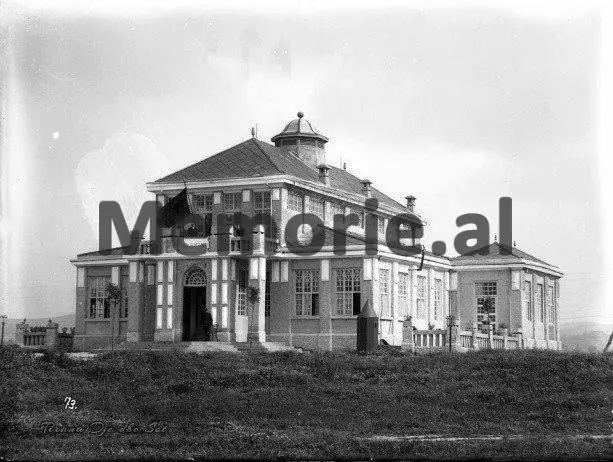
The first parliamentary elections in Albania were held in the spring of 1921, as until that time they had not been held due to World War I, in which Albania was involved. The first Albanian Parliament opened on April 21 of that year, and the first building of the Albanian Parliament was where the Academy of Sciences is today; 76 deputies participated, elected after a relatively regular process from the nine prefectures of the country: Berat, Durrës, Elbasan, Gjirokastra, Korça, Kosovo, Shkodra, Vlora, and that of the Albanian colony in the USA.
As in the past, those elections were held with a representative system, otherwise known as the second-voter system, where based on territorial division, the representatives of each region had the right to elect their deputy. Regarding the above, as well as a short history of parliamentary elections in Albania from that period until 1991, Memorie.al has published them in previous issues. Here, we are publishing in full the Founding Statute of the Albanian Republic (Constitution) of 1925, where a special place is occupied by the legislation of parliamentary elections of that time, as well as the Regulation of the Parliament, with the rights and duties of deputies, published by the “NIKAJ” Printing House in 1925.
Continued from the previous issue
FOUNDING STATUTE OF THE ALBANIAN REPUBLIC (1925)
(Tirana, Printing House “Nikaj” 1925)
Chapter II: Various Provisions
- 108. The Albanian State neither recognizes nor grants titles of nobility.
- 109. The authentic interpretation of laws belongs to the legislative power.
- 110. No State organization can be created or changed except by law. No civil service position (nëpunësi) can be created except by law. Administrative, judicial, military districts, and those of any other branch, as well as the changes of their centers, are regulated only by law.
- 111. Military service is mandatory for all Albanian citizens according to the law, except for exceptions specified by it.
- 112. No right, whatever it may be and to whomever it may belong, can be created or extinguished except by laws.
- 113. Everyone contributes in proportion to their wealth to the financial needs of the State. No fee or tax can be imposed or collected except by law; only when a customs tax is imposed or increased, which can be collected from the day the relative project is presented to the Chamber of Deputies, which must be voted on within the session in which it was presented.
- 114. No privilege can be granted to anyone regarding fees and taxes. Every discharge or relief must stem from a law.
- 115. No expenditure can be made without an authorizing law.
- 116. No salary, reward, or pension at the expense of the public treasury can be attached or given to anyone, except according to the law.
- 117. No item of the State’s immovable property can be alienated or leased for a period longer than twenty years, except by a law.
- 118. No loan can be contracted for the benefit of the State without an authorizing law.
- 119. State debts are guaranteed. Every debt of the State towards its creditors is inviolable.
- 120. The State recognizes moral persons created according to the law.
- 121. No foreign armed force can step on Albanian land, except by a special law.
- 122. Available officials (nëpunës disponibile) are prohibited for all branches of Administration, except in the army and in the Ministry of Foreign Affairs.
- 123. The legal status of State officials is regulated only by law.
Chapter III: The Rights of Citizens
- 124. All, without distinction of citizenship, are equal before the law and enjoy equal civil rights; but over rural lands in Albania, under any title, only Albanian citizens and moral persons have the right of ownership. Foreigners have only the right to sell rural lands and the right of ownership only over those rural lands necessary for the establishment of factories and the regulation of communication.
- 125. All citizens enjoy equal political rights and are accepted in all civil and military offices, except for exceptions specified by law.
- 126. Personal liberty is guaranteed. No one can be pursued, arrested, imprisoned, sent to trial, or in any way hindered from liberty, except in cases foreseen by the law and in the form specified by it.
- 127. The residence is inviolable. No forced entry can be made except when and how the law commands.
- 128. Freedom of speech and the press is guaranteed. Preventive censorship is prohibited. The confiscation of printed materials is regulated by law. Only Albanian citizens can publish newspapers, according to a special law.
- 129. The right of ownership, without exception, is inviolable, except when a legally verified public interest requires it and against a reasonable compensation as according to the law, paid in hand (cash).
- 130. Land is simple property, but the legal provisions currently in force over lands are in operation until they are changed by special law. Mineral wealth is divided into two classes: Mines and Quarries; the former are State property and the latter are the property of the owners of the land surface. Their exploitation is done according to the respective law.
- 131. The right of association and the right to assemble peacefully and without arms are guaranteed, in conformity with the laws. Societies can never be dissolved for law violations except by court decision. Only in public meetings can the police be present. Only outdoor meetings in open places can be prohibited if the meeting causes a risk of disturbing public peace.
- 132. Postal secrecy is inviolable and regulated by law.
- 133. Only Albanian citizens are accepted as officials and employees of the State, except for exceptions specified by special law.
- 134. Criminal laws cannot have retroactive force in favor of the defendant.
- 135. Every bodily torture is entirely prohibited.
- 136. No Albanian citizen can be expelled, interned, or restricted except by law.
- 137. Confiscation is prohibited and cannot be done except according to the law by court decision.
- 138. Each or many together have the right, while observing the laws of the State, to address the competent authorities in writing or orally, who are obliged to act quickly and respond in writing to the one who addresses them.
- 139. Since human liberty is sacred, in Albania no person is bought or sold; every person bought or slave, as soon as they step on Albanian soil, is free.
Chapter IV: Final Provisions
- 140. Every law or decree-law in contradiction with the letter and spirit of this Statute is unconstitutional and void.
- 141. The two legislative bodies, upon the proposal of the President of the Republic or the Members who compose them, have the right – each body in their separate meetings – to take decisions by two-thirds for the change of the provisions of the Statute, declaring the need for change. After taking this decision separately, the two legislative bodies meet together and proceed with changes. Decisions are taken by two-thirds of the votes of all Members of the joint assembly. The authentic interpretation of the Statute is done in the same way. The Republican form of the State cannot be changed in any way.
- 142. This Statute enters into force from the day of proclamation./Memorie.al
Chairman of the Constituent Assembly