





BY DASHNOR KALOÇI
Memorie.al/The Special Operative Group, created immediately after the arrest of former Interior Minister Kadri Hazbiu and his deputy Feçor Shehu in mid-October 1982 – headed by the Deputy Minister of Internal Affairs and Director of State Security, Zylyftar Ramizi, with subordinates Enver Zeneli and Hasan Ulqinaku – among other measures such as studying and analyzing a large number of archival files (1945–1982), also summoned several former high-ranking officials of the PPSh leadership and former senior cadres of the Ministry of Internal Affairs, State Security officers, etc. These individuals were to appear as witnesses in that trial, be called for confrontations in the investigative process, or provide in writing everything they knew or suspected regarding the “hostile activity” of Kadri Hazbiu, Feçor Shehu, and others who had been sentenced or were still in high positions.
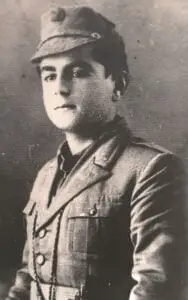
Almost the majority of them, besides condemning all members of the so-called “Hostile Group of Kadri Hazbiu and Feçor Shehu” by accusing them of being close collaborators of the “Poly-agent Mehmet Shehu” (which included Nesti Nase, Llambi Ziçishti, Llambi Peçini, Fiqret Shehu, etc.), also implicated other persons in their testimonies who had not been sentenced or struck by the Party until then. One of them was Nesti Kerenxhi, a former Deputy Minister during the period of Koçi Xoxe and, for a short time after his arrest, also Minister (October 2 – October 30, 1949) and a member of the Political Bureau of the Central Committee of the Party. Just as he had been called to testify in the investigative and judicial process against Koçi Xoxe in 1948, he was also summoned in the process against Kadri Hazbiu and Feçor Shehu. In fact, he was one of the first to be arrested and taken as a defendant immediately after Kadri Hazbiu’s arrest in mid-October 1982. And just as he had acted in the Koçi Xoxe process, accepting and signing everything requested by the investigators – even with various accusations and slanders – Kerenxhi acted the same toward Kadri Hazbiu and Feçor Shehu in their process.
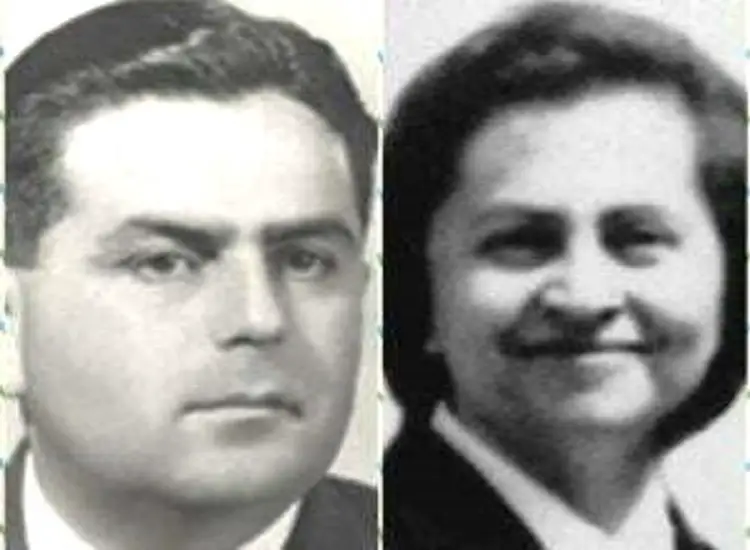
History would repeat itself point by point, in both content and form: Just as happened after the Koçi Xoxe process, where, despite being his right-hand man and admitting to all the crimes they had committed or ordered together, Kerenxhi was not only not sentenced but, thanks to Soviet intervention with Enver Hoxha, he maintained his previous positions and was only removed from the Ministry of Interior, being appointed as a director in large national enterprises or in the Prime Ministry. He remained and worked in those functions without the slightest concern (along with his wife, Naxhije Duma, a former minister and member of the Central Committee of the PPSh) until early October 1982, when the two other Interior Ministers were arrested. The Party needed him again for the next service, which he would perform with great zeal, just as he had done 34 years earlier with Koçi Xoxe.
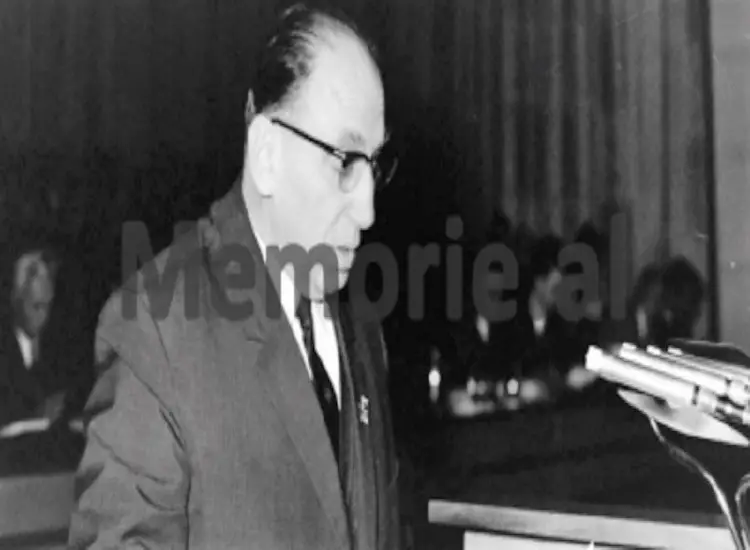
But unlike that time, when Kerenxhi’s depositions only accused Koçi Xoxe and his closest collaborators, in the 1982-’83 process, besides the “Hostile Group of Kadri Hazbiu,” he also accused other persons who not only had no connection to that “group” but had held high state functions. One such person was Myqerem Fuga, former chairman of the Executive Committee of Tirana (1970–’73) and later Minister of Light and Food Industry, who in 1977 was dismissed as minister and sent as a director to the Meat Plant in Tirana until his retirement in 1981. In 1982, when his name was mentioned in the investigation of the “Hazbiu Group,” Myqerem Fuga held the honorary position of vice-chairman of the Committee of Veterans of Albania.
As seen in the archival document dated November 10, 1982, investigator Perlat Kasaj informed his superiors that Nesti Kerenxhi had deposed against Myqerem Fuga, claiming that in 1956 and 1958, Fuga had sought the rehabilitation of Tuk Jakova and those sentenced for the Tirana Conference. Kerenxhi also claimed that, on the orders of Avdyl Këllezi, Myqerem Fuga had issued him a permit to visit border zones in Kukës, where Kerenxhi even slept in a border post. This testimony heavily implicated Fuga, implying he sent Kerenxhi for intelligence links with the UDB or for an escape attempt. Furthermore, it linked Fuga to Avdyl Këllezi (executed in 1977 as head of the “Saboteur Group in Economy”).
Ironically, similar accusations were used to implicate Myqerem Fuga’s in-law, Iljaz Reka, whose sudden death in 1975 remains a mystery after the Prosecution seized a television set from his home just hours before. According to Tajar Bonjaku and Sabri Cejvani, they were pressured during torture to admit they were pushed by Iljaz Reka to act according to the “Yugoslav self-administration” model.
However, in the full documents of the trial, neither Avdyl Këllezi nor Myqerem Fuga are mentioned again. An anonymous former investigator claims that Perlat Kasaj did not include these names in the final court file because he did not receive approval from his chiefs, Zylyftar Ramizi and Hekuran Isai. It is possible Kasaj included the name to “test the pulse” of his superiors or to discover another “enemy of the Party.”
The attempt to implicate Myqerem Fuga likely stemmed from a 1973 report where Fuga stated: “The main cause for the rise of criminality among youth today is the difficult economic situation.” This sentence was likely the “hook” Kasaj used. Fuga had also been Kerenxhi’s superior in the past. Additionally, Fuga was dismissed in the past due to his Western education (Italy) and links to other figures like Kahreman Ylli. Ultimately, Enver Hoxha likely spared Myqerem Fuga because his wife, Shpresa Hoxha Fuga, was a distant cousin of Hoxha.
ARCHIVAL DOCUMENT OF 1983: SUMMARY OF TESTIMONIES BY NESTI SPIRO KERENXHI
FROM THE DEFENDANT’S CLAIMS TO DATE
NESTI SPIRO KERENXHI
The defendant Nesti Kerenxhi admits the accusation that: “I was a tool in the hands of Koci Xoxe, that is, an accomplice of his and I collaborated in the implementation of a hostile Trotskyist line, by implementing every order and task given by him. My actions in the implementation of the tasks and orders given, are actions and tasks performed as a loyal agent of Koci Xoxe. Being in important functions and tasks, as Deputy Minister of the Interior, President of the State Planning Commission and Minister of the Interior, I have exercised activities, contrary to the Party line, which has been in favor of the enemy, whether internal or external. Of course, this activity of mine has been to the detriment of the interests of the country and in favor of the interests of the Yugoslavs…….”! (Gives explanations of the concrete actions he carried out during the time of Koci Xoxe).
In 1964 he was expelled from the Party in Selenica for reasons as claimed by the defendant Nesti Kerenxhi: “Drinking with Muhamet Selimaj, Axhem Imeri and a man named Hasan, in a drunken state I spoke out for the fight against Soviet revisionism, regarding China’s participation in this war, and I refused to drink the toast for a member of the Politburo, slamming the glass on the table until it broke”! When I was appointed a delegate to the Yugoslav Youth Congress in 194…”Koci Xoxe and Liri Gega gave me special instructions from the Secretary General of the Party, especially to gain experience for the army, the Party and the Government. It was during this time that I met Tito on the island of ‘Vis’ where the Yugoslav headquarters was located, with whom we stayed for about two hours and had lunch together.
Here, after comrade Alqi Kondi left with the Soviet mission, I stayed here alone for 10-20 days on Tito’s instructions. During this time, I met Dushan Mugosha, whom I had known since 1941 in Korça, later in Vithkuq and in Labinot. In August 1944, I left Yugoslavia and accompanied Velimir Stojnic, Njazi Dizdarjovic and two other Yugoslav officers, who were coming on a military mission. In In 1943 I went to Greece to the Youth Conference of Northern Greece. Before leaving, Koci Xoxe instructed me to talk to the leaders of the Greek National Liberation Army regarding the Yugoslav proposal for the creation of the Inter-Balkan Headquarters. On this issue, I knew that the Party had given the Yugoslavs an answer that they did not agree.
I also knew that the Greeks had also given the Yugoslavs an answer that they did not agree with the creation of this Headquarters. Despite that, Koci Xoxe instructed me to carry out this task once again, to see if the Greeks had changed their position. For this, I spoke with the Greek general, commander of the Army, who gave me the same answer that they had given before. “I, – says Nesti – conveyed this to Koçi Xoxes when I returned. In 1947 I was in Athens at the head of the delegation for the commission to verify the claims of the Greeks. The delegation consisted of Nesti, Teodor Heba, Vangjo Mitrojorgji, Myftar Tare, Kadri Hazbiu, Angji Faber, Nuri Huta and Aleks Caçi. From here we went to Sofia and then to Belgrade. After that, together with Teodor Heba, I headed for New York. Here I also met Nesti Nase.
The Yugoslav delegation was headed by Josif Gjergja, with whom we kept in touch in Athens, Sofia, Belgrade and New York. In New York, the Yugoslav delegation was headed by a man named Vilian, while Josip Gjergia was the vice-president of the delegation. In New York, Nesti Nase took us for lunch at the house of Dhora Leka’s brother, who was an immigrant. He also took us to the house of an immigrant from Lukova named Kristaq, or Kostaq Lazri. He took us to the house of some immigrants from Tepelena. Here, Nesti Nase introduced us to a girl from Korça named Frida, who was also an immigrant. After getting to know her, she constantly came to our hotel and met us. Nesti Nase took us to visit the Roosevelt House Museum.
During the conversations before and during the Tirana Conference, Filip Jakova, Zini Muço, Nesti Stratobërdha and I talked about something that would happen at the Conference. Filip Jakova told us this, which learned it from his brother Tuk Jakova. Here we talked about the rehabilitation of people affected by the Party. Filip told me that the conference was set up to rehabilitate, among others, me and Kristo Themelko. For these actions and for not condemning the Tirana Conference, I was punished by the basic organization of the Party. For this I was also called by Fiqrete Shehu. In the meeting where the resolution of the Tirana Conference was worked on, where Myqerem Fuga was delegated, he addressed me at the meeting saying: ‘Tuk Jakova raised it for you too, so that you could be rehabilitated’.
Of course, during the conversations we had about the Tirana Conference, I, together with the friends I mentioned above, felt good that we would be rehabilitated. During this time, Zini Muço expressed to me the opinion that there is a cult of the individual in Albania as well. I approved this to Zini. These conversations took place after we were familiar with the materials of the 20th Congress of the Communist Party of the Soviet Union. In 1954 or 1955, regarding the issue of an employee of the Export Enterprise who was going to Italy as a sailor on one of our ships, to buy some necessary items on hand, Kiço Ngjela sent me to talk to Kadri Hazbiu. I went to his office, where he waited for me alone and after I explained the issue, he told me that he agreed for this employee to go so that the documents could be drawn up.
In 1953, in an activity in Tirana that was held for internal reserves, Mehmet Shehu also assisted. I discussed this meeting. In the conclusions that Mehmet Shehu made, he considered my discussion one of the best and Vasil Kati on this occasion began to flatter me. This is exactly why I was awarded the Medal of Labor. Similarly, Sinan Hasani, who is a party member and a pensioner in Selenica, told me: ‘At a meeting held in Vlora, Mehmet Shehu said: Nesti Kerenxhi is a hard worker, so give him work.’ In 1958, at the behest of Myqerem Fuga, I went to report to the Presidency of the Council of Ministers about the grape processing workshops. I went and there were Mehmet Shehu, Beqir Balluku, Avdul Këllezi and the Minister of Construction. I reported and left.
Also during this period, at the behest of Myqerem Fuga, I was sent to Kukës to work on the collection and processing of milk! Mygerem had received authorization from the Central Committee of the Party through Avdyl Këllezi for me to assist in the meeting of the Kukës party bureau. I went and assisted in the meeting of the party bureau, where this problem was analyzed. After two days, Mygeremi arrived and sent me to see the dairies in the district that were on the state border. Mygeremi received permission to go to the border areas at the Internal Affairs Branch in Kukes. I even went and slept at a border post one night. All of this surprised me and I did not understand what all this rapprochement was about. As with the head of the Council of Ministers or even in Kukes, there was no reason for me to go. Even today, I am not clear about such a stance that was held during this time.
During my time in the People’s Defense and the Ministry of Interior, I got to know Kadri Hazbiu. During this time, I had noticed that Kadri Hazbiu liked to be close to senior officers and that he would praise them in order to get along with them. He did not have his own opinions, but was suggested and did what those senior to him in office wanted. He was subordinate to me, but he maintained direct contact with Koci Xoxe, he reported to him and received orders from him. His non-punishment, as well as mine and that of anyone else for the serious crimes we had committed at that time, came as a result of Koci Xoxe not giving it to him so as not to hold others’ crimes as well. He maintained contact with me only for small things regarding the problem of senior career officers, who had served even before the liberation of the country in the armies of those regimes that were in power.
I know that even in the Army, Kadri Hazbiu acted as if he were outside any control of the Party. Kadri Hazbiu knew that Mehmet Shehu had a file as a connection to the Americans because: During the trial of the Maliqi saboteurs, it turned out that this activity was directed by the Americans and all the saboteurs were former students of the Fultz Technical School. During their depositions, it turned out that one of Fultz’s most favored students was Mehmet Shehu. He also knew that Mehmet Shehu had connections to a Toptanaj family in Tirana, who were one of the wealthiest families and connections to the Americans. I know that Kadri Hazbiu was raised by Mehmet Shehu and the fact that they did not reveal it before shows that one covered for the other and they were in a common agreement.
In the Central Committee of the Party, I was elected in absentia at the 2nd plenum of Berat, after I was sent on a mission to Tirana to create the People’s Protection Brigade. As Nako Spiru later told me, that in the Central Committee of the Party I was elected on the proposal of Nako, he told me that in the Central Committee they elected the most capable people, but what if we were left with the General Secretary, the one who was. When I heard these words of Nako Spiru about the General Secretary of the Party, I was shocked, but I did not have the courage to tell the Party these things that Nako Spiru had told me. It was during this time that I had a lot of company with Nako and he constantly came to the Ministry of the Interior to see me, even on one occasion Koci Xoxe found us in the office together and said to Nako; what are you doing here, you have no business in the Ministry of the Interior, so go away and address me, why do you accept Nako here. I told him that he came simply for company and nothing else. During this time I do not remember what we talked about with Nako. / Memorie.al
Tirana, 10.11.1982
Note:This material was given to comrade minister when we came from Vlora
INVESTIGATOR
Perlat Kasaj