


BY DASHNOR KALOÇI
Part Two
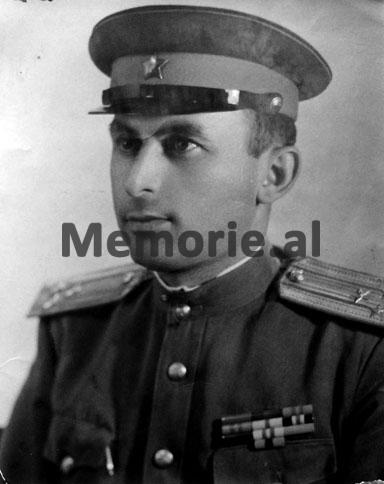
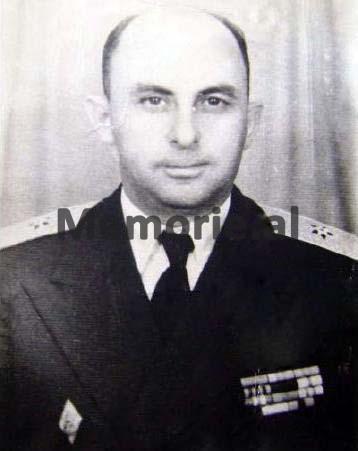
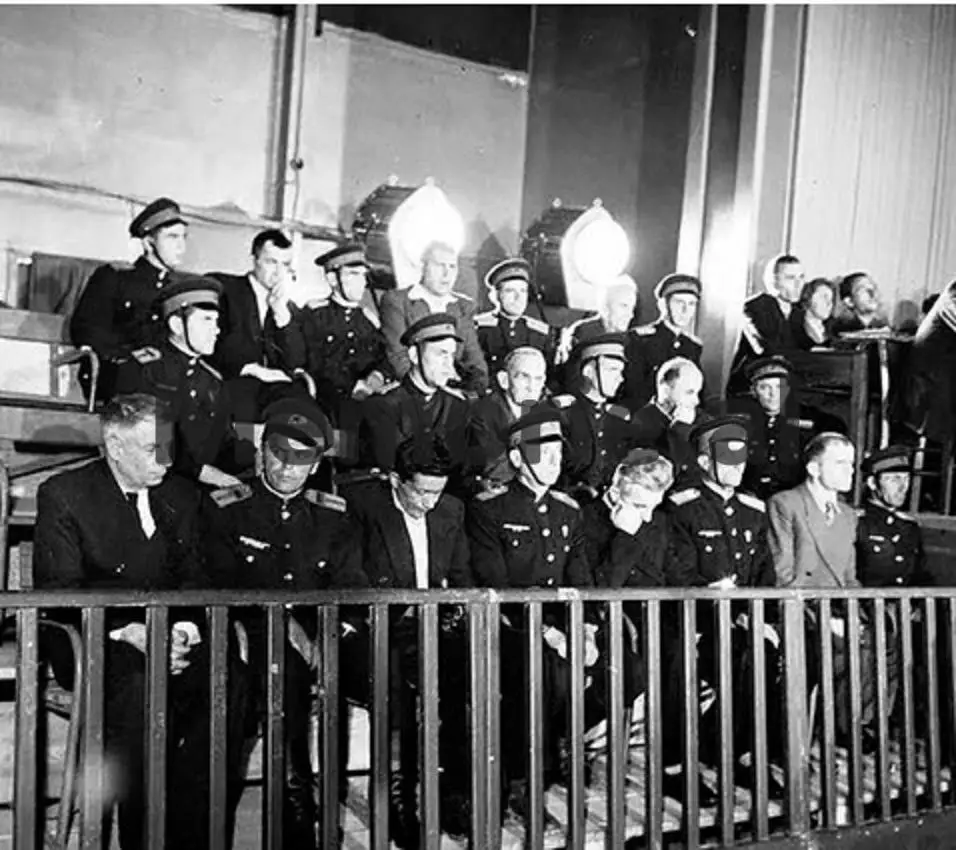
Memorie.al/ At the end of May 1961, the trial against the so-called “Hostile Group” of Teme Sejko (former Rear Admiral of the Naval Fleet) concluded in Tirana. He, along with Tahir Demi (former Chairman of the Executive Committee of the Elbasan district), Taho Sejko (former journalist of “Zëri i Popullit” and later director of the Shkodra Automobile Park), Avdyl Resuli (Lieutenant Colonel in the Tirana Recruitment Branch), Hajri Mane, Nasho Gërxho, Hajri Purizi, Ali Xhelo, Sami Murati, Izet Osmani, Shaban Ademi, etc., were accused of; “having put themselves in the service of foreign intelligence agencies, such as the Yugoslav UDB, the Soviet KGB, the American CIA, and the Greek Asphalia, with the aim of overthrowing the people’s power in Albania.”
As a result, after the sentencing on May 28, 1961, by the judging panel led by Shuaip Panariti (Chairman of the High Court, assisted by Major General Muharrem Kokomani, Colonel Sotir Spiro, Colonel Bejto Isufi, Lieutenant Colonel Hilmi Telegrafi, and session secretary Murat Deliallisi), eight of the defendants of this “Hostile Group” were sentenced to death by firing squad and executed on May 31 (two had died during the investigation), while the remaining defendants were sentenced to heavy penalties, up to 25 years.
All the above is now very well known, as dozens of articles with various testimonies or archival documents, as well as TV documentaries, books, etc., have been published from the early 90s until today. However, what has remained somewhat unclear, (at least with archival documents), is who were the main agents used by the State Security (Sigurimi i Shtetit) at that time to strike the “Teme Sejko Group,” or as it was otherwise known, the “Chameria Group,” due to their origin from the Chameria region!
And how much and how were those State Security agents rewarded, who “sank” their Chamerian compatriots, who were not brought to trial as witnesses in order not to expose their identity (dekonspiruar), even though their role was somewhat known? As we mentioned, their role was never made public in newspapers, books, and magazines, as happened at that time with other “Silent Heroes” of the Ministry of Internal Affairs.
Paradoxically, even today, almost 35 years after the collapse of the communist regime of Enver Hoxha and his successor, Ramiz Alia, no archival document has been published regarding the three main State Security agents who sank the “Teme Sejko Group,” nor the rewards and other favors they received from the ruling communist regime for their “contribution to the discovery and strike of that hostile group.”
Based on this, in this article, we are publishing some archival documents (along with the corresponding facsimiles) that have been extracted from the Archive of the Ministry of Internal Affairs, which are seeing the light of publication for the first time. But as we will see in this article and the corresponding facsimiles, only agents “Gjoksi” (Chest) and “Trimi” (Brave) are given with their full names: Braho Beqo Emini and Skënder Hoxha, respectively, while “Besniku” (Loyal) is not exposed?! At least not in the documents we have available.
Perhaps this is also due to the State Security Platform, which strictly prohibited such a thing, a rule that Minister Kadri Hazbiu himself should have been the first to implement. However, both “Gjoksi” and “Trimi,” as well as “Besniku,” were quite well known in the city of Shkodra, where they were sent to work and live with the aim; “to protect them from the enemies of the people or the Greek intelligence service,” against which they had worked since 1951, when they were sent on a secret mission to Greece, which we will see in this second and third part of this article, where they affirm with their own mouths their entire intelligence activity in the neighboring state.
Continues from the previous issue
ARCHIVAL DOCUMENT WITH THE RECORD OF THE INTERROGATION OF STATE SECURITY AGENT BRAHO BEQO EMINI, WITH THE PSEUDONYM “GJOKSI,” BY FIRST CAPTAIN OF THE EXTERNAL INTELLIGENCE DIRECTORATE, KRISTO…
RECORD
Held today, August 11, 1953, by First Captain, Kristo…. concerning the depositions of our agent “BRAHO EMINI,” with the pseudonym “GJOKSI.”
QUESTION: Tell us in detail, from when you went to Greece last year until you returned to Albania, where you stayed and which intelligence organs had you in service?
ANSWER: After crossing the Albanian border on October 22, 1952, I, along with my comrade SKËNDER HOXHA, stayed on the seaside for about an hour and a half and then made signals using the hand-held electric light we had.
At this time, 2-3 o’clock after midnight, Captain KUKULIS’s motorboat began to approach the seashore. The motorboat was located in the depth of Greek waters, about 2-3 km in the direction of Corfu. When the motorboat approached the land, we stepped down to the edge of the sea. Captain KUKULIS himself came out with a small boat, greeted us, and embraced us.
He told us: “If I had seen that there were three of you, I would not have had much doubt, as you might have brought someone with you, but if I had seen that there were 4 or more, I would have immediately shot you with a machine gun, because I had information from Albania that the Americans have a transmitting radio in Albania that was working, and I had strong doubts that you might have been detected and captured.”
He added that he did not have reliable information whether the American radio in Albania was cooperating with the Security or not. From what KUKULIS said, I suspect that maybe one of the people who knew we have a radio in Albania has revealed that the Americans have a radio in Albania, and thus, KUKULIS believes it too.
Only we did not learn that our radio was cooperating with the Security, which would result in our disappearance. I also connect this with the telegram (message) that the American Intelligence Office sent us when we were here, asking us: “Who knows that you have a radio?” Then he asked us; how we fared while we were inside, and we told him how we had faced skirmishes and other things, according to the instructions we had received from the Intelligence organs (Albanian Security).
After this, we got into the motorboat where the soldiers CANTOS and the civilian ROBERTS were, who, as we have mentioned before, serve KUKULI for escorting diversionary groups to Albania. There on the motorboat, they immediately gave us bread and canned food to eat, and we set off for Corfu. We arrived at the port of Corfu at 4:30 in the morning.
Here we stayed inside the motorboat, sleeping, with CANTOS and ROBERTS being there, while KUKULIS went out into the city. Later, from the small navy steamer that was there and often accompanies KUKULI’s motorboat, they brought us milk and coffee inside the motorboat. I add that the small Navy personnel had been changed; they were no longer the old ones.
Around 10 o’clock, KUKULI arrived with the motorboat, and we set off for Gumenitsa, where we arrived at about 12:30. Here it was not possible to get out on the pier, as there was too much movement from the people, so we continued the journey by going to the left of Gumenitsa, to a place with no movement, which was PITULIT PITULLI’s garden, who is a big farmer and estate owned (çifligar) of Gumenitsa.
Immediately upon landing here in the garden, we got into the car, which had been notified and was waiting for us there. The car was a “Dodge” brand; I don’t know its number. The driver was a soldier, whose name I don’t recall, and the escort was a Second Lieutenant (N/Toger), whose name I don’t know, both in military uniforms. Characteristics of the soldier: a healthy young man, about 25 years old, brown eyes, black hair, a bit fair-skinned, height about 1.80 m.
Characteristics of the Second Lieutenant: A tall young man, about 170 cm, thin, with black eyes, with a slightly red beard, brown hair. The car was covered with a tarpaulin. In the car, besides these two, I, SKËNDERI, and KUKULIS got in, a total of five people, and we set off for Ioannina. During the journey to Ioannina, we did not stop anywhere else, except for 15 minutes when we stopped in Frosina. Here was the center of a unit, and we saw soldiers; according to my thinking, there must have been a battalion here, and since we saw them working around those hills when we passed, I think they must be engineers (xhenios).
We did not see anything else interesting along the Gumenitsa-Ioannina road. Upon entering the city of Ioannina, at the checkpoint on the right side, there were troops and about 150 cars: “Jeeps,” “GMCs,” “Chevrolets,” and others, but we don’t know which unit was there. From what I saw, there must have been 5000 soldiers. At the Ioannina airport, there were only two civilian airplanes (passenger planes) and nothing else.
In Ioannina, we went to the Office of the Espionage Center, located in the main square of Ioannina, on the left, precisely across from the Ioannina cinema (see the attached sketch).
First, we went to a house, where the Major who is the chief of the Espionage Office lives on the upper floor. On the ground floor, we left all our belongings, stayed for an hour or so, ate, and then went to the established Espionage Office.
Here we went to the office of DHIMO DUKA, who is from Senica of Delvina, and who serves in this office, interrogates Albanian immigrants, and also works as a translator with some of them. Initially, there was only one soldier in his office, and it also had two military cots.
KUKULIS brought us to this office, and then he left, telling us to greet XHORXH. We found DHIMO DUKA in the hallway when we entered the office, and after 33 minutes, he came to the office himself.
I know DHIMO and we have a sort of friendship, because ever since 1950, when I defected from Albania and went to Greece, he was working in this same office and helped me by giving me food, and in the end, he gave a good opinion of me to the Greeks.
After greeting DHIMO, he asked how we fared and other things, and he told me that his brother, Vangjel Duka, whom I knew from when he was in Albania—I saved him from the Ballists who wanted to kill him—is in Ioannina working as a hospital director. His daughter, whose name I don’t know, works in the American Information Office in Ioannina.
I add that we arrived in Ioannina around 18:00 (6:00 PM) after dark. The Second Lieutenant who escorted the car got off at the Ioannina checkpoint.
In DHIMO DUKA’s office, we were left alone and slept on the two cots there. The next day at noon, the Major, who was the chief of that Espionage Office, summoned me to his office through SKËNDERI. We don’t know the Major’s name; he is a tall and thin man, height 1.70 m, with brown hair and black eyes.
He asked me why there are no more escapes from Albania to Greece like before. I told him that in Albania, there are three classes: poor, middle, and rich. The first classes are working, while the rich class was struck and imprisoned, and those who are free go out to earn a piece of bread by working. To come to Greece, they risk the family that remains there.
There were people from the middle class who wanted to defect, but they have lost hope that the Greeks and Americans will win, saying that they have not done anything for the liberation of Albania for so long, so they prefer to stay there and work. On the other hand, they are also afraid of being tortured here by you.
For example, the Albanian Second Lieutenant MEHMET OSMANI from Shalës of Saranda defected and came here. Instead of supporting him, you imprisoned and tortured him, so he deserted from you and went back to Albania, where he told everyone all that you did and that there is no organization here for the liberation of Albania. When others hear this, they hesitate and do not come to Greece.
The Major told me: “You are right, but you must know that the enemy puts many elements behind our lines, and how will we discover them if we don’t take these measures?” / Memorie.al