



Part One
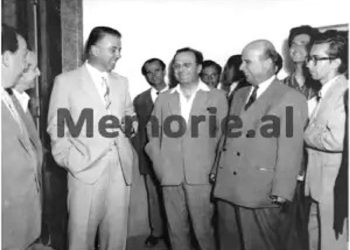
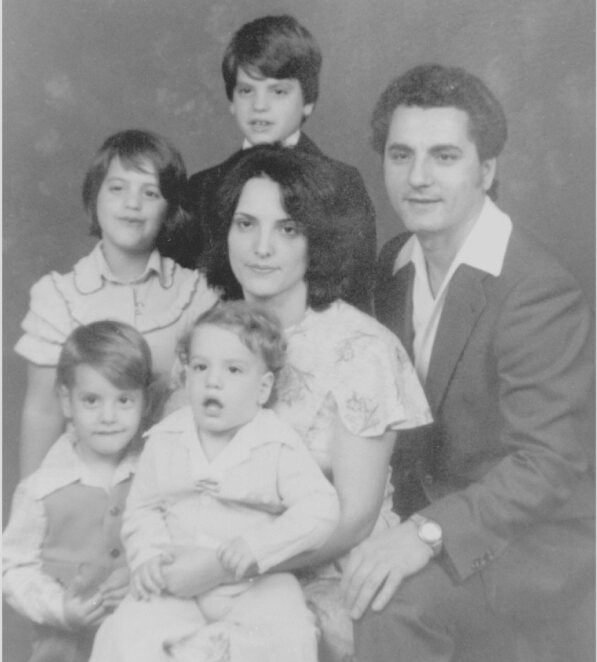
Memorie.al / On April 13, 2022, the well-known businessman and activist of the Albanian community, Zef Balaj, passed away. For several decades, he was a participant in all the most important events of our community. He was a staunch supporter of the “Albanian-American Civic League,” the “Vatra” Federation, the Albanian Catholic Church in New York, and the newspaper “Illyria.” On this occasion, we are republishing this part dedicated to him and his family in the book “Albanians of America,” authored by Vehbi Bajrami, the publisher of the “Illyria” newspaper, in New York. The black and white photographs are part of the book, donated by the deceased himself.
NEW YORK
If our screenwriters are looking for themes to create successful films based on real-life stories, let them listen to the tales of Albanians who escaped from Albania during the communist era. Each of them carries something special within. They are fragments of a broken life mosaic. Only those who have experienced it know what it means to leave people and property behind in your homeland and set off on a long journey without knowing what awaits you: salvation or a bullet.
Screenwriters, directors, and journalists, who know how to write, listen carefully to the narratives of our emigrants! They are worthy of being turned into films, summarized within the covers of books and newspaper pages. Do not let this painful history of the unfortunate part of our people, scattered across the globe, die!
Lina’s parents, Çun and Drane Kuraj, escaped from Fierza in 1951. Bad luck followed them too. They lived in an area that the “kaçakët” (outlaws), as those who did not obey the ruling regime were called, had chosen as a refuge and where they defied the government. Çun and his relatives were also involved in this armed movement against the regime. In the early 1950s, the communist resistance forces had begun to weaken.
Their allies, the so-called “diversantë” (saboteurs) who entered and left Albania from neighboring countries to overthrow the regime with the help of external forces – who proved to be insincere in this mission – were also failing in their task. Everyone was convinced daily that Enver Hoxha’s regime was not so easy to overthrow. The inhabitants of the northern areas of Albania continued to seek their shattered hopes for a free life somewhere else.
The Drin River was the main obstacle for all those who took the path of escape across the border. It was even more difficult to cross than the border itself, where one could meet death from border guards’ bullets. The elders were not wrong when they said: beware of water and fire. There was no bridge over that river to cross to the other bank. How many lives did it take from the villagers who could not swim? How many people did it terrify when they swam in the water and were uncertain whether they would reach the other bank?
In this area, long ago, someone had invented a method to cross the river. They created a type of boat using poles and inflated goatskins, which, after slaughtering the animal, were expertly removed from its body without being cut anywhere, and thus inflated with air. The inflated skin was attached to some poles, and it supported the weight of people and luggage on the river.
But maneuvering this boat had its own secret. Not everyone could steer it. The waves of the river could pull you in the direction of the current, especially after rains when they swept away everything in their path. The boat had to be navigated skillfully towards the other bank with your chest, kicking with all you might to overcome the power of the water.
There were people who specialized only in ferrying villagers across the Drin. The most well-known among them was Çun Kuraj. He became the savior of all those people fleeing to cross the border. After doing this work for many years in a row, crossing everyone without a scratch, the villagers called Çun the “vozar” (ferryman), which is equivalent to a modern ship captain today.
The time eventually came for him to do this work for himself too. Like many others, he had been put on the lists of people who created problems for the ruling communist regime. When he learned from a friend that he was about to be arrested, he quickly got ready and escaped with his wife Drane and their 7-month-old daughter, Lina. He did not take his three-year-old son, Gjelosh, with him, to convince the elders, his parents, and three other elderly relatives that he was not leaving forever but would return, and here he was, leaving his young son as a pledge.
He, like all those who escaped, genuinely thought that Albania would be freed from communism very soon, and they would then return to their country. No one thought that such a regime would survive for so many years. And the State Security, even worse! As soon as they learned that Çun had escaped, they spread a rumor that everyone believed: the little girl Lina had drowned in the river!
And who had committed this act? Çun himself, the State Security announced. “Oh God, how could such a thing happen?” – whispered Çun’s relatives and other inhabitants of the district. “A father throwing his own daughter into the river? This has never happened to anyone and couldn’t have happened to Çun! Did the Security forces throw the child into the river themselves?” – someone asked. Whatever the case, the news spread, and no one came forward to deny it. Çun’s parents, extremely saddened, rushed first toward the Drin.
For three weeks straight, they searched the depths of the river and its bank, hoping to find the body of the little girl. They learned the truth late, when they were already spiritually crushed as if after a funeral. After living in Kosovo for several years, Çun Kuraj immigrated to Belgium, where he has lived for 50 years now. His son Gjelosh, who remained in Albania, spent more than 16 years in prison and internment, because his parents had escaped.
The families who left Albania for the Free World established new friendships, marriages, and godparent ties. Someone got married in the camp, someone after leaving it, and settled in America or some other Western country. How did the young people connect with each other? The emigrants were scattered all over the globe, even in Australia. However, distance has often not been an obstacle for young people to connect with each other, with someone acting as an intermediary.
When Çun Kuraj’s daughter Lina, who lived in Belgium, grew up, she linked her fate in life with Zef Balaj, who had immigrated to America. She shows me some photographs from the wedding ceremony in Brussels. A group of compatriots accompanies the young couple after they tied the knot at the municipality and received the priest’s blessing at “St. Alice” Church.
The wedding took place on September 6, 1969. It lasted from 10 a.m. until 3:30 p.m. and continued in America that same evening. The young couple took the airplane immediately after the ceremony. But, since European time is several hours ahead of American time, they arrived in America exactly when the wedding guests were waiting for them. This might be a case worthy of being noted in the Guinness Book: an Albanian wedding took place on the same day, on two continents.
Zef and Lina Balaj often recall and talk about the past. The history of their emigration is almost the same. The Balaj family from Mzi of Puka and the Kuraj family from Fierza left the country for the same reasons and at the same time. They had no other way. Either flee or end up in prison. Their areas were not far from each other, and they collaborated to resist Enver Hoxha’s regime.
After the communists came to power, the mobilization of “volunteers by force,” as Zef calls them, began, regardless of age, to serve the regime. His second brother, Pjetër, when he was 16, was forced to go as a “volunteer” to replace his older brother Gjelosh, who had to take care of the house. After a few months, the government also took the older brother for military service. Both of them were dressed as soldiers. At that time, their house in Mzi was covered by death.
Their father, Gjon, the pillar of the family, passed away. The seven children remained under the care of their mother. Not long passed and their house burned down, and everything started going wrong: poverty knocked on the Balajs’ door. Immediately after being released from the army, Gjelosh began to fix the single-story house, also building a floor above it. At this time, he linked his fate with Lule Martina. Gjelosh and Pjetër continued to maintain ties with the resistance forces.
The Balaj brothers, seeing the danger of being arrested, had decided to leave the country at a suitable moment. And, as you will read below, the escape became inevitable. Pjetër had been asked to report to the State Security Branch in Puka. He had been informed by some reliable friends that he would be arrested because he and his family were cooperating with anti-communist forces and harboring them. Fleeing became necessary.
And they escaped in the midnight of June 30, 1951, when the Balaj family was celebrating the Feast of Saints Paul and Peter, a religious holiday of the Kabashi clan, to which they belong. The Balajs also celebrated it as their own holiday with friends, daughters, and well-wishers. This holiday was usually celebrated for three days in a row. On the night of the feast, Pjetër went to the village of Iballe to bring his sister, Lusha, to the celebration. They were delayed and arrived late in the village of Mzi, which stretches near the Drin, between Kukës and Fierza. There they were stopped by army patrols. Both sides recognized each other, as Pjetër was also in the uniform of the forest guards.
“Since you are a trusted man of the Party and dressed in uniform,” the army officer told Pjetër, “you will come with us, while your sister must go to your house. She must not dare to tell anyone who she met. She should tell those at home that Pjetër is on duty and cannot come tonight. We have information that a house in Mzi is harboring enemy forces, and as far as we know, they will come there tonight.”
At that moment, Pjetër thought of the house of a neighbor who was friends with Kol Bibë Mirakaj’s family.
Around midnight, the officer sent the soldiers towards the house they were looking for. When they approached the building, the officer told Pjetër: “This is the house!” Pjetër found himself in a difficult position: it was his house. After a while, he told the officer: “I have a small request. You say that the outlaws will come to this house, and if they come, we will kill them. However, if they don’t come tonight, I insist that tomorrow evening; we go and surround the house of the person who directed you here. This is my house.” The officer dispersed the soldiers to their positions, and then addressed Pjetër again: “You must stay with me.”
The two were standing under a tree. A few hours after midnight, Pjetër, to break the silence, addressed the officer: “I have an idea. Since we are standing here for nothing, can I go inside and get some raki and roasted meat on a spit (fërlik)? It is delicious.” “Go and don’t be late,” the officer told him. Upon entering the room, Pjetër apologized to the guests for not being able to join them, because he had been assigned to duty, but he promised to stay the next day. At that moment, Pjetër received shocking news from his brother, Gjelosh. The latter had arranged with the “outlaws” for them to come to the house that night to get food.
“The house is surrounded by soldiers,” Pjetër replied. “My sister informed me about this,” Gjelosh said. Right there, the brothers agreed that if they survived this siege, they would meet at the Bjeshkët e Dardhës (Dardha Mountains). Pjetër returned to the officer with meat and raki. He had decided that the moment he heard a gunshot, he would kill the officer. The hours passed, and the raki and meat were finished.
Pjetër proposed to the officer again that he go inside the house. The officer agreed. When Pjetër entered for the second time, he found his brother Gjelosh happy. “What happened,” he asked. “We are eating, drinking, and having fun,” he replied and approached Pjetër’s ear: “Those who were supposed to come, came. We spoke to them, and they left again when I told them we were surrounded.”
Pjetër returned to the officer. They continued to eat and drink. It was not long before dawn broke. Finally, the officer gathered the soldiers and left. He left Pjetër free, ordering him to stay home because he would need him again. Pjetër and Gjelosh decided to escape the next night. And so they did. There was no other way. The state authorities were staying in the village, waiting for the moment to carry out their arrests. / Memorie.al