
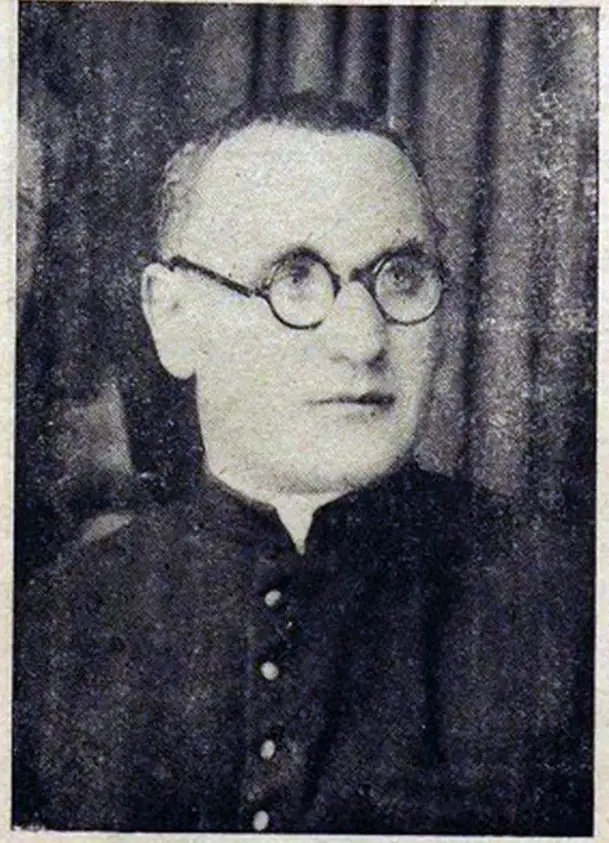
By Dom Zef Simoni
Part Two
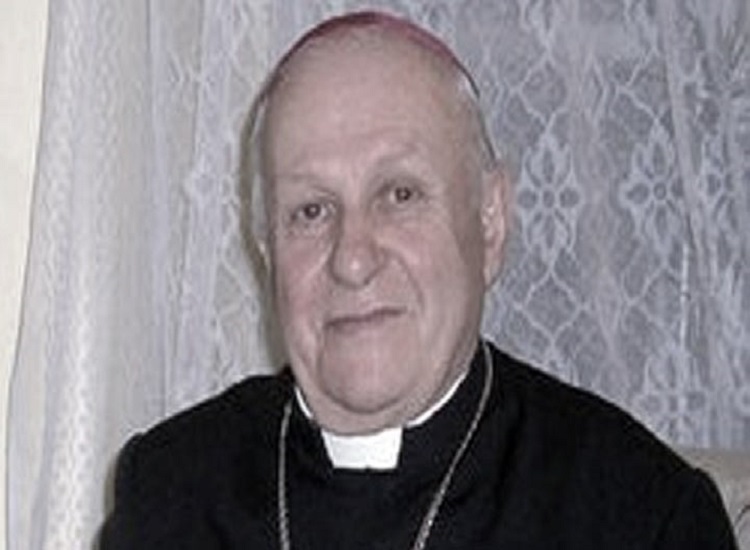
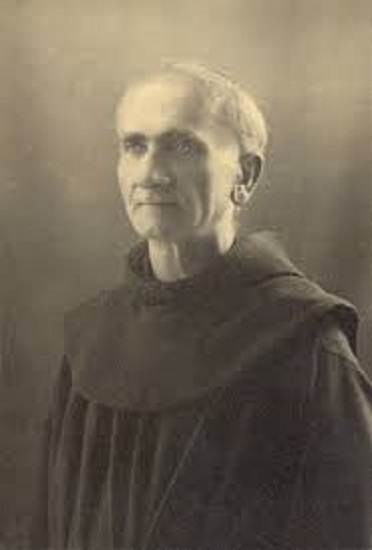
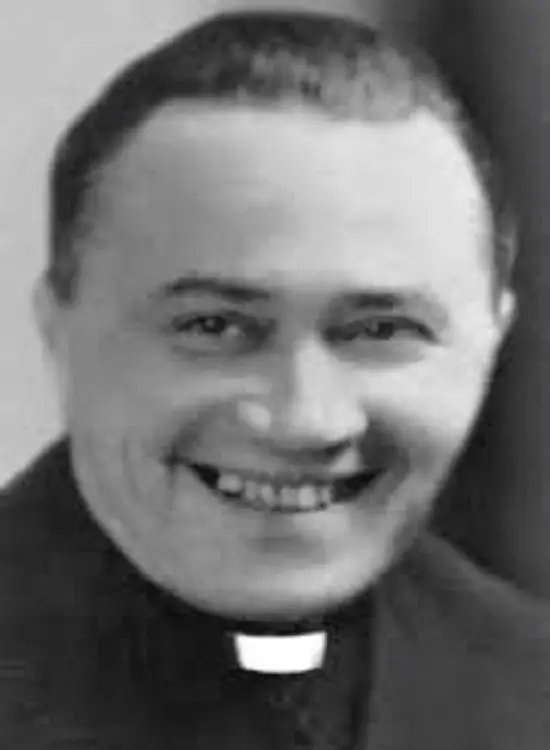
Memorie.al publishes an unknown study by Dom Zef Simoni, titled “The Persecution of the Catholic Church in Albania from 1944 to 1990,” where the Catholic cleric, originally from the city of Shkodra, who suffered for years in the prisons of Enver Hoxha’s communist regime and was consecrated as Bishop by the head of the Holy See, Pope John Paul II, on April 25, 1993, after describing a brief history of the Catholic Clergy in Albania, extensively addresses the persecution suffered by the Catholic Church under the communist regime, from 1944 to 1990. Dom Zef Simoni’s full study, starting with the communist government of Tirana’s attempts immediately after the end of the War to separate the Catholic Church from the Vatican, initially by prohibiting the Apostolic Delegate, Monsignor Leone G.B. Nigris, from returning to Albania after his visit to the Pope in the Vatican in 1945, and later with pressures and threats against Monsignor Frano Gjini, Gaspër Thaçi, and Vinçens Prenushti, who firmly opposed Enver Hoxha’s “offer” and were consequently executed by him, as well as the tragic fate of many other clerics who were arrested, tortured, and sentenced to imprisonment, such as: Dom Ndoc Nikaj, Dom Mikel Koliqi, Father Mark Harapi, Father Agustin Ashiku, Father Marjan Prela, Father1 Rrok Gurashi, Dom Jak Zekaj, Dom Nikollë Lasku, Dom Rrok Frisku, Dom Ndue Soku, Dom Vlash Muçaj, Dom Pal Gjini, Fra Zef Pllumi, Dom Zef Shtufi, Dom Prenkë Qefalija, Dom Nikoll Shelqeti, Dom Ndré Lufi, Dom Mark Bicaj, Dom Ndoc Sahatçija, Dom Ejëll Deda, Father Karlo Serreqi, Dom Tomë Laca, Dom Loro Nodaj, Dom Pashko Muzhani, etc.
The Serpent around the Tree: December 1945
The streets of the city of Shkodra had a movement that suddenly made it seem like everything was in order. A secret order amidst that first winter, of the infamous liberation. Everything maintained order, and the days passed as if expecting something. Military control began in the cities first, partisan control in every neighborhood, almost every house, to uncover hidden patriotic people, called “reactionaries” by the new communist and Slavic power. The Albanian passion for liberation worked with savage and swift speed, to block the roads and suppress everything. It started from above, to unify everything with matter, and to achieve turning the son of Adam into a serpent around the tree. This was going to be a very difficult time. Someone would extinguish the lights. Someone else would close the roads, and after a while, the entire border.
Post office, army, and clone. Everything so that someone could achieve having a collective force with weight, in this tangle. The effort was to bring out the emptied human being, who would no longer be his own, would no longer smell like a person, and this was done with a kind of revolution, minute by minute, that left you no time to eat, nor to drink, nor to sleep, nor to think, nor ever to be yourself, nor even to work! A kind of mass was emerging with negative elements, which have passed through our centuries of darkness and fanaticism, in a dangerous and crippled oriental sense, where heavy habits erupted, stemming from real injustices, to create unseen extremes of injustice. Violence carries injustice with it, and injustice is violence everywhere. Slowly the air grew heavy, and soon foul winds rushed in from all sides.
With these poisonous winds, both the government and the borders would be protected. Anyone who approaches dies from this stench. A danger greater than in Hiroshima and Nagasaki. It is difficult to survive alive in this land, spanning several thousand kilometers. Everyone has gone mad. Viewed from one angle, it is a kind of paralysis that has affected everyone. The important wicked ones have been strongly won over by the devil. They are with him. The savage class struggle began. Amidst a cleverly embellished materialism, the new era boiled with a program. These people were impressed by the injustice in the world, the hunger, the enslavement of the masses, and the exploitation of man by man. Their goal was to create the new world. Oh, when will such a thing happen? Oh, may it never happen! I continued to sell appetizers.
Horrors
(Dom Ndre Zadeja)
The nights grew heavily dark everywhere in Albania, and in the city of Shkodra, the break of dawn began, from time to time, with the bursts of machine guns that laid clergy and civilian men on the ground, behind the walls of the Catholic cemeteries, making the dawn mournful and the day filled with cries of pain. The shock that the city, the mountains, and the fields felt for Dom Ndre Zadeja, the nationalist and melodramatist of ‘Rozafa’ and ‘The Siege of Shkodra’, was strong, because as the blood of the ‘Red Robe’ dripped, the times of doom around our castles were renewed. The city was moving, faces sorrowful, on that March 25, 1945. Grief permeated the streets and alleys, the houses, and many Catholic hearts. It was Sunday. Holy Week was beginning. The mysteries of suffering increased. And the sufferings of the mysteries. Dom Ndreu was the second priest to be executed, after Dom Lazër Shantoja, who was massacred alive, his arms and legs torn to shreds.
Towards the end of December of that year, Father Giovanni Fausti and Father Daniel Dajani were arrested, along with the seminarian Mark Çuni. And, at the beginning of February, during class, Father Gjon Shllaku was handcuffed. The classrooms were blackened, the faces too. We students lived the terror heavily. In the unsullied rooms, the Cross of Christ recalled salvation. Thirty-something days were enough to see a gloomy day at the beginning of March, March 4, 1946, the broken skulls and muddy bodies behind the cemetery walls, of the two exemplary Jesuits, Fausti, Dajani, Father Gjon Shllaku, the seminarian Mark Çuni, and other Catholic civilians, 11 in total. They all uttered the holiest words before the execution, under the direction of the priests: “Long Live Christ the King,” “We forgive our enemies,” words found in their files, in the State Security archives.
For the friar with the rope, Father Gjon, more than two years may have passed, where the day felt bothersome and dark to me. And a heavy memory remained, when I saw him for the last time, as he exited the courtroom, amidst the piercing shouts of organized groups with the words: “A bullet to the forehead of the criminals,” as those sharp eyes with paternal depth gazed at me. That day, real gloom fell upon the school: the trigonometry class was mixed with the tears of Father Mëhill, who could barely contain himself. “Excuse me,” he told us, “can I continue?” And Father Mëhill’s tears were accompanied by all of our tears. An hour of endless pain, throughout the whole city. Laments for the priests and the people who were violently buried. It had been decided and planned to eliminate the good minds. The city and Albania began to be afflicted by true alarm and death.
This pain resembled the death of parents, brothers and sisters, loved ones, spiritual people who had shared joys and sorrows, in a suffering nation, a history of suffering.
Other events followed these pains, with arrests, torture, and slanders: “Weapons were found in the Franciscan church of Gjuhadol, near the altar of Saint Anthony.” The Provincial Father Mati Prennushi, the Guardian Father Çiperian Nika, and the Franciscans: Father Donat Kurti, Father Aleks Baqli, Father Pal Doda, and Fra Zef Pllumi were arrested. The first two, after unspeakable tortures, were executed. When the State Security operative, Pjerin Kçira, who had participated in their torture, was arrested two years later, sentenced to seven years in prison as a Yugoslav agent, he, angered and later remorseful, protested in court, saying: “What haven’t I done for you, I even planted the weapons in the church!”
Postriba: Monsignor Nikollë Deda, Bishop Frano Gjini, Bishop Gjergj Volaj
Another heavy blow came: The failure of the Postriba Movement. Oh, so many arrests?! Oh, so many executions throughout Albania?! Including that of the prelates! Without ever having any connection to this Movement, after severe tortures, the Deputy Apostolic Delegate, Bishop Frano Gjini, and the Bishop of the Diocese of Sapë, Monsignor Gjergj Volaj, perished in Tenzonë from bullets. Also with them, Monsignor Nikollë Deda. The prisons were filled with prisoners, and the churches and parishes were left without priests.
The city of Shkodra, which had nearly fifty priests, was left with Father Justin Rrota, paralyzed for years in a row, with Father Zef Saraçi, a Jesuit blind in both eyes, with Father Pjetër Tuci, a Jesuit, with several diseases. Serving at the Cathedral Church were Dom Ernest Çoba, Deputy Parish Priest of Shkodra, and Father Florian Berisha, and at the Franciscan Church, Father Marjan Prela and Father Ferdinand Pali – all of these ardent priests and zealous workers, fulfilling the great needs of the many faithful who attended the now simplified functions, with little chanting and flowers and no music, which the Church considers its art.
The days of the first executions were followed in the near future by other days, when we were expelled from school and thrown out. The educational reform of the communist state in 1946 closed all so-called private schools, and dispersed us, so that we would no longer see the schools of Mjeda and Fishta, whose lyres they broke and covered with mud. The lessons of patriots about the beauties of Parnassus, classical civilization, and the purity and finesse of the Western culture of this nation, barely out of the cradle and rocked by river nymphs, ceased. Convents and religious societies such as: “Catholic Action,” “Antoniana Society,” “Don Bosco” circle was closed, being called political organizations.
The printing presses of the Jesuits and Franciscans were seized, while various magazines, such as “Kumbona e së diellës” (The Sunday Bell), were completely banned in December 1944. My years, moving away from childhood, were steeped in a youth full of pain and holy hatred, because I saw a sky without light, a land with blood, a world with cruel and fratricidal wars, and this happened within the house brought by the one who called himself its master: “Enver of the Gospel.” How many times did I recall the words of Father Zefi, who had said in a short sermon, one day in May, that; “they kill, plunder, violate, kill priests and people of all sorts,” urging prayer not to fall into the days of great trials, which are strongly mixed with punishments and bad consequences.
At the State Lyceum (March, 1946)
In the days of March, we, the students of the Franciscan and Jesuit schools, went broken to the State Lyceum, which bore the name “Father Gjergj Fishta.” I was in the seventh grade. Within a few days, that long sign with the name of the national poet was savagely removed from the front of the school. This was done by the youths of the Communist Youth of the school, mostly boarders, who used violence against idealist and nationalist classmates, sworn enemies against the evil and the blood-drinking regime. And the work reached beatings, bloodshed, and arrests. That sign was disconnected from one link, and for more than two days they left it hanging like meat on a hook, until it was removed. A little later, after that year, handcuffs would be placed on anyone who spoke well of the unique “chauvinist” in the world, the anti-Slavic “cannibal.”
Students coming from the Clergy schools were under political surveillance. There was also a directive not to treat them badly. I found myself in that school where I was some years ago, but not in that class. I glanced at it too, holding my memories. But now I felt strong. The professors were almost all good: they all shone. The Mathematics professor, Petraq Fundo, shone. They knew me because they had seen me selling appetizers. I sold appetizers and studied well. I lived by my binomium: “Learning and work”: work for a bite. The literature class, taught with great culture by Professor Filip Ndocaj, was beautiful. He spent several good hours on Father Fishta. It was the last year to speak well of him. During school life, the compositions given by the teachers and professors attracted me little. A theme about the seasons of the year, about sports, about plantings, a theme about a walk, I developed without being distinguished.
I liked Father Gjon’s Philosophy class. His topics, although potentially simple to develop, attracted me because they slowly introduced me to the world of thoughts. Now in the State Lyceum, I developed them well. One day they were made an example in class. Although two hours were not enough for me to develop them and they remained unfinished, the professor did not reprimand me. This would later become a characteristic of mine, for what I would write. A very short paper might take me a week. The Philosophy class of Father Gjon now took the place of the Literature class for me, in a way. Now philosophy was no longer taught, but Marxism, a dead class, given without any taste, by the director with materialist lust, Dhori Samsuri. These were the justifications for dialectical materialism, which transitioned into historical materialism, with the struggle of the masses and the proletariat against the bourgeoisie.
We were not used to it; we listened to such things with which you did not enter the elevated world of the mind, but of the atom and the cell. If one considers that everything is only substance, only matter, then it turns out that life would have no perspective [1]. Only a few goals. Then it is better to be a stone, a piece of iron, a plant, perhaps even an animal. But never a human. How is it possible that nature has given the highest being suffering without perspective and permanent injustice?! Reality has brought out its own contradiction. Absurdity. No absurdity then greater than now, to be and soon not to be. Long live the animal! Long live the victory of the crumbs! Long live the cell that gives us thought, conscience, self-awareness, morality, class morality, bloodshed morality.
With these thoughts, on a beautiful May afternoon, I headed towards the parish cell. They had closed the Jesuit Convent. They had sent the Italian Jesuits across the Adriatic, to their homeland. The Albanian Jesuits had been dispersed and arrested. The distinguished professor of philosophy and theology, Father Mark Harapi, was in the cell. I asked to spend some time with him. And this Father immediately came down from his room to the waiting room where I was. I spoke little. I had no doubts, but I wanted to strengthen myself. And this hour with this distinguished Father was very dear to me. The Father spoke clearly and simply.
The Death of Archbishop Gaspër Thaçi!
Time grew heavier and heavier. Every day became more difficult. More arrests, more executions. Grave news was given at school that May afternoon. “Singers who have been in the church choir, leave class, you have rehearsal. The Archbishop of Shkodra, Monsignor Gaspër Thaçi, has died.” We rehearsed at the Cathedral Church, under the direction of Prenkë Jakova. Father Filipi played the harmonium. A deep sorrow among us and gloom. It was grief for the death of the Monsignor and memories, because after a few days we gathered again, and this would be the last time, to sing a Requiem Mass and Perosi’s “Libera me Domine.”
We were studying Latin, although only a few months separated us from leaving, we might recall the words; “O tempora, o mores”! Every pain was new. On the day of the burial, they did not want to let us Catholic students of the Lyceum participate in the funeral. But with the exception of a few who did not go, we all found ourselves at the ceremony that was taking place through the city. The youth carried the Monsignor’s body, but, towards the end, near the Cathedral Church, a large car had blocked the road, supposedly broken down. Efforts were made by the youth to clear it.
The solemn Mass was said by Monsignor Frano Gjini, Deputy Apostolic Delegate, and the sermon by Monsignor Gjergj Volaj. This event also closed, and Shkodra felt the strong grief of the flock without a shepherd. Everywhere, in Shkodra and Albania, there was a bad, frightening movement. The people were scared. Conversations between people gave the impression of dangerous days. The reaction was great, but people were confused. There were many opinions. Gjakova, who stayed on the surface of the time, like a barrel on water, like a barrel of raki (brandy), when he heard such conversations taking place, used to say: “You don’t know what the power of the poor is.”
People were very careful not to speak, because the new state had begun its work.
Many people had affirmed that our backward world needed to be changed. King Zog had been a somewhat modern feudal lord. Italy was a very modern occupation. Suffering and restless Albania was filled with contradictory mentalities. Where to start the work? From above or from below?! From the left or from the right? From inside or from outside? Which great idea would be equal to a reality that would give us the true bread, because the table needs bread? Oh, this permanent Albanian bread! Work always difficult and dangerous! The beautiful idea of everyone having something enters with ideals. But since regulation is an act of sincerity and nobility, if it is dangerous to speak great words, lies and theft take the main place.
It is interesting that the communists won because they are hardworking, they do work. They deal with the so-called mass, they penetrate everywhere, no one escapes them, because in their own way they gave importance to the poorly dressed man, the hut, because they dealt with people the world had forgotten, to bring them closer. Revolutions are made with the forgotten. Before a rich man, an official, before an arrogant man, the simple person, the ragged one, the person from the hut, had no importance. In front of such a youth, they said with contempt: “Who is this?” And with wisdom and promises, communism sought to win them over. No one works with the most minor individual more than communism. Are not the words of Christ proven, that; “The children of darkness are wiser than the children of light?” But I continued to sell appetizers.
Education
(March, 1946)
A few months after I entered the graduating class, an order was issued that within a week, all taverns would be closed. Everything was done with strict orders. There would be a little drink and appetizers from the state, at the ‘Grand Cafe’ and ‘Adriatik’. In a few days, we were unable to bring bread home. I experienced fatigue and spiritual decline. Sadness, even going to school. I couldn’t go, due to this difficult condition. I asked to start working. The director of the Lyceum, Nesti Havari, a highly educated Marxist from Korça, treated me well. He didn’t want me to leave. “You only have a few months left,” he told me. “We’ll put you in the dormitory. We will also arrange a scholarship for you to continue your studies wherever you wish, in the Soviet Union, Poland, and Hungary. This is a government that has fought to uplift the poor, you, you.”
When he told me these words that was exactly what I didn’t want. I refused to become a boarder with those students who used violence against my good friends. I certainly didn’t want to attend school in socialist countries, especially in the Soviet Union, the center of global violence! Ideals were truly being revealed within me. The director, seeing my insistence, tasked the chemistry and physics professor, Injac Ndoja, with finding a job for me. The professor asked me if I wanted to work at a bank. I wasn’t keen on it. “Do you want to enter education?” the professor asked me. “Good,” was my reply? I liked school life. The professor himself came with me to the Executive Committee.
The Secretary of the City Committee, Fadil Hoxha, an uneducated but sharp man, who held his head crooked and answered for everything on his feet, told the professor with his typical class fury of 1947, and whom I would later teach: “Take him with you right now. Let him be a Professor at the Lyceum. He has worked to earn his bread. He is poor. He does good work. He is one of ours.” And the things he said about me. He was ready to make me a minister. I told myself: “Where have I entered here?” This happened before two o’clock, one of those rainy February days, which sometimes stopped and sometimes poured down heavily. Everything felt like a squall. But nearby were the strong lightning and thunder. The room thundered from his tone as well. Memorie.al