
Memorie.al / One of the most debated issues in these decades of post-communism has been the date of the liberation of Albania from the German Nazi occupiers. Endless discussions around this topic have occupied not only specific segments of the sphere of historiography, but also the political and media scene. Indeed, this is one of the “par excellence” cases where contemporary Albanian politics has tried and continues to try to use history for the benefit of self-interest, to strengthen its influence and position in various layers of society.
In fact, whenever the November holidays arrive, there is more discussion about the date of liberation than about the important historical events commemorated that month. This debate, both historiographical and political, best demonstrates how difficult it is to reach accurate and consistent conclusions when parties strive to create different, even contradictory, perceptions and opinions regarding historical phenomena and events, as well as the motives and actions of their protagonists, based on interpretations, assumptions, concepts, and prejudices often far from the historical reality of the time.
Seeing the confusion and misunderstandings that this issue has caused and continues to cause in public opinion, and observing occasional methodological errors, such as the forced attempts to prove the truth of a liberation date by linking it to the time the last soldier left Shkodra, we decided to approach this topic by preferring to examine the authentic documents of the decision-makers of that time who set the date of liberation. Only in this way can the true motives that drove the main leaders of the new communist power to establish a specific date to commemorate and celebrate the liberation of Albania from foreign occupiers be better clarified, in our perspective.
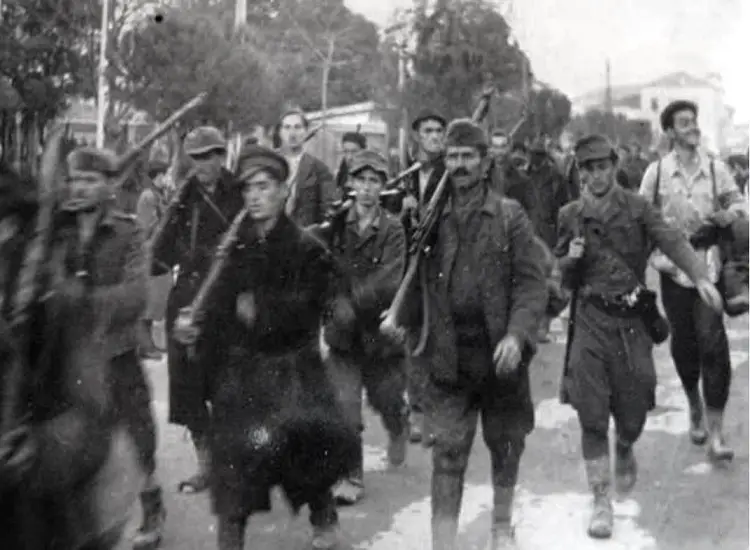
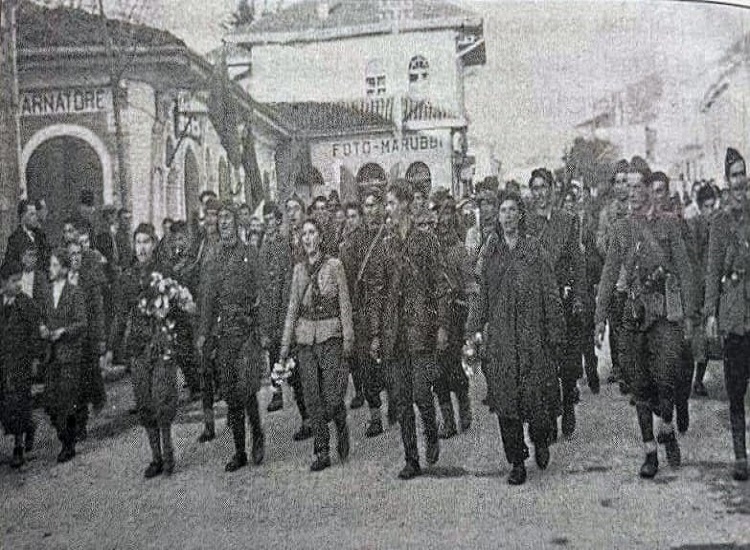
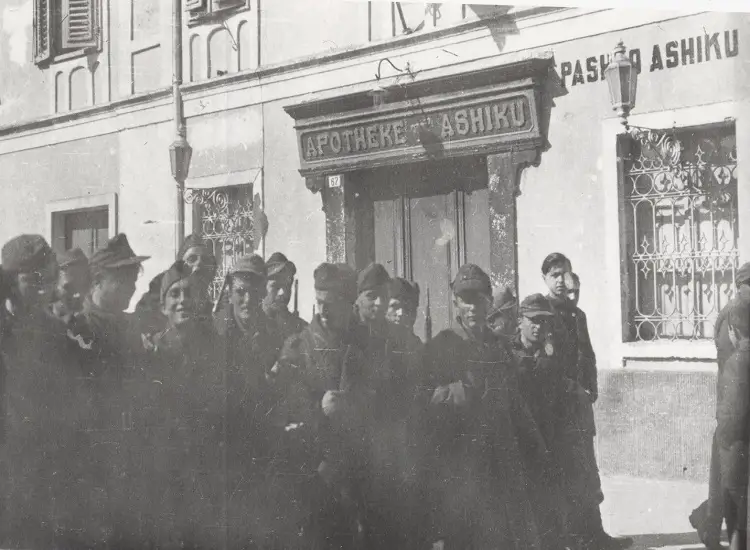
On November 28, 1944, Enver Hoxha, accompanied by almost the entire communist leadership, entered Tirana triumphantly as the Prime Minister of the Government of Albania (elected at the Berat meeting, where he also gave the liberation speech on a tribune set up in front of “Dajti” Hotel). Solemnly, the communist leader would declare: “On a marked day like this, in 1912, after so much time in slavery, independent Albania was born.
When our country was threatened from all four sides by foreign enemies, when new chains of slavery were being forged for our people, the elder Ismail Qemali, with a handful of brave patriots, raised the flag of freedom high in Vlora, and the Albanian people breathed… Flag Day became a doubly sacred day, the day of liberation (our emphasis – V. D.) and the unification of the Albanian people.”
(This passage is extracted from the Bulletin of the National Liberation War published on November 30, 1944).
From Enver Hoxha’s original speech, and not the one later altered, it is clear that the communist leader had waited for Albania’s Independence Day, November 28, to deliver the speech on the country’s liberation from the Nazi-Fascists. Even if we look at the front page of the Bulletin of the National Liberation War, November 30, 1944, which published all the festive activities of November 28, 1944, a poster was placed on its front page where the photograph of Enver Hoxha as Prime Minister of Albania stood next to the photograph of Ismail Qemali, and above their heads was placed a large red and black flag. The message of the poster was clear: November 28 is doubly sacred, the day of independence and the liberation of the country.
After these three-day celebrations dedicated to the country’s liberation, for more than 11 months, November 28 as the day of Albania’s liberation was never questioned in the highest Albanian state body of the time, the Presidency of the Anti-Fascist National Liberation Council. We believe this was a refined political tactic by the head of the Albanian communists. Given its special significance in the national history of Albanians, in the early moments, November 28 was beneficial for the communist leadership to gain support and sympathy among the people as liberators and as successors of Ismail Qemali’s great work.
However, further on, sheltering the day of liberation within November 28 would not adequately highlight either the War, which was the only political capital with which the communists came to power, or the figure of the Albanian communist leader, who risked being overshadowed by the figure of the architect of Albanian independence. Therefore, after a temporary calm, maneuvers began to find a specific date for liberation. The first signals in this direction were given by the meeting of the Presidency of the Anti-Fascist National Liberation Council on November 5, 1945. At this meeting, attended by all members of this forum, including Enver Hoxha, a draft law concerning the amnesty and pardon of all persons who had committed ordinary offenses up to the day of liberation would be discussed, among other things.
The aforementioned draft law was drafted by Manol Konomi, a member of the Presidency of the Anti-Fascist National Liberation Council and a lawyer by profession. In the first provision of this law, he had set November 17 as the day of Albania’s liberation, a day that would close the time of amnesty for people who had committed ordinary offenses during the war. He explained at the meeting that he had set November 17 as the day of Albania’s liberation because Tirana had been liberated on this date, and according to him, the liberation of the capital in all countries marks the liberation of the country as a whole.
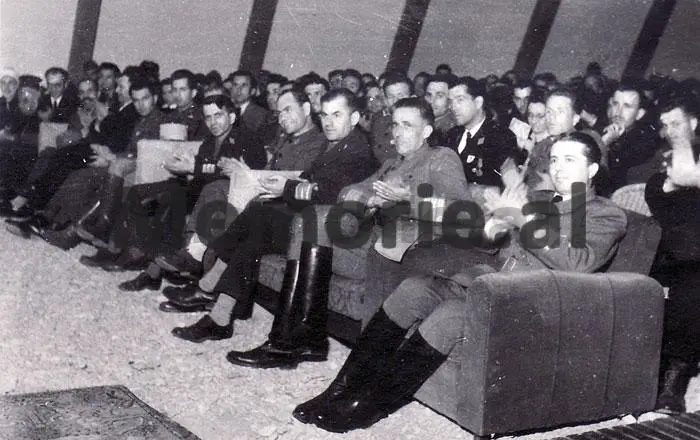
However, this proposal did not find the support of the other participants. Qirjako Harito, a member of the Presidency of the Anti-Fascist National Liberation Council, and after him Tuk Jakova, an old communist from Shkodra and commissioner of the First Assault Brigade, proposed that November 28, 1944, be considered the day of Albania’s liberation, serving the amnesty law. According to Tuk Jakova, when the occupier left Shkodra (November 28), there was no foreign army left in any other part of Albania.
This truth, spoken by one of the most prominent representatives of Shkodra in the Presidency of the Anti-Fascist National Liberation Council, is accepted by everyone, as stated in the minutes of the meeting. On November 5, 1945, the entire communist leadership gathered in the Presidency of the Anti-Fascist Council, including Enver Hoxha, accepted the truth put forth by Qirjako Harito and Tuk Jakova regarding November 28 as the day of the liberation of Shkodra and simultaneously the liberation of Albania. This spirit of discussion at the meeting was also reflected in the amnesty law, which was approved on the same date with a unanimous vote.
Article number 1 of the law states: All ordinary offenses committed even on November 28, 1944, are granted amnesty…! This date is underlined in the original document without being specified as the day of liberation, but implied by the discussions of the members of the Presidency of the Anti-Fascist National Liberation Council, that the liberation of Shkodra would be considered the final day for the amnesty, as the liberation of all Albania.
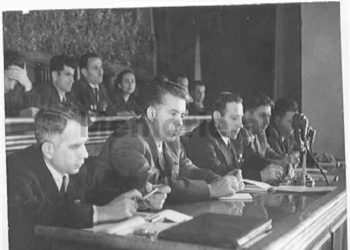
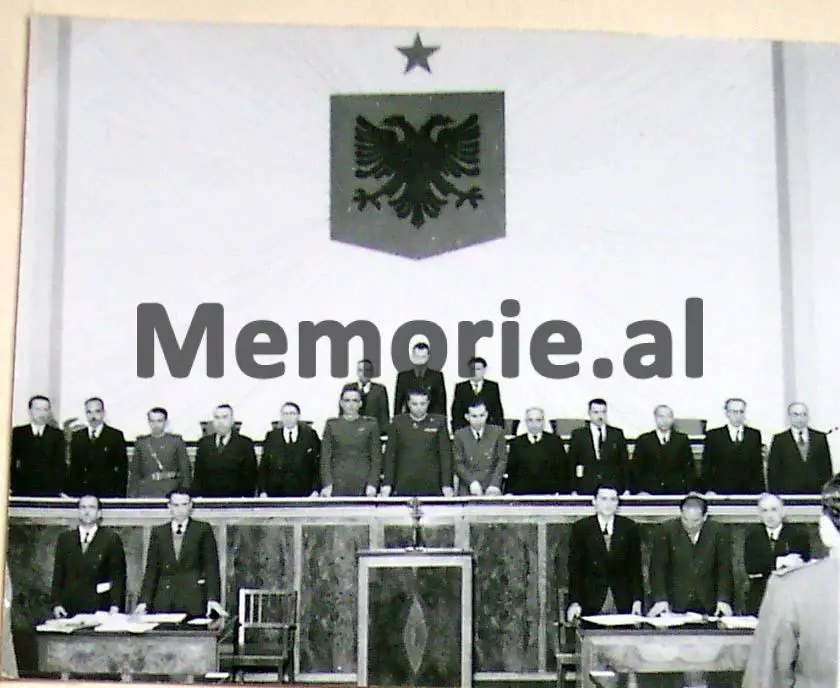
On November 9, 1945, the Presidency of the Anti-Fascist National Liberation Council would meet again, for the first time to discuss the day of Albania’s liberation as a national holiday, within the framework of the draft law on official holidays.
I want to emphasize the fact that in the draft law on official holidays, which was presented to the members of the Presidency of the Anti-Fascist National Liberation Council, the day of Albania’s liberation was intentionally not marked as an official holiday, but only November 28 – Albania’s Independence Day, May 9 – the day of victory against fascism, May 24 – the day of the Përmet Congress, July 10 – Army Day, and September 16 – the day of the Peza Conference. The absence of the liberation holiday in this draft law shows that not only Manol Konomi, as its drafter and rapporteur, but also the other members of the Presidency of the Anti-Fascist National Liberation Council, and even Enver Hoxha himself, were still in doubt about the day that would be officially considered by them as the national liberation holiday of Albania.
The first person to speak and propose the inclusion of the date of Albania’s liberation in the draft law was Bedri Spahiu, a communist from Gjirokastra, who proposed that since November 28 had coincided with the liberation of Albania, i.e., with the liberation of Shkodra, the name of the November 28 holiday should be: Independence and Liberation Day of Albania.
In fact, Bedri Spahiu’s proposal was consistent with the logic of the events in Albania from November 28, 1944 – that is, the triumphant entry of Enver Hoxha and the new government of Albania into Tirana – but also with the spirit of the discussions about the amnesty law four days earlier, where November 28 was accepted by everyone as the day of the liberation of Shkodra and all of Albania.
However, Bedri Spahiu’s proposal did not find widespread support. When the latter asked for his proposal to be voted on, it was actually supported by only 5 members of the Presidency of the Anti-Fascist National Liberation Council. The names of the Presidency members who supported Bedri Spahiu are not given in the minutes of the meeting.
Following Bedri Spahiu’s proposal, the meeting of the Presidency of the Anti-Fascist National Liberation Council surprisingly continued with proposals only for religious holidays, such as Novruz, which was included in the draft law, and Saint George’s Day, which was not accepted, and no one sought to address the day of Albania’s liberation as an official holiday until a 5-minute break was taken, which the minutes of the meeting do not state why it was taken or who requested it. After this break, the entire meeting focused on the day of Albania’s liberation, the setting of which was accompanied by many discussions.
The first to speak after the break was Ramadan Çitaku, who, as if to fault all the participants demanded that the day of liberation, which, to his surprise, was missing, be included in the draft law as an official holiday. We are convinced that Çitaku, in this case, was also acting as Enver Hoxha’s spokesperson. Among other things, he said:
“It has been forgotten to include the Day of the Liberation of Albania. The Day of the Peza Conference, where the National Liberation War took shape, has been included; the Day of the Përmet Congress, where the war took on a broader form, has been included, and it was right that these days should be included and celebrated, but, as I said, the day of liberation, the day of the end of the great war fought by the Albanian people, has been forgotten. The people must remember this day and celebrate it from generation to generation; it must remain as a historical day.
The day of November 28, 1912, is right to be celebrated, but this one of the Second War, of the Great War, must also be added. It is only a matter of the date. As far as I know, after midnight on November 28, 1944, the enemy had disappeared from all of Albania, meaning November 29 dawned with Albania liberated. Therefore, I propose that November 29 be added to the national holiday days. We have included the day of the end of the world war, and not to include the day of Albania’s liberation would seem like a mistake.”
Çitaku’s intervention would change the course of discussions at the meeting of the Presidency of the Anti-Fascist National Liberation Council. What stands out is the fact that all the speakers who took the floor at the meeting after Ramadan Çitaku accepted November 29 as the liberation holiday; however, none of them associated that date with the liberation of Shkodra. This forced Ramadan Çitaku to take the floor several times during the meeting, insisting on convincing the participants to accept the alibi of Shkodra’s liberation as true, to justify November 29 as a national liberation holiday.
The other speakers who took the floor did not bring facts about when Shkodra or Albania had been liberated but insisted on the idea of having a liberation date for Albania, different from May 9, because, according to them, Yugoslavia also had its own liberation date, which was the liberation of Belgrade, October 20, and Bulgaria also had its liberation day, despite the fact that the Bulgarians had not fought as much as the Albanians. Enver Hoxha did not speak at the meeting, but to better understand the setting of November 29 as the liberation holiday, it is necessary to mention the words of Tuk Jakova at the meeting, the ideator of setting November 28 as the day of the liberation of Shkodra and all of Albania in the first provision of the amnesty law.
He never mentioned November 29 as the day of Shkodra’s liberation but insisted on accepting this date as a national holiday, listing the main reasons: “…November 29 is a distinguished historical date and will play an important role in the consciousness of the Albanian people. On this day, speeches will be held and the great sacrifices made by the people will be remembered; everyone is connected to this date—one who gave a son, another father, a brother, etc. The date of November 28, 1912, is another stage; after five hundred years of slavery, self-government was won, and it is right to celebrate it. But November 29 must also be celebrated, because great sacrifices and work were also done for this. This is supported,” – state the minutes of the meeting.
Omer Nishani, the leader of the meeting and simultaneously the chairman of the Presidency of the Anti-Fascist National Liberation Council, supporting November 29 as a national holiday, asked for a vote, and after the proposal was supported by a majority of votes, November 29 as a national holiday for the country’s liberation, took its place in Article 2 of the Law on National Holidays approved on November 9, 1945.
In these 75 years, Albanian politics has voted for this date three times. For the first time, the Presidency of the Anti-Fascist National Liberation Council voted in its meeting on November 9, 1945, where the winners of the war set November 29 as the national liberation holiday, with the argument that Shkodra and all of Albania were liberated on this date; the second time, the Assembly of the Republic of Albania voted in its plenary session on November 22, 1993, setting the liberation holiday on November 28 based on the same historical argument, the liberation of Shkodra; and again, the Assembly of the Republic of Albania, based on the same historical argument, the liberation of Shkodra, voted in the plenary session on November 30, 1997, to set November 29 once again as the date of the holiday for the liberation of Albania.
Likewise, the propaganda apparatus of the Party of Labor of Albania, so as not to compromise the new liberation date, modified the text of the speech of November 28, 1944, 14 years later, in the second volume of Enver Hoxha’s works, published in 1968. Despite the fact that in the II volume, the republication of the speech refers to the Bulletin of the National Liberation War, the phrase the day of liberation found in the Bulletin has been replaced with the phrase; the day of independence.
In conclusion of this article, I wish to emphasize that unlike our discussions today about the departure of the last soldier from Shkodra, the decision-making protagonists in the Presidency of the Anti-Fascist National Liberation Council, the victors of the war against fascism and Nazism, did not need any document for this. Enver Hoxha, after 11 months, sought a holiday for himself and the war; the fable of the November 30 poster in the National Liberation War Bulletin, where Independence Day and Liberation Day were celebrated on the same day, had now been overthrown. That is why we have interventions and changes even in his November 28 speech republished in 1958.
After November 9, 1945, only the photograph of Ismail Qemali would remain on the November 28 poster. Finding a well-thought-out historical alibi by Enver Hoxha, his photograph would be pompous and large on the November 29 poster, adjacent but separate from the elder of Vlora, not allowing in any case the father of independence to overshadow the communist leader. But regardless of the political motives and the manner of setting the liberation date, we believe that the Albanians who fell for the homeland deserved that commemorative date. Subsequent attempts to change it again proved useless, even harmful to the cohesion of Albanian society. / Memorie.al