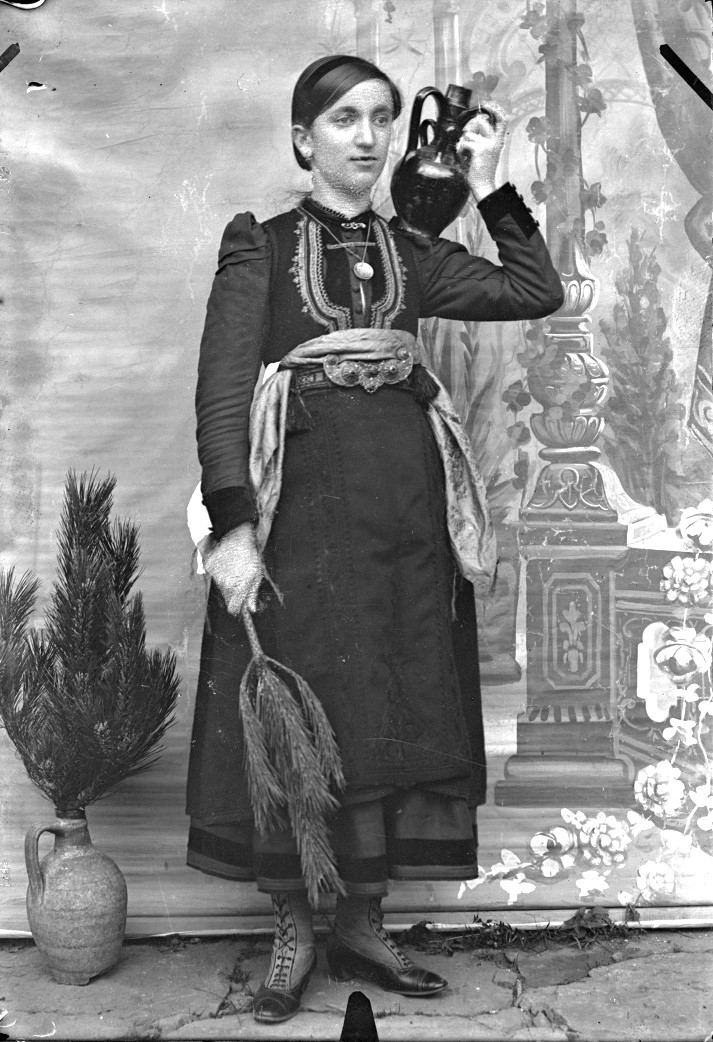
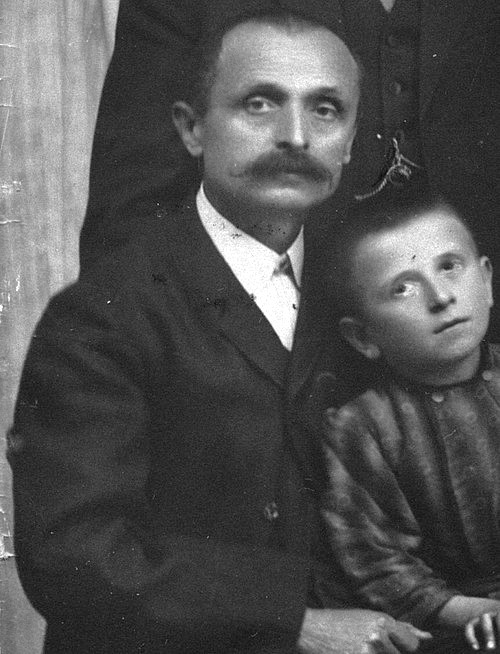
Memorie.al /They captured the first Albanian photographic images, the figures of independence, the heroes while they were alive, and forgotten rites – but their names are barely known. They laid the foundation stones of the art of photography but also suffered sad fates.
- Kristo Sulidhi (1858 – 1938)
- Perikli Kaçauni (1870 – 1940)
- Dhimitër Vangjeli (1872 – 1957)
- Vani Burda (1875 – 1949)
- Kristaq Sotiri (1883 – 1970)
- Petro Dhimitri (1886 – 1953)
- Thimi Raci (1886 – 1966)
- Mandi Adham Koçi (MAK) (1912 – 1988).
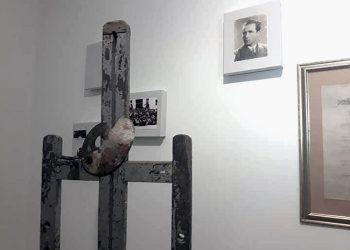
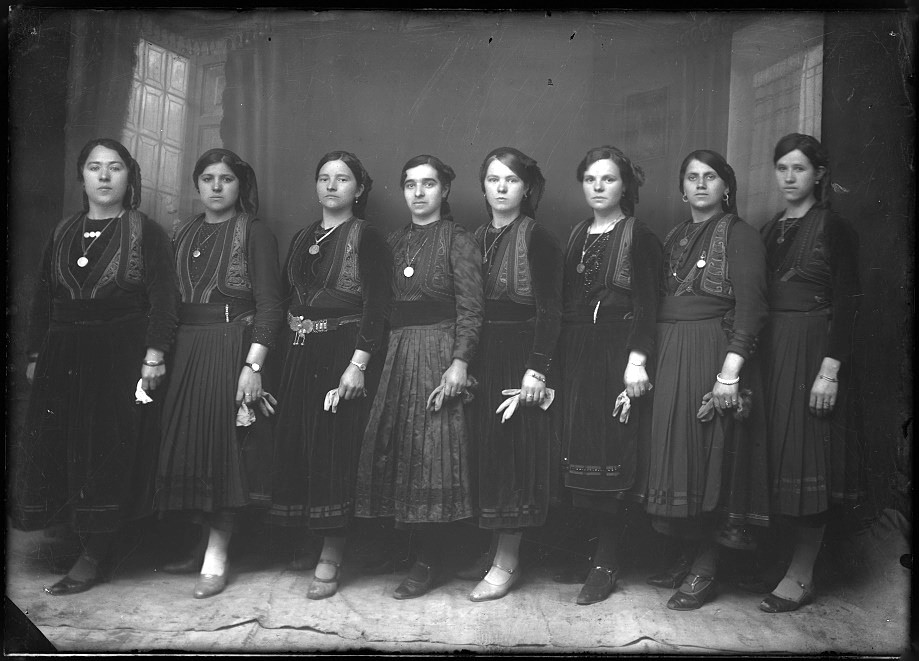
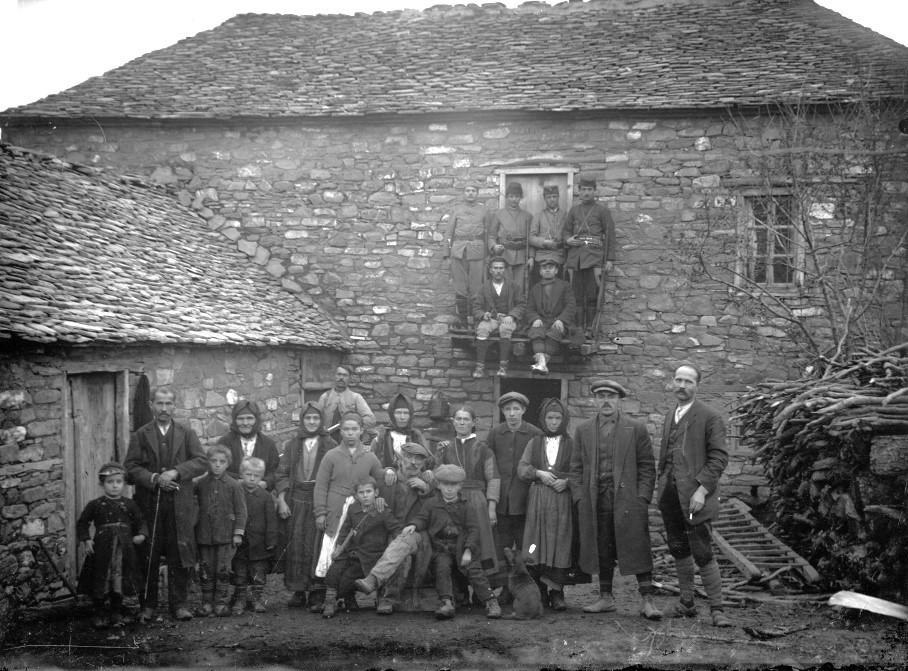
A unique exhibition brings together the creativity of the first eight Albanian photographers in images that convey moments from the political and social life of southeastern Albania.
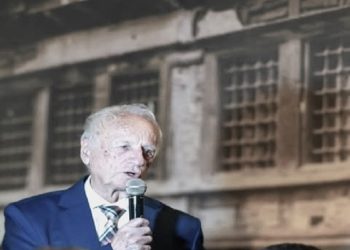
It was the “Marubi” National Museum of Photography that brought together the ‘forgotten names’ in an exhibition curated by Gjergj Spathari, organized in cooperation with the Municipality of Korçë, the Municipality of Kolonjë, the National Center for Inventorying Cultural Assets, and the General Directorate of Archives. In connection with these, we present below excerpts from the biographies of the eight photographers whose images were displayed in that exhibition.
Kristo Sulidhi
He was a photographer and writer of the 19th and early 20th centuries. He was born in the village of Marjan in the Opar region (Maliq in Korçë). He immigrated to Greece where he wrote in Anastas Kullurioti’s “Java” (The Week), “Zëri i Shqipërisë” (The Voice of Albania).
He returned to Albania and worked in Korçë as a photographer. One of his most important photos is the one documenting the first Albanian school, opened in 1887.
Shuli is also known for photographing many people involved in the Rilindja (National Renaissance) movement, such as the well-known freedom fighters Shahin Matraku and Kajo Babjeni, thus becoming one of the movement’s propagandists.
In 1892, Shuli went to Shkodër to meet with Kel Marubi and Kolë Idromeno, with whom he shared his experience. Shuli was the brother-in-law of the well-known Albanian photographer Kristaq Sotiri, who was Shuli’s former student. Kristo Shuli was posthumously decorated by the Albanian government for his patriotic activities.
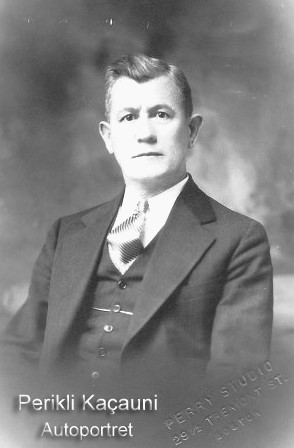
Perikli Kacauni
Pero (full name, Perikli) Kaçauni, was born in the village of Dardhë, Korçë, in 1880. In the city of Odesa (Russia), Pero learned photography, naturally starting work as an apprentice in the shop (photographic studio) of some Russian.
When he thought he knew photography and could work independently, at the turn of the 19th and 20th centuries, he returned to his birthplace (Dardhë), where he began to practice his new, somewhat unique craft to earn a living.
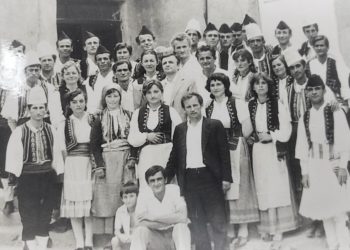
He also photographed special events in the village with a religious, social, and cultural character such as picnics and theater performances, the Holy Water (January 6), weddings, funerals, births, commissioned shots, and even unrequested ones of the people in his photos.
Pero photographed in the village until 1910 when he left for the USA. Pero Kaçauni passed away in Boston in 1949, where he had also opened his studio.
Dhimitër Kristo Vangjeli
He was an Albanian photographer from the village of Prodan in the Kolonjë district. Thanks to his passion for photography, within a short time he transformed his shop into a photographic laboratory, though not a studio, which, according to his heirs, originated at the beginning of the 1900s.
With the passion and vision of a photographer and as a man who loved the work and profession he had chosen, Vangjeli, with his camera in hand, traveled through all the villages of Kolonjë, becoming a well-known and beloved person to his contemporaries.
As a traveling photographer, he is among the few whose photography centers on the life of almost all the villages, covering all cycles of life, from birth, baptism, marriage, even to funeral ceremonies. His photos are an accurate reflection of the condition of Kolonjë in the first half of the 20th century.
Kristaq Sotiri
As early as 1922, he worked as a photographer and excelled in portraiture. He worked all his life in Korçë. Within the lens of his camera have passed the images of many people from the city of Korçë and the surrounding areas, famous and “ranked,” but also unknown people, beggars and vagrants, and often many grooms and new brides on their wedding day.
He was a student of Sulidhi, who immigrated to the USA in 1923 and worked as a photographer in New York and Los Angeles. In the same year, 1923, he returned to his hometown Korçë and opened the Sotiri studio with the painter Vangjush Mio.
Vani Burda
At a young age, Burda went to Romania, Bucharest, Egypt, and for a short time to Istanbul. In Romania, he opened his own photographic studio, being very active in the Albanian colony there. With the group of delegates from the colony, he went to Vlorë, on the occasion of the Proclamation of National Independence.
On the journey to Vlorë, Burda captured a moment of this historic trip, where the delegates are resting with weapons in hand under an olive grove and in the background is the flag with the double-headed eagle.
In 1920, he returned to Korçë, where he opened his own photographic studio. This photographer’s collection is scattered throughout the General Directorate of Archives and in private collections.
Vani Burda, the author of the photo of Ismail Qemali, printed on the 500 Lek banknotes we use today, undoubtedly has a great merit in preserving the image of the most distinguished figure of Albania’s independence. He died in economic misery, selling cigarettes in a kiosk in the city center.
Petro Dhimitri
He was born in 1886 in the city of Korçë. Known as “Petro the photographer” or “Petro the Albanian,” with a rifle and a camera in hand, he traveled throughout the south of Albania and even developed his patriotic activity in the north of the country.
Petro Dhimitri was trained as a photographer in Istanbul. He worked there in a photographic studio. The development of photography in Turkey was focused on documentary photography, and this influenced Dhimitri’s training.
Dhimitri photographed important activities in Albanian social life. He also photographed the French authorities of the autonomous government of Korçë, which is the only photo of them. He photographed Abdyl Frashëri and Prince Vid. Petro Dhimitri brought us the only image of the most important historical moment, the celebration of the 1st anniversary of Independence.
Thimi Raci
Born in 1886, he was an Albanian photographer who worked mainly in the ’20s and ’30s in the village of Dardhë near Korçë. At the age of 15, he immigrated to Romania for work, like many Albanians from those areas. After returning to Albania, he worked as a tinsmith in Korçë before returning to the village.
He learned the craft of photography from Pero Kaçauni, who immigrated to America in 1910 and left all his photographic equipment to Thimi. A year later, in the village of Dardhë, he had a shop with the sign “Thimi Ratsi – tinsmith and photographer.”
MAK (Mandi Adham Koçi)
One of those who lived under three regimes and were imprisoned by all three.
He was born in Voskopojë, Korçë, on January 12, 1912. He studied at the Korçë Lyceum in the early 1930s. In 1933, he went to Greece, where he learned the craft of photography. In 1936, he returned to Korçë and opened his first photographic and electrical studio.
He is the author of photos reflecting the bread demonstration in Korçë in 1936. He participated in the National Liberation War, was arrested in 1943, imprisoned, and interned by the Italians in Porto Palermo and then in Poncia, Italy.
After the liberation, in 1945, he worked as the laboratory manager at ATSH (Albanian Telegraphic Agency). In 1947, he opened a photographic exhibition in Moscow, Russia. Also in this year, MAK was sent to Moscow to be trained as the director of Kinostudio (film studio) which would be inaugurated in 1952. There he married the Russian woman Rozalia Kozakova.
In 1960, MAK was expelled from Kinostudio, arrested by the State Security (Sigurimi), and sentenced to 20 years in prison. The accusation: “Collaboration with a Polish spy, who brought him a letter from his daughter in the Soviet Union.” He was released from prison in 1980 and died alone in the old people’s asylum in 1982. / Memorie.al