
Part One
Memorie.al / Coincidence led me to meet Safet Kolgjini these days, from Lusëna of Ujmisht, located in the eastern corner of the region of Lumë. As soon as he mentioned his birthplace, the names of two well-known personalities of our nation from this village immediately came to mind: Tahir Kolgjini and Baba Reshat Bardhi (the World Grandfather of Bektashism for the years 1993-2011). I ask him about Tahir, and he replies that with him, “they are branches of the same ancestral trunk,” planted there early on, while there was no human presence around. This is also evidenced by history, where the Kolgjini tribe (Gjeta Kola) stands at the beginning of the village’s creation. The same can be said for the Peposhi (Pepa) tribe. Both of these tribes came from Lura in Dibër; they multiplied among themselves, and with others, eventually leading the village to number over 350 houses by the late 1980s.
However, the Kolgjini tribe was not only the first but also the most vital among them, as several new tribes were born from its growth and blood, such as: “Lleshi,” “Lika,” “Biba,” etc. This means that those who bear the surname “Kolgjini” today, besides being the ancient identity of Lusëna, are also the backbone of the tribe; the closest relatives, regardless of the generations that have passed since the first day of their stay in these northern territories, equidistant by about 17 km as the crow flies, between Kukës and Fushë-Lurë. On the other hand, the Kolgjinaj, through good traditions and customs, have not only been an example but also the guides for the path of community life for all the village residents.
Initially, it was the “insistence” of nature, with its resources and beauty, that kept the Kolgjinaj and the other tribes of Lusëna in these territories. Then, as usually happens in such cases, nature was overcome by work and social relations; then by human values and virtues. It was overcome, but not subdued. Generally, it became an ally of the people, despite the occasional whims displayed. The inhabitants here never regretted that, through the mediation of nature, they were bound together by strong traditions and customs.
The change in the political-social system in the early ’90s seriously shook the customary edifice of Albanians, but where the foundations were strong, as in Lusën, the damage was light. This is thanks to the open-minded residents of the village. “Customs form us all,” says the English poet and playwright, Aaron Hill. “Our thoughts, our morality, our deepest convictions, are the result of the place where we were born.”
“Customary Law…” of Tahir Kolgjini
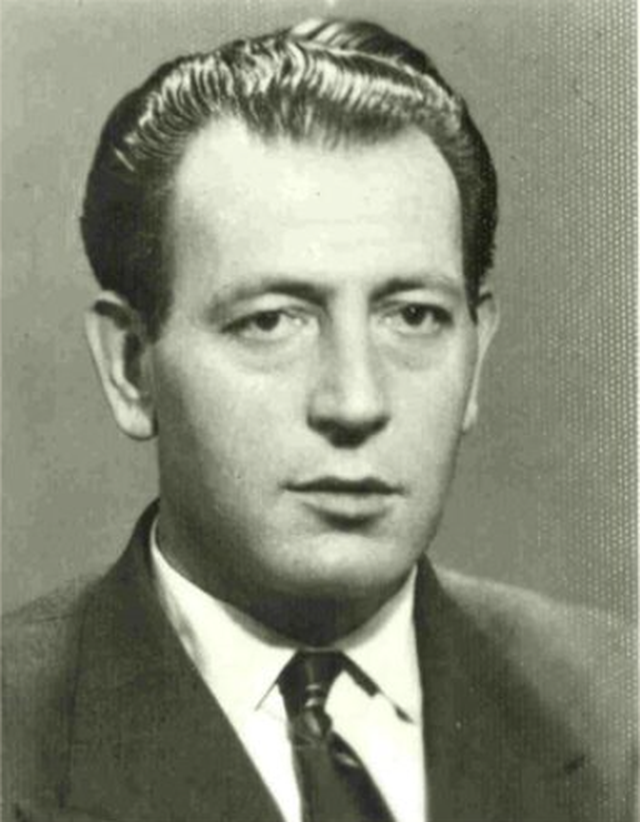
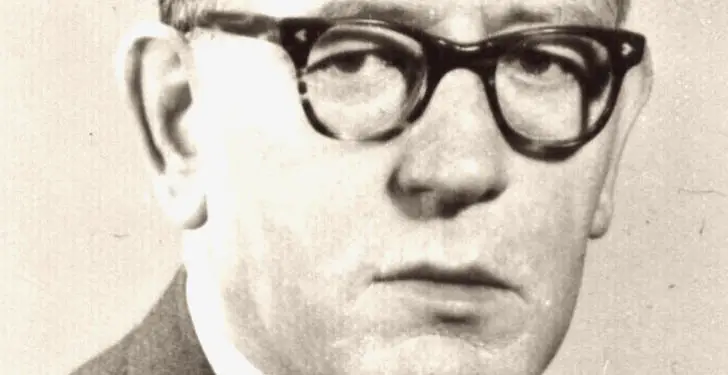
In Albanian historiography, Tahir Kolgjini is ranked among figures and personalities such as Mehdi Frashëri, Ernest Koliqi, Mustafa Kruja, and so on, who were once labelled as “…collaborators of fascism and Nazism.” He received his first lessons in his hometown, Lusën, from Hoxha Mulla Ademi from the suburbs of Skopje. He was an extremely intelligent child. He memorized the Quran from a young age. With the start of the Balkan wars, he left with his family for Istanbul, where after 6 months, he remained only with his father, who was involved in trade, as the rest of the family returned to their homeland.
There he completed the Higher Madrasa and earned the title “Hafiz.” Equipped with deep religious, as well as political and legal culture and knowledge, he returned to Albania to serve his compatriots, starting with his fellow villagers. For three years, from 1925 to 1928, he worked as a teacher in Bicaj and Lusën. From the end of 1928 until 1932, he served as the secretary of the Court of Peace in Himarë and Kukës. In the same year, he ran for deputy, but the lists were manipulated, so he got involved in the creation of an illegal political party, for which he was interned by the authorities of the time in Porto Palermo, where he stayed for a year.
After opening a print shop and working for some time as a public writer, from 1939 to 1944, he performed duties such as mayor in Kukës and Prizren; prefect in Gjirokastër, Prishtina, and Shkodër, and General Director of Police at the time when Xhafer Deva was Minister of the Interior. 4-5 days before the country’s liberation, he went to Yugoslavia, then to Vienna, and then to Rome and Milan, where he stayed for about four years. In 1948, he settled in Istanbul, until his death on December 12, 1988.
Although he was an exiled patriot for four decades, his mind and heart were in his homeland, in his birthplace; in the Albanian language and the defense of Albanian values, traditions, and customs. He was an intellectual heavily engaged in the national cause. He wrote dozens of articles and studies with literary, political, cultural, and scientific content, which were published in various newspapers and magazines around the world, taking truth and professional honesty as the main criteria.
However, their influence on the Albanian political environment was “zero” due to the communist isolation that Albania experienced until two years after his passing. On the other hand, instead of being valued, he was labeled “enemy and traitor,” although the motto of his stance was the postulate placed at the top of the book about Esad Pasha: “In this world, there is nothing more bitter than being accused of what you didn’t do”…!
As is known, the autumn of 1912 found the Balkans ablaze. The cause of this fire was Serbia and Montenegro, which, along with Greece and Bulgaria, had drafted a plan to occupy Albanian lands after the departure of the Ottomans. The period of the Balkan wars resembles a Greek tragedy in the Albanian territories. Serbs sought access to the Adriatic Sea, attempting to capture the port of Durrës before Ismail Qemali arrived there on November 21, 1912. Greeks fought in the southern part. Our only support came from the Austro-Hungarians and the Italians, who had a project for the creation of an independent Albanian state since 1880.
Thus, the fate of our country was hanging by a thread. Had the Serbian army not been stopped in Lumë of the Kolgjinaj, it would have taken Durrës before the arrival of the Father of Independence, Ismail Qemali. The fight was waged with weapons, but also with pen and diplomacy, naturally combining these forms of patriotic engagement. At these moments, the patriotic activity of Esad Pasha Toptani in the north of the country also stands out. Referring to the words of Tahir Kolgjini, the “deed” (e bamja) was the peace treaty that Esad signed with King Nikola, snatching Shkodër from the Slavic claws, to return it to the Albanian Principality, while the “undone” (e pa bamja) was his labeling as a “traitor” by the communist authorities in the post-liberation years (!?).
With such standards of transparency towards himself and others, Tahiri also wrote the apology “Albanian-Greek Truths,” where he denounces chauvinistic attempts to annex Southern Albania. Meanwhile, his children and relatives were persecuted for the “undone” by the political regime of the time in the Tepelenë concentration camp and the notorious prisons of Spaç and Burrel, starting with Tahir’s wife, a daughter of the famous Lala tribe from Buzëmadhe, their only son Ahmet, nephews and nieces, sisters and brothers; primarily anyone bearing the surname Kolgjini.
But the spirit of the blood heirs, no matter how distant, could not be imprisoned, just as the feeling of patriotism could not be washed away so easily in such individuals with high moral integrity. For this category of patriots, love for the homeland begins with respecting the contribution of every one of its citizens, without doubts and without divisions on political grounds. “We do not have the right to judge the people who made Albania,” says Father Zef Pllumi. Viewed from this perspective, I believe we do not have the right to judge the way they contributed either. Moreover, linking patriotism only to war is an unreasonable reason.
War is a bad thing, but not worse than the political attempt to demoralize the other, to lose morale and patriotic feelings, because they do not choose to hold a “real” weapon in their hand. “Disagreement of opinion,” which Jefferson calls “the noblest form of patriotism,” cannot become the cause of taking a hostile position against those who lack political power. Because, when hatred triumphs over people who are different from your supporters, it is undoubtedly nationalism and not patriotism.
Thus, for the communist government, patriotism was an anti-human mask, as long as entire families were killed and persecuted, just because they included individuals who did not think in line with the party’s political line. Meanwhile, most of these families reflected only nobility or values and virtues, which had given life to Albanian identity even in the darkest times of our country. History has proven with endless examples that there is no plot of noble families where the seed of patriotism does not grow, just like those of the Kolgjini tribe.
Here we single out Neritan Kolgjini, Ahmet’s son and Tahir’s grandson, expressing disappointment even towards today’s government, which, according to him, “…is a continuation of communist rule in other forms… We have not had much ego, and most have gone abroad. It has been a strategy of the regime that young people who had the energy to be politically engaged should leave the country, and many have left…”! In a way, Neritan Kolgjini paraphrases the saying of the well-known American writer of the last century, Edward Abbey, according to whom: “A patriot must always be ready to defend his country against his government.” Perhaps he also has in mind the philosophical expression of his grandfather, Tahir, who in the Albanian Muslim Congress of Prizren, held in 1941, addressed Mustafa Kruja: “Neither the government should be tied to religion, nor religion to the government.”
Tahir Kolgjini was indeed formed as an intellectual in exile, but rarely has anyone adhered to Albanian customary law throughout his social-patriotic and cultural activity as he did, always acting as he wrote and spoke; without separating word from deed and Albania from his heart. In this sense, the beginning of his short memoir, “A Brief Account of My Life…,” is significant, where among other things he writes: “I am the son of Ali, Osman, Hasan, Sulë, Idris, Bajram, Shahin Kolgjini. My mother is Qamile Kolgjini, the daughter of Sadik Tota from the village of Vilë, also in Lumë…! I asked my father. He told me that I was born in the year of Shemsi Pasha, who had come to Lumë and Albania to reconcile blood feuds in 1910, which this Ottoman date corresponds to the year 1903. I asked my mother about the season I was born in. She told me that I was born exactly 12 days before St. George’s Day. So, on April 24, 1903…”. Thus, the Kolgjini tribe, Lusëna, and Albania constitute an indissoluble unison with Tahir’s human being, sending many messages for the present time.
During these last 35 years, Albanian society has suffered great cracks, where one of the wounds that constantly flows is the depopulation of entire regions and especially the abandonment of the homeland without looking back. The phenomenon of not feeling well in your own country is becoming massive, wandering “… like Jews in the desert,” while there are other examples that show that the best way to increase love for the homeland is a temporary stay in a foreign country…!
Safet’s Footprints in the Kolgjini Tribe’s Journey
Safet Xhemal Kolgjini may be a “seventh cousin” to Tahir, but judging by the way he approaches life, his birthplace, the homeland, moral principles, and social norms, there is no reason not to call him: “his younger brother.” Safet also begins his “life story” with the capillary of ancestral roots, just like Tahir. “According to my father’s stories,” he says, “we have been in Lusën for seven past generations, starting with grandfather Safet, great-grandfather Hafiz, and so on: Sadik, Vesel, Dullë, and Shahin Kolgjini…”. Besnik, the younger brother, intervenes: “In fact, a considerable area of land there in Lurë is called Kolgjinaj’s Meadow.” While the older brother, Seda, adds: “As far as I know, our ancient roots might be from Shkodër; from there we came to Lurë.”
As observed from the biographies of both, Tahir and Safet, they share the name “Shahin.” “Nevertheless, we treated them as closer,” Safet tells us. “Tahir’s uncle, Osman, was a lonely man, without children. Besnik and I became like children to him in his final moments, and when he passed away, even though the regime treated him as declassed and others kept their distance. Besnik even stayed a full week in his house to serve him.” As we will see later, the differences between the cousins Tahir and Safet are simply circumstantial, and not at all moral or spiritual.
From what the brothers Seda, Safet, and Besnik tell us, and from what we have read before about the Kolgjinaj in general; they share the same insistence, efforts, zeal, and vision even though they belong to different times. Thus, their qualities are permeated by human values and virtues. They become slaves to the things they love and inherit, and to pass them on to others; contemporaries or predecessors, they first strive to surpass themselves. Therefore, they always base their judgment on what is achievable and what is not on possibilities, which are the result of their foresight, endeavors, and continuous efforts. / Memorie.al