
By Ismet Azizi
Part One
– A distorted history, an intentionally erased reality –
Memorie.al / The events of the autumn of 1941 in Sandžak, and especially in Novi Pazar, constitute one of the bloodiest and most distorted episodes in the history of the region. What happened that year were not “local clashes,” as Serbian historiography has systematically called them, but the first organized attempt at ethnic cleansing of Sandžak, carried out by Chetnik formations under the command of Dragoljub Mihailović, Kosta Pećanac, and local leaders such as Radomir Cvetić, Todor Dobrić, Mašan Đurović, and others. In Serbian historiography – from the work of Vaso Čubrilović to the post-war interpretations of the “Partisan” school – the events of Novi Pazar have been deliberately softened: presented as an “inter-ethnic conflict,” “local revenge,” “Muslim treachery,” and even “Albanian and Bosnian collaborationism.”
This narrative has served to cover up the simple and undeniable fact: 1941 was the year of the first serious attempt at the total extermination of the Muslim population of Sandžak.
The burning of villages, the massacre of civilians, mass killings, rapes, abductions, and the burning of 2,016 Serbian houses and 776 Albanian and Bosnian houses within a few weeks – were not a spontaneous process. It was an operational plan clearly written by the ideologues of Greater Serbia: Stevan Moljević, Vaso Čubrilović, and the leaders of the Chetnik formations.
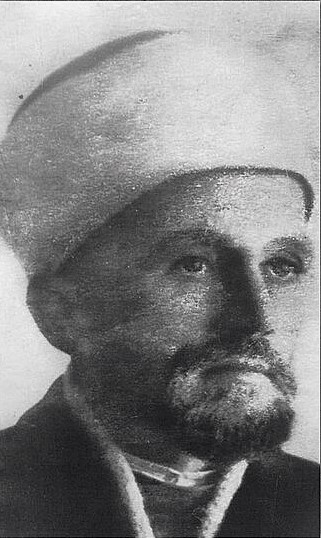
This writing aims to unfold the historical truth – stripped of propaganda – about the three Chetnik attacks on Novi Pazar (October–December 1941), the organized Albanian-Bosnian resistance, the role of Aqif Efendi Blyta, the participation of Albanian units from Kosovo, as well as the humanitarian dimension that has often been erased: the saving of hundreds of Serbs by the Muslims of Pazar themselves.
From the Dismemberment of Kosovo and Sandžak (1912) to the Creation of a Colonial Reality
After the occupation of Kosovo and Sandžak by Serbia and Montenegro in 1912–1913, the Albanian and Bosnian populations were treated as an ethnic and political foreign body. According to the famous Načertanije program and the elaboration of Vaso Čubrilović: “The Muslim element must be eliminated from the areas of Yugoslavia, as it presents a permanent danger to the Serbian state.” Colonization, forced displacement, the burning of villages, political liquidations – were part of the institutionalized state plan.
The Policy of Colonization (1918–1941): The Basis of the 1941 Outbreak
In the years 1919–1941, the policy of the Kingdom of Serbs, Croats, and Slovenes, and later Yugoslavia, included: the displacement of Albanians towards Turkey, Syria, and Albania; the colonization with Serbs of the Ibar Valley, Pešter, and Sandžak as a whole; the creation of repressive units (gendarmerie, “order forces”); the criminalization of any form of Albanian self-defense; and the burning of about 120 Albanian villages in Kosovo and Sandžak during the 1920s and 1930s. This policy prepared the ground for what would happen in 1941.
What were the Chetniks looking for in 1941?
Stevan Moljević states it openly: “Sandžak must be cleansed of the Muslim and Arnaut element.” “Serbia and Montenegro must have a common border.” This plan became an official document in the program of the Ravnogorski pokret (September 1941). Why did Novi Pazar become the main target?
Three main reasons:
- It was the largest urban center in Sandžak. Novi Pazar had an overwhelming Bosnian-Albanian majority and a strong merchant class that controlled the local economy.
- It was located in a key strategic corridor. The Mitrovica–Novi Pazar–Raška corridor was the only communication line between Serbia and the highlands.
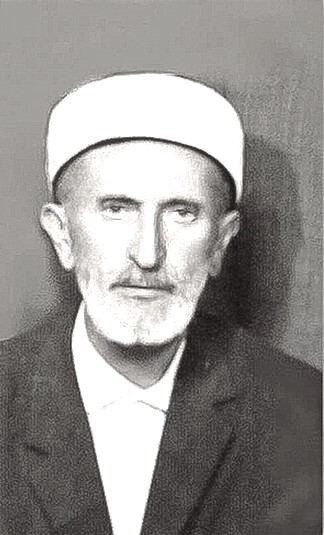
- The local leadership was strong and organized. Aqif Efendi Blyta, Mulla Jakub Kardović-Kombi, Ejup Lajić, and many others had connections with: Drenica, Rugova, Peć (Peja), Plav, Gusinje (Gucia), as well as the Kosovo Committee. This made the city insurmountable for the Chetniks.
The First Chetnik Attack on Novi Pazar (October 4, 1941)
How did it all start? The Germans abandon the city – the Chetniks enter the area. On October 2, 1941, the German command, fearing being isolated during the great uprising in Serbia, abandoned Novi Pazar and withdrew towards Mitrovica. Their departure created the classic vacuum: when the occupying army withdraws, parallel ethnic structures begin the battle for control of the territory. For the Chetniks of Raška, Kopaonik, and Ibarski-Kolašin, this was the long-awaited moment to realize their ideological objective: the extermination of the non-Slavic element in Sandžak.
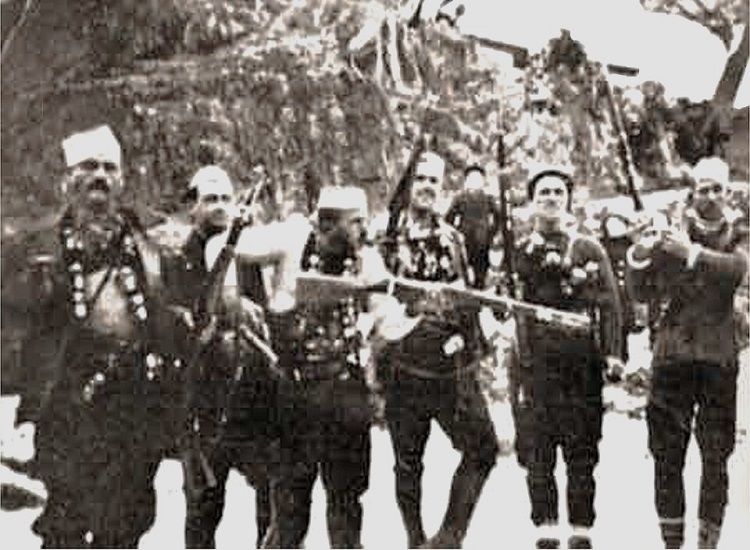
In this vacuum, on October 4, the Muslims of Novi Pazar created the City Defense Committee, chaired by Aqif Efendi Blyta. He managed to secure: 150 rifles from gendarmerie depots, the establishment of armed guards at the city’s entrances and exits, the blocking of population movement to prevent Chetnik infiltration, and the dispatch of delegations towards Drenica, Peć, Plav, Gusinje, Rožaje, and Mitrovica to seek help. Help arrived quickly. On October 7, 1941, the first group of 500 fighters from Kosovo, under the command of Shaban Polluzha, entered Pazar after defeating Chetnik forces in Kolašin.
Chetnik Plans: Encirclement and Total Massacre
According to the Chetniks’ own documents, Captain Radomir Cvetić’s plan was: “The encirclement of the city in a ring formation and the complete liquidation of the Muslim population.” This attack involved: the Studenica-Deževska detachment, the Kolašin detachment, about 20 Serbs who had fled Pazar, armed civilians from the villages of Trnava, Požega, Brđani, Banja, etc. The total number of Chetniks: 600 fighters, but all with a clear intention: entering the city and massacring the Muslim population. This is also confirmed by the presence of dozens of Serbian families dressed in black, who accompanied the formations – ready to “identify” Muslim homes and families for execution!
Why did the attack fail?
The attack began at 04:00 in the morning. By 10:00, the Chetniks were forced to retreat.
The reasons:
- Exceptional organization of the civil defense; Blyta’s Committee had carried out a rapid mobilization: about 1,500 local defenders, assistance from 500 Drenica fighters, formations of the anti-communist People’s Militia from Pešter and Bihor.
- High morale; For the Muslim population, this was a matter of survival. The testimony from Biko Drešević, Mulla Jakub Kardović-Kombi, and Xhemail Koniçani shows that the fighting was door-to-door, and that the Chetniks were often struck from behind (due to the locals’ knowledge of the terrain).
- Chetnik unpreparedness; many of them only had: axes, pitchforks, sickles, knives. Military discipline was weak. The Serbian gendarmerie of the First World War no longer existed; the Chetniks were essentially paramilitary units of revolted peasants.
- Alcohol, looting, and chaos; Documents show that many Chetniks, after entering Brđani, Trnava, and the Gazilar cemetery, began: burning houses, looting, drinking rakia, and slaughtering livestock. A force without discipline does not win a battle.
Massacres after the First Attack: Unwritten Atrocities
After the failure, the Chetniks took revenge with mass burnings and killings in: Trnava, Brđani, Banja, Janča, Muhovo, Grabin, Bijele Vode, etc. These villages were burned mercilessly. In the village of Požega, in the house of Bahtiar Dolovci, 13 Serbian and Muslim women and children were massacred, even though the Dolovci family requested that no one be harmed. This case is a clear example that the conflict was not simply “Serb against Muslim” – it was an organized war by the Chetniks, fueled by propaganda, but not with an absolute division among the civilian population.
The Lesser-Known Dimension: The Rescue of Serbs
Aqif Efendi Blyta, Mulla Jakub Kardović, and dozens of Muslim families rescued 420 Serbs of Novi Pazar, sheltering them in the District Court building. There is no other example in the Balkans during World War II where: the attacked and burned population saves the attacker’s population. This fact is systematically hidden in the Serbian narrative.
The Second Chetnik Attack on Novi Pazar (November 21, 1941)
A larger, better-organized offensive… and again a failure. In just 17 days after the first failure, the Chetniks returned with a new offensive, much larger in number and weaponry, aiming to correct the “shame” suffered on November 4. This attack was: more organized, better armed, more brutal towards the civilian population, and with clear genocidal intentions.
Composition of Chetnik Forces in the Second Attack
The attack was led by: Lieutenant Pavlović, Captain Radomir Cvetić, Vojvoda Mašan Đurović, Mirko Tomašević (Pećanac’s officer), units of the Kolašin detachment, units of Vračevska–Nikolača, Serbian units of Raška and Studenica. In total, according to Serbian sources, there were about 1,200 fighters, while according to Albanian and Bosnian sources, the number reached 1,500–1,800.
Objective: Complete Extermination of Muslim Villages
This is again evidenced by the operational plans of the Ravnogorski Pokret: “Cleansing the terrain towards Drenica, Dukagjin, and Pazar.” “All Muslim inhabitants must be removed.” “Novi Pazar must fall.” The goals were no longer merely military – they were ethnic and religious in nature.
Course of the Attack
The attack began on November 21, 1941. In this battle, the Chetniks had greatly expanded the front line: from Požega, to Dojeviće, from Vučinić, from the Rogozna mountains, towards Vidova and Trnava. For the first time, the Chetnik attack aimed directly at the city center, through the Raška valley.
The Reaction of the Albanian-Bosnian Defense
At this time, there were about: 2,000–2,600 fighters in Pazar (according to Albanian authors), including units from Drenica, Biševo units, the Voluntary Pešter Militia, fighters from Drenica, Bajgora, Rugova, and Rožaje. The defense was now experienced and highly motivated.
Losses and Chetnik Barbarity
According to the author Quković: 42 Chetniks were killed, 26 defenders were killed, 45 people were wounded, 20 Muslim women, children, and elderly were massacred. Other sources give even higher figures. One fact that is not disputed by anyone: September–December 1941 are the most important months for the Muslim population of eastern Sandžak in the 20th century, which managed to avoid genocide. In those areas where the volunteer forces from Kosovo and the People’s Militia were present, the Serbian-Montenegrin Chetnik formations failed to carry out ethnic cleansing.
Burnings and Massacres during the Second Attack
In this offensive, the Chetniks committed atrocities also documented by Serbian authors like Radović and Živković. In this wave of barbarity, the following were burned: Požega (for the second time), Dojeviće, Vučinići, Vučja Lokva, Berberišten, Rvatska, Kalin, Guljije. Some data indicate that about 75% of the Deževa territory was burned in this phase. A particular act of cruelty: In Vučja Lokva, a Muslim woman was nailed alive to a tree. (A Serbian source confirms this.) / Memorie.al
To be continued in the next issue
Source: Ismet Azizi, AĆIF EF. HADŽIAHMETOVIĆ BLJUTA: VELIKAN SANDŽAKA Publisher: “Memorijalni centar Hadžet” Foundation 2022 Novi Pazar