By Reshat KRIPA
Part Eight
Memorie.al / Arbër sat in his corner in the hall, waiting for the arrival of the plane that would take him to another world, and he meditated. He meditated and dreamed of the road full of nettles and thorns through which his life had passed. He recalled the worries that had accompanied him for years. He had many passions. He wanted to become a lawyer, a journalist, a doctor, an engineer, an artist, a writer, or anything else, if possible. But fate had condemned him not to reach any of his dreamed-of peaks. He encountered disappointment at every step of his life.
Continued from the previous issue
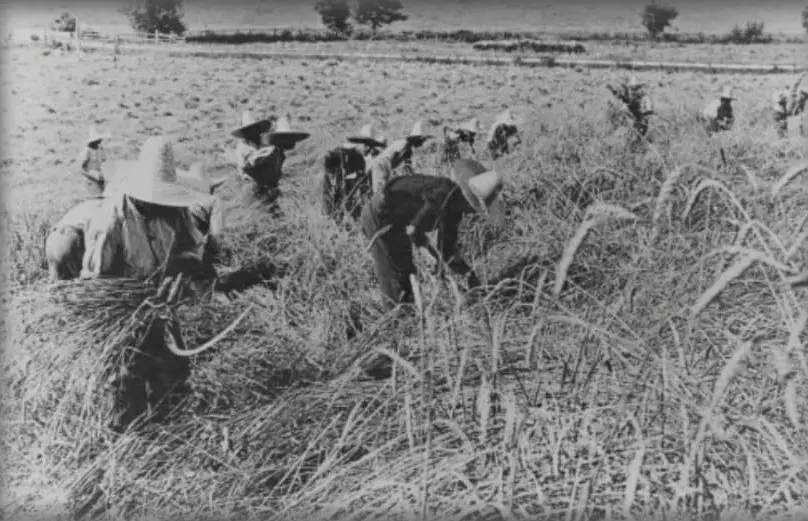
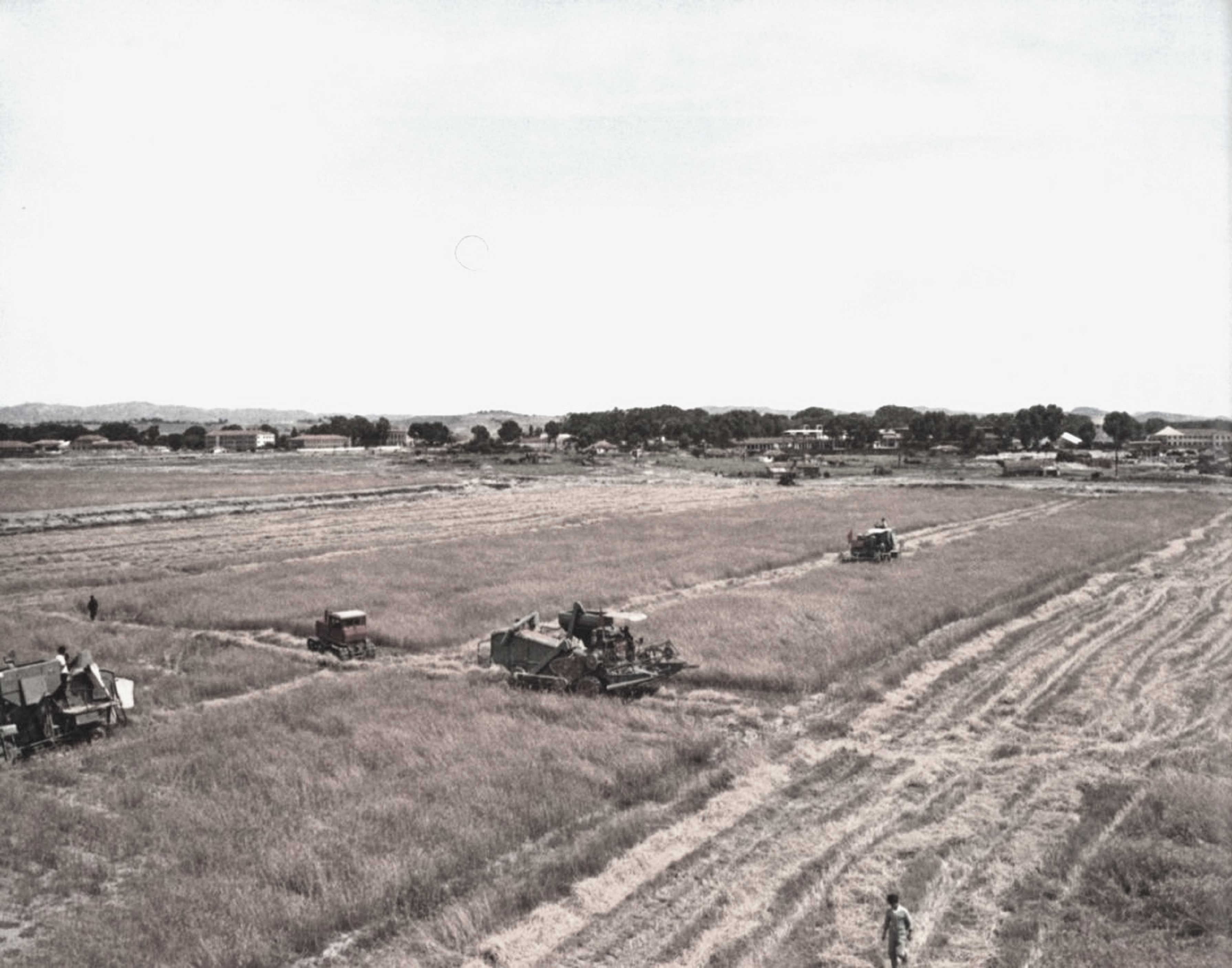
Arbër was doing his military service in a labor unit near an agricultural farm. It was military service, but without weapons. They did not exist in that unit. They were clearing land for planting vineyards. Work started at seven in the morning and finished at five in the afternoon.
It was the end of the second year of service. Two more months and they would be discharged. Throughout his entire service, he had only managed to go home for one week. Leave was very difficult to obtain. He didn’t even have liberty passes, as they were very far from the city. Correspondence was allowed twice a month. He used this opportunity to exchange letters with his mother, but especially with Blerina, who, to avoid the notice of anyone who might get hold of it, wrote at the end: “Yours, Blerta.”
She was continuing her philological faculty studies in Language and Literature at the University of Tirana. She was a first-year student. She had made it a habit to stop and meet Arbër whenever they had holidays before returning home. She did the same one Sunday. She got off the train and arrived at the unit by a random car. She asked to meet him, but the officer she addressed told her sharply:
– “Go home. You cannot meet today, as he is punished.”
– “He’s punished? And what could a soldier have done to be punished?”
– “That is none of your business,” the officer replied, turning his back dismissively.
What had happened? Arbër had been appointed squad commander. There were ten people in the squad. Among them was a highlander, known for his arrogance and bullying. He barely worked at all. Even the little work he did, he performed poorly. Everyone knew this. One day, the State Security operative of the unit, who was from the villages near Arbër’s city, came to the workplace. He took a few soldiers from other squads and ordered them to inspect if Arbër’s squad had cleared the land well.
With unparalleled servility, they declared that the work had been done very poorly, which was not true at all. Only the part that the arrogant highlander had worked was poor. But the operative’s arrows were not aimed at him. At the end of the workday, he lined up the squad in the unit’s mess hall. He began to shout loudly about alleged sabotage that had been committed. He specifically singled out Arbër, as the squad commander. Arbër denied it. The operative became furious and yelled:
– “Are you trying to sabotage the work? This is not your father’s backyard, but the property of the entire people, and we will not allow you to sabotage it. Do you know that I can put you in handcuffs for this?”
Arbër understood that continuing the conversation would make things worse, so he kept silent.
– “You are discharged from the duty of squad commander,” he said, and locked him in the disciplinary cell.
Blerina returned home. She was quite shaken by what had happened to Arbër. But she didn’t tell anyone, neither his mother nor her parents. She didn’t want to worry them. That same evening she wrote him a letter where, among other things, she wrote:
“My dearest Arbër! Today I returned for the holidays and came to meet you, but, surprisingly, they wouldn’t let me, telling me you were punished. They didn’t tell me why. Although I am younger than you, I would advise you to be calmer, so as not to create dissatisfaction in the unit. I know your character well, so I wonder how it is possible for you to overstep the norms of good behavior?! This seems impossible to me.”
At the end, as usual, she wrote: “Yours, Blerta.”
Arbër read the letter. He understood the pain she must have felt. He couldn’t grasp how far the absurdity of his superiors’ actions could go. They were difficult years. Cut off from other countries of the socialist camp, the country had become almost isolated. Extreme proposals had begun to emerge from certain institutions or strata. One such proposal had come from a high school in an Albanian city, which stated:
“Everyone, without fear and in a loud voice, must rise against anything that hinders the march of our country on the road to socialism and communism.”
Thus, so-called “Lightning Sheets” (Fletë-rrufe) began to appear across the country, by which anyone could strike whomever they wanted, and in most cases, this was done by people set up by the government authorities. As if this were not enough, the country’s “emperor,” through a so-called “Open Letter,” began to attack religious beliefs and called for the destruction of all their objects. Thus began an unprecedented uproar against these institutions, as if World War III had broken out.
This situation was also reflected in military units, especially in the labor units where Arbër was. The labor unit was a new half-prison. The work, food, sleep, and treatment of the soldiers were almost the same. The only difference was that there were no guards to escort them when going to and from work. Instead of a real rifle, they each had a wooden one, as if they were children who were going to play with it.
These were Arbër’s thoughts as he read Blerina’s letter. He considered giving her a concise answer, so that his superiors, who would surely read it, would not understand it. Among other things, he wrote: “My heart, don’t worry. I am well. It was a lapse on my part. I will explain when I am discharged.”
He sent this note inside a letter he sent to his mother. Fortunately, those were the last days of the army. The two months passed quickly and Arbër was discharged. He had finally passed this test too.
With his discharge from the army, the problem of employment arose. Arbër, with only a high school education and no profession, found it very difficult to find a decent job.
A friend of his family convinced the chairman of the woodworkers’ cooperative to hire him. The chairman was a wood engineer. He had finished his studies in Prague. He was a perfect man. He hated intrigues, gossip, and servility. Through his mediation, Arbër was assigned as a worker next to a carpenter in the enterprise’s carpentry shop. The work was not too difficult. Besides, it was indoor work, where neither rain, cold, nor heat could catch you.
He also began to learn the carpentry trade. This did not last long. One day, the head of the Cadre Department, an arrogant and conceited man, entered the unit. He gave the order to remove him from that job. In the enterprise, the word of the Cadre chief was stronger than that of the chairman. It was the paradox of the time. They transferred him to transport lime with a “Skoda” truck, from the kilns where it was produced to the sales shop in the city.
The shop where they unloaded the lime was on a narrow alley. This meant they were covered in lime, so much so that they were unrecognizable. One day, while they finished unloading and were getting ready to wash up and go home, the chairman and the Cadre chief arrived. The latter spoke in an ordering tone:
– “Go immediately and load a truckload of planks at the sawmill agency for the enterprise.” It was late afternoon. October. The sun was setting. The workers began to object. To go there would mean continuing work for almost two more hours. Arbër also joined them. The chairman approached him and, stepping on his foot, said in a low voice, so the chief wouldn’t hear: – “Be quiet!” – and winked, nodding his head toward the chief.
Arbër understood everything. The objection could be interpreted as a deliberate incitement of the workers. His rebellious spirit urged him to resist, but reason restrained him. He kept silent. He had no right to raise his voice, even when he saw that an injustice was being done. He considered the warning the chairman gave him a great favor, as he didn’t know how things might have ended. Nevertheless, the order for dismissal from work, without giving any reason, soon arrived.
Meanwhile, Petrit had finished his studies and was appointed agronomist in the city’s agricultural enterprise, the same enterprise where Arbër’s mother worked. He advised him to go to the neighborhood council and ask for a work ticket for the agricultural enterprise. For this, he had previously talked to an acquaintance of his who was a member of the council. Arbër received the work ticket without any difficulty. Thus, he started working in one of the sectors of the enterprise. His mother was in another sector.
The work was hard and the pay was low. Initially, they worked clearing land for opening new fields. With the start of winter, they switched to olive harvesting. The men shook the trees, while the women gathered the olives. In the evening, they carried them on their backs to the brigade center, where they were weighed, and the fulfilled quota was calculated. The greatest difficulty was when it rained. They were forced to stand under the trunk of a large olive tree. The mud did not leave them for the entire winter season.
Their brigadier was an ignorant man with only primary school education. He was a typical bully, one of those often encountered in the country. He was the most typical representative of those who strictly implemented the class struggle. Those who had a “mark” in their biography, as it was called then, he treated as enemies. Whenever a brigade meeting was held, he would say: – “Those who do not have Front membership cards leave.”
Arbër and a few others who lacked the card were not allowed to attend the meetings. Naturally, according to their logic, so as not to hear the “great secrets” that would be discussed in an agricultural brigade! Thus, amid these difficulties, he continued until the end of winter.
Being in this state, he thought of applying for a membership card in the Democratic Front organization. The day the requests were to be reviewed, all the interested parties, as well as other neighborhood members, were gathered at the organization’s headquarters. The requests began to be discussed, one by one. When it was Arbër’s turn, a resident of the neighborhood stood up and said:
– “Let him first tell us a few words about his biography.”
Arbër was put in a difficult position. He didn’t know what to say. But at that moment, Mother Emineja, a well-known activist of the Democratic Front organization, stood up and spoke:
– “You be quiet, I know Arbër’s family very well. Therefore, we have nothing to discuss.” Arbër was stunned. He couldn’t believe that mother would speak that way. The organization approved the granting of the membership card. When they parted, he thanked Mother Emine.
Petrit, seeing Arbër’s situation, intervened with the engineer of the investment sector, who was his neighbor in the district, to take him into his sector. The engineer agreed and managed to bring him in, even making him the brigadier of the construction brigade. With his intelligence and the engineer’s help, he managed to master the trade quite well, even learning to read blueprints. They worked on constructing warehouses, stables, and apartment buildings. With his ability, he managed to win the sympathy of all his comrades, who gave him the nickname “The Engineer.”
In his brigade, there were several individuals who belonged to the “overthrown classes.” He was closer with his schoolmate, Ibrahim, who had not pursued higher education because he also had a younger brother who, at the age of seventeen, along with two friends, distributed anti-communist leaflets in the city. He was arrested and sentenced to eight years in prison.
Finally, he had secured a permanent job, which, compared to others, was many times better, and which he intended to exercise until retirement age, provided, of course, that no other unforeseen obstacles arose.
Blerina finished university and graduated as a teacher. She was appointed literature teacher at the city’s gymnasium. Although a beginner in this position, with her sharpness, she managed to win the sympathy of her colleagues. The director was Andrea who, through a friend he had in the Ministry of Education, had managed to be rehabilitated after the demotion he had suffered earlier for supporting teacher Afërdita. This was a stroke of luck for Blerina. She spoke to Andrea without reservations and shared her concerns.
One of her biggest concerns was how her relationship with Arbër would continue. Not that she had changed her mind, but she couldn’t figure out how to act now, when others knew them only as two young people who had a casual friendship. What would public opinion think when it saw that the relationship of a pedagogue with an agricultural worker would be so close and frequent? She decided to discuss it with Andrea. He listened carefully and, after thinking it over, said:
– “Listen Blerina, before I answer, I want to ask you: Are you fully determined to join your destiny with Arbër’s? Are you determined to face all the difficulties that might arise?”
Blerina pondered: “What could happen to me? Will they fire me? Will they send me to work in the agricultural enterprise, like Agron’s mother? Will I be able to handle such a thing? And Mother Afërdita, how was she able to handle it? Wasn’t she also a distinguished teacher?” All these questions revolved in her mind. She made up her mind.
– “My destiny is eternally linked to Arbër’s,” she told Andrea. “Nothing can separate us. I have decided this.”
– “Then if that is the case, you absolutely must announce the engagement.”
In the evening, Hektor sat in one of the living room armchairs, reading the newspaper. Irma was correcting the essays that the students had written a few days earlier. Blerina stood in silence, thinking. Director Andrea had told her that they must announce the engagement. But this had to be discussed with her parents. She didn’t know how to start! How to tell them?! Finally, she spoke:
– “Father, Mother, I want to talk to you!”
Hektor lowered the newspaper and looked at his wife. She gave a sign as if to say; “What?” But this lasted only a few moments.
– “Speak, daughter,” her father said, after the initial confusion passed, “what do you want to tell us?”
– “I think my relationship with Arbër must take another path.”
– “Another path?!” asked her mother.
– “Yes, another path. I think we can no longer continue to appear before the public opinion as two ordinary friends. We must announce the engagement.”
Hektor and Irma looked at each other. Deep in their conscience, they were convinced that their daughter’s request was right. They had already reached the appropriate age for such an action. But the psychological struggle taking place in their conscience bothered them. It gnawed at them internally. Yet they saw that they had no other solution.
– “Alright, our daughter, we also agree,” Hektor finally said. “But we must discuss this with Arbër and his mother. Have you talked to them?”
– “No, I thought I’d get your opinion first.”
– “Then discuss it with them and set a day for us to meet.”
That night, Blerina did not sleep. This time, not out of worry, but out of the joy she felt inside. Finally, her dream of love would be realized. The next day, she discussed it with Arbër. They decided to hold the meeting that same evening at Blerina’s house.
The conversation proceeded in a joyous atmosphere. Both families were happy that the love of the two young people was being realized. They also discussed how the ceremony would take place. Finally, they agreed to organize a small dinner, with the participation of both families and a few close guests. They also discussed the venue for the organization. At first, they thought of holding it in one of the city’s restaurants, but since this would be a challenge to the opponents of this engagement, they decided to hold it at Blerina’s house.
– “Then let it be for good fortune, Sunday evening,” Hektor concluded.
On Sunday, both families gathered. The only guests were Petrit and Vojsava. Andrea and Elvira were also invited, but they informed them that they couldn’t attend, as they were wary of a repeat of the story from a few years ago with the screening of the “Flower of Remembrance.” The engagement ceremony had neither songs nor dances. Only a dance by the new couple, which was accompanied by Petrit and Valbona. Finally, the rings were exchanged. Arbër placed a ring on Blerina’s finger that his father had brought from France, while Blerina placed a ring that her mother had saved for this occasion.
The next day, to the surprise of the employees of the Neighborhood Civil Status Office, they completed the civil ceremony formalities. The witnesses were Petrit and Vojsava.
The news spread like lightning throughout the entire city. Whispers began quietly. One part expressed astonishment at how she, a well-known pedagogue, could get engaged to an ordinary worker with only a high school education. This disparity astonished them, and they whispered that their relationship would not last long. Another part whispered about how teacher Hektor and teacher Irma, a family with a good political background, had agreed to give their daughter to the son of a collaborationist who had died in prison. But there was also another group that congratulated Blerina and her family for the decision they had made.
All these whispers also reached the ears of the protagonists of the event and their families. They heard them but tried to avoid debates with them, thinking that time would take its course and one day everything would be forgotten. So they pretended not to have heard anything. Memorie.al