

Memorie.al / The Great Highlands (Malësia e Madhe) has always been the “nest” of Albanian patriotism where patriots and clerics were born and raised, who spared neither their lives for freedom, human rights, customary laws, nor for the Albanian ethnic lands. In the Great Highlands, national symbols of the life-giving binomial of Faith and Nation were born and raised throughout the ages and centuries. One of the prominent symbols of the binomial Faith and Nation is the Kastrat nationalist, Father Lekë Luli, treacherously and brutally killed by the godless and nationless communists on July 16, 1944…!
BIOGRAPHY:
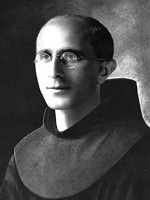
Father Lekë Luli was born in the village of Kastrat in the Great Highlands, on March 8, 1908, to his mother Lene and father Lul Marku (the Vulaj clan). Lul Marku’s family moved early to the city of Shkodra, before the creation of the national civil registry (1929–1930) by the Albanian Kingdom. This Kastrat family is listed in the civil registry in Shkodra as early as 1930. Father Lekë Luli, from a young age, was enrolled in the Franciscan College in Shkodra, where he completed his primary and secondary education, while he performed his novitiate in Troshan. He completed his higher education in theology at the College of Saint Anthony (Shna Ndou) in Rome, Italy.
In 1935, he was ordained as a priest. He said his first Mass on December 28, 1935. After his return to Albania, Father Lekë Luli worked at the “Illiricum” high school as a docent and as the Director of the “Antoniane” Society of Shkodra in 1938–1939. (The “Antoniane” Society was founded on the initiative of Father Ambroz Marlaskaj, who was the Director of the Third Order. Its goal was to provide Shkodra’s youth with means and ease in moral and religious education). Father Lekë Luli quickly became a well-known and respected figure in Shkodra, the Highlands, and beyond, especially for his patriotism and oratory skills.
On the occasion of the 25th anniversary of the declaration of independence (November 1937), a magnificent rally was organized in Shkodra, where several speeches were held, including those by the mayor Ndoc Çoba, Ymer Ruzhdia, Nush Topalli, and Father Lekë Luli. The first three had their speeches written on paper, while Father Leka, being an orator, spoke without notes, receiving more cheers and applause than any of the others who spoke at the rally. He was also the initiator for the erection of a monument to the martyrs of Shkodra, a work for which the foundations were laid but was not realized due to the fascist occupation of Albania.
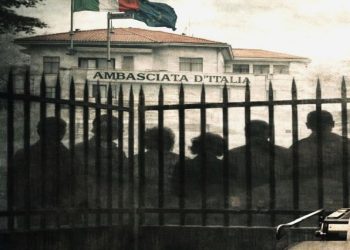
Just like the majority of the Albanian people, the Franciscans, educated and nurtured with the ideal of Faith-Nation, did not reconcile with the occupation of Albania by Italy…! In fact, the school directors had reservations and opposed the inclusion of fascist education in the school curriculum. For this reason, the government of that time (the fascist government of Albania – Ed. Note) closed the Franciscan high school for the 1939–1940 academic years. Father Gjon Shllaku, Father Lekë Luli, and Father Athanas Gegaj were those who most forcefully exposed the fascist occupation of Albania and propagated both individually and in their sermons that the youth should not adhere to the Fascist Party.
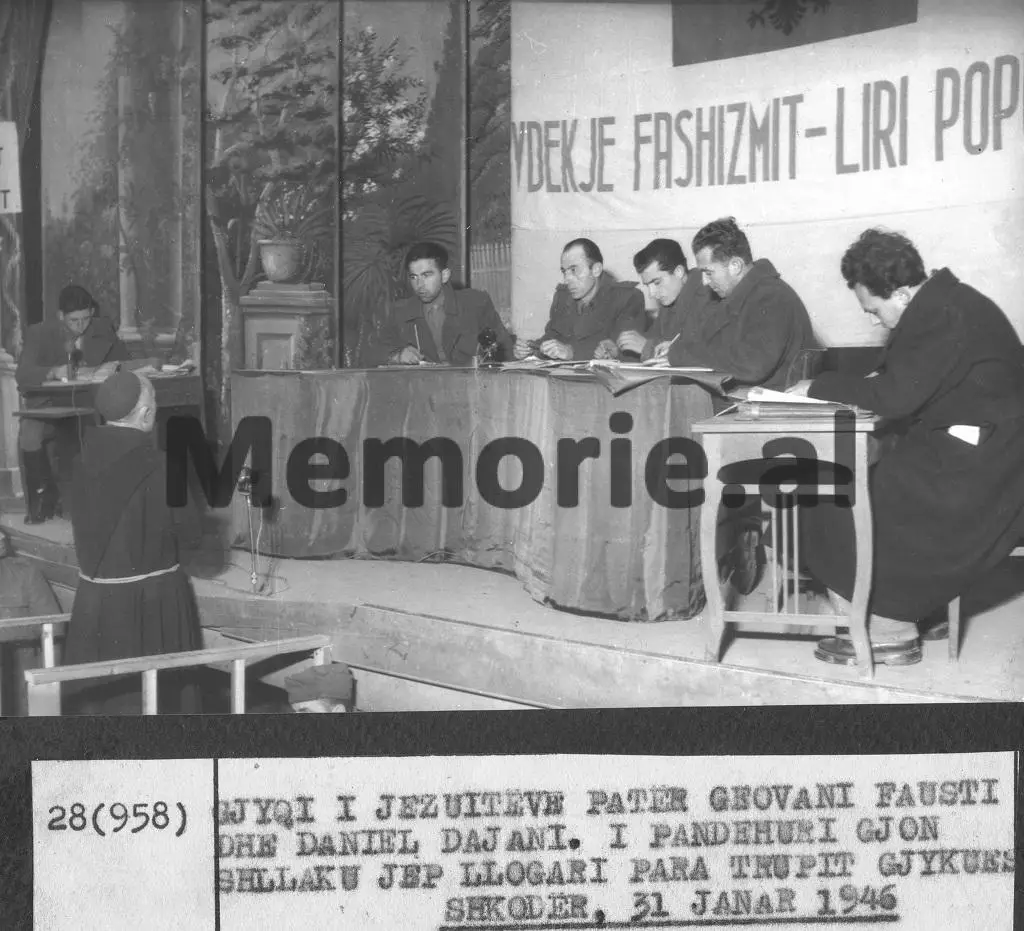
Father Gjon Shllaku managed to get hold of secret material outlining the preparation for the fascist occupation of Albania by Italy. He informed Father Athanas and Father Lekë Luli, with Father Leka taking responsibility for guarding this document. The fascist authorities, informed of this, ordered their arrest. They only managed to imprison Father Gjon Shllaku, while Father Lekë Luli and Father Athanas Gegaj managed to escape to Yugoslavia…!
Father Lekë Luli stayed in Yugoslavia for nearly a year, until the German occupation of Yugoslavia. He returned to Albania together with Abaz Kupi, the two Kryeziu brothers, the English major Hill, and about three hundred nationalists and Zogists who had fled to Yugoslavia. On April 5, 1941, in the presence of three hundred highlanders in Bogë of the Great Highlands, they raised the Albanian flag. Father Lekë Luli, with his extraordinary oratory, delivered a very beautiful patriotic speech…! Father Lekë Luli openly expressed his anti-fascist views. For this, Italian intelligence sources defined him as a “revolutionary friar.”
Father Lekë Luli had submitted a memorandum to the British Legation in Belgrade in January 1941, which represented a direct accusation against the Italian aggression in Albania. Events unfolded in such a way that Father Lekë Luli was arrested by the fascists and interned in the Tuscany region of Italy. Even in internment, he did not cease to express his patriotic feelings. During his internment, Father Lekë Luli had to substitute for the parish priest of that area for a “day,” and when an Italian girl went to confession, during the confession she told Father Leka about a sin she had committed. The girl showed repentance and asked Father Lekë Luli for help to atone for the sin.
Father Lekë Luli told the girl; she had to say the words “Viva l’Albania” (Long Live Albania) three times a day. After completing his internment sentence, he returned to Albania and headed for the Legality Movement’s Headquarters. There (in the mountains, Ed. Note) he stayed near Abaz Kupi and performed the function of the Secretary of the OKLL (National Organization of the Legality Movement), never taking off his friar’s robe and always being guided by the ideal of “Faith – Nation.” Father Lekë Luli was among the few priests who had supported the Zogist wing, along with Monsignor Nikollë Deda and some others, in contrast to the vast majority of clerics who belonged to the “National Front” (Balli Kombëtar)…!
Father Lekë Luli, as a first-class nationalist and anti-fascist, was also valued by the delegation of the General National Liberation Council at the meeting held on July 26, 1943, in Tapizë of Tirana, at the house of Ihsan Toptani, where it was decided that Father Lekë Luli should also be accepted as a consultant. The meeting was preparatory for the Conference of Mukje…! The delegation of the General National Liberation Council consisted of many figures without party distinctions, such as Major Abaz Kupi, Dr. Ymer Dishnica, Myslim Peza, Mustafa Gjinishi, Mit’hat Frashëri, Faik Quku, and Hasan Dosti…!
Father Lekë Luli participated in the Conference of Mukje on August 1–2, 1943, with the status of an observer, with a consultative vote. The Conference of Mukje was attended by well-known figures of the National Front, led by Lawyer Hasan Dosti, Mit’hat Frashëri, Prof. Isuf Luzaj, and others…! While the General National Liberation Council was represented by Abaz Kupi, Myslim Peza, Gogo Nushi, Dr. Ymer Dishnica, and others. After the Mukje Conference, rallies and assemblies were held according to the regions, where they pledged a besa (oath of honor) to fight against the occupiers on one hand and against the Slavic danger on the other. Typical of this is the Kalisht Assembly… It took place from February 2 to February 12, 1944, under the leadership of Muharrem Bajraktari.
According to German documents, V. Mann informed his superiors in the Dom Lc 297 Div. Inf. section on February 19, 1944, that; “a joint meeting of Albanian leaders has been held at a conference in Kalisht, attended by; Muharrem Bajraktari, Haxhi Lleshi, Cen Elezi, Faik Shehu, Father Lekë Luli, and others…! Three English officers also took part in the conference. Here it was decided to fight jointly against the Serbian Chetniks, against the German occupiers, and the quisling government. An assembly of men without distinction of ideology, religion, or region, a pledge of besa as in Mukje, recognized by the allies…!
THE BRUTAL MURDER OF FATHER LEKË LULI BY THE COMMUNISTS…
Father Lekë Luli, as a first-class nationalist, an intellectual, and a speaker of several foreign languages, was assigned important tasks by Abaz Kupi and the Legality Movement to meet and communicate with the anti-fascist missions of the Allies, such as the English Mission in Albania. Precisely on such a mission, Father Lekë Luli was treacherously and brutally killed in Bytyç of Tropojë by the communists and their spies, on July 16, 1944.
The communist battalion “Perlat Rexhepi” murdered and burned Father Lekë Luli…! The former commander of the “Perlat Rexhepi” battalion, the communist Rexhep Haka, writes in his book about the activity of this battalion: “…We caught the spy Lekë Luli and executed him.” Meanwhile, the zealous servant of communism, Ragip Beqaj, in his book titled: “The Anti-National Activity of the Albanian Catholic Clergy,” presents Father Lekë Luli with a “photograph” dressed in his priestly robe and with an automatic rifle on his arm, and writes: “Lekë Luli was the representative of the Christian Democrats, near the traitorous Legality organization.
Implementing the line given by the Pope, the Catholic Clergy established close ties even with ‘Legality.’ Just as it had previously created with the ‘National Front’ and the ‘Independents.’ At the request of Abaz Kupi for better coordination of actions, he was appointed as the representative of the Catholic Clergy at his headquarters…!” Meanwhile, the former director of the Ministry of Internal Affairs archive, the researcher and historian Kastriot Dervishi, based on the documents of this archive and the description of the main partisan killer of Father Lekë Luli, writes among other things: “Father Leka traveled from Kastrat of the Great Highlands to Tropojë to participate in a meeting of political forces. The communists, being ignorant even in their explanations, justified the murder as having occurred because the cleric was an ‘intermediary between the Germans and the British’ (!).
In fact, only the communists could make the Germans and the British allies in 1944. The main partisan killer described the macabre crime in this way: “The murder was committed in the dark forest of Valbona. Father Lekë Luli was sent by the enemy of the people Abaz Kupi to link the actions of Gani Kryeziu with the reaction of Dukagjin and with the other reactionary parties of Lumë and Mirditë, to stop the forces of the National Liberation Army from liberating the northern regions. The corpse of the traitor of the people Father Lekë Luli was set on a great fire where his bones were also burned. Later, 100 reactionaries, pushed by the reactionary Clergy of Shkodra, went to find the signs, but his dust had vanished.”
An interesting piece of information about the murder of Father Lekë Luli was received by Father Zef Pllumi from the well-known nationalist and fighter for freedom, Nikë Sokoli. Nika was well informed that the son of the Bajraktar of Tropojë was a communist and belonged to the “Perlat Rexhepi” battalion. He undertook to take Father Leka to the English mission, but he proved treacherous and ordered the two accompanying persons to kill him on the way, and they carried it out. Abaz Kupi, as soon as he learned of this murder and betrayal, deeply grieved and indignant, sent a very harsh message to Sali Mani, saying: “You betrayed (preve në besë) us, O Bajraktar, and you will answer for this.”
The death (murder) of Father Lekë Luli is described in the Necrology of the Albanian Province of Our Lady Nunciate: “On July 16, 1944, Friar Lekë Luli from Kastrat, priest, died. He was hanged by a band of partisans and buried there in an unknown place. He was a capable preacher, full of love for the nation. He was a docent in the gymnasium, director of the ‘Antoniane’ Society of Shkodra. He lived 36 years.”
THE PUNISHMENT OF FATHER LEKË LULI’S BROTHER, PROF. GJELOSH LULI
It is worth remembering that after the communists came to power, Father Leka’s brother, Prof. Gjelosh Luli, would be one of the members of the nationalist and anti-communist organization “Albanian Union” (Bashkimi Shqiptar). In October 1945, Prof. Gjelosh Luli would translate into French the memorandum compiled by the seminarians in Shkodra to be sent to the Anglo-American mission. The memorandum detailed the mournful criminal-terrorist situation that the communists had created in Albania.
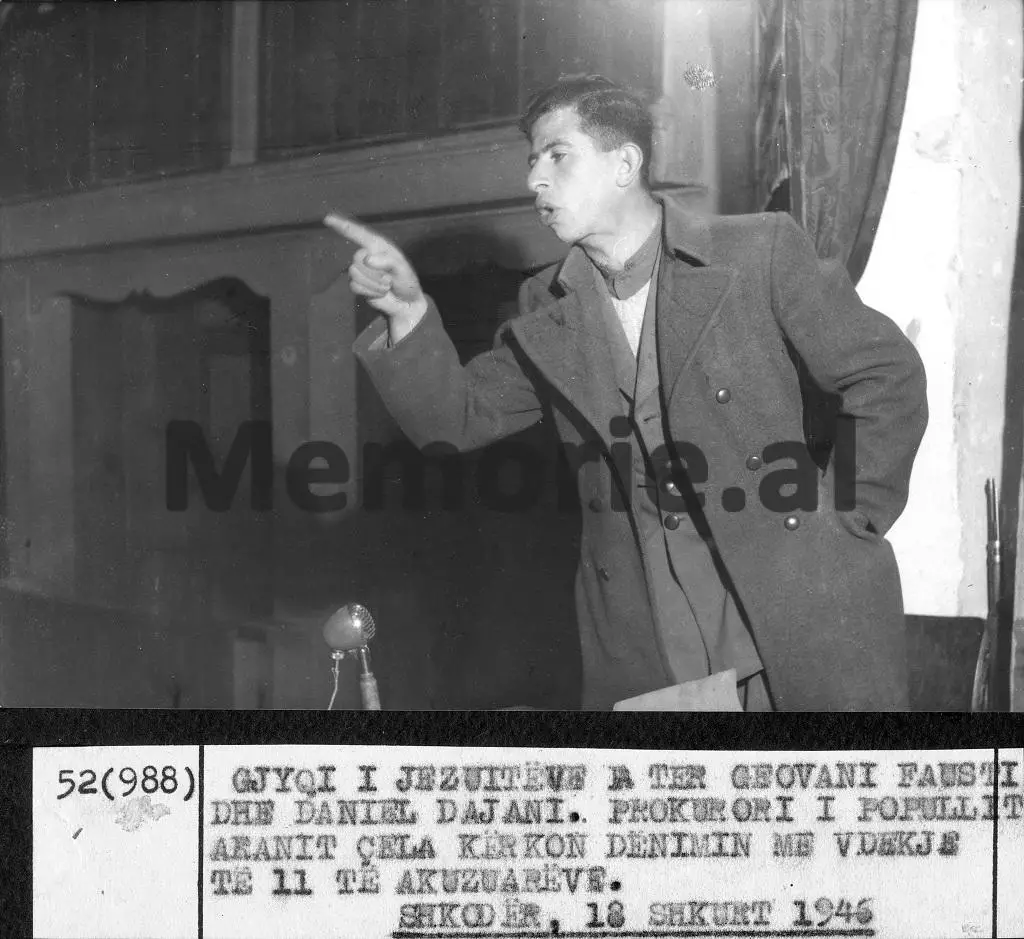
Prof. Gjelosh Luli, along with the other members of the “Albanian Union,” would be arrested, and on February 19, 1946, the trial against the members of this nationalist organization began. For 11 members of the “Albanian Union” organization, including Prof. Gjelosh, the communist prosecutor, Captain Aranit Çela, sought the death penalty…! Meanwhile, the military court, chaired by Lieutenant Mustafa Iljazi, in the 17th and final session on February 22 (1946), sentenced Prof. Gjelosh Luli to life imprisonment.
INSTEAD OF AN EPILOGUE:
Instead of an epilogue, I thought of quoting a poem published in a leaflet in 1942, distributed by the ‘National Front’ during the Second World War. The poem (or more…) was permeated by strong “notes” of patriotism, written by the nationalist symbol of the Faith and Nation binomial, Father Lekë Luli, when he was in the mountains with a rifle on his arm, against the fascist occupiers. The poem was entitled “The Voice of the Eagle” (Zani i Shqipes)…! / Memorie.al
THE VOICE OF THE EAGLE (ZANI I SHQIPES)
High above the mountains, sighing,
The eagle fiercely screams:
“Up on your feet, Albanian youth!
Grab your arms and wipe out
Italy, which in four years
Destroyed your Faith, Nation, and State
Above other birds, because I was enslaved,
My wings and legs badly bound,
Without anyone left to untie them
From the chains of slavery?!…”
But is it true that the shame
Has covered the faces of the Albanian youths,
So much that you cannot remember,
That Italy has set its target
To bring death to Albanians
By all means! Are you not seeing?
What great baseness
It is doing to us now for four years,
Since it has us under its heel?
Look what Italy does to us:
The best youths that Albania has
Slowly it is wiping them all out
Hanged on a rope, chopped down by fire,
Locked in prison, others in exile
Is there any greater humiliation:
To separate people from the place they were born,
Take them and scatter them in a new land;
Separate them from friends, comrades, well-wishers,
Do not let them be called Albanian.
Wives and girls being disgraced.
Small children being sold in the market,
Here burning Churches and there Mosques,
Geld the men like cattle
Before the eyes of their wives!…
What brings us alive, what brings us life today?
For by the oath of the Great God
It is not a morsel that can be chewed
To kiss the enemy’s hand and foot
And place a crown upon his head
For the evil deeds he is perpetrating,
When he occupies your Nation and home!
Who then calls himself Albanian?
In the mountain and in the field or on the seashore:
Grab the rifle and leave the house,
Grab the rifle and join me:
Grab the rifle without delay
Either to die or to win
To liberate our Nation!!!
There is no need to ask
Where am I waiting for you? You know yourselves:
On those mountains covered with snow
With the Albanian Flag in hand
There I await you…
May death not blind your eyes?
Because the victory is ours.
Where you fight, you win,
As your ancestors always won
Praised with honor before the World:
Teuta, Pyrrhus and the Great Leka.
But even if death comes to us
It is a blessed arrival, for by God’s oath,
There is no more beautiful death today
Than to die with a rifle in hand,
As citizens and as highlanders,
Fighting against the Italian,
To bring freedom to the Balkans.
And with the flag above the head
Red and Black, unstained
Waving in the air
While the youth around it
Without stopping the charge, without stopping the step
Give heart to one another:
“Hurrah youth, may success be with you,
For fate marches before us!”…
Thus the battle will catch fire
In the mountain and in the plain like lightning striking
Everywhere the rifle will echo,
The earth and sea will roar,
While the canon relentlessly
Strikes camps and castles
And the airplanes above the head
And the tanks well-armored in iron
Bombard and machine-gun
But the Albanians will not let go of the fight:
Face to face they stand the enemy
Without shying away from any danger
As the Balkan people have fled
But the Illyrian man, the man of Nation and State
Is accustomed to fighting and being cut down
With the enemy of the Nation, for the Homeland
When the Albanian falls in battle
There is no other fate of war there:
But either death, or freedom!…
Only then in Albania
Will this titanic war cease?
When all Italian force
Is extinguished, and the Albanian
Enjoys freedom as his ancestor left it!
Thus the world will understand:
Albania will not become a slave alive.