By Shkëlqim ABAZI
Part thirty-nine
S P A Ç
The Grave of the Living
Tirana, 2018
(My memories and those of others)
Memorie.al /Now in my old age, I feel obliged to tell my truth, just as I lived it. To speak of the modest men, who never boasted of their deeds and of others whose mouths the regime sealed, burying them in nameless pits? In no case do I presume to usurp the monopoly on truth or claim the laurels for an event where I was accidentally present, even though I desperately tried to help my friends, who tactfully and kindly deterred me: “Brother, open your eyes… don’t get involved… you only have two months and a little more left!” A worry that clung to me like an amulet, from the morning of May 21, 22, and 23, 1974, and even followed me in the months after, until I was released. Nevertheless, everything I saw and heard during those three days; I would not want to take to the grave.
Continued from the previous issue
“In one clause, they even envisioned a nap on the ground, to conserve his strength, because, unfortunately, he left a young bride!”
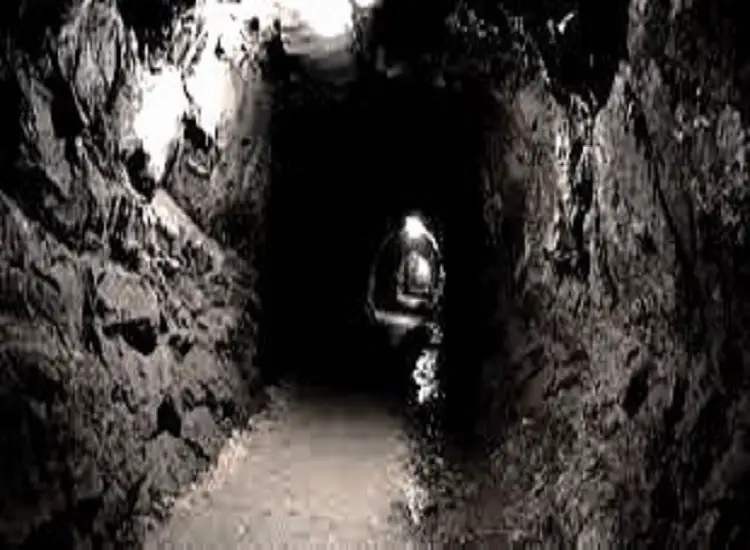
“Agreed, nice pact!” – I took the scale, excuse me, the shovel, and began weighing the ore for the second wagon. We loaded the second, the third, the fourth, until we cleared the entire face. Returning on the last trip, we woke up Tomçe, who was snoring by a heath bush above the gallery entrance, like a Cyclops’ eye.
“Did you scare him?” – mocked Osmani.
“I got rid of my summer rheumatism!”
“I haven’t heard of summer rheumatism!” – I intervened.
“In the pyrite holes, the waters run opposite, brother, you get cold in the summer, and hot in the winter!” – laughed Tomçe.
“Which means it enters one side and leaves the other!” – laughed “The Student.”
“Or are you enforcing the agreement and the points of the pact?” – I teased him.
“Hey, you learned this talk on the very first day?!” – Tomçe expressed his surprise.
“Who in Spaç is unaware of your pact?” – I pushed him.
“Ehh, I left a young bride, my friend, I got married and they shoved me here; also, I have a crippled mother and they need some help!” – with the latter, he tried to cover up the former.
“I was just kidding; I didn’t mean to insult or hurt you!” – I apologized.
“I don’t hold it against you, because we are family, but in prison, you also need a harmless trick or two.”
He fixed the hammer on the axis, inserted the baromina, screwed the hose, and started drilling the holes. The roar deafened our ears, as the compressed air blasted out the thick dust. Through the smoke, we raised the wooden supports, fixed the wedges, threw on the blasting caps, filled the roof and sides with mine fill, tossed the tools into the wagon, and hurried out, to enjoy any late ray of sunlight.
I felt so exhausted that my feet tripped over each other, while hunger or something else gnawed at my stomach, the carbide smoke caused me to belch, and the acid fumes scorched my eyes and throat. On the surface, we headed for the stream by the Cyclops-eye hole, where a trickle of water, with sooty nuances, flowed. Damn it, we washed with slag!
Who knows how many years I would have spent in the “Polyphemus’s Hole,” if not for an accident six months later, which kept me in the infirmary for two weeks and in bed for two more. I got along quite well with Tomçe and Osmani, and I would have liked to continue until the day of release, but they separated us (they were afraid of groupings).
Osmani was locked up in solitary confinement for thirty days, and when he was released, he was assigned to another brigade, in the same area, while Tomçe was plunged into an even blacker hole, also in the second zone, on the second level, in the second brigade, where due to the daily collapses and the flows that had no equal, those who worked there had also become second-rate. Osmani and Ahmet became my friends; in our free time, we exchanged books and ideas.
In the late eighties and early nineties, I heard mention of an Avdi, a fierce communist judge. I remember his prophecy in Osmani’s memoirs, on the day we met:
“You might hear of other Avdis who will make a career, but I guarantee you, they belong to the broken piece that will never be reattached, and even if it does, it won’t function; it will resemble the monstrous being, half man, half serpent, where the serpent will poison the part nourished by man, and the consequences will be fatal, sickening the organism until annihilation!”
And he was right; the serpent half was casting venom on the healthy part, but nevertheless, it didn’t manage to poison it…! The whole time I worked in that zone, the scab never left my body. The dark skin reminded me of Ramadan Lipe’s joke, the day I was assigned there:
“By order of the Central Committee of the Albanian Party of Labor and personally of Comrade Enver, who loves the gypsies, this time the white people will be shoved into the pyrite holes, to get a little darker since they keep cursing our luck!”
The pyrite stained us so much that neither the stinky soap of Rrogozhina nor the caustic soda could wash it off (perhaps the green clay of Kapinova and the leaves of the lofata plant, in the distant village of Meleq Hasa, could help; but go find them – the clay and the lofata remained there, but old Meleq’s whereabouts were unknown).
In the hellish holes, we had no clothes left on our bodies. They were full of holes, enough to terrify even scarecrows! Sulfuric acid flowed overhead and peeled our skin in shreds, crumbled the few teeth that escaped the investigators’ boots, leaving us masticating beings.
In the pyrite holes, even iron lost its shape. The tools didn’t last long; a shovel became a ladle within a month; the wagon’s basin lasted two months at most, and even the carriage with the rough wheels wouldn’t last a year; the rails and ventilation pipes were ground down by sulfuric acid, as if they had been scratched by dinosaur claws.
Nevertheless, the convicts endured…, they endured and resisted! They resisted and resisted. But until when?
The Auto-Prison!
(Xhike’s Carriage, without Xhike)
They had given it many nicknames: “Rattletrap,” “Araba” (Carriage), “The Cart of Live Meat.” While according to regions, they called it: in Shkodër, “Dyli’s Sharabajka,” in Korçë, “Gole’s Karrocka,” in Berat, “Xhike’s Karrua,” etc.
Someone had christened it; “a rattling coffin,” another; “the devil’s box,” still others; “hell-house,” and the mythographers; “Noah’s Ark on wheels,” or “cosmic ship to Hades.” But there were those who caressed it with fancy names: “divan-house,” “Lala’s beauty,” “paradise room,” etc. But most openly called it: “auto-prison.” An invention of terror, shrouded in mystery!
The double-sheet-metal rattletrap became a binomial of Albania-the-prison, so much so that you couldn’t think of them separately. When you mentioned the prison, the imagination conceived the rattletrap, crossing the hell of Albania crisscross, from one district to another, and when you saw the auto-prison, you pictured hell, the dark basements, waiting to swallow you into their insatiable guts.
It had no defined schedule, it came and went ceaselessly, because no one demanded an account from it; where it came from, when it left, how many it carried alive, how many dead, and indeed they wouldn’t dare, because it represented muteness, deafness, the grave. Its exact hour, day, week, month, or year was unknown, when the wreck appeared, squeezed, conceived, and returned from whence it came.
It worked stealthily, was filled in secret, emptied in secret, then refilled and re-emptied in secret. It emerged from the night and plunged back into the night, even though it carried out its actions in broad daylight and by law, it was forbidden to move at night. Therefore, it was the night itself, representing the mystery and symbolizing terror! Even though the “goods” it distributed were called of special importance, it had no fixed itinerary. The escorts and the driver played the ignorant; they did not speak of the destination, even when they knew it. It went and came everywhere and nowhere!
It could end up in all 23 prisons at once, or in each of the 48 internment camps that operated in Albania-the-prison, or in all of them without arriving anywhere, or straight into the nameless graves. Who would demand an account?! No one cared what it carried, nor where it took them, as long as it transported live or dead corpses, from prison to the grave and to hell!
“Wherever the prison is, it is a prison, and the grave, a grave!”
“I wanted to know out of curiosity?”
“What do you need the address for, you over there?! Don’t ask about the place, the Party knows where it builds the prisons and… the graves!” – screamed the policemen, whenever you inquired where they were banishing you.
“You brought me for nothing, I am innocent!” – you protested.
“Serve the sentence the Party gave you and don’t make a sound! Did you hear? Say, ‘I heard’!” – the mildest response was the tightening of the handcuffs to zero.
Everyone remained silent. Whoever learned more attributed it to forgetfulness. Silence became code, and the code a duty.
“Did you see anything, comrade?” – provoked the provocateurs.
“No, honestly, nothing!” – replied the pragmatist.
“What did you hear?” – the spy pushed further.
“Nothing, honestly!” – the afflicted person walked away with his head bowed, without looking back. The secret code was heard everywhere.
“It’s better not to see or hear anything, because even the load is carried beyond amnesia!” the wise advised, and they acted accordingly.
Amnesia occupied the nation. Collective forgetting dissipated the notion of prison, stripped it of material properties, and gave it abstract dimensions, with unshaped boundaries; meanwhile, it discarded thought and dulled the brain. The terror of the imminent turned into fear, and fear into panic.
Everyone spied on the shadow of the bogeyman “prison,” but it was nowhere to be found. Because there were no such maps, they perceived the coordinates subconsciously and prayed: “far from my behind,” and handed over their relative, without a twinge of conscience.
Since the convention of place and time did not exist, no special instrument was needed for reference, neither compass, nor calendar, nor hour, nor date, nor month, nor year, nor century, but only numbers stretched across the gray expanse and abstract figures, which covered the world of the living with a shroud of night, just like the darkness over the ocean. Time was seized like an inverted mirage beneath the shroud, while the roads groaned under the weight of the auto-prison, which absorbed the screams of the victims and guaranteed the longevity of the dictators.
The torture applied first to the fire-thief Prometheus, after Zeus tied him to the rock in Tartarus and sent the eagles to peck at his liver; followed by Sisyphus in his eternal ascents and descents, with the stone on his back, continued with Christ and the symbol of the cross on Calvary, with the pointed stake, with the tearing wheel, with the pillory, with the straitjacket, and the wood pyre of the Middle Ages, down to the head-cutting guillotine of the French revolution and then, with the Hitlerian crematoria and the gas chambers that horrified the world.
Nevertheless, these required the raw material, which equally required means of transport. Thus, they contrived carriages, galleys, araba (carts), down to the death trains, which they overfilled with Jews at the ends of Europe and penetrated thousands of kilometers, to burn them alive at railway stations. The democratic world branded the Holocaust and the crimes against humanity. But the communists perfected the SS legacy; besides death contrivances, they brought the model of the auto-prison from the Russian steppes and wrought havoc.
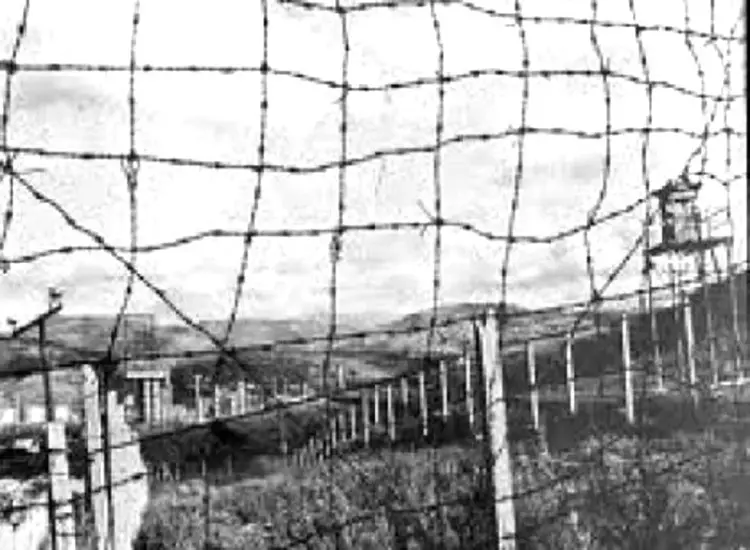
They crammed it full of innocents and took them to the extermination gulags. Again, a diabolical holocaust, even if it wasn’t called Mauthausen, Dachau, Auschwitz, Majdanek, and other names that became symbols of terror. It changes nothing that less sensational names, like: Spaç, Burrel, Maliq, Beden, Thumanë, Qafë-Bar, etc., etc., put the former to shame for their longer duration, and the world played blind. They drew an impenetrable curtain for the Western eye and took care to sew up mouths, plug ears, patch up eyes, cut off the head of anyone who might speak, see, or hear from within, and terrified the rest with the bogeyman auto-prison.
It was no great invention, like, say, a “cosmic capsule” that achieved interplanetary separation, but an ordinary innovation; on the chassis of a battered “ZIS” truck, they had welded a metal compartment, measuring three to four meters in length, one meter sixty centimeters in width, and two meters twenty centimeters in height, with a cramped nook in the front for confining the escort squad, and at the back, a double door opened, clapping shut from the outside with a lever and lock over two small, squealing hinges, while in the ceiling, they had contrived a type of skylight, secured with a double grate of thick iron bars, the size of a wrist joint, over which they had welded a lid that allowed air in but prevented the eye from looking inside-out and vice versa.
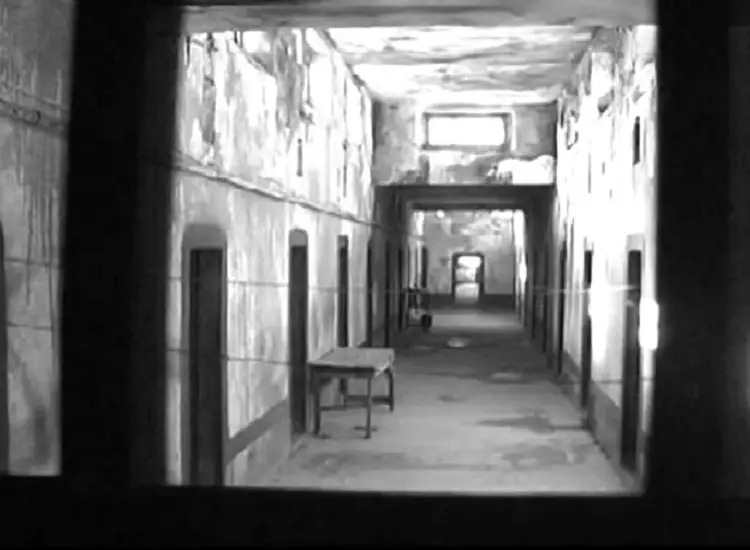
Whoever had the turn to travel, even once, inside that moving pit, will never erase it from memory until their last breath. All the hardships can be forgotten: the ferocity of the cell walls, the gnawing hunger, the endless pains and boundless tortures, the curses, the insults, the screams of the sadistic interrogators, the crucifixions with wire on posts at “Golgotha,” the coldness and heat of the isolation cells, the chains, the tufted tube, the sand hose, the hornbeam or chestnut stake, the death helmets, teeth and molars crumbled by nailed boots, the endless lineups in the winter frost, under downpours, snow, and blizzards, in heat and scorching sun; Burrel, Spaç, Qafë-Bari, etc., etc., can be forgotten; but never the cursed auto-prison.
In it, they shoved you in as the moment caught you, deafened by the gjermanka (a type of metal lock/hinge) and with a blanket over your head, plunging you from the darkness into obscurity and slamming you onto the double-sheet-metal floor. But it wouldn’t start until it was packed, sometimes the human heap exceeded the carrying capacity several times over, so that the wretches clung like lobsters onto each other’s backs, moaning, gasping, cursing, urinating, vomiting, shitting everything they had, without being able to see the face of the one next to them.
In the box, the living and the dead journeyed together from hell to hell, often beyond hell. It squeezed out what it held in its cave, like a boil being squeezed, but the base remains inside and continues to collect and flow just as before. It would arrive, swallow human cargo, and return from where it came, to be refilled again and again, to squeeze and suckle again and again.
With this all-communist contrivance, they consolidated power built on crime, terrified the people with endless suffering, gathered tens of thousands of unfortunate men and women, and indiscriminately shoved them into the guts of the vampiric auto-prison. First, they put me in it before I reached seventeen. After a sham trial, they convicted me without a lawyer, with an illegal law, although they used specific articles of the Penal Code which, if equivalent, should have punished first those who drafted and implemented it, but this belongs to a topic I am sidestepping.
So, almost a child, they bound me and crammed me into the ominous abyss that brought shivers, with the terrifying name. This sheet-metal wreck would leave consequences in my youthful memory for years and years, and years…!
Urban Legends
My generation was lulled in the cradle of legends and the justice of the fight against crime and criminals. In the galleys and primitive quarries, we saw the ideal place where delinquents should suffer perpetually. Naturally, the feeling of hatred for unprecedented crimes, such as patricide, matricide, fratricide, incest, and others of this nature, justified the severity and harshness of the punishment, as a deserved countermeasure against the rotten part of society with moral principles.
Since childhood, tables and images derived from stories or films with criminals had been ingrained in my memory. I imagined these monstrous-fiend beings, chained hands and feet with heavy shackles and confined in coaches or araba (carts), surrounded by fences or iron cages. I always imagined the old rattletraps traveling on creaking wheels for weeks and months, transporting galley slaves under rain, snow, scorching sun, and under the strict surveillance of guards armed to the teeth. I imagined these monstrous passengers bloody-kneed from the cannonballs dangling from the chains on their legs, crawling under the curious gaze of peaceful citizens who saw them off with contempt and spittle, towards the place of serving their sentence.
The idea had crystallized for me that the punishment against the anti-human species had to be even harsher, so that crime and evil would be uprooted, so that society would feel calm, become safer and more humane. Urban legends had nourished the thought in me that good and evil clashed eternally, despite the seven-headed dragon possessing supernatural powers, I still saw a happy ending; evil would be defeated, the dragon would win; “David” would destroy “Goliath” and humanity would continue its progress.
I believed these nonsense stories, because the bookish psychosis had clouded my reason; when I heard the word “prison,” criminals behind bars appeared to me. But I never imagined a peaceful individual with no prior record and no criminal premise ending up there. Memorie.al