By Shkëlqim ABAZI
Part thirty-seven
S P A Ç
The Grave of the Living
Tirana, 2018
(My memories and those of others)
Memorie.al /Now in my old age, I feel obliged to tell my truth, just as I lived it. To speak of the modest men, who never boasted of their deeds and of others whose mouths the regime sealed, burying them in nameless pits? In no case do I presume to usurp the monopoly on truth or claim the laurels for an event where I was accidentally present, even though I desperately tried to help my friends, who tactfully and kindly deterred me: “Brother, open your eyes… don’t get involved… you only have two months and a little more left!” A worry that clung to me like an amulet, from the morning of May 21, 22, and 23, 1974, and even followed me in the months after, until I was released. Nevertheless, everything I saw and heard during those three days; I would not want to take to the grave.
Continued from the previous issue
“Oh God, how much money was spent on this prison-fold? How many kilometers of barbed wire, how much construction material, how much labor, how many tons of food, how many linear meters of cloth for clothing, how many lek for wages, etc., etc., just to confine us within the socialist meat grinder! Ah, the class struggle?!”
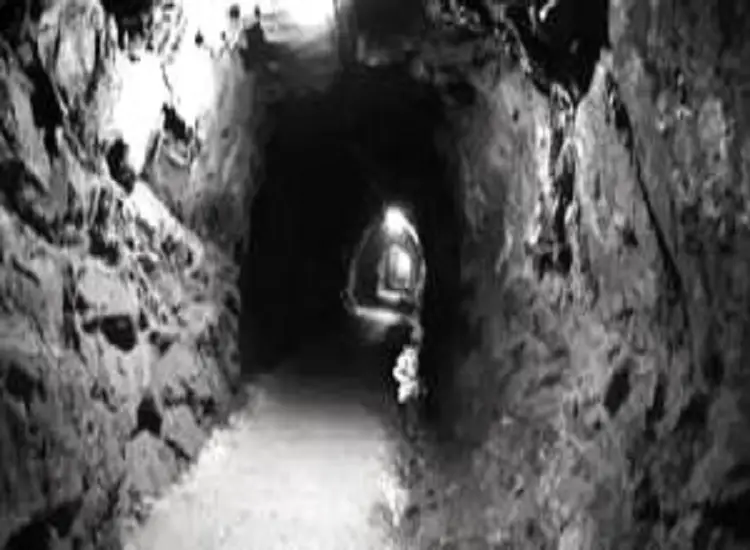
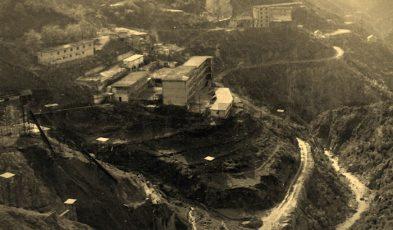
A few meters above the road, the tunnels opened up like gaping mouths. Higher up on other level, even blacker holes, and on the third level, a single mouth swallowed you like a Cyclops’ eye. As far as the eye could see, there were only ravines and rocky-sandy ledges sticking out over the debris. The pyrite residues reddened the bottom of the stream bed that descended from the Kalimash Mountains, and the stream itself twisted behind the bend we saw every day, snaked through the gorge, and plunged into the ravines, disappearing into the darkness like Acheron into the abyss of Hades.
The view was obscured by the roundness of the hills, right at the visible lower boundary where “our domains” ended. Beyond that, the contours melted, and the gaze slipped over the ridges that the locals marked as the border between Mirdita and Kukës. As we stepped onto the terrace eroded into the rock, we were confronted by some hunchbacked barracks like tortoise shells, perhaps warped by the wind that scoured the rocky face. We collected our carbide ration at the shack with blackened boards, where the stench of rotten eggs assailed us.
I was surprised, as the entire upper territory was pitch-dark, contrasting with the reddish surroundings; the road was pitch-dark, as if covered with a layer of soot; the abrasive-sandy stones were black, as if a black veil had been cast over them; the bushes had black-tipped leaves, and the corrugated eternit roof of the workshop was black, wrinkled like black parchment.
When we went straight towards the single tunnel entrance, like the Cyclops’ eye, the rust of the wagons was blacker and blacker, the rails were black, the tool handles were pitch-dark like ebony, and even the line of water flowing alongside the tunnel resembled the Acheron as it flows black from the kingdom of Hades. The clothes, bodies, and faces of the convicts we exchanged places with were covered in grime. Everything was black in this earthly hell! This corner of the globe suggested sorrow! My telepathy had not deceived me.
The blackness brought to mind the gloom of my dreams with the demons of Hades, with Cerberus gnashing his teeth, with pitch-dark Zeus, with the black-rayed sun, with the cloud of ravens, with the lightning-tongues of harpies, with the acid rain, with… and my flesh crept.
“In your grace, oh God,” I prayed to the Great One.
In the Pyrite Hole
We threw the tools into the cauldron, placed some logs for support on top of them, and set off. We followed silently behind the wagon, I on one side, Osmani on the other, jumping the rails to turn right or left as needed, until we got stuck at the face of the tunnel’s far end. Strangely, a chill ran into my bones; the temperature dropped, and the aroma of sulfuric acid stung my nose and brought tears to my eyes. I reached the ninth circle! Under the dim light, Tomçe was struggling to open a shutter that didn’t want to yield.
“Oh devil, these nasty gases shortened our lives! We are paying dearly for the day off!” he burst out and was choked by a dry cough.
“Be thankful they let us off, man, our soul had left us!” Osmani countered.
“You are wrong, my friend; during the twenty-four hours, the gas multiplies, and our lungs absorb it,” Tomçe defended his idea.
“You saved your environmental erudition for today!” Osmani joked. “Or are you trying to scare this friend who honored us on this everyday holiday!” – perhaps he wanted to create a more welcoming environment.
The hose stretched over the material hissed and burst, spraying fine particles that hit the rock face, the sides of the cauldron, and then sprayed back onto us. The pulverized current turned Osmani into a black man, while Tomçe was pitch-dark; as for myself, I couldn’t imagine what color I might have turned.
I started to shake; an acrid sensation scorched my throat and gave me the hiccups. As soon as Osmani noticed the change in my expression, he invited me:
“Come on, let’s go out until the face clears, because it’s your first time, and you will have problems adjusting to the smell.”
“I feel fine!” I objected.
“As you wish, there isn’t much material today!” He scraped the shovel blade on the back of the rails.
“Stop scraping our guts, man!” Tomçe complained.
“I will bring the wagon closer, because it is a bit far; who can lift all this weight with their arms!”
The shovel sank easily into the fine pile, but when I tried to lift it, the weight almost overpowered me and slammed back onto my head. Oh devil, how the calculations of Ismet Boletini came rushing to my mind: “The state doesn’t feed us with a special diet for nothing, my friend,” he used to advise us. “To load one wagon of pyrite, you need to fill nearly two hundred shovels, plus or minus, depending on the individual’s conscience or the physical-chemical qualities of the mineral: the richer and finer it is, the heavier, and vice versa. So, one shovel of pyrite weighs from eighteen to twenty-five kilograms, and copper from ten to fifteen. To be precise, we must assume a golden average, which is twenty kilograms of pyrite per shovel and twelve for copper.
Ultimately, one wagon holds nearly $3,600 \text {kg} $ of pyrite and $2,400 \text {kg}$ of copper. Multiply this by seven wagons for two wagon loaders per shift, and it comes out to $600$-$700$ shovelfuls for each prisoner, to move a load of $12,600 \text {kilograms}$ of pyrite, or $8,400 \text{ kg}$ of copper. Translated into a calendar year, working $340$ days, excluding some Sundays off, a sick leave, or a week’s punishment, the result is a weight of $4,284,000 \text{ kilograms}$ of pyrite per year, or $2,856,000 \text{ kg}$ of copper for each.
Multiply this by the average of ten years per person and draw your own conclusion. As you can see, the human-mechanism lifts this load with a shovel, throws it into the cauldron, pushes the wagon seven times for nearly a kilometer, dumps it in the chute, and then returns seven times empty, plus the weight of the wagon and the logs for support, plus the saddlebag-fur coat that everyone carries on their back, and draw the conclusion.
Please, can you find a more economical animal that can compete with the human animal in performance per unit of daily, monthly, and yearly expenditure? Calculate the state’s benefit from multiplying the number of convicts and breeding them slightly better than any other animal with a paunch?!”
Although we didn’t take Ismet seriously, because he joked with logarithm calculations and we considered his talk sarcasm against the regime due to hatred, in fact, the theory held up.
This came to mind when I almost smashed my face into the pile. I let the shovel drop and tried to straighten my back, but a stab of a knife pierced my middle. I gritted my teeth and muffled the scream. When I plunged it in for the second time, I took care not to fill it completely, and before lifting it, I supported it carefully on my thigh, but the handle bent, as if a counterweight had been hung on it, from the heaviness, almost breaking in my hand.
Lost in the à la Ismet experiment, I didn’t take care to mask my clumsy action so as not to draw the attention of my comrades, but they followed the movement of the shovel from the bottom to the height of the cauldron. When I turned and plunged it in again, it filled up more, the weight increased by several kilograms, and simultaneously the pains in my back increased. Nevertheless, I reached the cauldron with effort.
“Strange, Ismet’s calculations were extremely accurate!”
When I materialized it in practice, I accepted the political mathematics of my friend without hesitation.
“Are you working with poses, brother? Are you filming some Stakhanovite movie?” Tomçe prodded me.
“He’ll get in the furrow once he gets used to the weight!” Osmani also teased.
“What kind of earth is this? The shovel weighs like it’s filled with lead!” I expressed my surprise.
“Not exactly lead, but iron sulfate!” Osmani laughed and mentioned the chemical formula.
“My dear, we don’t need the formula, but the quota! We need to clear the material, drill the holes, hit the cycle, to escape Pjetër Koka’s wires! Do you understand?” Tomçe cut short his didactic enthusiasm.
“I got it!”
“And you?” he turned to me.
“I got it too!”
“Well then, give me the shovel to warm up, because I’m freezing!”
He snatched it without my consent and began to toss material into the cauldron. Osmani was on the other side, and the wagon was full in ten minutes.
“O-ha, boy, into the furrow!” He put his shoulders to it, but couldn’t move it. We, the wagon loaders, strained like geese pulling a harness, but unlike them, who pull the collar, we stretched out with our shoulders braced against the edge of the cauldron, fixed our heels, and pushed with force.
“O-ha, boy, into the furrow!” Tomçe repeated and whipped the coupler with the shovel handle.
Initially, the wheels dragged moanfully until they gained rotation, then they picked up speed and began the familiar trot. But unlike the first and third zones, it was smoother here, because the weight of the wagon easily doubled the load of copper ore; as a result, the echo was softer, and the movement was faster.
Experience was more valuable here than anywhere else, because the danger of ending up in the side canals was much higher, and it was much more difficult to put the wagon back on the rails. Along the way, thousands of drops and streams rained down on our heads and backs; you didn’t know which to guard against first, while the side lines gurgled from the amount of water, so much so that near the exit, they turned into a furious current.
The drops felt hot and caused itching on my neck and discomfort on my skin. When Osmani noticed it, he began to mock:
“Ba-ba-ba, what a beautiful fur coat! After a week, it will be patchy, like a camouflage tarpaulin; after a month, a scarecrow rag to frighten the crows, and after two, it will end up as a rag to clean Captain Pjetri’s boots!”
“We ourselves have become scarecrows and are scaring each other!” Without referring to the clothes that the dogs couldn’t catch hold of, I pointed to our blackened, pitiful faces.
“The soot reflects the successes of socialism, my friend; behind this appearance is hidden the conscience of the nation!” He was intelligent and grasped the allusion in its full satirical dimension.
Following his advice along the way, when he ordered me to get off, I jumped off first, clung to the chassis, and inserted the pole at the right moment. This way, we commanded the wagon without any incidents on the plates and on the rails corroded by sulfuric acid, but the worst awaited us right at the chute: the fine, water-saturated pyrite material would not detach from the bottom of the cauldron. Unloading was a laborious process; the weight of the wagon and the ore risked pulling you into the abyss of the chute; one carelessness and you would end up with a torn hand or foot, or with broken bones. It had happened that the cauldron violently snapped back to its initial position, causing trauma.
He instructed me sufficiently on the way, and at the chute, I rose to the occasion; I flipped it over and put the lever to the cauldron, which did not return to its bed, while he scraped the ore with a short-handled shovel. When we finished the process, I was tired and felt exhausted. The after-effects of the pyrite required about ten minutes in the sun; it seems the clear weather brought back the dizziness. I sat down by the rails because I almost collapsed to the ground.
“Are you sick?” Osmani asked.
“I have a kind of stomach upset!” I replied.
“May it pass, you’ll be fine!”
“Terrible pain, a cramp cut me inside!” When I wiped my forehead, the corner of my jacket turned into a rag.
“When the weather gets hot, the face will be even colder, and vice versa!” he began his explanation.
“At least we won’t feel winter!” I replied with a laugh.
“Worse still, we will get pleurisy; inside we will work in thin clothes, outside we will wear fur coats!”
From the corner of my jacket, I looked at his face. Now that he had removed his cap and was scratching his shaven head, it contrasted with his pitch-black face.
“Are you looking at my face with so much attention?” He seemed to be able to read my thoughts even in the secret recesses of my brain.
“No!” I replied, but I was actually thinking what he had surmised.
“Ah, my brother, before they brought me here, I was light-skinned, tender-hearted, and pure in spirit; now they ripped my head, blackened my face, hardened my heart, and darkened my soul!”
“I believe you have remained as white as the snow of Korab!” I countered.
“In every mountain pasture, the crystals are white; here, even the snow is flaming black! We are the white slaves of the pitch-dark ages, my friend!”
“Shall we go?”
“Just relax a bit more!”
“The plan or the soul, work comes first!” I quipped, mocking the devout police officer.
“We have time; only two or three wagons are left!” He also sat down on the log.
A Story like Hundreds of Others
“How many years has it been for you?”
It seemed like they were talking, but my troubles had muddled my thoughts.
“I asked you, how many years have you been in prison?” he repeated.
“Ah-ah, a lifetime!”
“What did you say, man?”
“Since I was born!”
“Why, were you born in prison?!”
“Our whole generation was born in prison!” I replied, unfocused.
“What are you saying? I was born in Dibër myself!”
“What does it matter if it was in Dibër or Berat? The communists turned Albania into a large prison, surrounded it with barbed wire, with watchtowers, with soldiers, and with border dogs.”
“Ah-ah, you are right from that perspective, but I just asked you for conversation’s sake,” and then: “When you look at the problem through this prism, I understand you, because I too once believed that I was the most privileged subject of the happiest state in the world, but reality would disappoint me.”
“Lucky you, you enjoyed your childhood, or are you talking about dreams?”
“About the virtual reality of my age.”
“How do you consider the real reality?”
“Are you talking about the present or the past?”
“Reality is one.”
“It can’t get any worse!” He fell silent, lowered his head to his chest, closed his eyes, and took a deep breath: “It seems you had a difficult childhood!”
“It can’t be more pitiful, as if I was born in prison!”
“How so?!”
“Well, in internment, it was worse than in prison! Instead of a midwife, a policeman stood by my head; instead of diapers, they wrapped me in coltsfoot leaves and instead of soap, they lathered me with cow dung!”
“What are you rambling about, are you in a daze, or have you lost it?” Osmani was surprised.
“I was born in a hut, do you understand? In one manger, ‘Apple’ gave birth, in the other, my mother.”
“Ah-ah!”
“So ‘Apple’ licked the calf, and she licked me too. Pure romanticism, isn’t it?”
“Bitter reality, my friend, palpable by reality itself!”
“And then?”
“What can I tell you? Childhood rolled downhill; I can’t shake the memory of misery, terror, hunger, horror, barefoot, naked, without toys, without friends, without bread, surveilled from the egg, with the fear of the law and the police. Then, school with a sack full of rags over my shoulder and wrinkled books, torn notebooks, half erasers and half pens, cracked reed pens…”
“Man, we were in a bad state too, but not in that plight!”
“I don’t know what to say, I spoke for myself!” Silence…!
“Now, let me turn to you,” I interrupted, to switch to the role of the questioner; I felt comfortable.
“I don’t have anything extraordinary to tell. We were a major family, and several crowns lived together, according to the custom in our areas. We had a house, land, livestock, and we hosted guests. Friends and well-wishers from the entire region would come and go; we welcomed and sent them off without distinction, with the characteristic generosity of the area. So, as a major family, our circle of friends was also extended, which is why we became a shelter for all the fighters of the region, without dividing them into parties. The Kaloshët, the Agollët, from all the major families would come, but more often the communist elite, Haxhi Lleshi, Haki Stërmilli, the Ndrehët, the Xhunglinët, and others, and they propagated their ideas in the villages. They sat cross-legged at our house because they found hosts and ears that listened to them.
Even after the war, the officials who had eaten and drunk in our house visited us again. To tell the truth, they helped us with grain seeds, some selected animal breeds, with education, and with some state jobs. Perhaps they did it for political motives; at that time, our parents didn’t know the tricks of the communists and considered the offered help as debt repayment. They were uneducated, my brother!”
“Even the educated fell for it at that time, let alone the villagers!” I supported him.
“Exactly what happened in the first years, because as soon as collectivization started, they showed their claws? They targeted our family first because they considered us their own; they nationalized the property acquired with effort and sweat, and this is where the trouble started, because until then, people would kill for Enver and the Communist Party in our house.
But still, we were the most privileged because they gave us schools, they allowed us to move to cities, but the part of the family that remained in the village felt dissatisfied, the discontent spread throughout the clan, and it divided us. Those who secured privileges and sought to maintain them advised silence to the part that suffered for bread.”
“How long did this game last?” I asked to spur him on.
“Until the knife reached the bone, and we definitively split into two. I and my cousin’s son, who are here, belong to the dissatisfied part of that great family. From the other side, you might hear about Avdias who will make a career, but I guarantee you, they belong to the broken piece that will never join back, and even if it does, it will never function; it will resemble a monstrous being, half man, half serpent, where the serpent will poison the part that the man nurtures, and the consequences will be fatal; they will embitter the organism until annihilation.”
“Why do they call your cousin ‘The Student,’ and the vast majority don’t even know his name?”
“It’s a title because they arrested him at the university. In fact, he learned much of what I told you there, because before that, it hadn’t crossed my mind. Before he went to the faculty, I was a layperson. There, he spotted the deep class division and told us about the differentiation they made among intellectuals, about the pain, the destitution, the misery, the ambition, the hatred, the ignorance that was leading the nation toward degradation; in short, he discovered the mysteries and was disappointed by the class struggle, although it didn’t touch us directly, but indirectly no one could escape it.
He was frustrated by state hypocrisy and cynicism, the baseness and wickedness of the Great Ones, to whom we had entrusted our fate and who were fiercely wrestling and devouring each other, supposedly in the name of principles. They renounced relatives, friends, comrades, but they weren’t actually arguing over interests they supposedly preached, but for personal power.
There, he discovered the existence of a different world, better and more prosperous, where people lived free and everyone could self-select, practice the profession they desired, could get rich and enjoy the well-being they secured with honest effort and sweat, without submitting to ideological propaganda, without political headaches, without fearing uncertain tomorrows.
He sobered up and decided to attempt to reach the world that lured him. We discussed this and left together. Unfortunately, we didn’t know about the secret agreements of the Security with the U.D.B., and now we are suffering from that ignorance,” he concluded the story about “The Student.”
“This trouble has fallen upon the entire nation!” I tried to lighten his spiritual burden.
“Initially, the twist of fate crushed me, but after getting to know these men of worth, I feel freer.”
“And regretful?”
“Absolutely not! On the contrary, I am fortunate that I had the opportunity to live among these enlightened minds, about which history will speak one day!”
“Bravo, Osman!”
The Seven Tricks and the “Pact” with the Devil
When we returned to the face, we didn’t find Tomçe.
“Did the earth swallow him?” I froze in surprise.
“Well, the earth has swallowed all of us, but Tomçe has made a pact with the underworld!”
“What pact?”
“The pact with the devil!”
“Is there something I don’t know?” I asked, hurt.
“No, it’s not what you’re thinking! When I mentioned the pact, I didn’t mean evil, but more or less a kind of Mephistophelian agreement.”
“Ah-ah?”
“Tomçe is a brave man, but he left his mother crippled and his wife young, so he’s thrown himself into work to earn some day-reduction and a little money to help them out financially.”
“I understand!” I was relieved.
When he mentioned the pact, I don’t know why I was suspicious and thought it might be some secret agreement. Where could he have gone, for heaven’s sake?! Memorie.al