Memorie.al / The well-known journalist of the “Boston Herald” recounts in an interview his research on the OSS, the secret American mission that worked during the Second World War in Albania. What was the purpose of the OSS in our country? Enver Hoxha’s close connection with the head of this service, Tom Stefan, and his fate after the end of the war. Now, this story, which has brought to light secret information for both the American and Albanian sides, is expected to be materialized in a film directed by Stan Dragoti. History does not leave him alone even when he decides to take evening strolls on the main boulevard of Tirana. Peter knows that German soldiers, killed during World War II, were once buried on the boulevard where people calmly walk beside him.
In his recent trips to Albania, he has found it impossible not to feel caught between two eras. The one that appears to him through the imagination that comes from the New York archives and the one of today. It seems that the first time still conditions his actions. A journalist should not trust imaginations too much, but Peter feels powerless to leave behind all that history which he found through a photograph.
He is the second American journalist of the “Boston Herald” who arrived in Albania in 1986. From that time until today, as Peter slowly sips tea in one of the capital’s bars, many things have changed in his connection with Albania. Now, he is not merely the first journalist who could report to the West on what was happening with communism in the heart of the Balkans, but also the first journalist who has shed light on the OSS (‘Office of Strategic Services,’ the most powerful in the world, or as it is known today, the CIA).
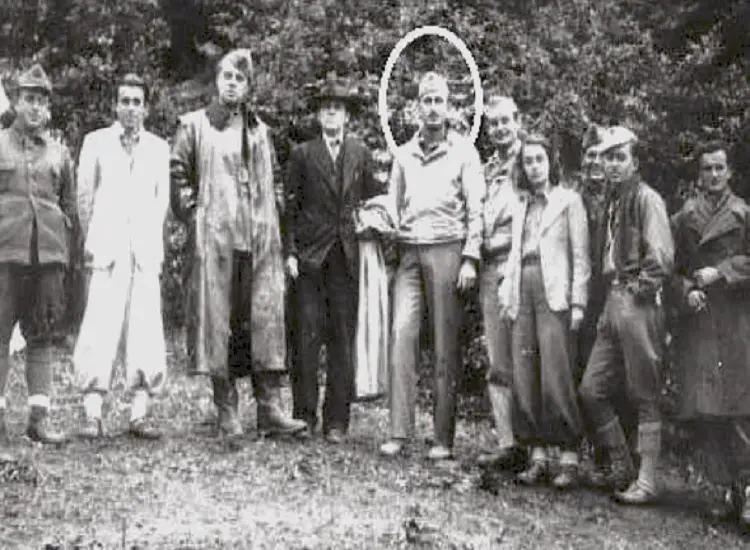
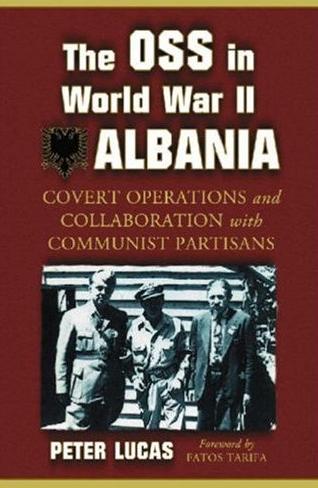
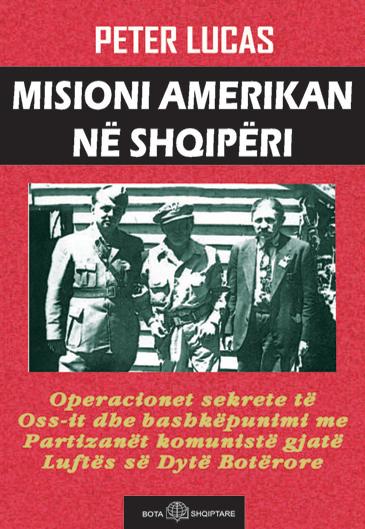
Starting from a photo of an American alongside Enver Hoxha, which he found while digging to write a book about the Albanian dictator’s youth, Peter became acquainted with the story of Tom Stefan, the head of the OSS in Albania, a man who had a close friendship with Enver Hoxha, only to later uncover the entire life of this service in our country. His book “OSS in World War II in Albania,” published years ago, has become the center of attention in the USA.
This is because many people did not know that this mission had also operated in a country like Albania, let alone helped Enver Hoxha, the former communist leader, seize power. Below, Peter recounts in an interview his work on this book and who Tom Stefan was, this man whose life will now be brought to the screen in a film by director Stan Dragoti.
Mr. Lukas, you are the second American journalist after Harrison who arrived in Albania in 1986. Can you tell us more about this visit?
PETER LUKAS: It is certainly a visit that I remember well. I was traveling to a country that had been visited just a year before me by another American journalist, who stayed here for only three days. While I was the second person to be given such an opportunity. The Albania of that time was a police state. It felt like you were entering a prison with your own feet. As soon as you got off the plane, from the meticulous checks of newspapers, books—everything, no matter how ordinary you might have with you. The people who accompanied you, etc. When I saw the airplane taking off from Rinas Airport today, leaving me here, for a moment I thought; “What am I going to do here now?”
But slowly, I got used to it. For an American setting foot in Albania, the country was undergoing a major change. We had grown up differently, despite the Albanian blood. No one could approach to talk to you, students moved away, so you had to be able to perceive the situation yourself and understand those seemingly strange behaviors of people. It was a new experience. But at the same time, there were things I liked here. For example, when you saw that the country was clean and the family was strong.
It is understood that prostitution and drugs were unknown, as there was no freedom then. Whereas with the arrival of freedom now, these things are present here, as in every other country in the world. Of course, the present is better. But freedom is always a problem if you don’t know how to manage it. This is what brings about various crises in countries that have just gained freedom, because freedom means more responsibility, not to overlook many things, but to take them into consideration.
You have published a book on American secret services in Albania during World War II. How did you come across the traces of the OSS?
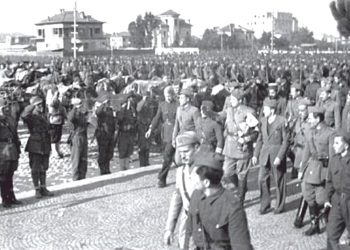
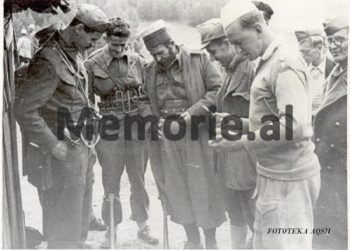
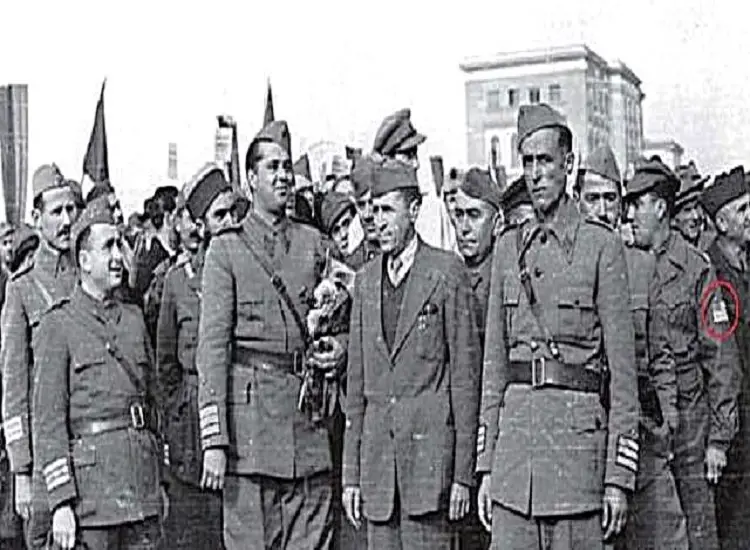
PETER LUKAS: I always wanted to write a book about Enver Hoxha’s youth. But for many reasons, this idea of mine was not realized. But among those searches I conducted in Albania for that period, I came across a photograph taken during a parade on November 28-29. In the photograph were Myslim Peza, Baba Faja, Mehmet Shehu, and in the second row of the photograph, I see an American. In fact, this photo surprised me, as I did not know that Americans had been near the General Staff of the National Liberation, and I wondered what an American in uniform was doing so close to Enver Hoxha. His name was Tom Stefan.
Thus, I started researching who this Tom Stefan was. I only knew that he had died. So, I began a search to find his activity in Albania, to explain all the details that would link his presence in that photo. It was strange, as even other Americans who had been with him on a secret mission in Albania did not know that he had died. I went and met these people, and they started telling me about him, about the work he had done in Albania, and about the special relationship he had had with Enver Hoxha. Then I went to the Central Archives in Washington to conduct research.
And the more I researched, the more interesting the story of this man became to me. And the subject grew more than just Tom. In this research, there were things that even the Americans themselves did not know, let alone the Albanians, as they were highly secret documents of a period reported by a man who was at the head of the mission. These documents reveal that the Americans and the British helped Enver Hoxha come to power. No one knew how this aid and these connections had come about.
After conducting research and reviewing these archival materials, I met four people who had served in Albania and were still alive. They had traveled all over Albania, from Karaburun to the north, everywhere. And when we talk about Karaburun, on both sides, from the sea side where the caves were and from the Dukat side. I discovered where Tom Stefan had died, where he was buried, and it became a very interesting story that motivated me to write it.
According to you, what was the interest of this American mission in Albania?
PETER LUKAS: The interest was direct, as the Americans were stationed in southern Italy at that period. The Americans were interested in keeping the German divisions in Albania under pressure and attacking them occasionally, so that these forces would not move further than Albania. And to achieve this, these missions chose the partisan forces and Enver Hoxha, to cause trouble for the Germans and keep these divisions from leaving the borders of Albania, but to remain here.
The work of the American mission here was certainly not easy. They had to foster the idea that the Americans might attack the Albanian coast, in order to keep the Germans under pressure. Another interest, in my opinion, for these forces to stay in Albania was to create a base in Albania.
If American pilots who set off on military service in Romania or some other country were caught, or somewhere in a corner of Albania, this mission had the duty to find these places where the plane crash might have happened and secretly organize their return to base. Albania was a point from where the Americans needed to pass to other countries where they had an interest, so a base here was essential…!
Let’s talk a little about Tom Stefan and his friendship with Enver Hoxha. What was this friendship like, and what happened to the two friends after Hoxha came to head the Albanian state?
PETER LUKAS: It is known that in this period we are talking about, Enver Hoxha was 35 years old, while Tom Stefan was 25 years old. I think that in the friendship between them, Hoxha was the one who dominated. This is due to the fact that Hoxha was a leader, educated, while Tom was a very simple young man. Tom had to work day and night to educate himself. He did not know much about politics. He came on a mission to Albania immediately after joining the army, as this time coincided with the start of the war.
Tom was a boy who knew how to speak Albanian, due to his distant origin, and thus he was placed at the head of the mission. He was the chief of all the other American intelligence officers in Albania. As I have leafed through so much material about him, having read all his secret reports, I think Tom was too young for the task entrusted to him. But it is somewhat difficult to speak about the relationship between them, as this is a private intimacy, but through the photographs and materials found, I can argue what existed between them.
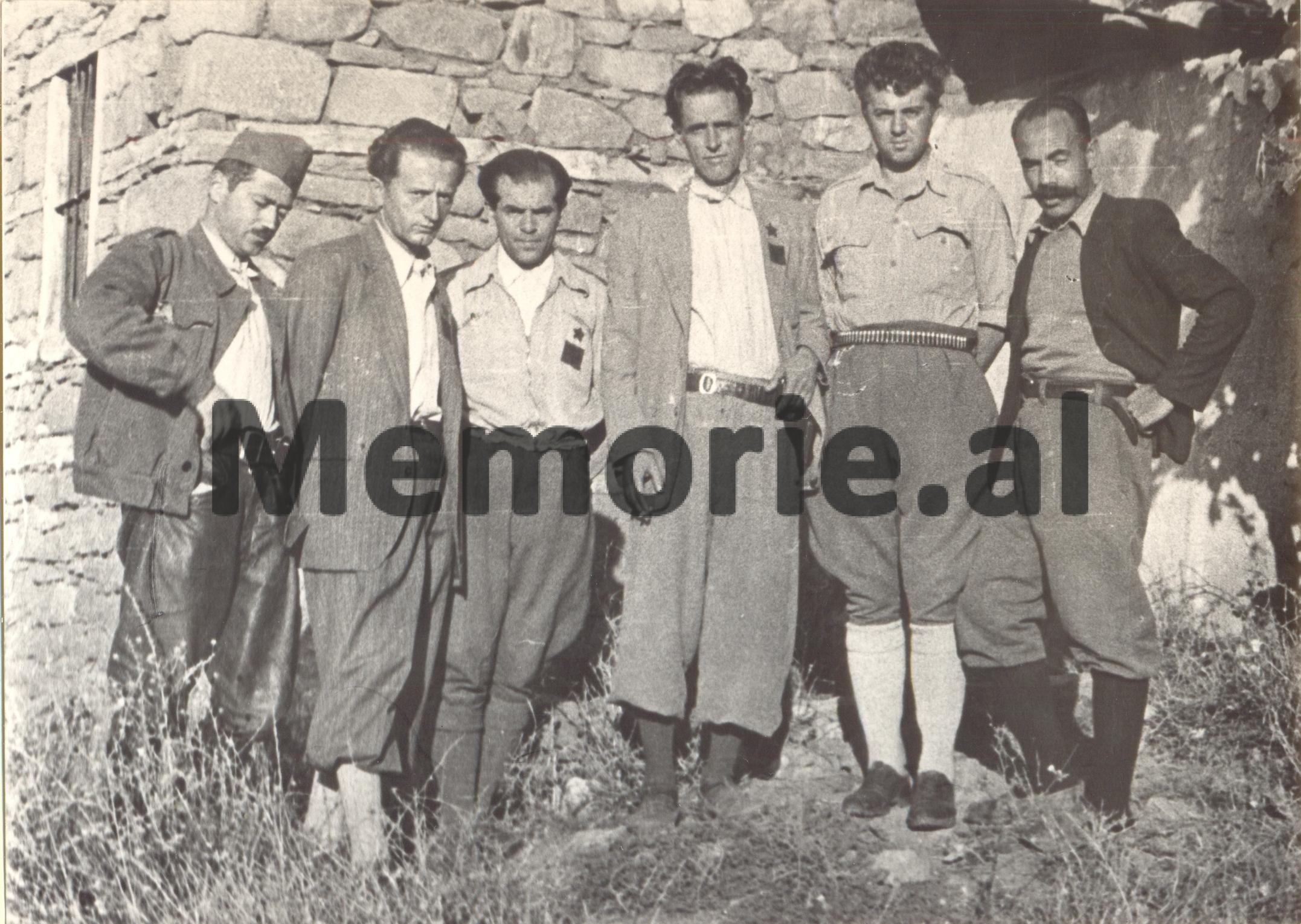
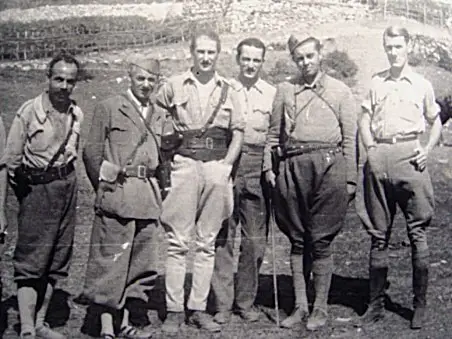
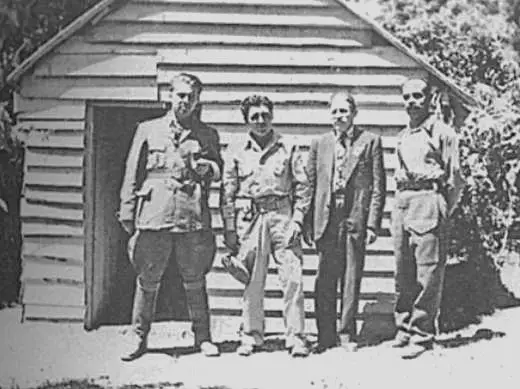
Photographs often show a lot. For example, we have photographs where Tom Stefan is pictured with Enver Hoxha and Omer Nishani. If we follow the war photographs, we will see that Enver Hoxha never posed with the British. And this fact shows a connection between him and Tom Stefan. But your question is: what happened to this friendship after the war? Of course, this friendship did not last after the war. Like everything else, Enver Hoxha broke this friendship.
Tom Stefan’s connection with Albania would also enter the sentimental sphere. After returning to Tirana after the war, he met a girl, Lulu Vrioni, with whom he fell in love. It is understood that the Vrioni family was not to Enver Hoxha’s liking, and thus the persecutions against this family would begin. Many of its members were executed. Hoxha did not like Stefan having such a relationship, and precisely with a person from this family.
But the fact is that Tom secretly married Lulu Vrioni, and you understand how upset Enver Hoxha was about this event. After these contradictions, Tom would take Lulu with him to Washington to live together. It is a very sad fact if you look at the documents of that period.
All the educated Albanian girls who knew how to speak English and who associated with these secret American missionaries in Albania, after the end of the war, were arrested and interned by Enver Hoxha. But Lulu did not have this fate, as Stefan took her with him to the USA. Lulu worked at the “Voice of America” and died only three years ago. While Tom Stefan died in 1959.
What can you tell us about his death?
PETER LUKAS: Tom Stefan’s life was not very beautiful after he returned from service in Albania to the USA. It was an almost tragic period for him. He returned from the war perhaps with the illusion that he could put the experience he gained from this mission at the service of the State Department, or elsewhere. But in that period when Albania turned into a dictatorial system, no one was interested in him anymore. It was the years 1945-1947, and Tom remained outside the interest. Albania’s turn is known.
Enver Hoxha turned away from Stalin in 1948. Tom went to Los Angeles. There he met an old friend of his who had been with the OSS in Albania and had become a very famous actor. According to friends’ accounts, Tom Stefan and his friend, the OSS, wanted to make a film about the war. But Tom had a heart crisis and died at the age of 42. He never managed to write the story or make the film…!
How easy or difficult was it to write a history of the OSS?
PETER LUKAS: I think writing is the easiest thing. But tracing the problem, searching the archives, is the most difficult thing. Whenever you start a search, it seems extremely difficult. I am not a professional in this field, so my task became even more difficult. Being in this position, as a journalist, I have tried to be truthful in every detail placed in the book. When I started my research, I met a man whose job was the OSS.
It was this man who guided me on where I could find notes or data on the OSS. There I found secret reports that Tom sent to the base in Bari, Italy, from the Headquarters where he was with Enver Hoxha. It was an extraordinarily large amount of material about the OSS operatives who had worked in Albania, and I had to choose. I can say that during the research, while reading these reports, I sometimes felt carried away by them, so much so that I felt like one of them.
The man who helped me in the American archives did a brilliant job. He selected the materials I needed so that I wouldn’t have to deal with finding them, but simply analyze them, having them ready when I went there. If you come to my house in Boston, there are thousands of photocopied materials that tell that time. But the most interesting and helpful phase in realizing this book was finding those people who were still alive, who had been in service in Albania. They were a living testimony that made this book more complete. / Memorie.al