
By EKKEHARD KRAFT
Memorie.al / Four wars since 1991 and the continuous instability of the entire former Yugoslav space have had catastrophic effects, not only on the economy but also on the population structure. The number of war dead is estimated at 200,000 people. Only Slovenia and Macedonia have remained largely unaffected. The fighting in Slovenia in the spring of 1991 lasted for several days, took the lives of only a few people, and caused minimal destruction. The country’s demographic and economic development was not derailed.
The population has continued to grow modestly, with a minimal birth surplus, while the number of emigrants has increased significantly. Both of these trends continue the patterns of previous decades. Even in old Yugoslavia, Slovenia was a destination for the workforce from the southern republics. The emigration of Slovenians is marginal. For example, in Germany, after a small increase after 1991, their number reached 17,000.
Macedonia was not hit as hard by the war, but due to its structure, unfavorable geographical position, and the occasional embargo policy from neighboring Greece, it suffered much more severely from the consequences of Yugoslavia’s collapse. Thus, several tens of thousands of the country’s inhabitants have emigrated at least temporarily, which has a significant impact on the two million inhabitants. In Germany alone, the number of Macedonians increased from 22,331 in 1974 to 42,600 in 1997. Since all ethnic groups in the republic are affected to the same extent, it is believed that there will be no shift in the numerical ratios between the Macedonian majority and the Albanian minority – a shift that is viewed with suspicion by the Slavic majority.
The number of Albanians, as in past decades, is increasing due to a significantly higher birth rate. To what extent the arrival of Albanians from Kosovo contributes to this is difficult to assess. In both Macedonia and Croatia, the population has decreased numerically. On the one hand, this is a consequence of the exodus of Serbs, especially after the re-conquest of Eastern Slavonia and Krajina in 1995, which in the period between 1995 and 1996 was reflected in a population decline of more than 200,000 people. Meanwhile, the share of Serbs in the total population of Croatia is thought to be about 5 percent, while in 1991 it was 12.2 percent.
To this must be added the Croatian war losses, the long-low birth rate, which in 1996 for the first time again was above the mortality rate, as well as emigration. While after the end of the war, the number of Bosnian and Yugoslav citizens in Germany has fallen again, that of Croats has increased, from 82,500 (1992) to 206,600 (1997). If it is said that the population of Croatia, according to estimates from mid-1998, must be only 100,000 people smaller than in 1991, then this is primarily a result of the wave of Croats from Bosnia and the Federal Republic of Yugoslavia. In Bosnia and Herzegovina, 150,000 war deaths are counted, in addition to which perhaps 15,000 missing persons should be counted.
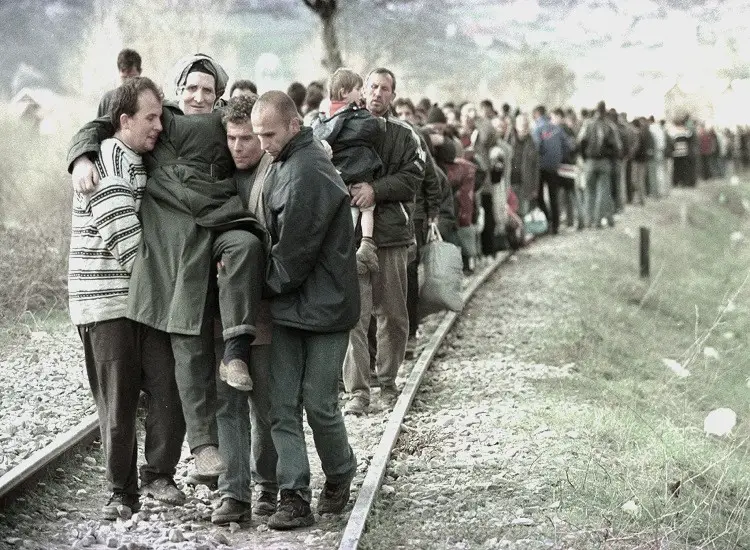
A total of 75,000 invalids will be characterized by the war for their entire lives. As of mid-1998, the population of Bosnia was estimated at nearly 3.4 million people, i.e., 900,000 less than during the last Yugoslav census in 1991. In the course of the war, over 2.5 million Bosnians, more than half of the population, became refugees or displaced persons, of whom more than half remained within Bosnia. According to UNHCR data, by the end of 1997, 400,000 refugees had returned. Most of the returnees have settled in localities that are controlled by their own ethnic groups. Only 10,000 have returned to those territories where they once constituted the majority.
The return of other displaced persons is proceeding significantly more difficultly. Surveys show that the majority of refugees want to return to their former homes; but if this residence is located in an area where members of another ethnic group have power, then only a minority expresses a willingness to return. Even resettlement in a locality located in the entity of one’s own group does not meet with full approval. Above all, it is the young people who do not show a willingness to return at any cost. In the Federal Republic of Yugoslavia (Serbia-Montenegro), the sarcastic prophecy has somehow been realized, according to which President Milošević would unite all Serbs in one state, i.e., in Serbia.
At least 700,000 refugees from Bosnia and Croatia currently live in Serbia and Montenegro, who were joined by those from Kosovo after the NATO war against Belgrade. A natural population increase exists only in Montenegro and – to a much greater extent – in Kosovo. Every third child born in Serbia in recent years has been Albanian. On the other hand, in Serbia and Vojvodina, there are more cases of death than births; a trend that was clear even before 1991, but which has now only worsened. The low birth rate is also a consequence of the high abortion rate: for every three pregnancies, two end in abortion. To this must be added a certain increase in the number of stillbirths and infant mortality, as a result of poor medical care, the cause of which is partly the sanctions against this country, but more so the general destruction of Serbian society.
Economic misery stimulates emigration.
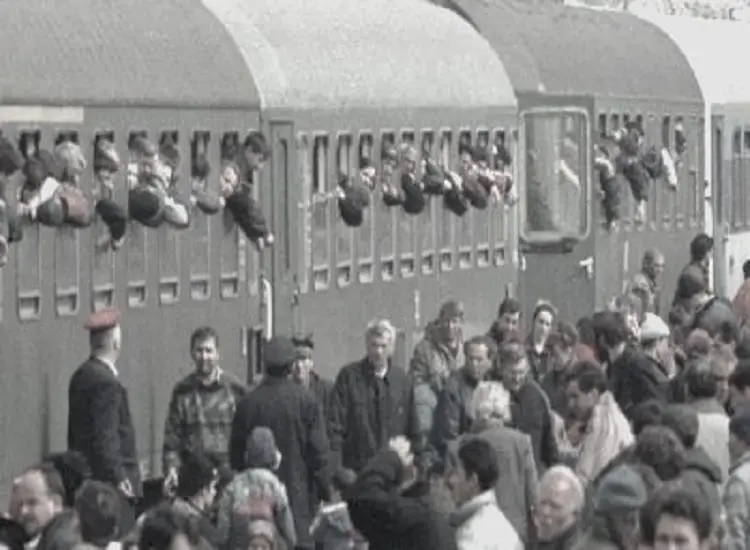
At the same time, the repressive policy of the Belgrade regime against minorities has caused the exile of 400,000 Kosovar Albanians and respectively several tens of thousands of Croats and Hungarians. In addition, many young people, as in Croatia and Bosnia, have fled military service by abandoning the country. From 1990, the number of citizens of former Yugoslavia with permanent residence abroad has increased by more than one million. In Germany alone, their number has doubled from 600,000 to 1.2 million. Given the not-so-good prospects for the future, the tendency to emigrate may increase. With the exception of Slovenia, a particular danger for the future of the Yugoslav successor states is the emigration of well-educated scientists and technical specialists.
The United States of America is the most attractive, but also Canada, Germany, Switzerland, Great Britain, and France reflect a great attractive force. In fact, this “brain-drain” was also observed in the ’80s, but now it has significantly worsened. In less than ten years, the centuries-old population structure has been destroyed by the wars. In fact, the Second World War had caused more victims, but the population displacements caused by it were for the most part reversed. It is generally debatable whether the territory of former Yugoslavia has ever before experienced such radical demographic changes in such a short time.
The way the war developed – not only on the part of the Serbs – quite consciously aimed at creating “ethnically clean” territories. However, this policy ultimately hit its own inventors. After the expulsion of the unwanted populations, the “cleansed” territories were also unattractive to the respective victors, due to the destruction and general economic misery. Thus, in Krajina, not all Croats who once lived there and from where they were expelled during the years 1991 to 1995 have yet returned. The Serbs, who today control half of the Bosnian territory, are also not succeeding in filling the territories they have occupied with people. Thus many territories will remain desolate, while the population density in the industrial zones will increase even more. / Memorie.al
(* Ekkehard Kraft is a German historian. The article was originally published in 2004 in the newspaper “Neue Zürcher Zeitung”).